Gurez and Kheer Bhiwani- A Visit to An-Other world


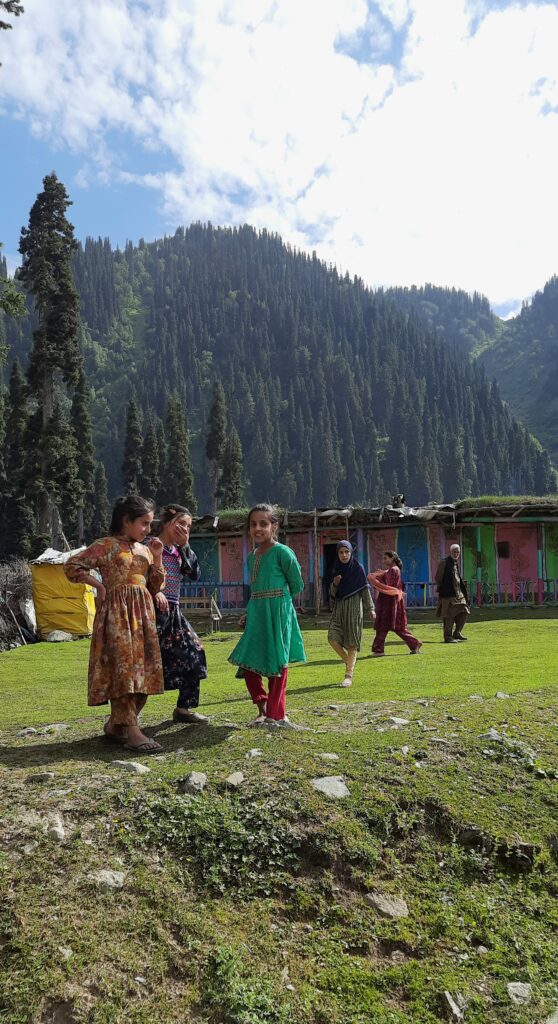
Come, have tea. The pretty girl says, hanging out of the window of her wooden house. The invites are pouring in on this lovely sunny day. I ruefully decline. I’m not alone and we are running awfully late as it is.( the time plan goes further awry when I found the aunt had accepted someone else’s.) But I ask if I can take her picture. In the by lanes of this tiny village, the mousse brown house makes a perfect frame for her in her sparkling white hijab. Wandering back through the labyrinth of lanes we cross a mosque and exchange greetings with a matriarch sitting outside her house and a wizened old man reading. The driver has a bemused look when we can’t find half my clan. He points to a house in an alley. The girl who was chatting with the aunt on the road has taken the rest home. They are sitting on a carpeted floor with the man of the house, a ‘doctor sahib’, his wife, daughter in law and the extended family. He shows videos of him trudging through snow bound mountains to give vaccination shots to babies. Kashmiris have no furniture in their house, I was told. Well, if I had wall to wall carpeting like that, neither would I. The last few hours in Gurez Valley are tinged with an old-world charm and simplicity, that can be found, I suppose, in the backlanes of villages time has little time for.
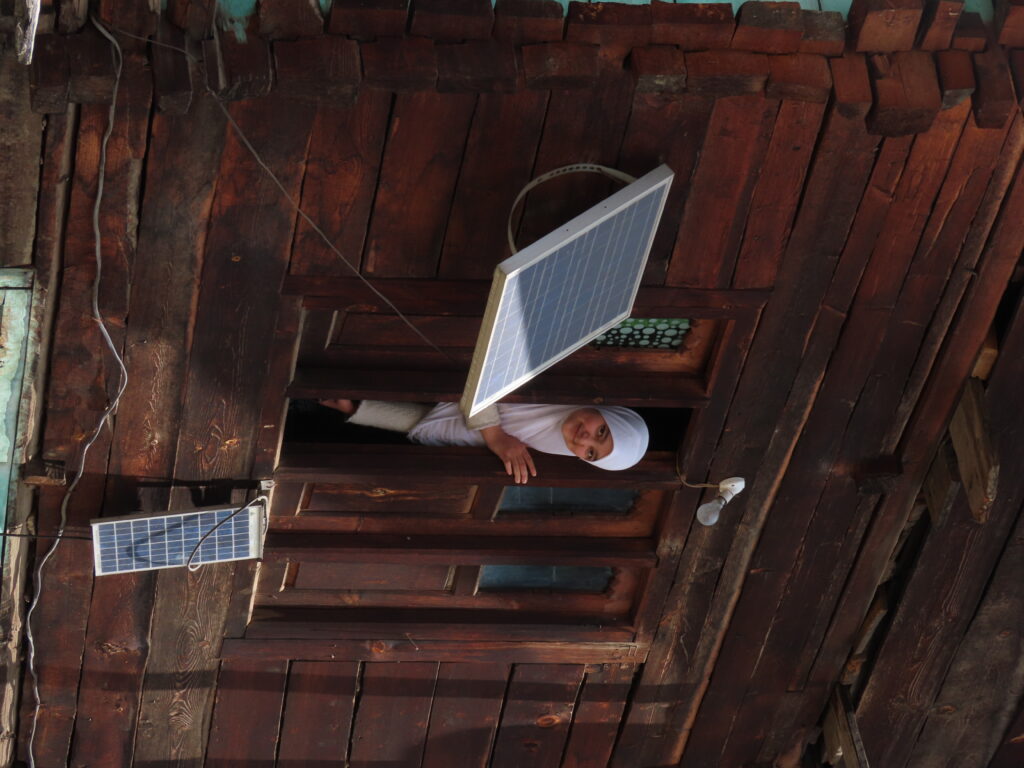
Shine Bright

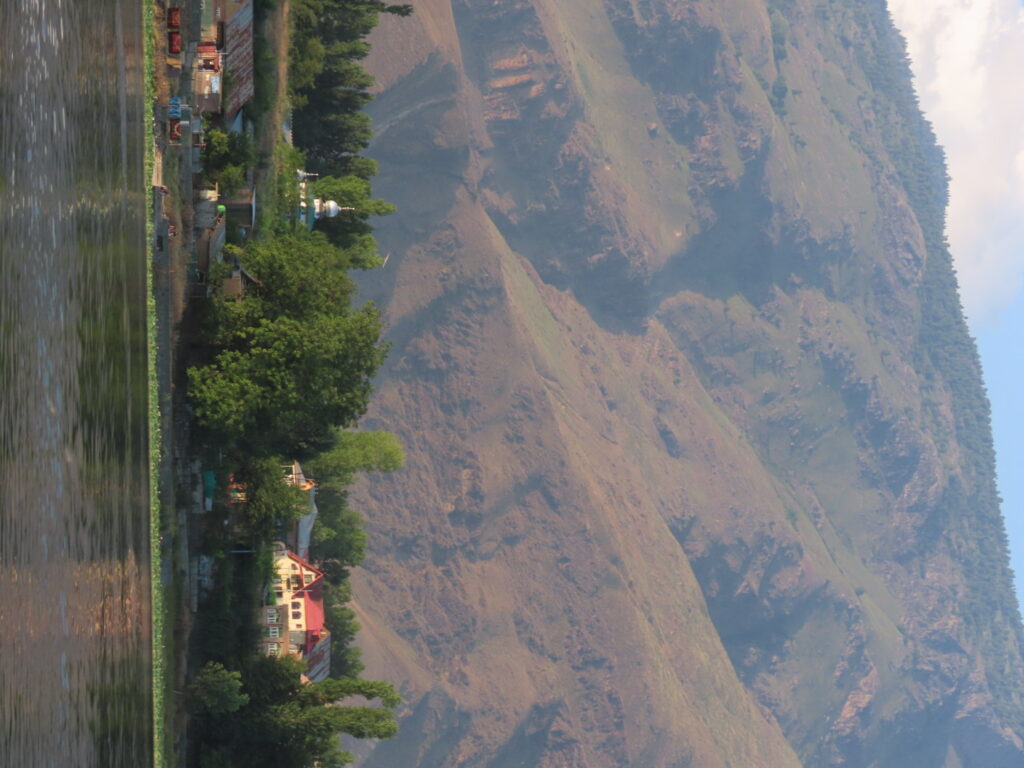
Soon we reluctantly retrace our path back to Razdan pass where we had come from the day before, with a last view of this picturesque valley at the curve of the towering craggy range and the lake formed by the dammed Kishanganga river.
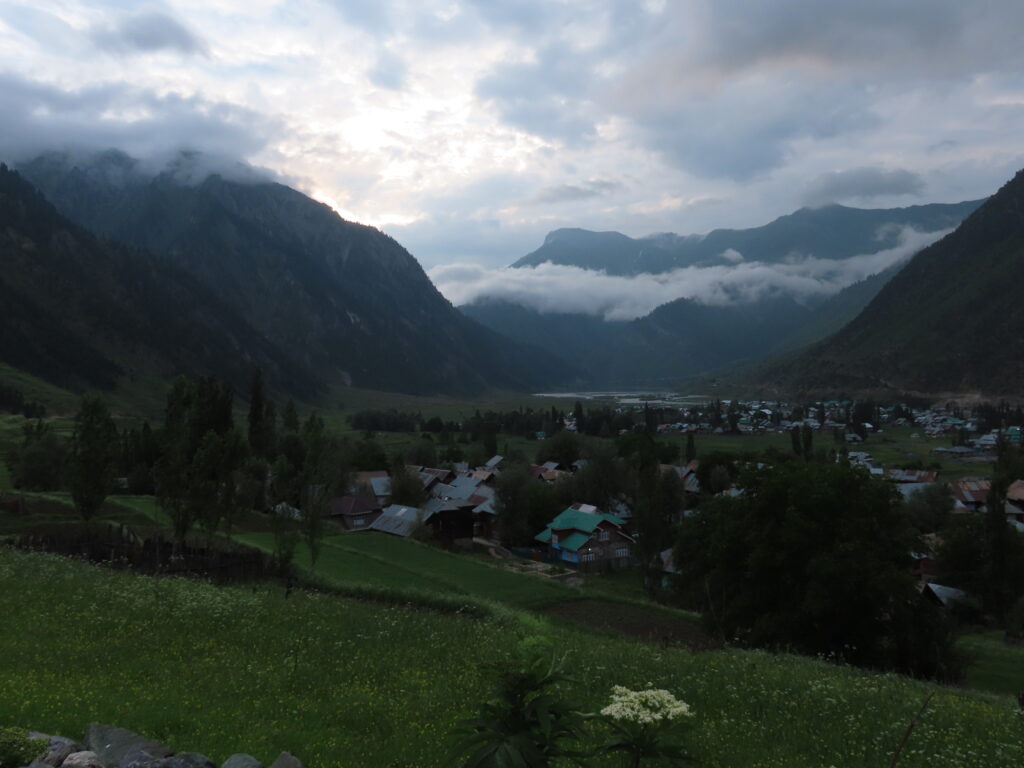
Serenity Streams In.

On the Road through Iris Pass

We crossed Bandipore town to climb into the forested mountain, leaving luminescent step-fields and scattered hamlets by the side. The first stop is for a picnic breakfast by the road under the low branches of a dark deodar. After making a tiny dent in the food packed for an entire army by the sister, and chasing elusive birds twittering all around, we are back on the road. Soon the last of the trees give way to the bare crest of the range.
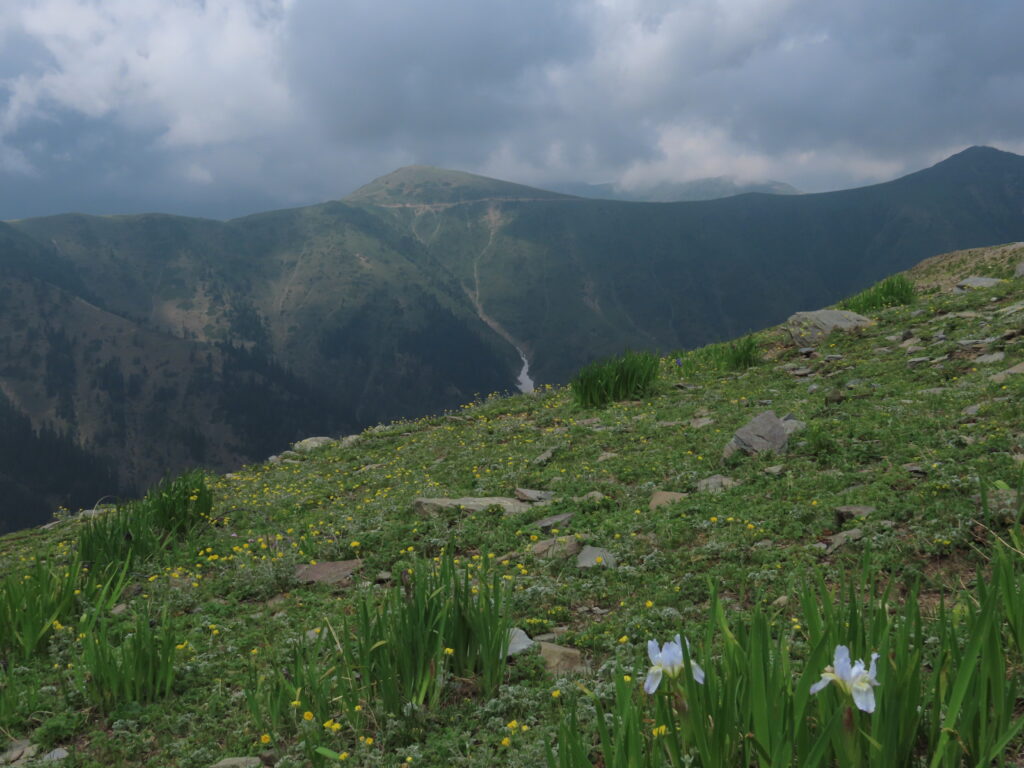
The colour of spring

A passing drizzle makes us skip halting at the Pir Baba’s shrine. Razdan Pass, the gateway to Gurez, lies buried under snow for months but summer makes it melt to make way for grazing sheep and, as we stop to discover, fields of wild iris shaking in the icy winds that blow the clouds across. I spot white iris for the first time. Then the path descends past birch trees growing at crazy angles. Lower down, frozen streams fill the folds in the mountains and a few tents mark the dwellings of the Gujjars. The valley narrows till we cross the dam on the Kishanganga river that gets renamed as soon as it crosses the border.

Another river story Along the Lohit on the Long Road to Walong
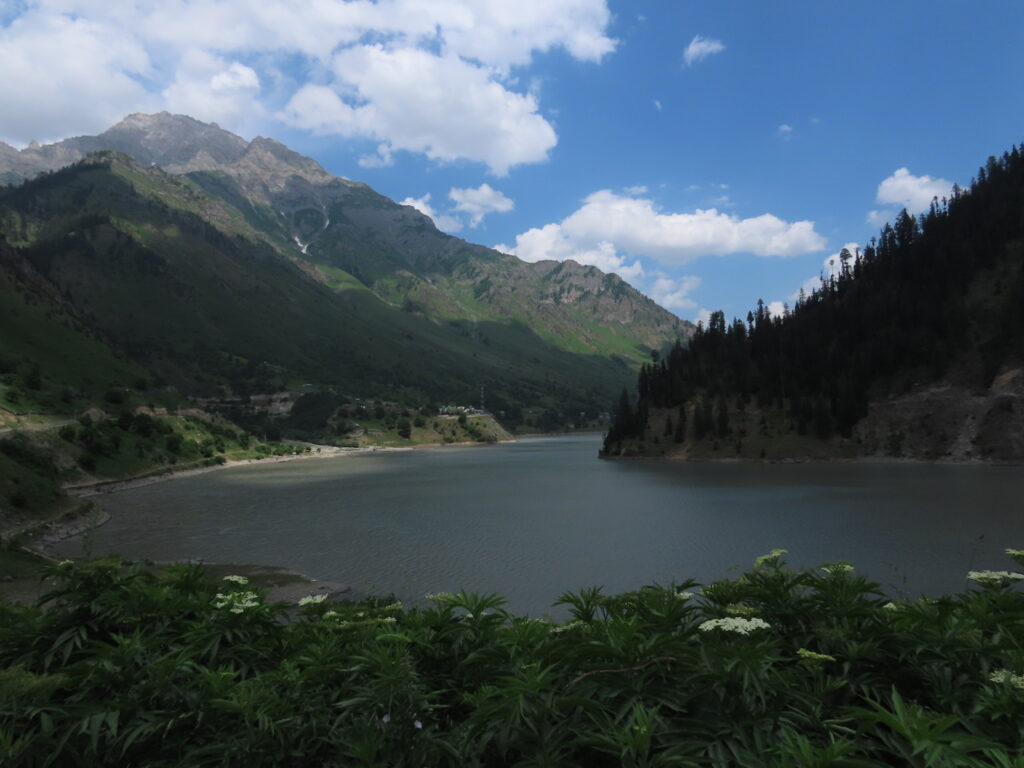
Well, I’ll be damned!


The Vale of Vistas

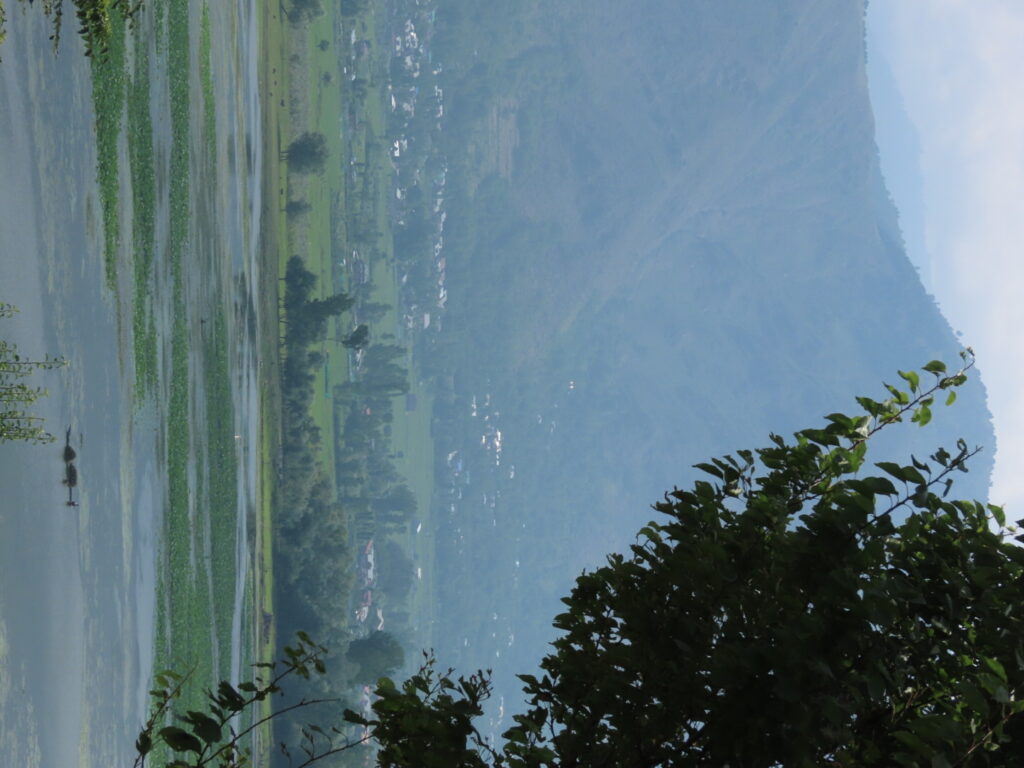
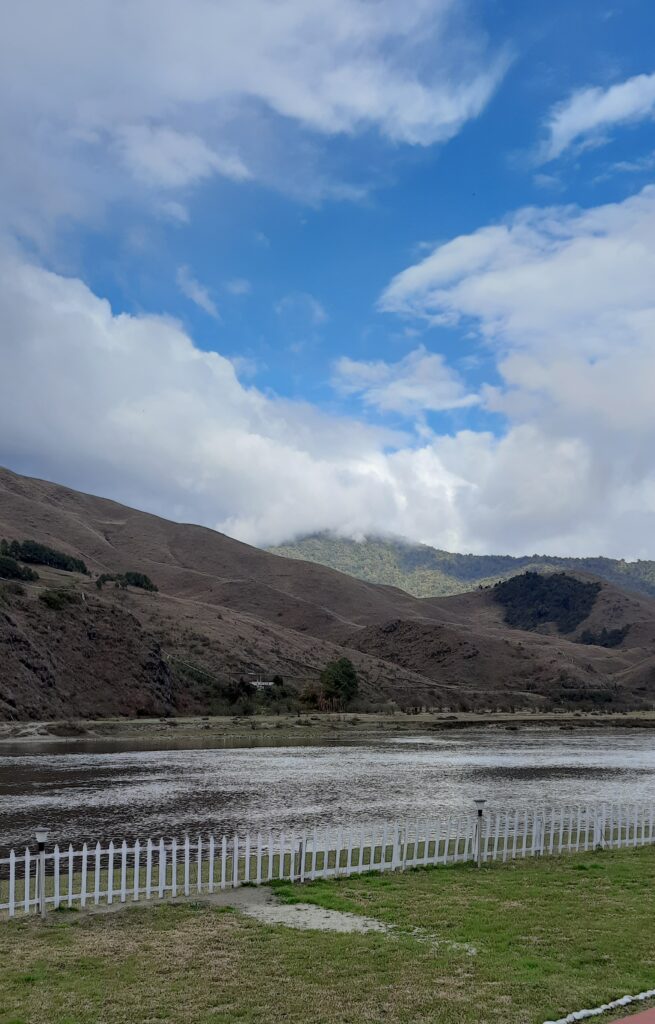
A boomerang shaped reservoir cradled in the nook of a steep mountain range, lush green with craggy tops, has come up because of the dam. Gurez valley stretches between the ranges in a perfect U till the famous ‘Habba Khatoon’. It stands seemingly alone at the end, surrounded only by lore of the tragic poetess-queen who lent her name to this perfectly conical rugged mountain.
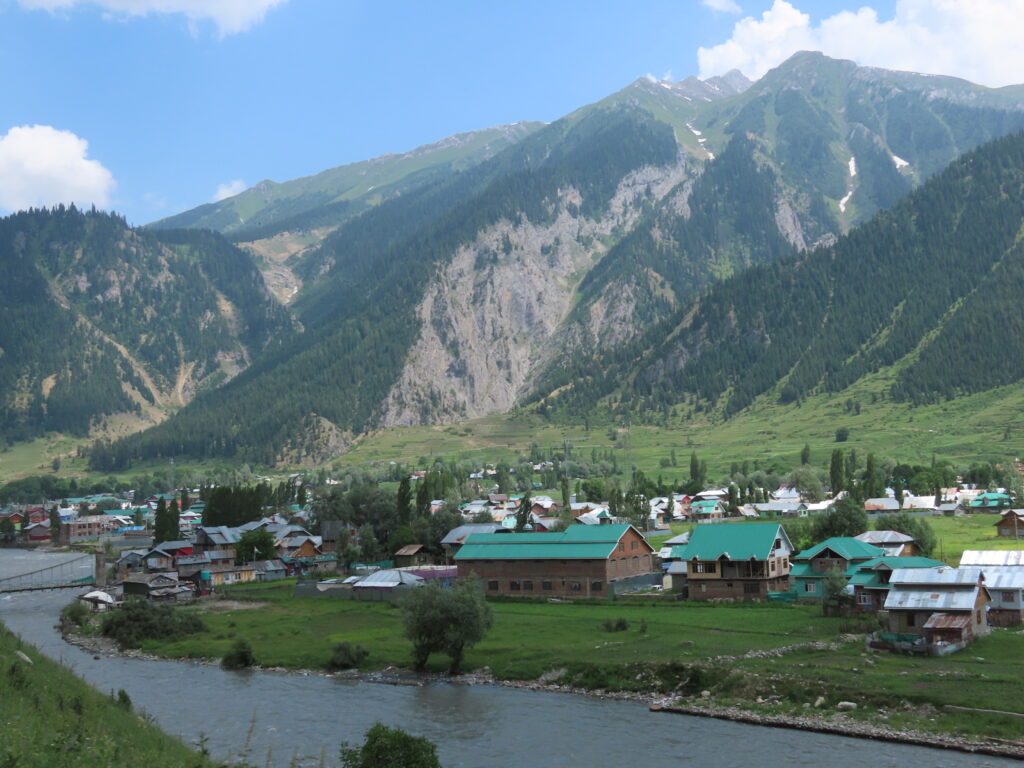
Vale, Village, Vistas.

She wandered in the valley and up the mountains when her husband, Yousuf Shah Chak, the ruler of Kashmir was taken by Akbar to Bihar, never to return. In between lie small hamlets surrounded by fields and the overgrown village of Dawar, by the side of a rushing river. The mountain side is covered in patches of thick forest topped with rocky peaks with massive overhangs providing a perfect habitat for bears and other animals.

Read about Discovering Dibang Valley, the Last Frontier

Relearn the Art of Rambling

The plan at Gurez is to not have any plan. Just be!… And ramble…..Take off in any direction…  up the hillsides, into the bylanes of Dawar. We reach late in the afternoon after an easy journey of about six hours. The weather has packed up so our afternoon walk plan gets shelved. In the mountains, man proposes and weather god disposes! So, we take a drive up to a Kandiyal Top to see the sunset. It is on an outcrop with a ringside view of the days last rays coming through a perfect V in the mountains and light up the lake or like today, let the clouds stream in. Then we ramble down the road savouring the beauty around. The weather is perfect for a cup of coffee at the tiny wooden café in the middle of town. The bakarwal dogs outside charmingly beg to be fed. The play of light and colours flit on Habba Khatoon’s stony face. Nothing like heartbreak or sublime surrounding to turn one into a poet like the queen. (No chance here!)
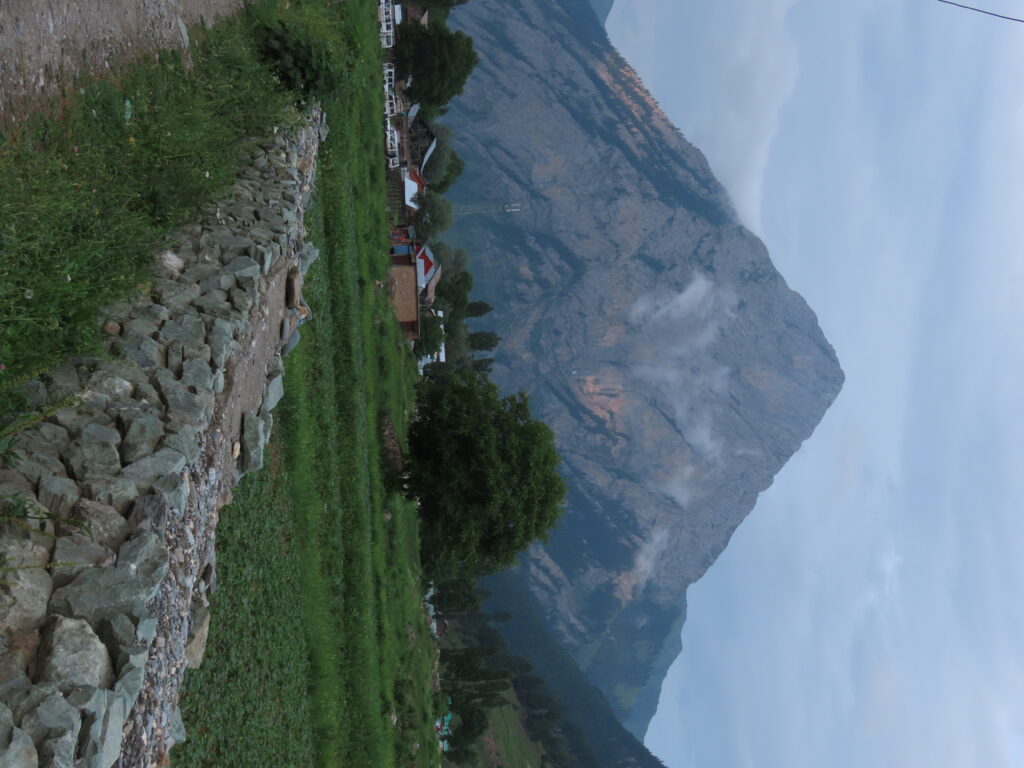
Stone -faced Profile

Next morning after a short drive on the road to Tulail we cross the river towards the spring at the base of Habba Khatoon. The weekend crowd is more of a dampener than the cold water and we turn back to the village enroute. Ditching the vehicles we walk along the steep mountainside dotted with walnut trees and wild daises growing near a village of old wooden houses. The people in this valley are Dards with their own language. A memorable morning of socializing ensues.
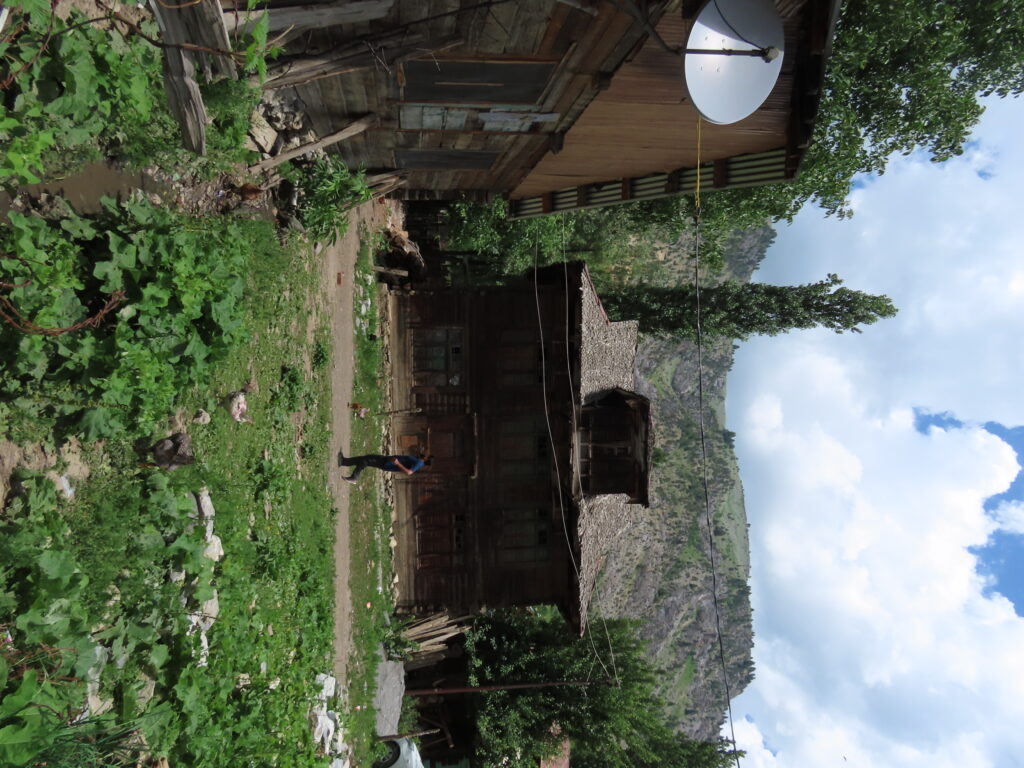
Vintage Village


The Legend of Kheer Bhawani

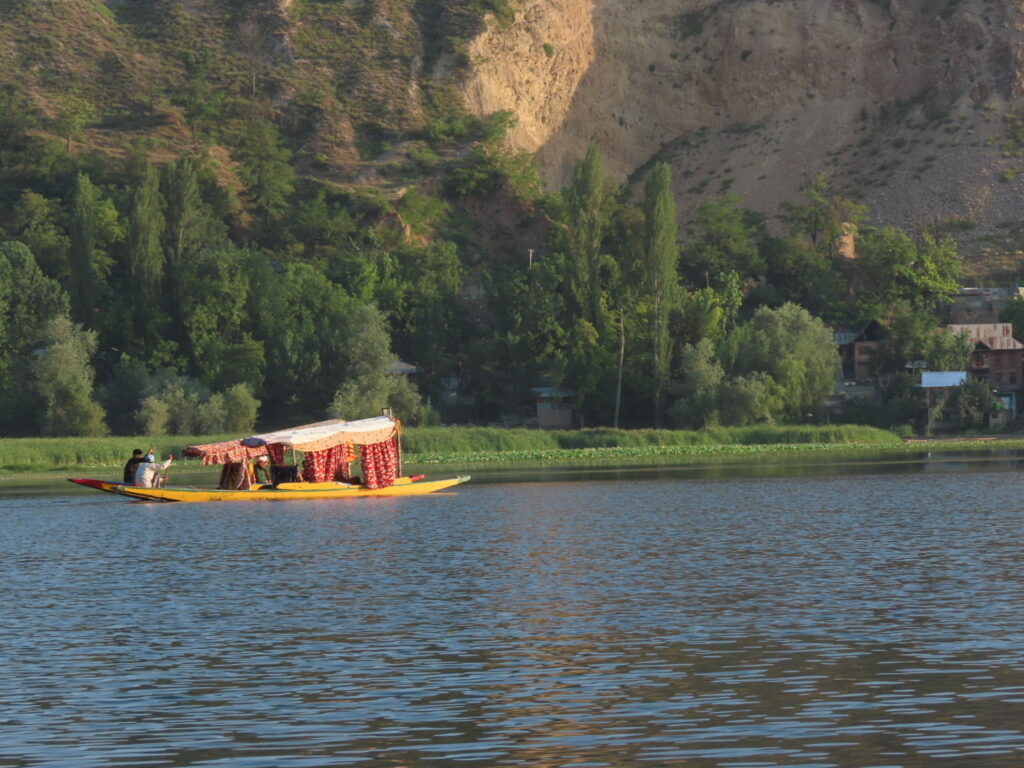
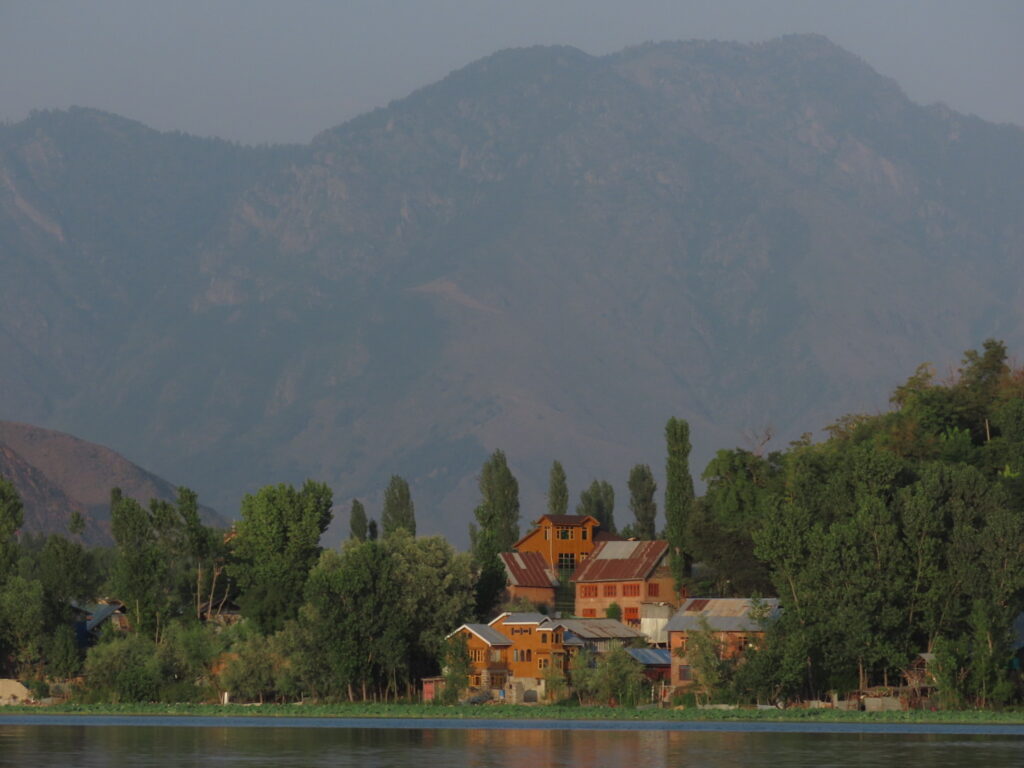
With an evening to spare after a pilgrimage to Amarnath is done and dusted (and literally how!) we close the trip to the valley with a visit to Kheer Bhawani. Winding through fields of green paddy braided with tiny streams shaded by weeping willows we made our way to the temple of the goddess. This area was more of a marshland once. Streams that web their way around still have slim shikaras moored here and there.
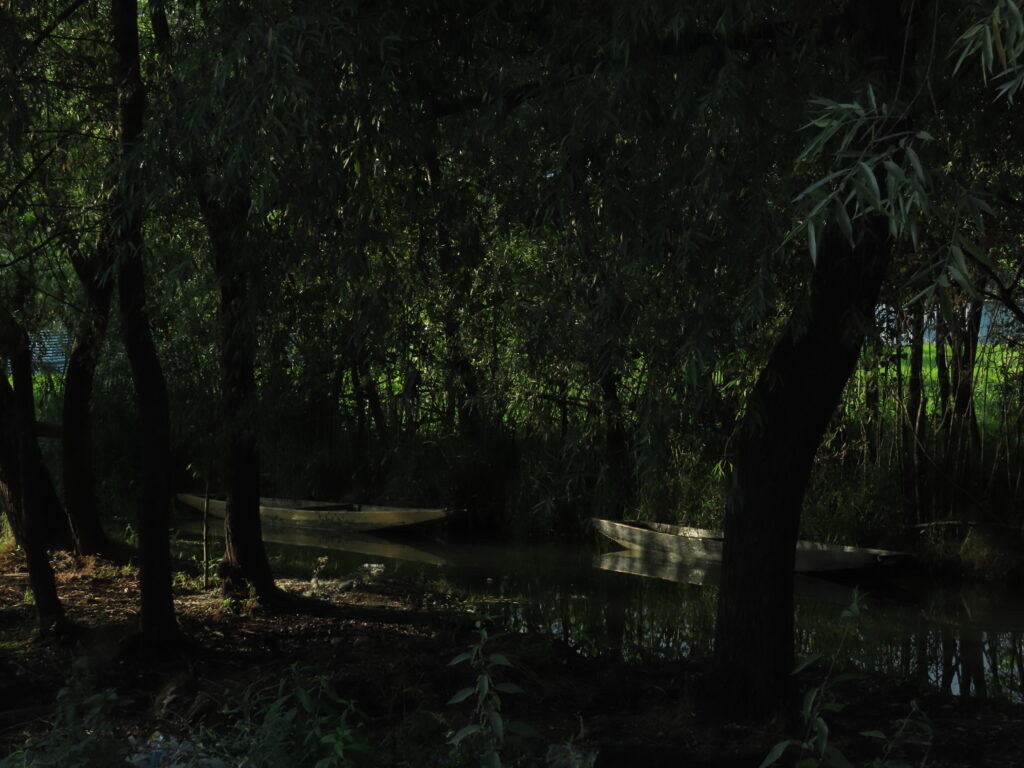
Water Ways

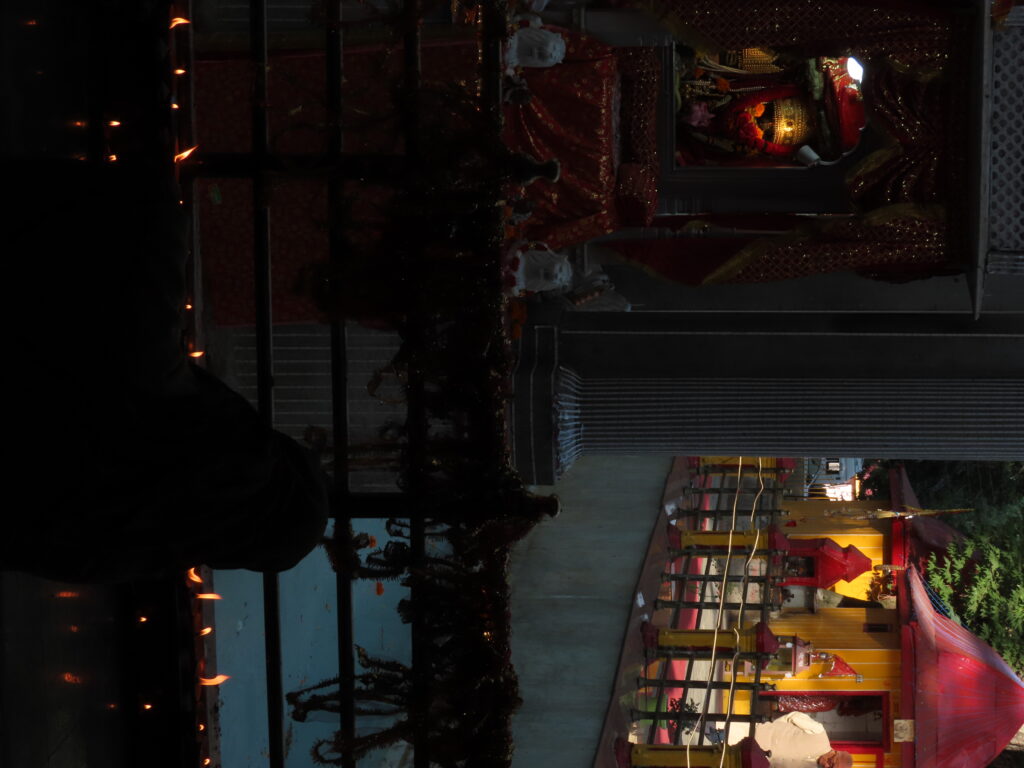
A woman rows one, laden with provisions, in a stream that disappears into the backyard of houses. The route ends in the middle of Tulmulla village square after crossing a bridge. A massive red gate and wall surround the complex of the goddess. Inside small shrines dot the central area, and in the middle, surrounded by towering white bark chinars, lies the colour changing sacred spring from which the statue of Sheer Bhiwani and a shivling, their origins lost in antiquity, were discovered at some point in time. Now, in the middle of the spring a tiny ‘temple’ houses the goddess where she has the place of prominence. Through the water changing colour she portends the luck of the inhabitants of the valley. When we enter it is icy blue and then milky white. During the 1947 and Kargil war it turned black and during the recent pandemic red.
Divine Diviner

I made quite a pest of myself with the sister organizing the trip. Haranguing on about going to Gurez. A tiny valley still untouched by mass tourism and crass commercialization. To do what? Relearn the art of rambling! What followed was a trip to an other world of charm and tales.

Fact File

Distance

Srinagar to Dawar- Approx 137 km.

Srinagar to Kheer Bhawani- Approx 22km.


Best Time to Visit

Gurez Valley- May to October. It still remains cut off in winter.
Kashmir with a Cup of Kahwa

Off beat places are dead. Long live offbeat. There is no place where someone has not already travelled to, written about and in this Insta driven world, posted pics of and gushed about. But what can still be exceptional are the experiences to be had amidst the crowd. Remember, kahwa is not everyone’s cup of tea!

Throwing shade on Eden

On a recent trip to Kashmir Valley, the clichés were clinching. It is the proverbial garden of Eden complete with its own orchards (literally), not just a tree, of enticing apples! A land blessedly bountiful…from snow fed waters, to magnificent mountains, fruiting trees growing wild, handsome houses and their beautiful inhabitants. But the valley was drowning under a deluge of humanity (I was a drop too) trying to beat the heat and the only things melting faster than the people, was the snow on the mountains. So how does one immerse oneself in paradise when it is overrun by people?  You have to own your own experience, to make memorable moments. Do a ‘In Kashmir do what the Kashmiris do’… and then some!

Because a shikara is more than a boat.

Go the Distance in Gulmarg

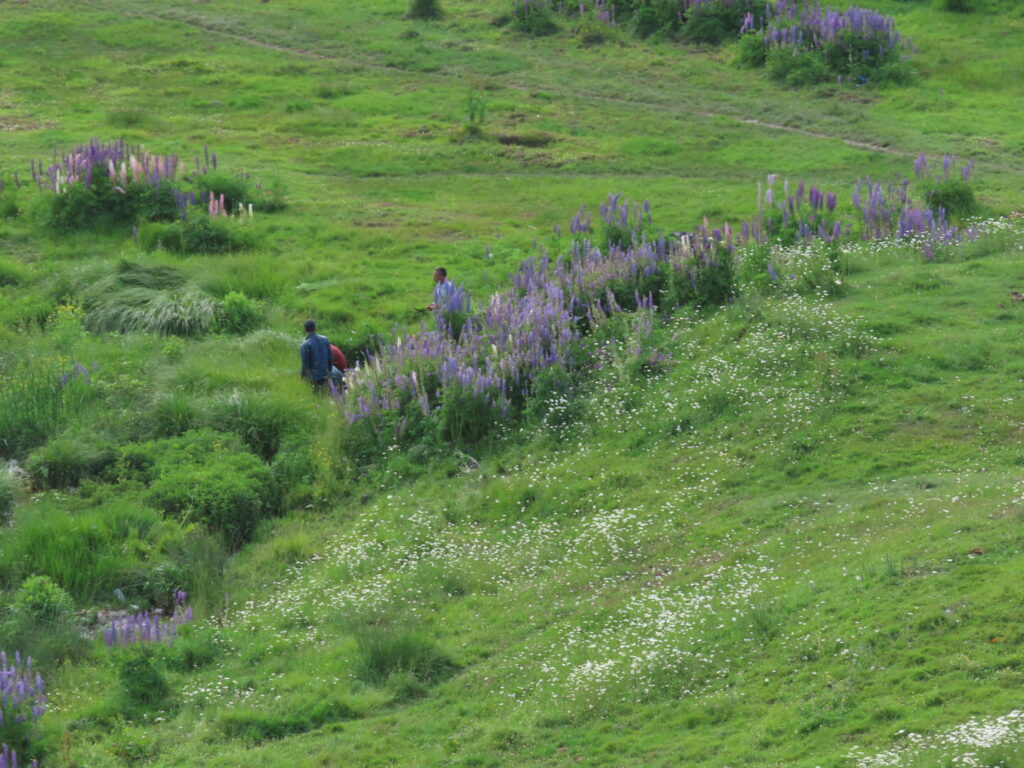
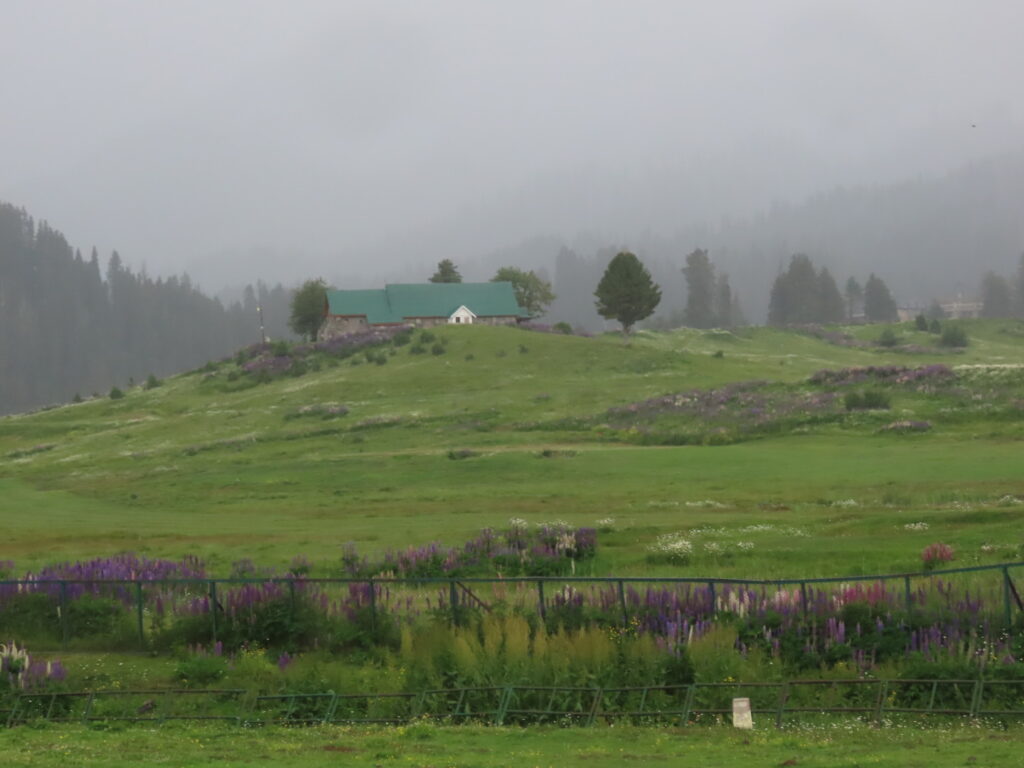
I did not want to go to Gulmarg. Been there, done something (it was decades back, so not like I remember any of it.) But mostly because everyone has the same idea. Sure, the rivers of amethyst-shaded lupins in full bloom, running down the folds of the gently undulating meadows with the picture-perfect little St Mary’s church on a mound in the centre, are a visual delight. Not to mention the wild carpet of daisies that grow under the towering conifers everywhere.

Dream a Lupin coloured stream.

Read about other churches in- 3 Churches in Mhow: Discovering Obscure History and Outstanding Carols 

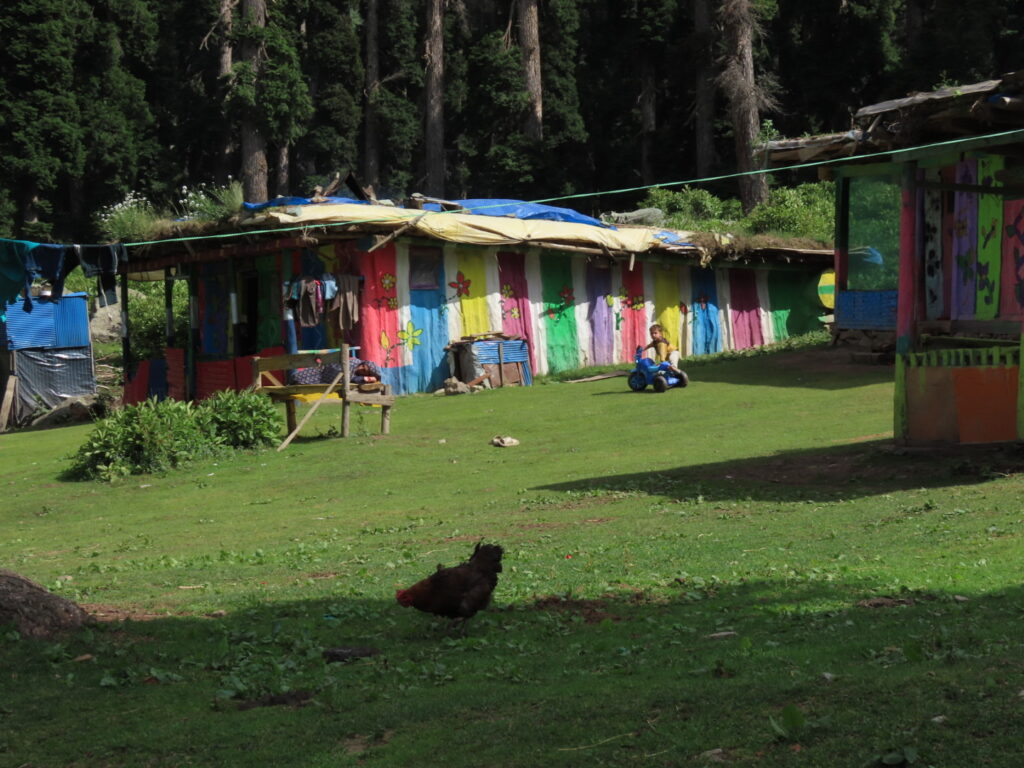
But leave the hordes and drive beyond Gulmarg on the Bota Pathri Road and in between the thickly forested patches, shading shallow streams running around moss covered rocks, are the settlements of the Bakarwals. The flat roofed ‘kothas’ are gaily painted in stripes of bright colours and look as cheerful as their inhabitants.

Colourful Personalities

These are the summer homes of this dying breed of nomads, who migrate to lower pastures lock, stock and barrel when these regions get buried under snow. As soon as we halt, we are surrounded by a group of chatty teenage boys while couple of younger girls hang back, more reticent. The boys are now enrolled in school somewhere. A woman snoozes on a bench and an old man watches us curiously from afar. Someone has opened a chai shop at his place and put up a fence. Soon the roots will grow more permanent and this nomadic lifestyle will be a lost story.

Happiness has a face.

Walk through this life in- Tarsar Marsar : Memoirs of an Escapade


Ditch Dal Lake, Waltz ahead to Wular or to Manasbal Lake

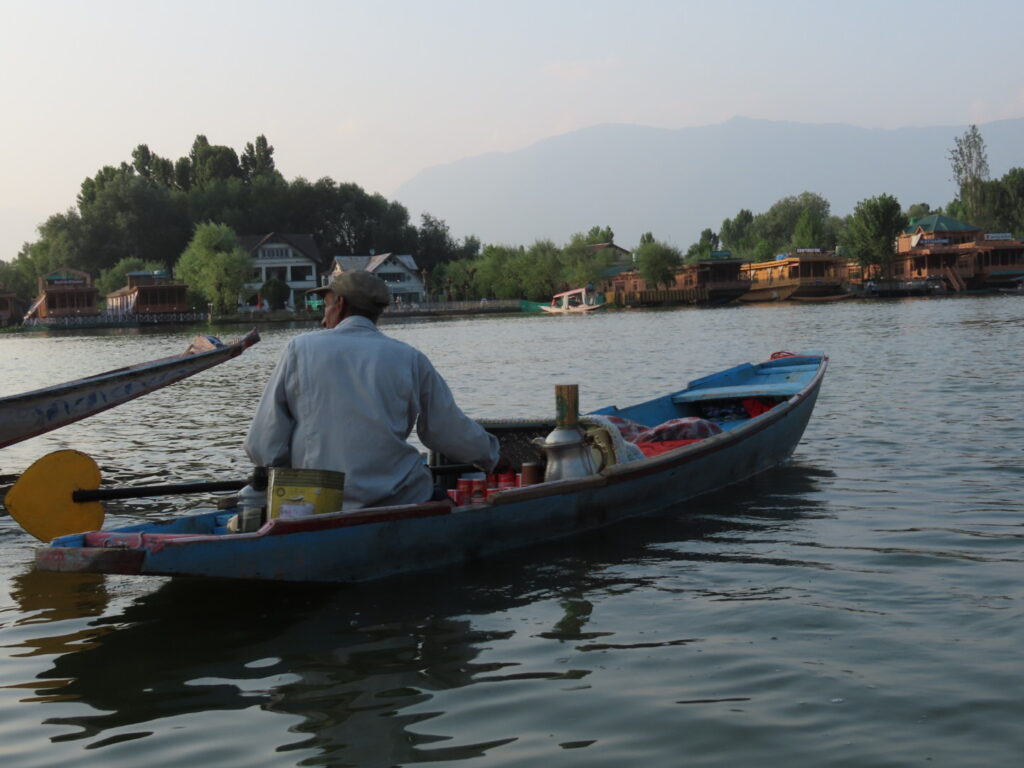
The saving grace of the shikara ride at Dal Lake were the shikarawalas. Witty and charming, they kept us entertained but took us only that far into Dal whose waters seem to extend across most the valley floor. But what we traversed was just a tiny inlet lined with houseboats and swarming with shikaras. I tried dipping my fingers in the cool waters and was hesitatingly told it was best avoided. (No sewage filtration!)

A Vintage Village

Discover a lake like no other in- Pangong Tso – The Gems in the Crown

For a more peaceful experience head to Manasbal lake, cradled by bare mountains, with it’s lotus lined waterfront and get a glimpse of vintage village life from a boat. Here narrow alleys lead from the waterfront to houses huddled around mosques with multi-tiered roofs. In the park adjoining the lake, families spend an evening out in the lawns, eating giant baturas from the stalls lining the road outside. An ancient temple lies submerged in a lined pond close to the lake with only the top of its shikhar above the water. Head further to Wular lake, more expansive than the Dal and a Ramsar site. Watch, from the Vantage garden, geese line themselves up perfectly in a row in the water or see shikaras laden with mounds of lotus stems for that yummy nadru being rowed back from the waters fed by the Jhelum river.

Workplace

Read also- Loktak, Keibul Lamjao and Ima Market- The 3 Must Dos in Manipur


The Best Kept Secret are the Bakeries

Heaven must smell like a bakery! One of my most abiding memory from an earlier trip to Srinagar was the smell emanating from a line of bakeries. Warm, rich and utterly enticing…The coconut macaroons (haha yes!) were the best I’ve ever eaten! Coconutty crisp sweetness!! The countryside in Kashmir might be luminescent with fields of paddy but on the plate, there are local breads and savouries of all sorts from the local bakeries or Kandurs as they are locally called.

That is the way to have tea!

From a crumbly sheermal, with that sweetened chai to a soft doughy katlam that would go down well with coffee (in my mind), ditch the packaged produce and walk into a local bakery and ask the baker what he’d recommend. You’ll probably be offered some to try out, if you butter him up well!

Savour- Satiating Nostalgia Under the Winter Rain at Junia


Place for a Picnic

In Kashmir, you don’t need to look for a place to picnic. A picture perfect patch lies at every curve and corner. Be it on a slope beneath dark deodars, in an orchard of ripening apples (better ask for permission here), under a shady walnut tree growing wild or beside a river running riot or high up on a grassy wind kissed mountain pass, take a mat or like the Kashmiris do-a carpet (they have enough to spare!) We crossed families doing a cookout or with a giant samovar for rounds of tea, enjoying their day in the sun. Outdoor is the place to be in the Valley but remember to leave no plastic behind.

Pray for paradise answered


Read- A Tale of Two Veiled Valleys: Part I- Shangarh’s Meadows are meant for Musing

Kashmir is a place to commune with nature. It is a sensory feast, a visual wazwan… and That is the exceptional experience to be had in whichever manner in the Valley. Even in the midst of the maddening crowd there are spaces for silence and solitude to be savoured with that cup of Kahwa. Discover yours!

Discovering Dibang Valley, the Last Frontier

Loud woops suddenly rend the air as we climb towards Mayodia pass. As I jump from the vehicle with the camera the driver, as excited as me, says ‘van manush’, literally tree man or ape. A Hoolock gibbon! Through the thick greenery I spy a black shape swing adeptly on the vines draped across the trees. The call is returned from above the road. In the end though, all I get is a blurry shot of a black face and the unmistakable white brows! (soon enough there was an opportunity to be within touching distance of one…another story for another time) We are off to a good start into the folds of Arunachal again.

Read-Along the Lohit on the Long Road to Walong

The last frontier.

Gateway to Heaven

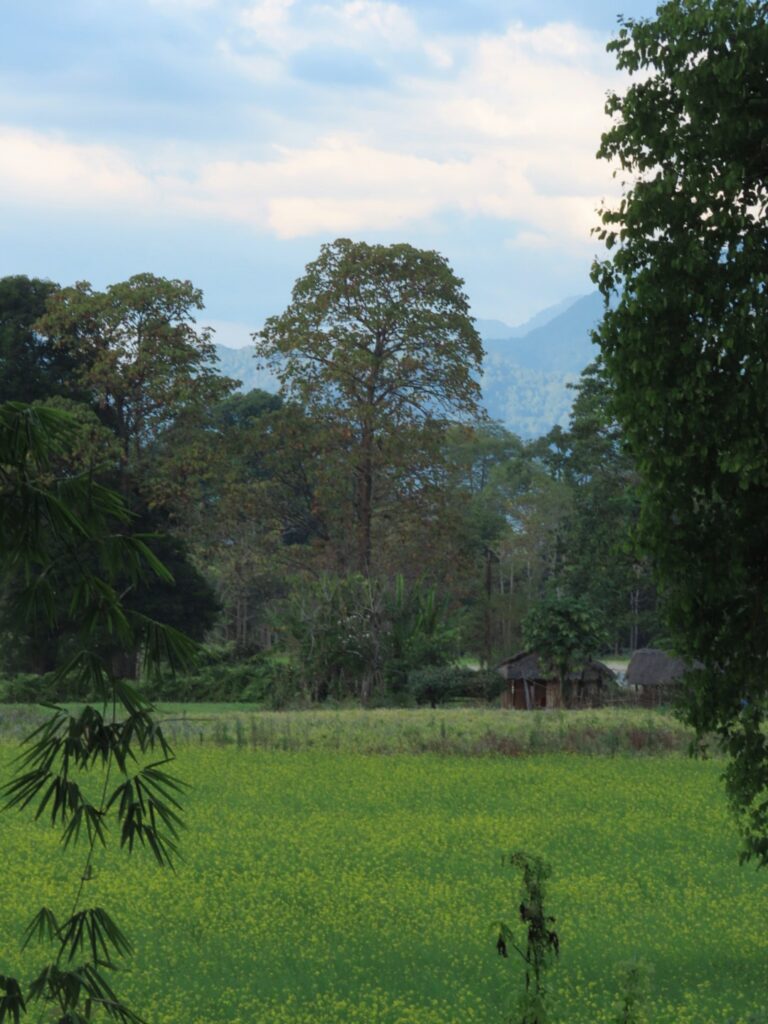
Anini, deep inside the Dibang Valley, home to the Idu Mishmis, has been on the itinerary for months but the year and the season are coming to a close when we cross the Dhola Sadiya bridge over bleached sandbanks of a drying Lohit. Past mustard fields a mellow yellow green and silver tinged bullrushes.

Dream in mustard yellow.

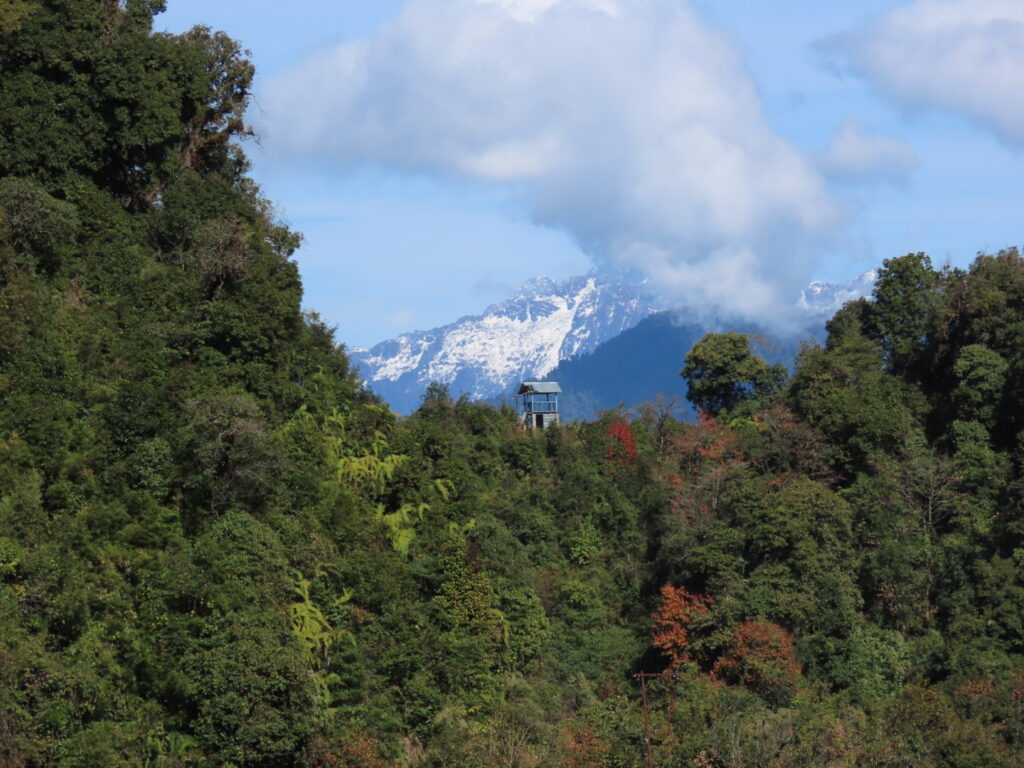
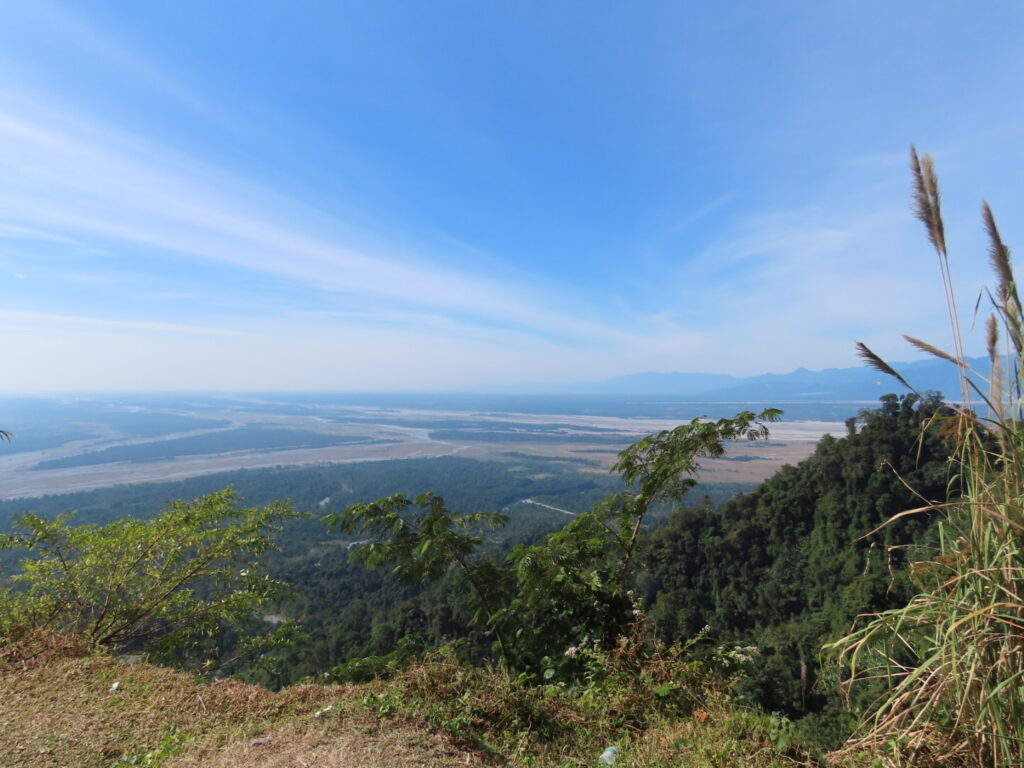
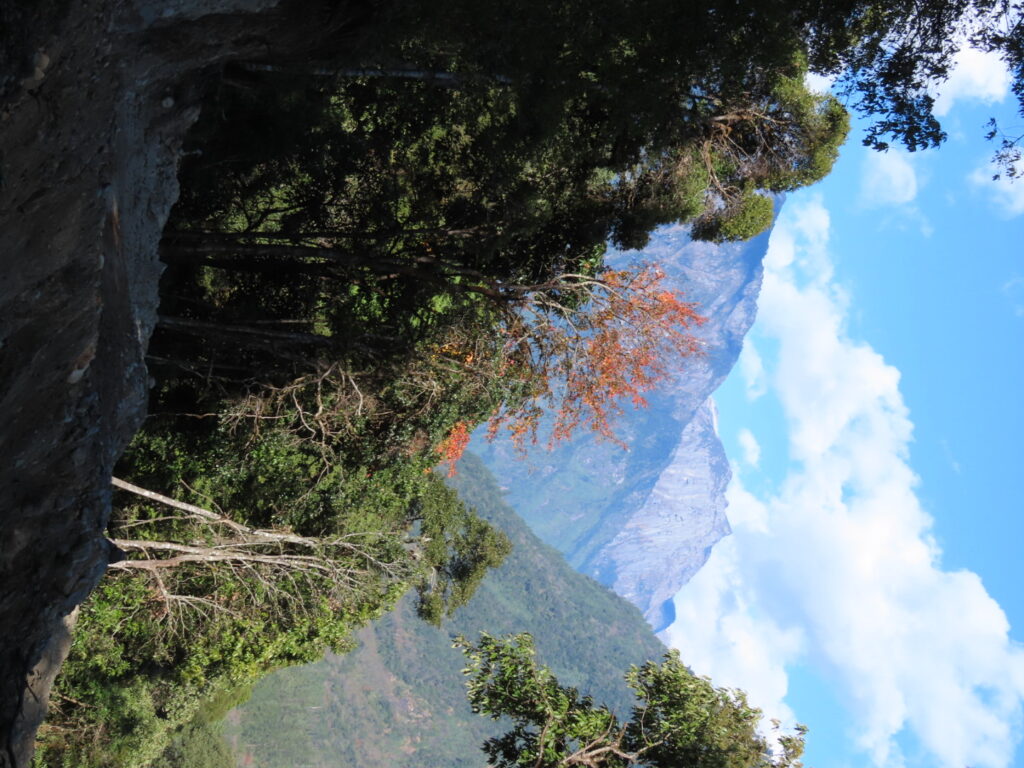
In Roing, the Christmas stars are off the shop shelves and on the neat houses lining the road. We climb an invisible road to Mayodia pass, the go-to-place in winter for snow for the Assamese around. It is well camouflaged by the thick foliage as it snakes up the mountain. On one hand of the pass the Lohit, Dibang and Siang merge in the hazy horizon to form the mighty Brahmaputra and on the other extend snow capped ranges and deep valleys like crumpled paper till Andra La on the northern border with Tibet and somewhere in Upper Dibang lies the lost Pemako, the ‘promised land’ of the Tibetans. Into this remote fecund land we descend after a perfunctory stop to take in the clouds flowing down like water over densely forested ranges.

The making of the mighty Brahmaputra.

The village of Hunli is visible at the bottom on a shoulder seemingly in a face-off with drawing book mountain rising from the depths with its arms outstretched, every inch covered in thick forest. At Hunli we nearly take off towards Hayuliang on a shiny new road since there is almost no signage pointing towards Anini. It is a long drive into the crumpled ranges along the Dibang. By the time we reach Anini, Orion the Hunter is rising and has one boot on a peak and his belt looks like a three star tower. So close to the clear heavens!

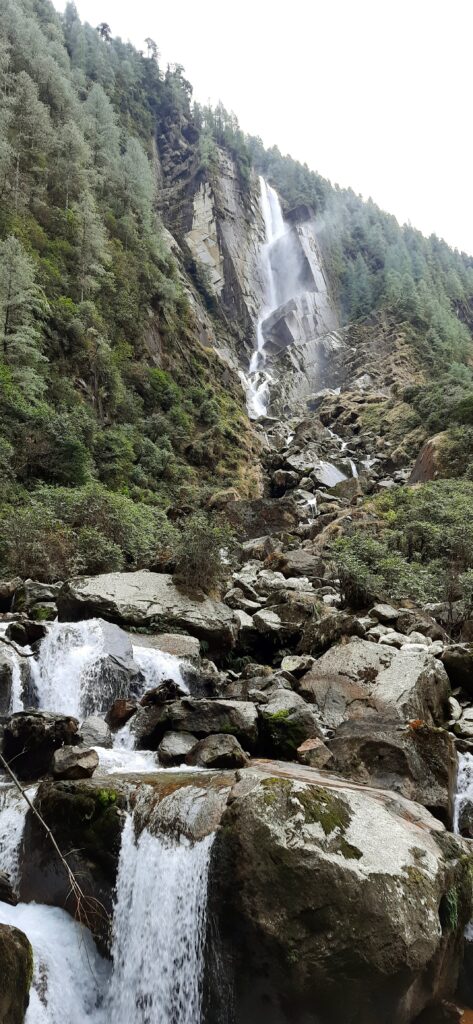
Tall Mountains and Towering Falls

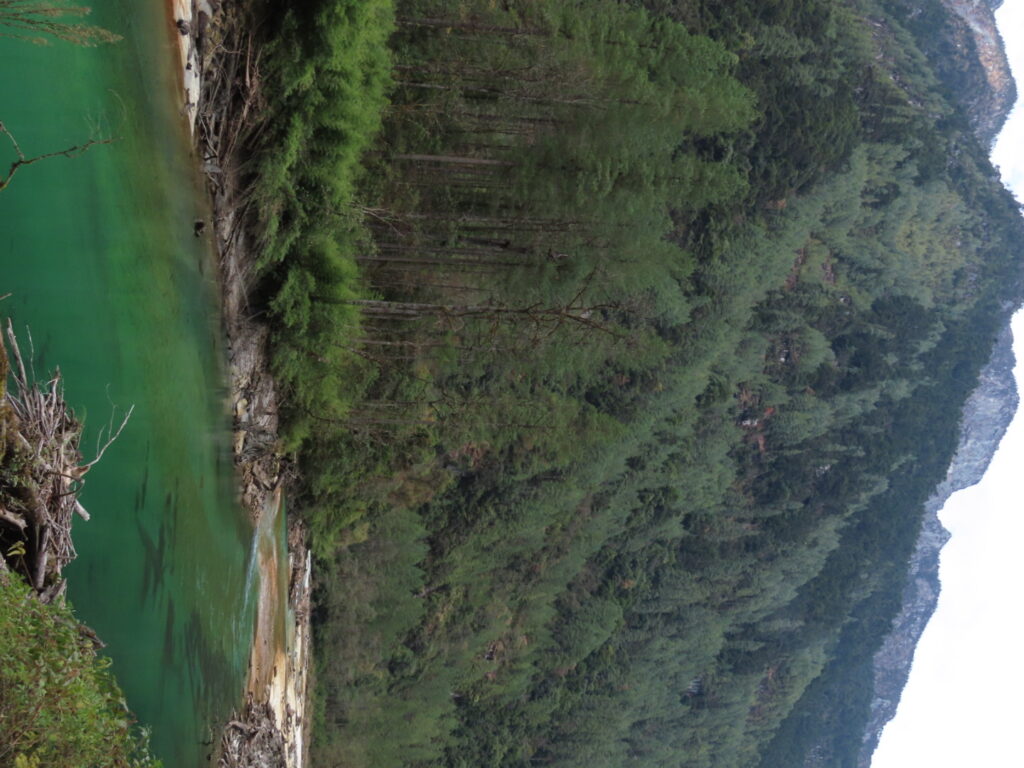
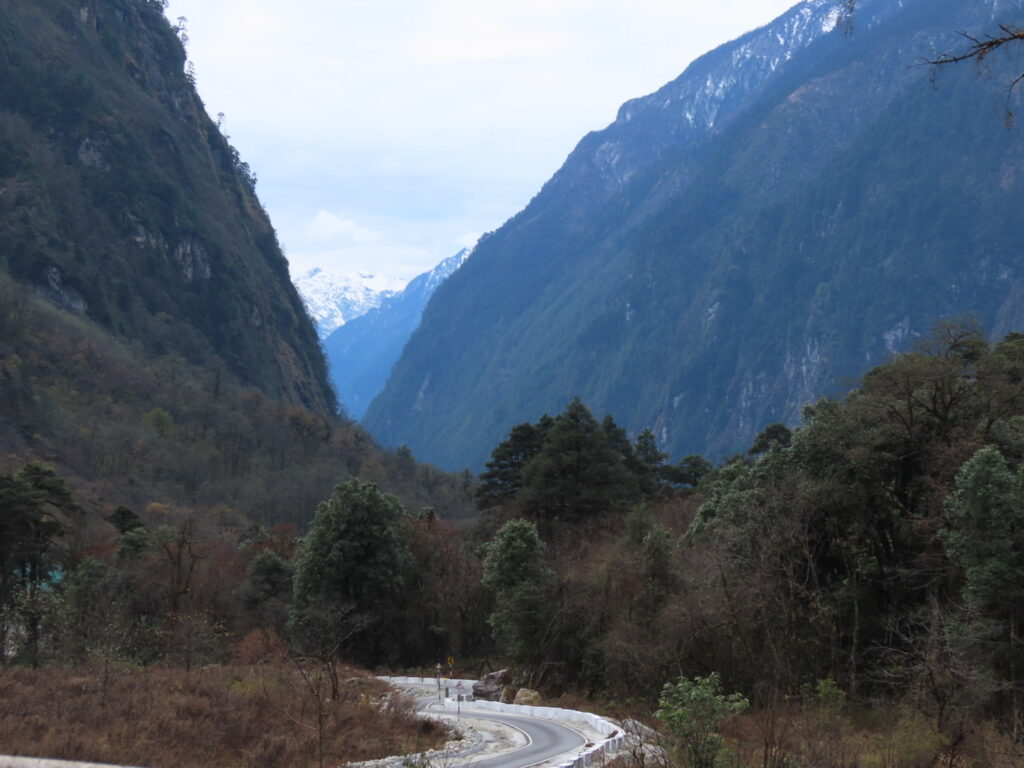
Anini sits on a plateau at the confluence of two rivers draining two valleys. Dri, the picturesque Angrim valley and Mathun, a narrower namesake. It is a small town and a district headquarter. After a night in near freezing temperature, it is an early start into the Angrim Valley under a slightly dour sky. A sparkling Dri keeps company, mostly skipping and rushing over boulders, at places resting calmly in crystal-clear emerald pools cradling sunken logs and fish.

Another river tale is- Barot And the Serendipitous Catch in the Uhl River

If emerald were a river….

The valley rises gently and after Acheso village it widens into a rolling meadow of copper ferns. One can only imagine the greenscape it would be post monsoon. Soon we are deep inside the Dibang Wildlife sanctuary. Waterfalls dot the mountains as the valley narrows and we reach the Insta famous Chigu resort on a massive sandbar. A healthy respect for rivers in the mountains and the need to keep them at a distance is so ingrained that being on a river bed is a little disconcerting. After the customary photographs (it is quite a picture with the wooden and red roofed alpine huts on wooden platforms with the towering Chigu Falls and snow peaks as backdrop) we head for the Mawu Aando Falls.

Sculpted by Nature

The short walk to it is a teaser of what hiking in these parts would be like. Walking on fallen mossy logs, climbing root steps takes us to a waterfall where the mountain looks like it has been chiselled precisely and at perfect angles by a machine. A thoughtfully made wooden platform and a low bench faces the water flying of the rockface. A place to meditate! Back on the road the drive ends abruptly a little beyond Brueni. There is only a wild forest of towering pines and boulders but soon it will give way to man and his machines.

On the road to ruin.

Dream Ride along the Dre

Our plan is to cycle back from Brueni to the Dree-Afra campsite. I test out the brakes (the only things that matter!) before we roll down. Off we go in the bracing cold which makes my eyes water. It is an exhilarating dream run on an excellent yet nearly deserted road. Down a narrow valley enclosed by snow-capped, thickly forested steep ranges.

Ride through- Cycling in Dehradun – The Best Routes for Leisure Rides

Dibang Dreamscape

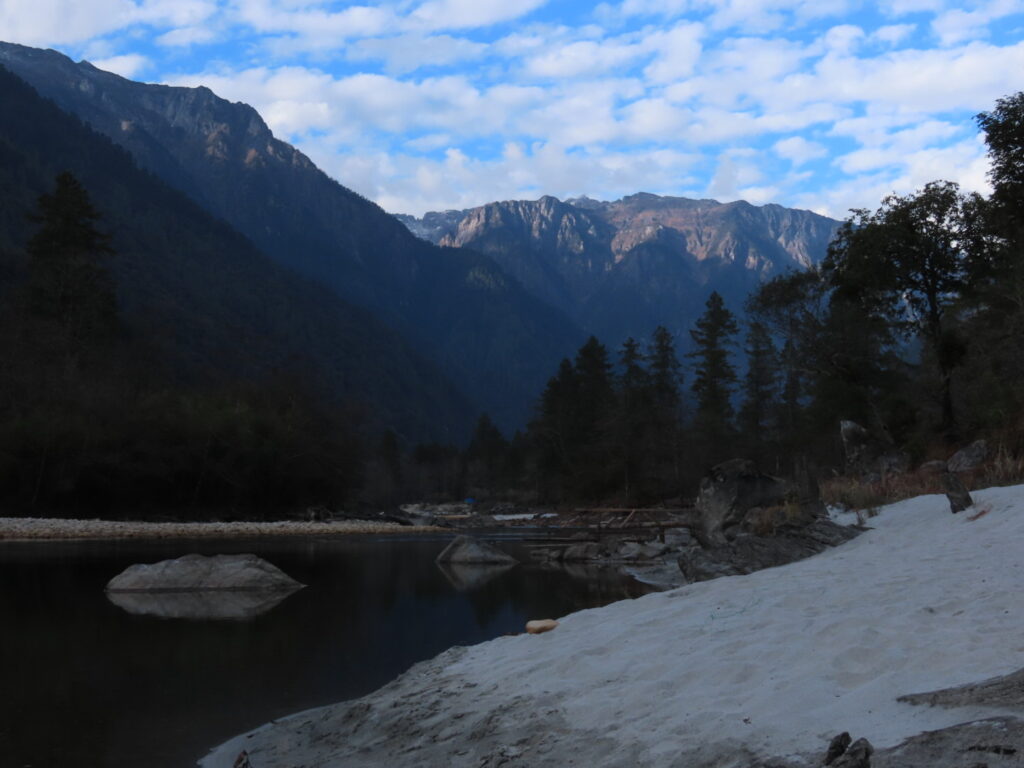
The thirty five odd kilometers end much too soon. I try to take in the fleeting scenery but one needs to keep an eye (watering and wandering!) on the road. A Mithun moves ruminatingly on a golden slope as we turn for the resort with it’s white beach for a late lunch. Still waters mirror the mountains and clouds. Redstarts quiver around on the boulders. With the light fading the cold returns with vengeance.

White sand and serene water.

Holy Night

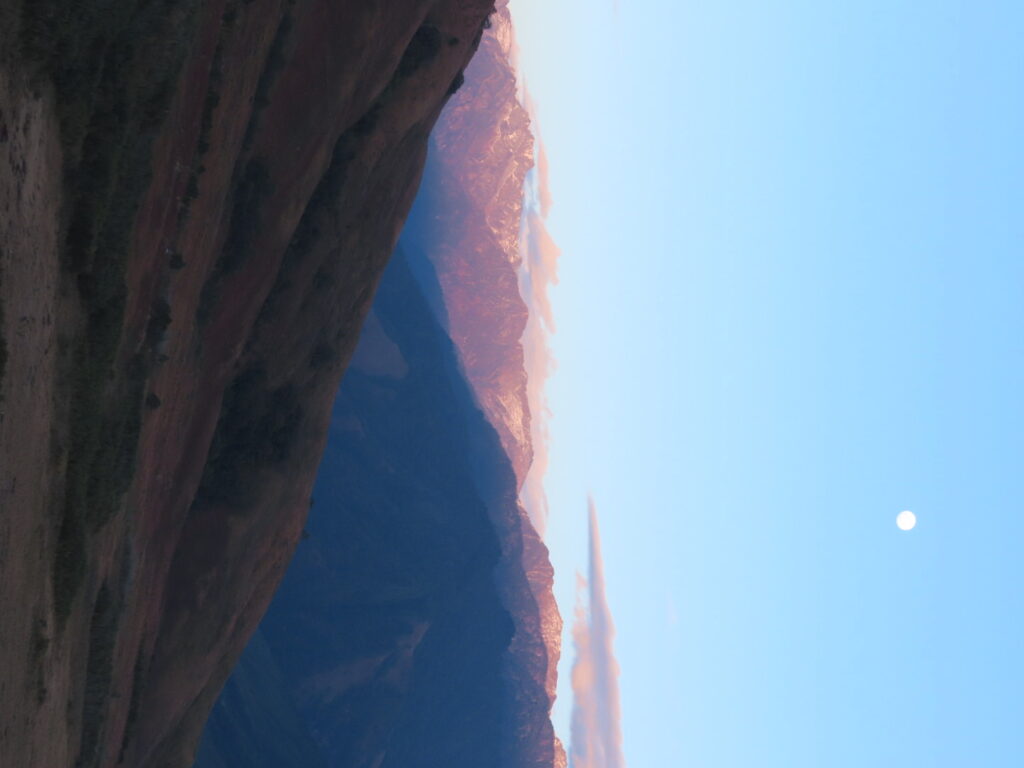
Back in Anini, from the heights above it, in the descending dusk, we watch a falcon hunt it’s supper before a silver full moon rising above the pink snow peaks leaves us starstruck. Being Christmas eve, we are treated to carol singing by a group of locals who with their innate musical talent and joyful fervour have us singing along soon enough albeit with a limited repertoire. Silent Night is the only suggestion I can give when asked! But what we lack in substance we make up in enthusiasm.

For more carol stories read- 3 Churches in Mhow: Discovering Obscure History and Outstanding Carols 

Moon by the mountains


Women of the Valley

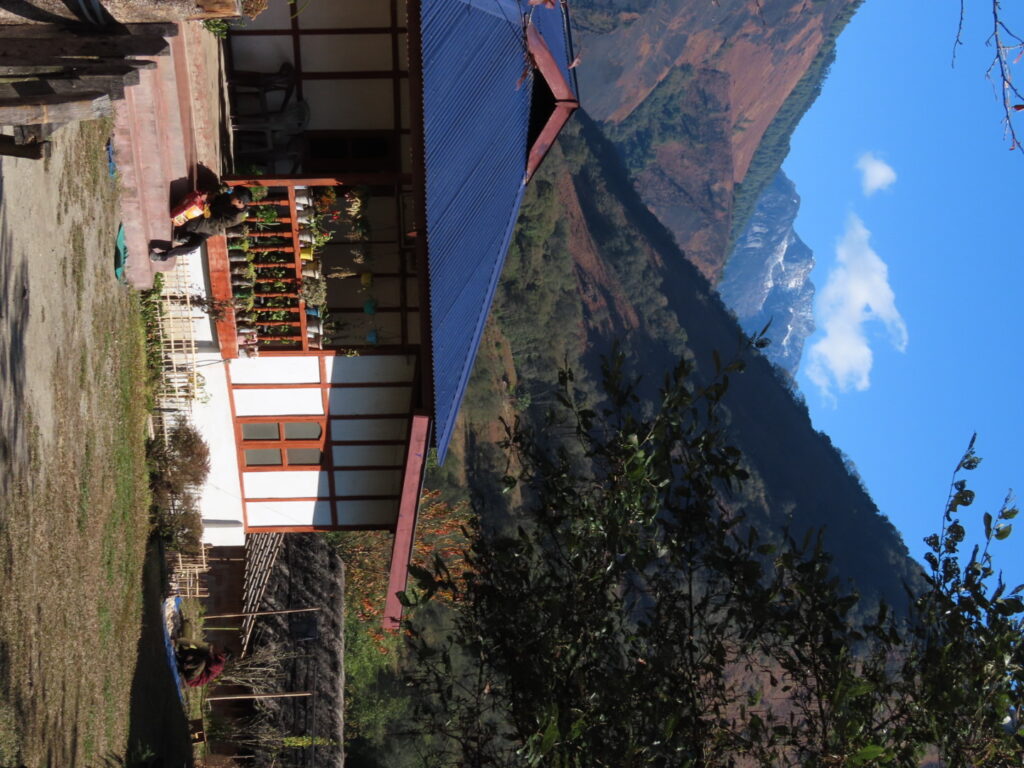
Next day while heading to Matu Fall we cross a small village of barely a dozen houses. Orange trees laden with the tiny, deliciously sweet and juicy fruit and drying vines of Kiwi plantations dot the area. The houses are a colourful lot on low stilts. We walk past a kitchen garden which looks like a miniature edible jungle, wild and organic. The path ends at a house with an open gate.

Picture Perfect Porch

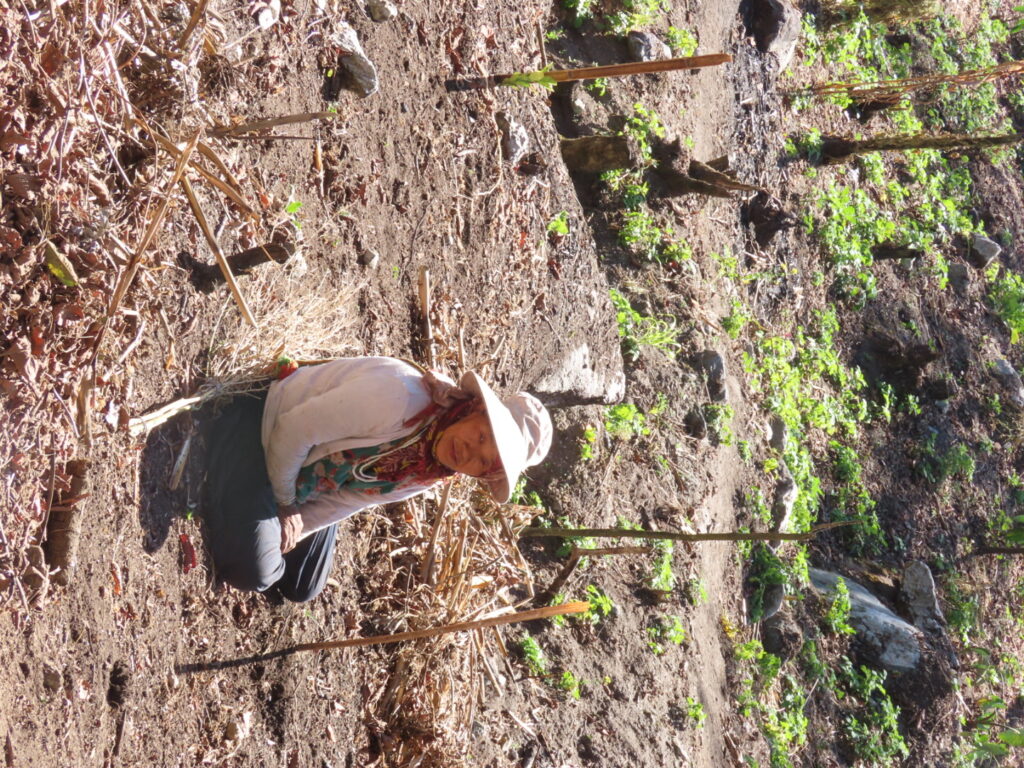
A woman is chopping a banana trunk. Breakfast for the pigs we are told by the grandson of the owners. The lady of the house is supervising and given the language barrier the grandson who studies in Anini and speaks fluent hindi translates. Her weathered smiling face begs to be photographed but she isn’t dressed up, translates the grandson. (haha..I understand!)Mithun horns line the ledge of a small traditional structure outside another house. Ahead in a steep field an old lady painstakingly clears the shrubbery. A smile is a language that needs no interpretation.

Also read- At the Darwaza of a Road Less Travelled

A Lady on her Land.

At Matu Falls a mini dam and a resort is being constructed and beyond, a new road is being cleaved from the mountain. It is a graveyard of massive massacred trees, hacked and strewn. Somewhere up in the higher reaches is the famous Seven Lake trek of Arunachal. Glacial beauties right now only accessible to the few tough and brave enough to venture into this last frontier. Somewhere I hope it stays a ‘Pemako’, famed but lost to man.

Falling water and a climbing road.

Fact File-

Getting There-Dibrugarh(376 km) is the nearest airhead. Tinsukia(326km) the nearest railhead. Then a taxi.

Staying– Dree Afra Campsite offers tents. There are a few simple homestays and hotels in Anini. The Chigu Camp is not operational.

Best Season- October to April.

4 Different Experiences at 4 Bali Beaches

‘Do you want magic mushrooms?’, the taxi driver asks the man on the first day. Taken aback, he takes time to say no. In the back the child and I are rolling with laughter. Does he look like he has them or does he look like he needs to have them? Bali is a destination to unwind but we intend to get our highs diving into Bali’s waters and beaches.

Pondering over Paradise

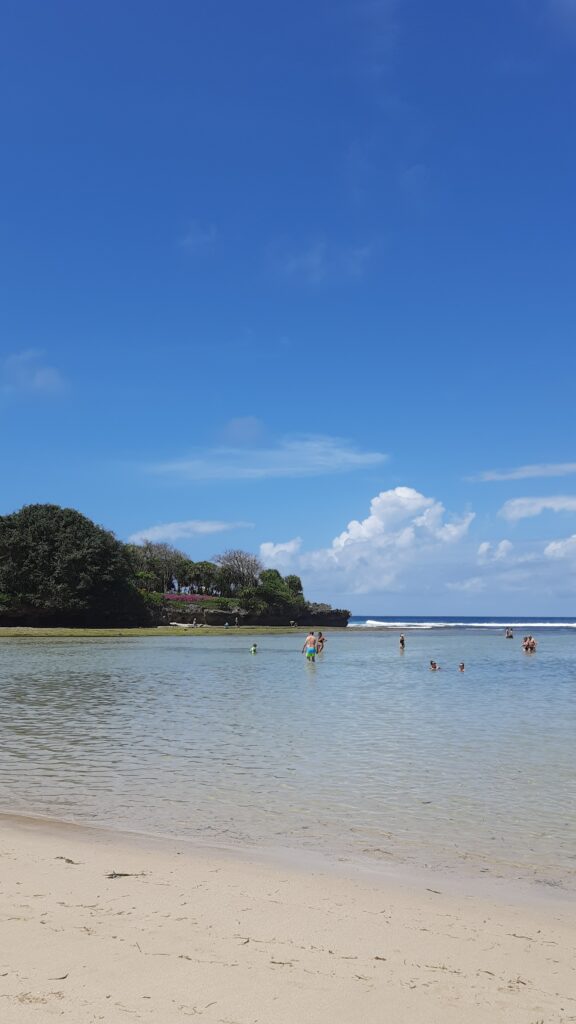
But, researching for a holiday can either be as exciting as the trip itself or exasperatingly exhausting. Like, how does one shortlist which beach to hit and which to skip when visiting an island? Bali, ‘the Island of Gods’, and among the most researched destinations by Indians this year, naturally has them all- miles of broad golden beaches, dramatic cliffs hiding pristine patches of sand, volcanic black sand beaches, white coarse coral ones. So, how to shorten that list?  Each beach offers something exclusive, from swimming, surfing, snorkelling to water sports and secluded idling. Three varied ones made it to our list and we added another smaller island near Bali for good measure. 

Explore-Disconnecting with the World on a Mountain Isle at Shaama

Kuta’s Cool Quotient

Coloured canopies

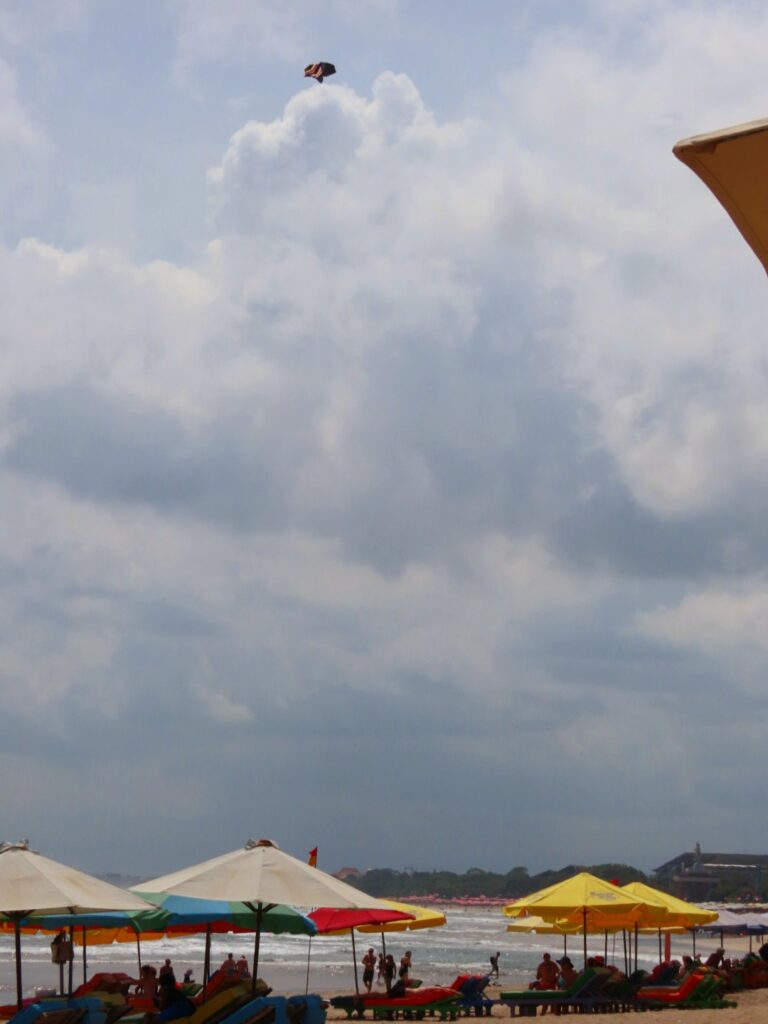
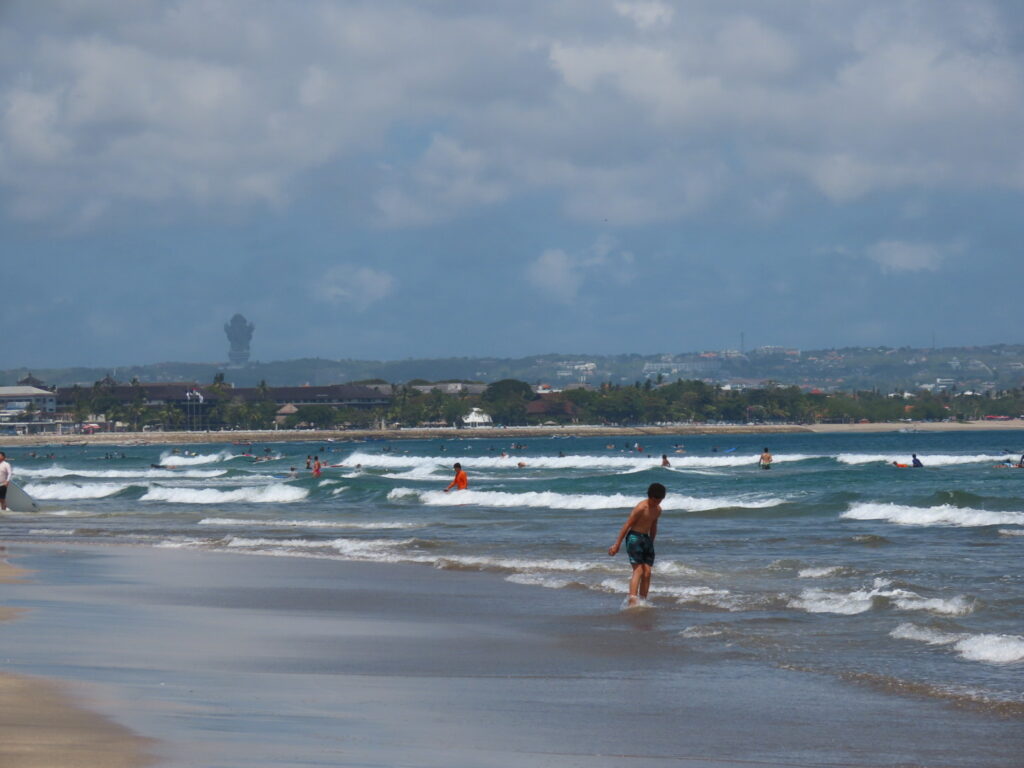
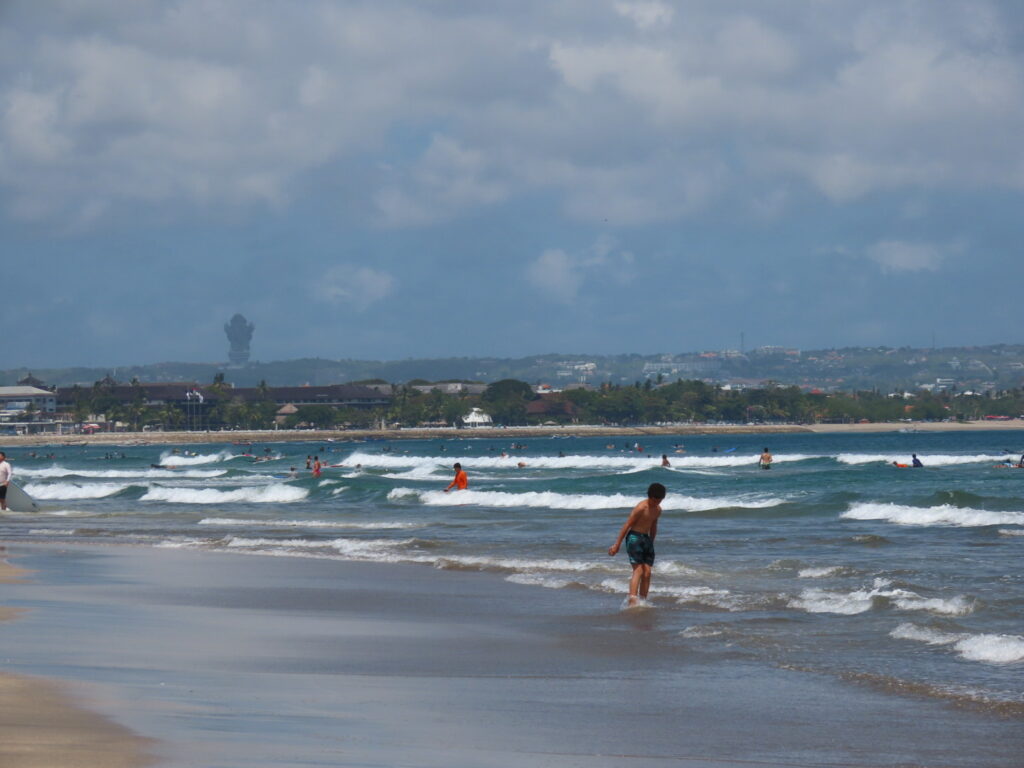
 Giant kites flutter in the air above the lines of colourful umbrellas when we hit the beach. Earlier, during the morning walk we had encountered walkers & joggers on the pavement by the beach and surfers catching the high tide. The man tied up for an hour of surfing lesson for later at one of the shacks. So while he tired himself out trying to keep up with the waves and on the board, we sprawled on the bean bags under the umbrellas. Watching the surfers paddle out, wait patiently for ‘the one’, ride in and repeat it till the sun burnt them a burnished brown was no Baywatch moment! Of the completely commercial and tourist trap beaches we chose Kuta. Adjoining Seminyak and Canggu are trendier but more crowded. The wide public beach is lined by a boulevard, hotels, restaurants. Though the shacks at the beach provide some drinks and food and wandering hawkers stop by, we chose to hop across the road to a convenience store for chilled Bintang and hot ramen.

Of Surf and Sand

Discover solitude in- Batalik – A Tribute to the Human Spirit

Gili Trawangan is a Gem

Island Life

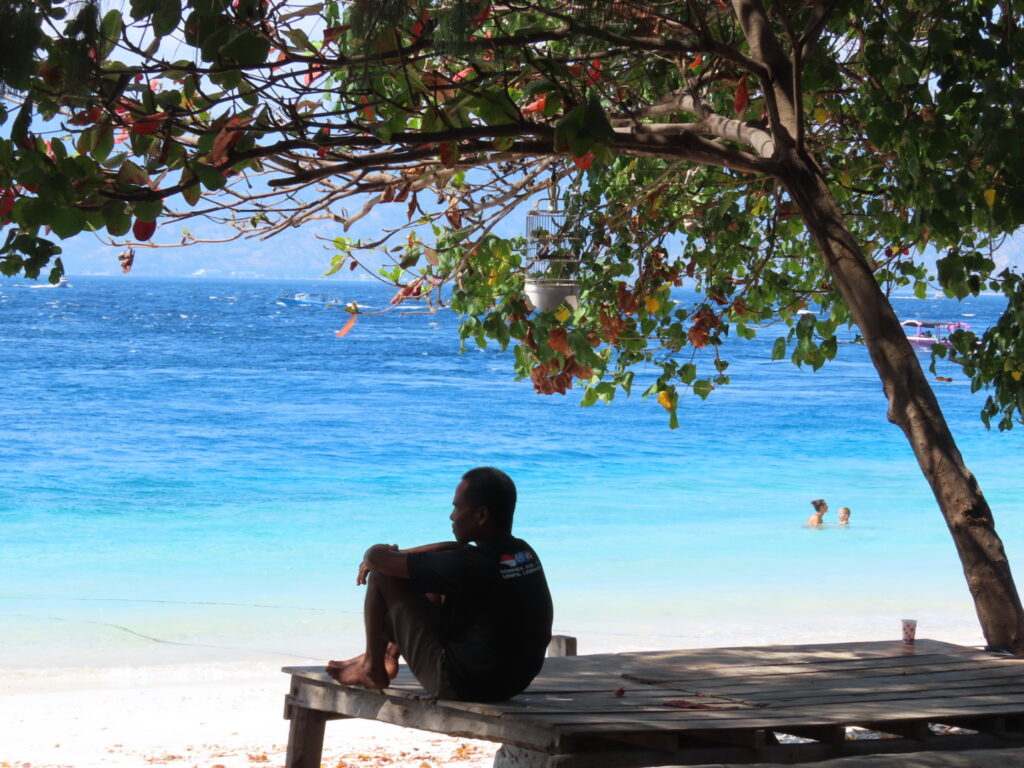
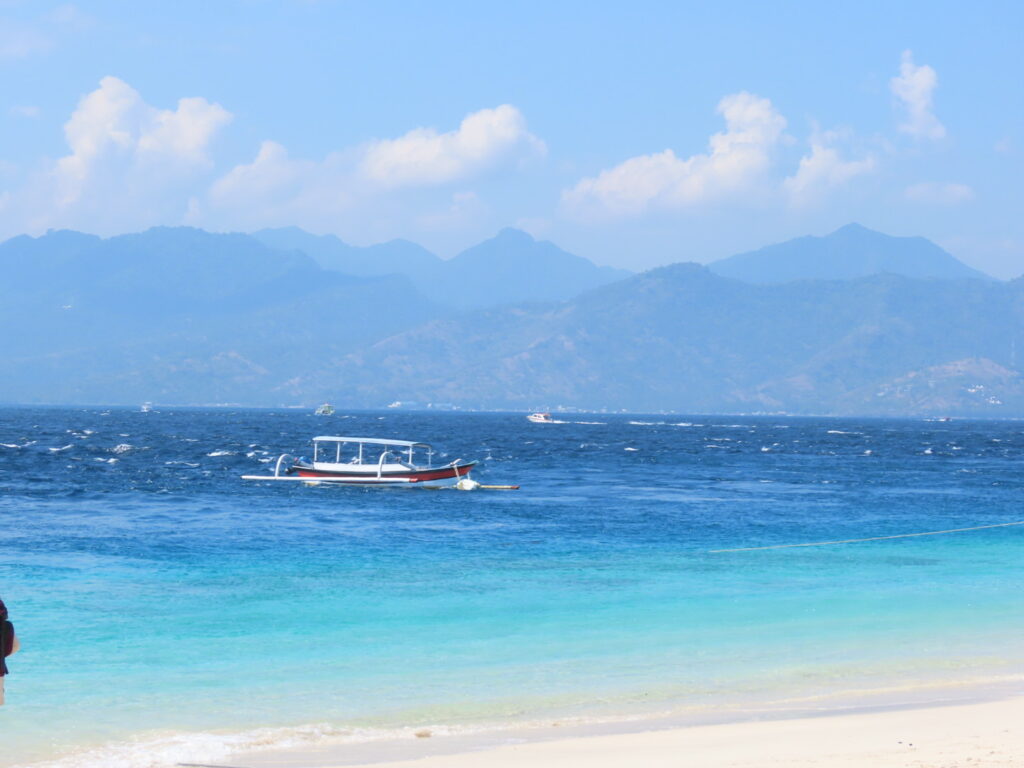
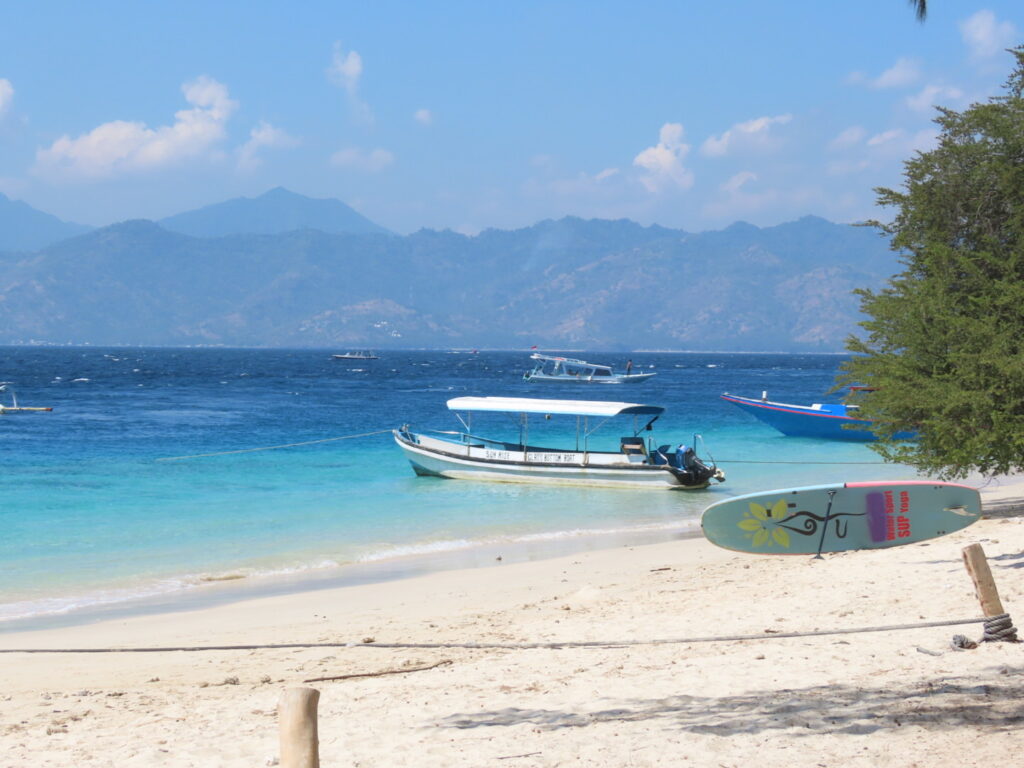
First off- skip the Gili islands nearby unless you plan to spend atleast two nights there. Though the fast boats are just that but the wait at the pier seems to stretch and along with the cushion time for chaotic traffic, you end up spending almost half a day travelling. Having said that, we chose Gili Trawangan for the snorkelling. It is a tiny picturesque island of white beaches and azure waters, with no vehicles! Only horse-carts that clip-clop while they ferry people and their mounds of luggage to and fro from the pier to their accommodation and bicycles ply on a shaded road that lines the beach. It is popular for diving and snorkelling like the other two adjoining Gili islands. The diving boats head out early in the morning and then bob around just offshore for the rest of the day. While snorkelling the man and child lucked out when they spotted a Green-back turtle along with schools of small fish. Sadly the corals I saw had not survived the hordes of trampling feet. The rocks just off the beach take revenge on everyone’s feet for the corals in low tide!

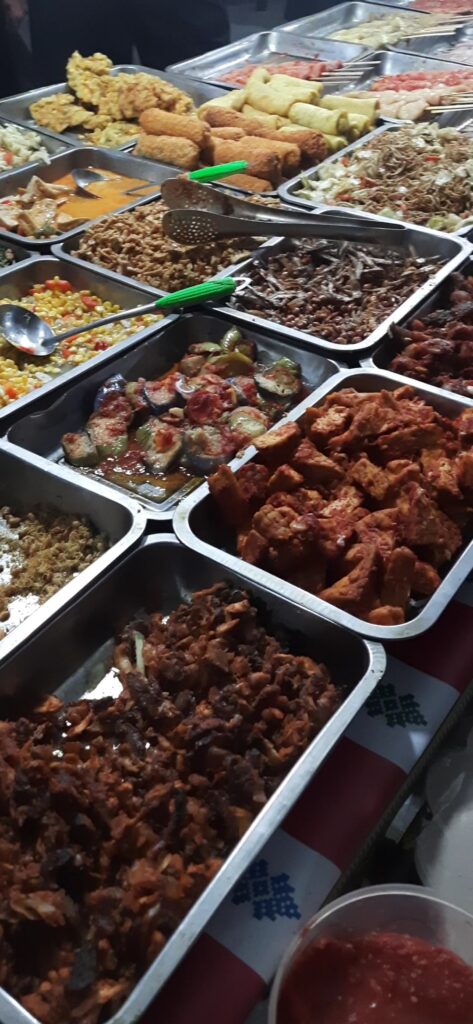
The island has a bustling vibe all day and is a known party place.  Brightly lit restaurants line the road in the night and on the beach strings of lights provide a canopy to chairs and tables full of youngsters but all the roads lead to the night market. A crowded, noisy affair lined with open stalls selling the choicest of the day’s catch and generous sides for a reasonable amount. One can pick and choose from an array of enticing grilled and fried seafood. In the middle there are rows of tables and chairs full of eager eaters.

Spoilt for choice

Discover- Pangong Tso – The Gems in the Crown 

Nusa Dua is a Snooty Do

Blue Lagoon

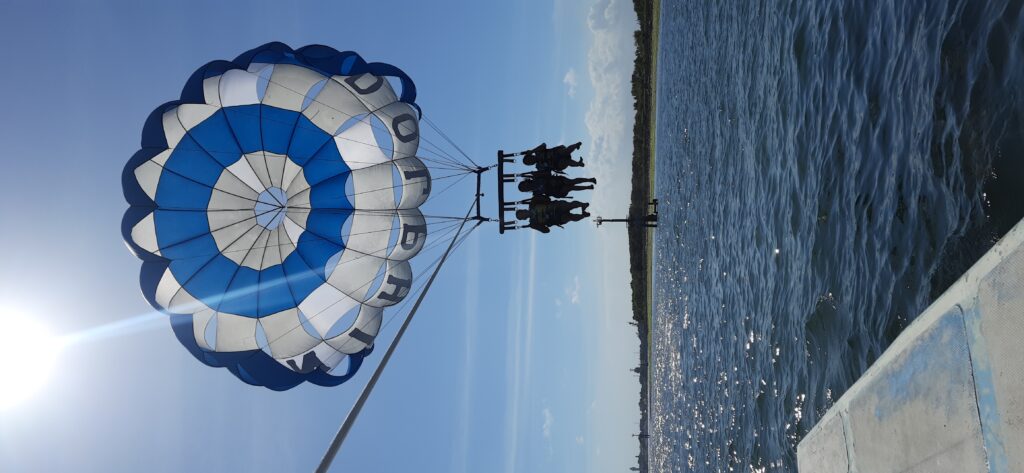
Trying to find the place for watersports we drove through a massive Candi bentar (the traditional Balinese gate) into an immaculately landscaped haven. The BTDC (Bali Tourism Development Complex) area is like an exclusive enclave where the major names in hospitality are discreetly tucked away behind walls of artful greenery. A short walk got us to a small cove during low tide with an azure lagoon. Rows of loungers and beach umbrellas lining the small quiet beach had people reading, snoozing and soaking up the vitamins. What we were looking for was further ahead, known as the Tanjung Benoa Beach (The name does not pop up until you really zoom in on the map!) with its line of big shops for those seeking thrills on and under the waters. Think sea walk, parasailing, flying fish (Yes, you can be one too!), jet ski etal.

No flying Fish!

Find high jinks in- Part One- On the Wild Side of Outstanding Orchha

Jamboree at Jimbaran

A must visit for seafood lovers, Jimbaran beach comes into its own near sundown. Walk through the entrance of any of the restaurants lining the beach, select your choice from the day’s catch from the tubs and tanks, find a candlelit table on the festooned beach, be serenaded by a group of motley singers as your barbequed dinner fetches up while in the background the surf crashes on the sandy shore.

Discover a food trail in- A Handy Guide on How to do the Hornbill Festival

 Bali is truly on an island of plenty. All you need is your swimwear and dollops of sunscreen!

So, apart from the  beaches that made it to the short list, the long-listed contenders were-

Amed beach- With Mt Agung in the background and USS Liberty under the water off shore, the black sand beach is considered one of the best diving sites in Bali.

Nusa Lembongan island- Just half an hour by fast boat from Sanur in Bali, it offers a sampling of all kinds of beaches.

Fact File

Kuta- 

A half an hour surfing lesson costs IDR 180,000/- approx.

Gili Trawangan- 

Padangbai is where the boats for the Gili islands leave from. Getting there by fast boat including a pick up by the fast boat company itself costs IDR 2,100,000/-.(Harbour tax is additional).

 Snorkelling- Hiring the gear costs IDR 50,000 for a day.

Tanjung Benoa 

Watersport packages vary depending on the number of activities but a lot of bargaining is required to fix the cost.


7 Cultural Must Do’s of Bali

‘So, when she gets married who will take care of you?” The question has been posed by the taxi driver during the long journey to Ubud from the Ngurah Rai airport. ‘She’ sitting next to me rolls her eyes. I laugh. It is not exactly the kind of cultural exchange I had envisaged, especially within hours of landing in Bali but the question sounds heartfelt, as if we have not thought life through and need to have more children! At some point the conversation veers to caste. He mentions his matter of factly, like the entire caste hierarchy is an academic exercise. Perhaps in Bali it is. Hinduism along with Buddhism came almost a thousand years back via Java to this island. But despite having its roots in India and certain affinities, Bali’s cultural identity has blossomed differently and distinctly.

Festive Festoons.

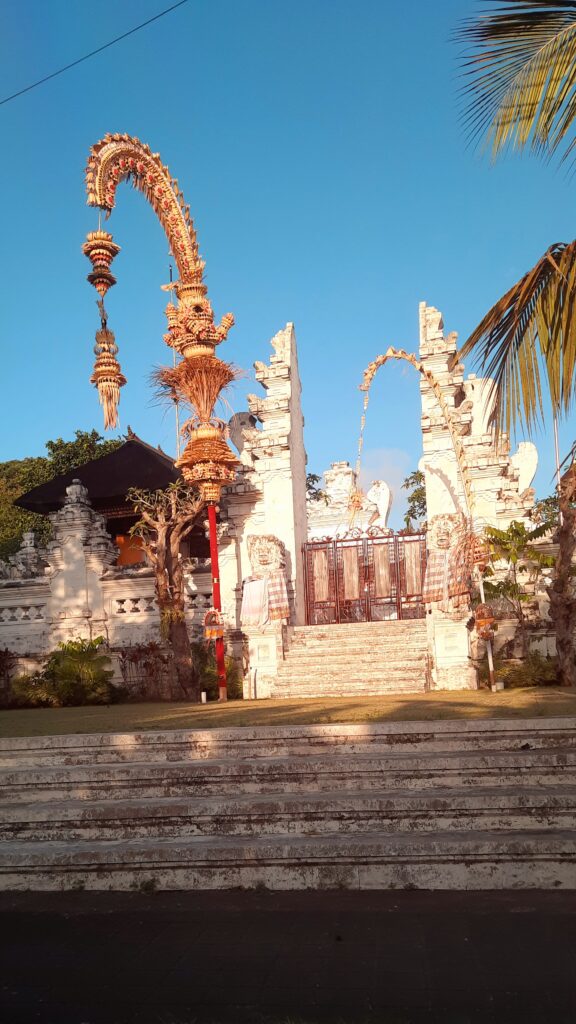
Bali, in a sense, is in a time warp. Shah Rukh Khan and Amitabh Bachchan are still the ruling cine gods. Temples outnumber people and are everywhere- inside and outside houses, each family has its own cluster in the village and then there are the temples of yore and of Instagram worshipers. But in this ‘Isle of the Gods’ where, unlike back in India, I want to visit the temples, (which the man ribs me about) one needs to choose or the trip would be just a temple run. Apart from homing on to cultural performances and local attractions we shortlist three temples and they do not include the most photographed ones!

Explore other temples in – Part Two – The Old Gold in Outstanding Orchha

Ubud- Eat, Pray, Love!

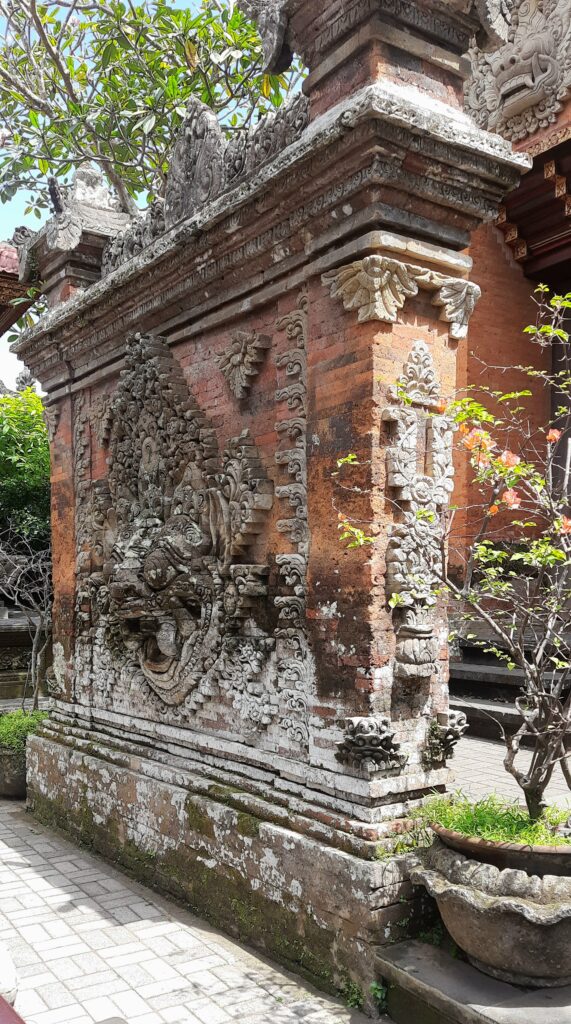
After a hearty breakfast of delicious banana and coconut pancakes and a platter of colourful fruits we make our way through streets lined with shops opening for the day to the Ubud Palace. Small leaf baskets with flowers dot the pavements, doorways and the thrones of pillared stone temples outside the houses in the morning. Offerings for a propitious day. The Palace is a small two courtyard affair with delicate, raised wooden pavilions and stunning brickwork. A part is still the residence of the royal family and we all cannot resist peeking into their private courtyard dotted with the most beautiful vases.

Read also – Bikaner’s Chattris: Royals in Repose

Beauty brick by brick.

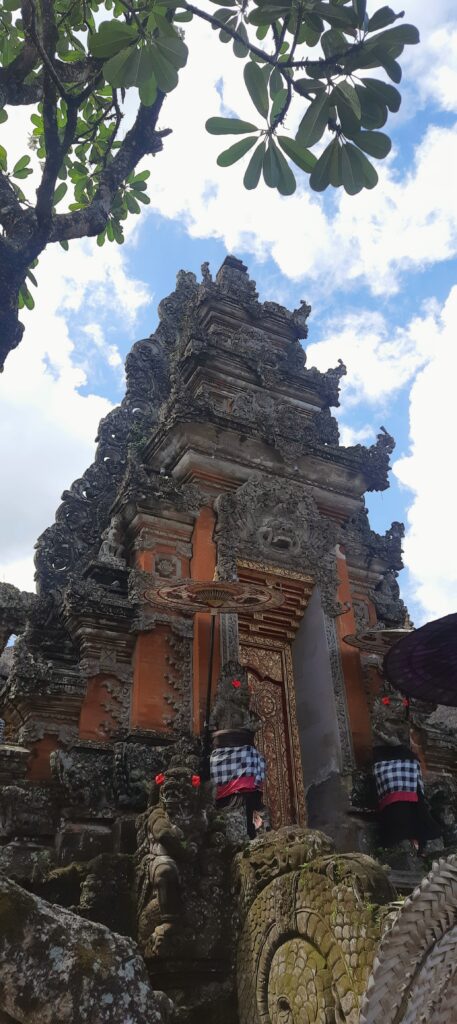
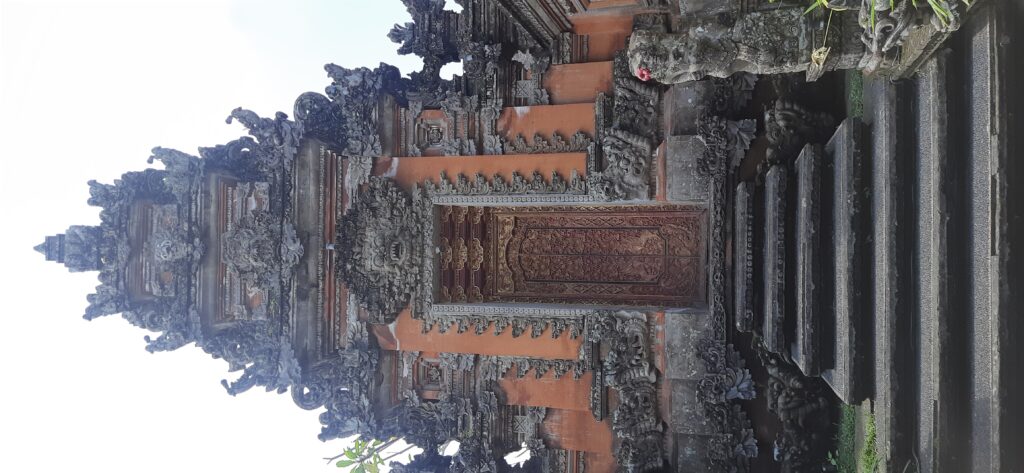
The nearby Saraswati temple’s entrance is squeezed between an eatery and Starbucks. We get a full rig of mandatory purple and white headgear, shirt and sarong to wear.

Demons at a Dreamy Doorway

A path lined with lotus ponds leads to ornate chairs placed before a resolutely shut doorway which is guarded by moss covered fierce creatures adorned with fresh red hibiscus. Inner sanctums are not open to any outsider in any of the temples we discover.

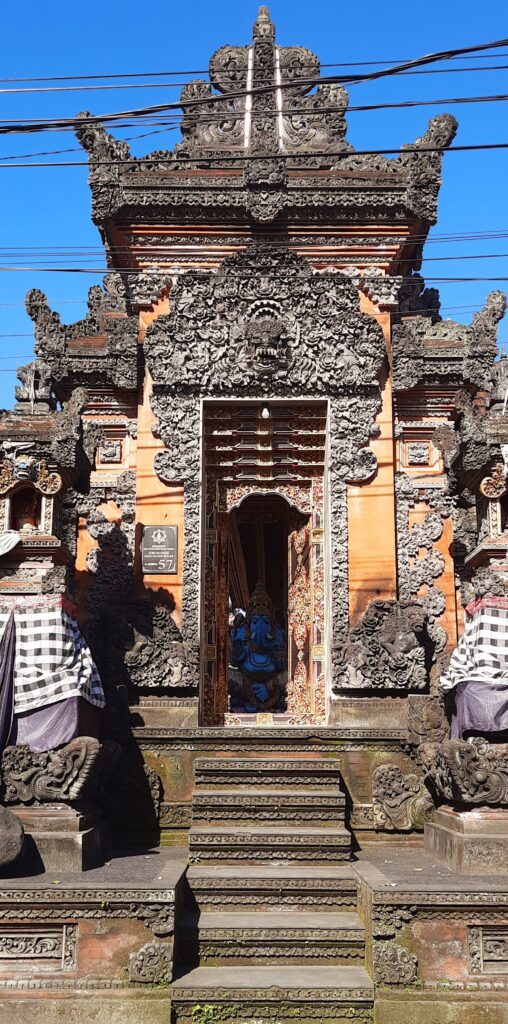
After a sumptuous lunch at Sun Sun warung where the setting and food are a visual delight, we amble through a labyrinth of narrow streets lined with traditional houses hidden behind orange walls, inviting arched doorways and courtyards with frangipani trees in bloom. A half ajar door in one reveals a massive impassive blue Ganesha.

The Divine Within.

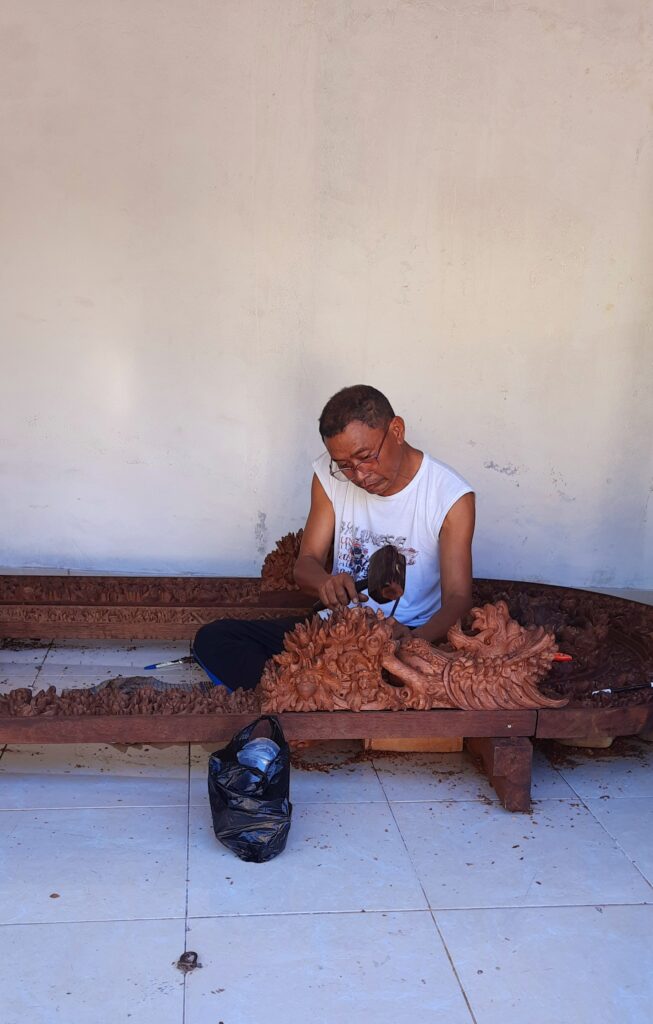
Intricate Penjors swaying in the breeze next to the doors announce the ten-day Galgulan festival, to celebrate the triumph of good over evil. We cross a workshop where an artist skilfully chisels away at an elaborately carved doorway that would be a connoisseur’s pride.

Discover doorways in- Part Two- What Not to Miss on a Weekend Vacation in Shekhawati

A Master and his Creation.

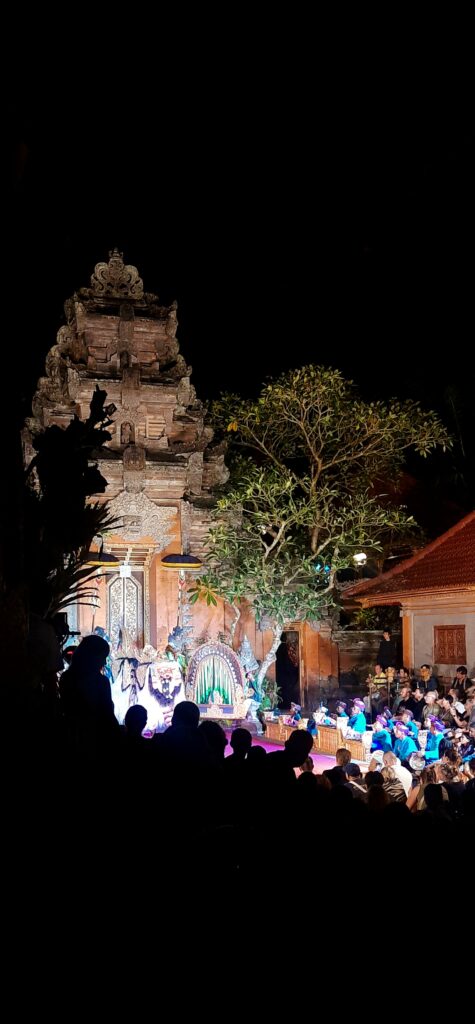
In the evening after browsing through the Ubud Art Market we head to the Palace for the dance performance in, what we think is, good time. The courtyard is full and we barely manage chairs on a platform at the rear. Against the backdrop of a lit doorway, the show begins with the tinning instruments of the Gamelan orchestra and the Legong dancers keep us spell bound with their expressive eyes, elegant fingers and delicate movements.

Setting for a Show.

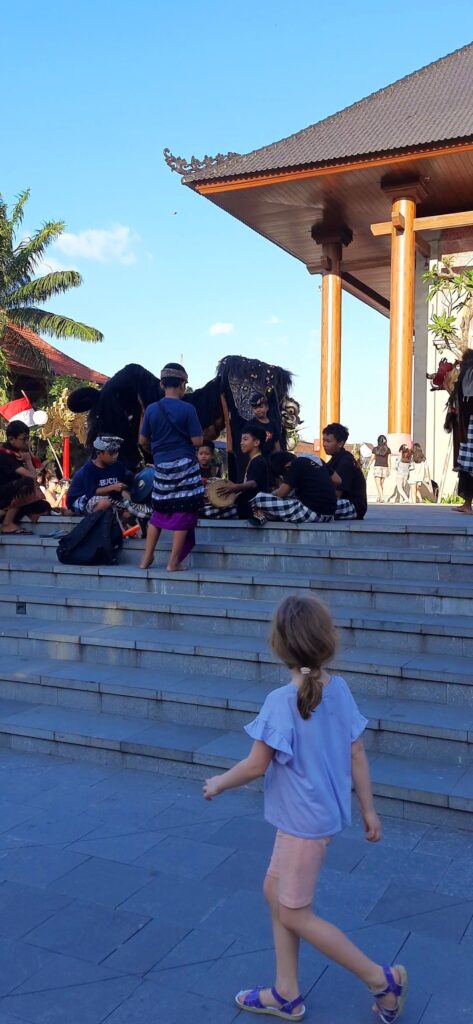
The second performance is a Barong dance drama with a benign beast and fierce looking but equally evocative performers. Outside, on the road little troupes of boys in black who have been busy all day, can be heard from afar as they make their way through the streets with their instruments and energetic Barong, stopping to perform every now and then. The air is full of music and merriment.

No child’s play this..


Luwak Kopi for the Road

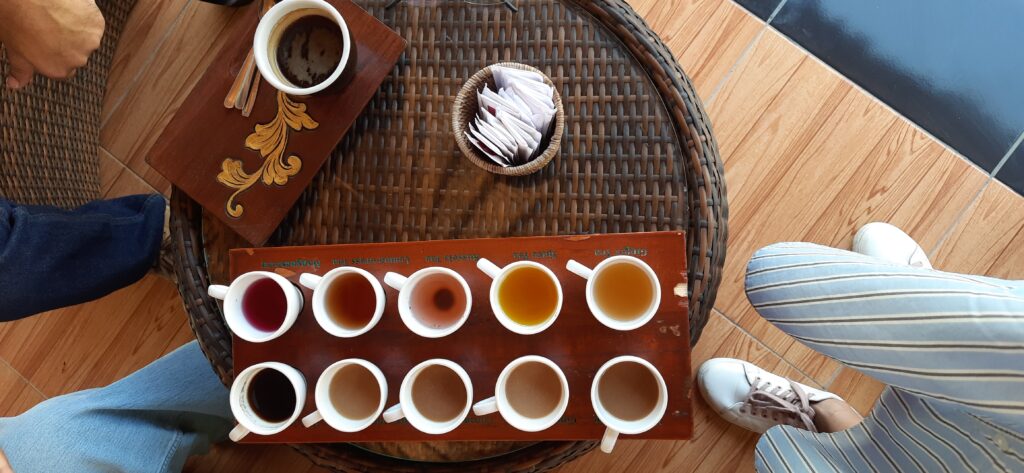
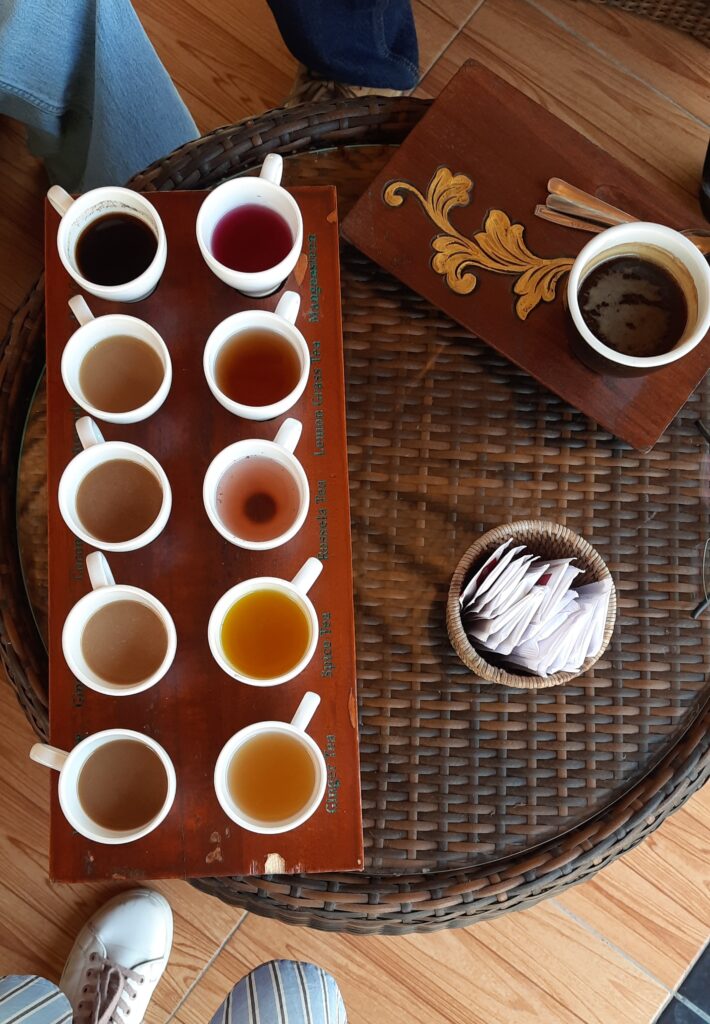
The next day we zip past a line of workshops on the outskirts of Ubud producing the most stunning artefacts from cane and wood. (If I had known about them my trip for the day would have ended there itself!) At an ‘Agro farm’ we are given a tour with an introduction to a variety of teas and coffees, including Bali’s (in)famous Kopi Luwak and its traditional process. The process instead of foraging, now involves feeding caged Palm Civet cats coffee beans, which once pooped are cleaned, roasted and ground. (Not everyone’s cuppa!) So, the ethics of the production are questionable.

Not everyone’s cup..

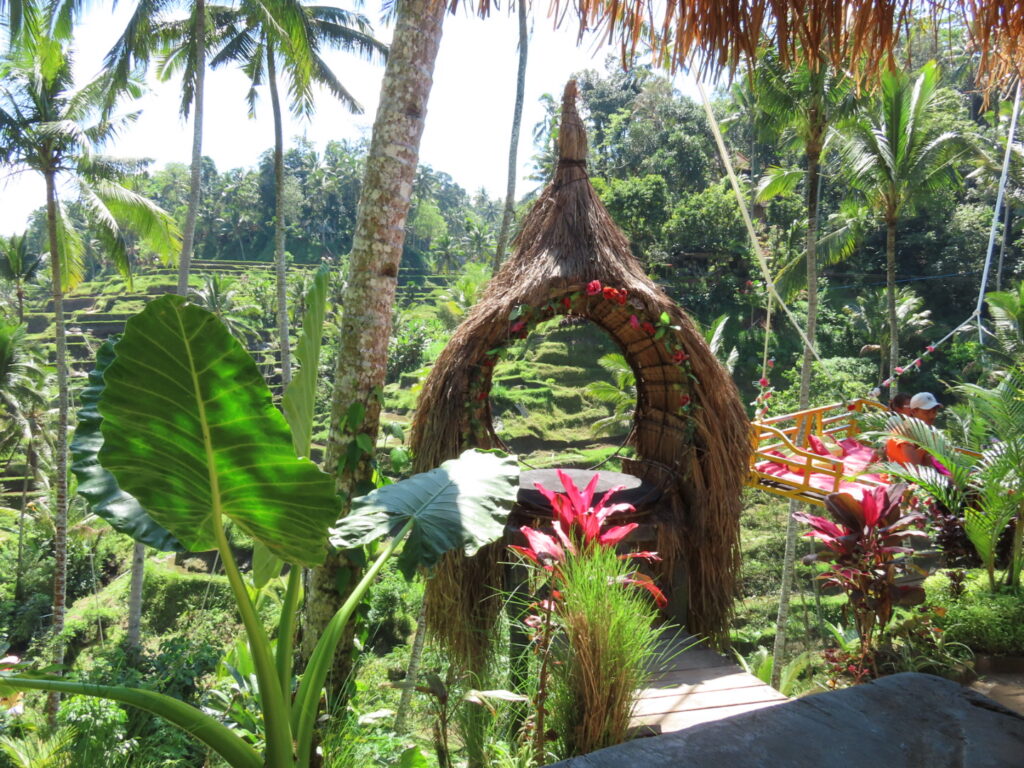
The world’s most expensive coffee served in style tastes robust with a lingering sweet aftertaste. The place overlooks some rice fields and has a couple of the ‘Bali Swings’. I spy a flying red dress accompanied by, I cannot decipher, screams of delight or ‘what all I have to endure for that Insta high!” The much-photographed Tegalalang rice fields, not on the original itinerary, are the next stop since they are enroute to the temples but we don’t linger. The fields are dry and the crop is sparse. Perhaps in another season they would be more appealing.

Savour- Nasirabad’s Kachora: More than a Savoury Story

Pura Pilgrims

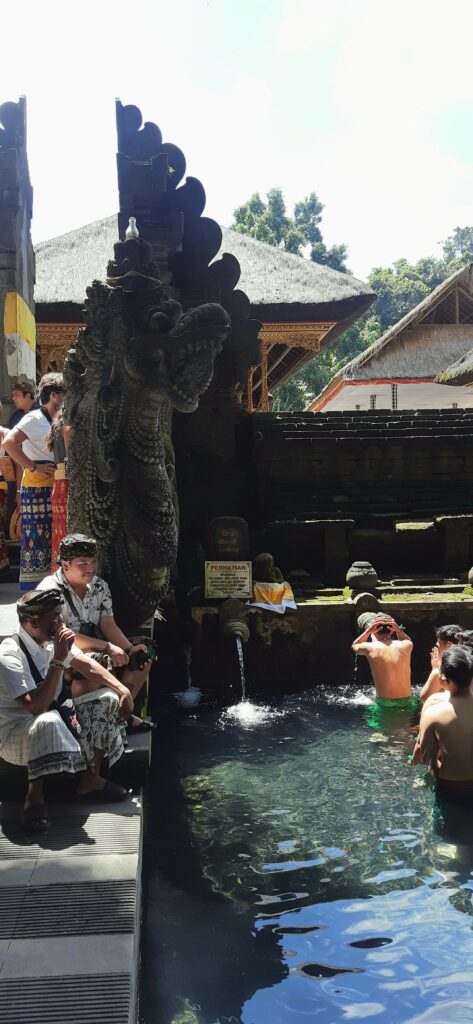
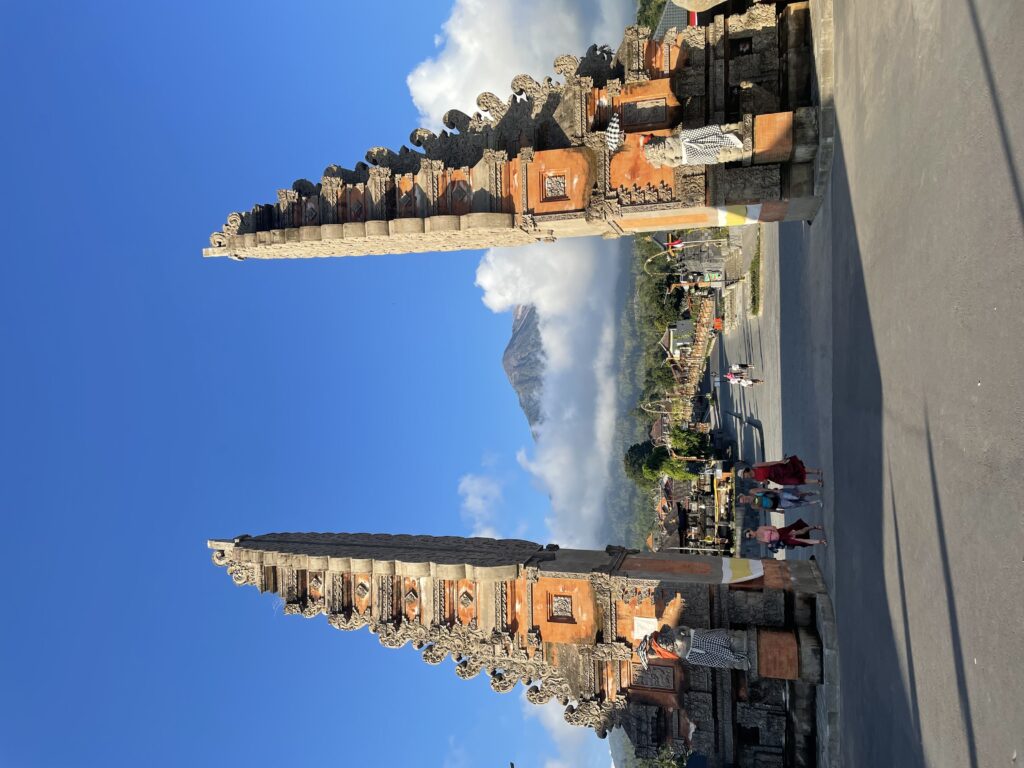
Winding through quaint village roads lined with towering penjors and flooded terraced fields reflecting a majestic Mt Agung we reach Pura Tirtha Empul, the sacred water temple, made in 926 AD. A stone throne with a deity (the only one I saw in Bali) stands under a sprawling tree with branches holding massive ferns. A complex of ponds and temples lies beyond.

A Spout’s Soliloquy

It is a green sarong here and the first pond is crowded with people waiting in line to take a purifying dip under the spouts bringing water from the inner pond where grey ash mushrooms from springs and mixes with water filled with reeds. Thoughtful statues pour water into the last Koi Pond full of overfed golden fish.

Main Course of Greens

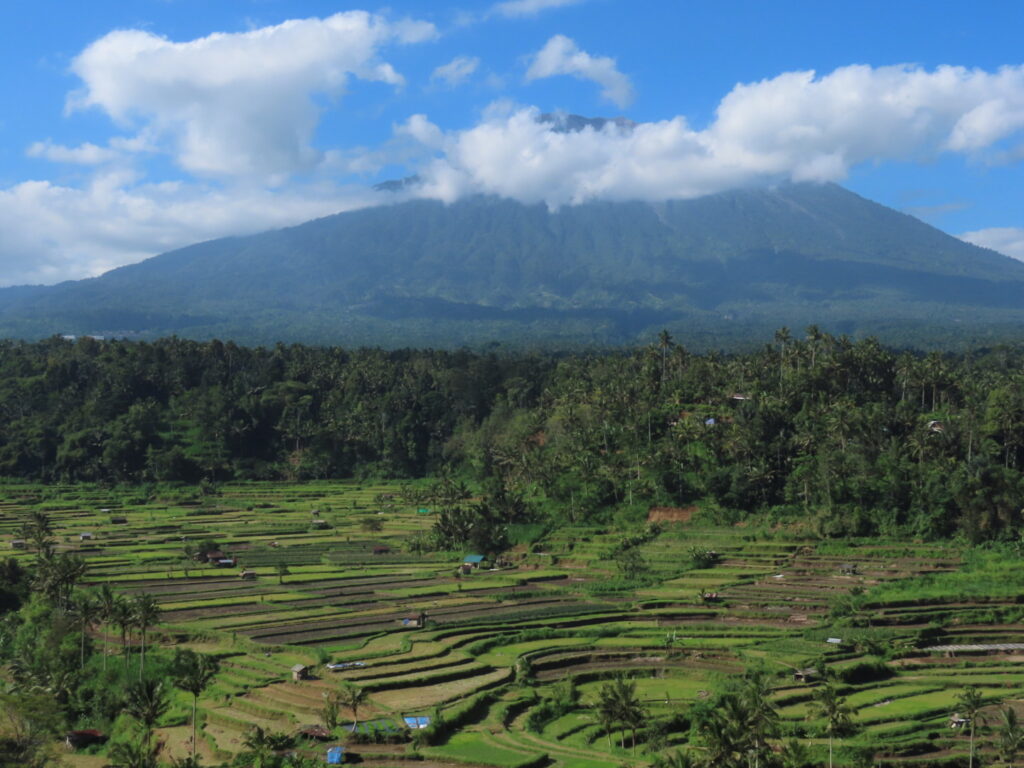
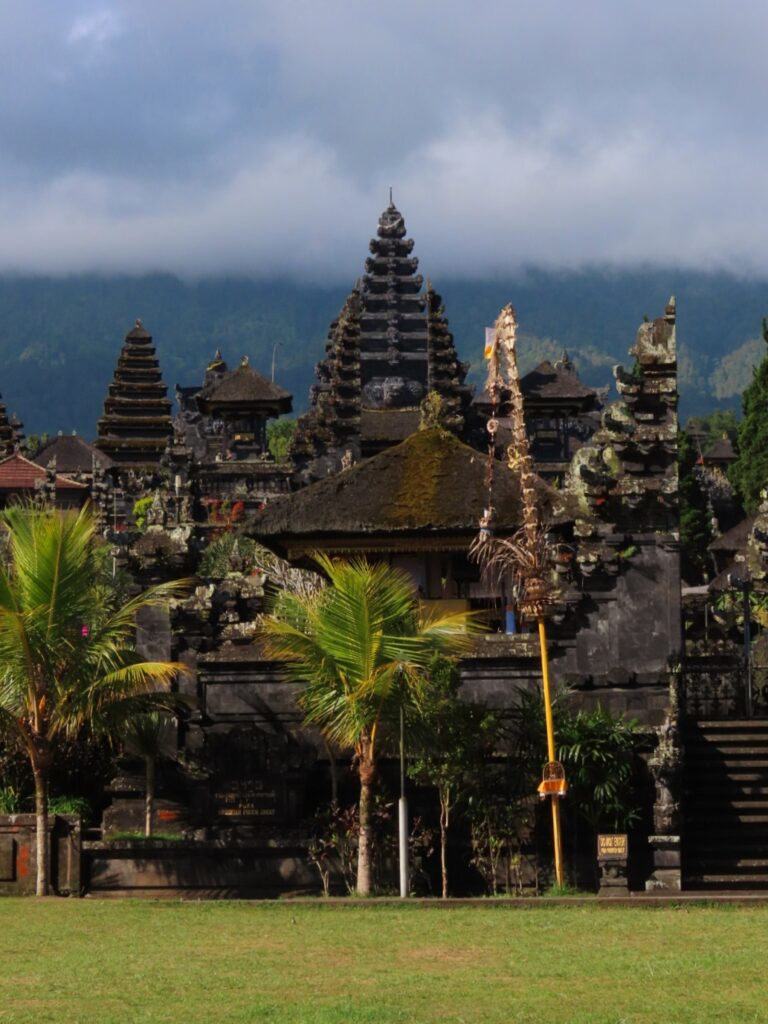
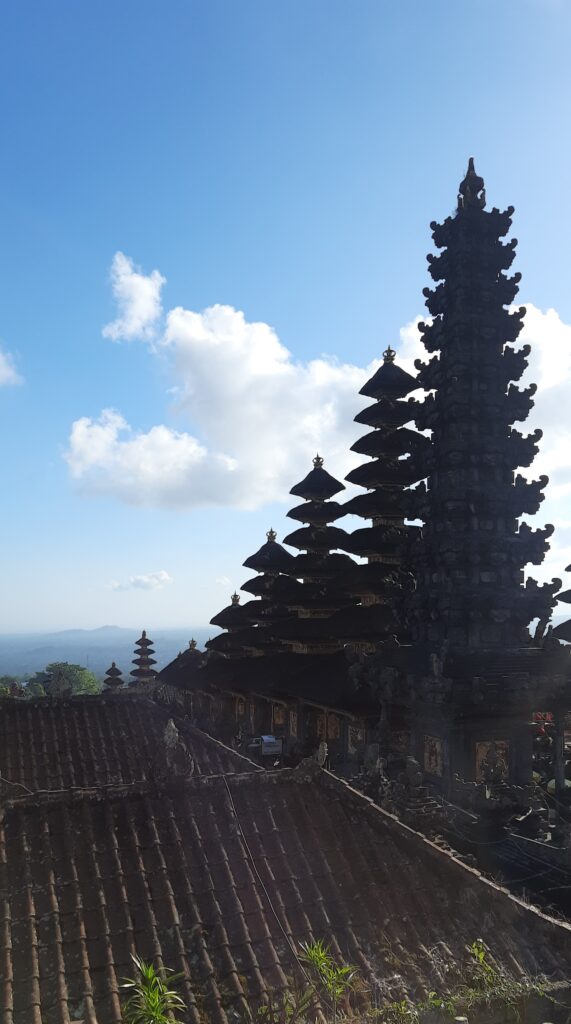
Lunch is at a restaurant on the edge of a ridge where the main course is the view. It overlooks a bowl of rice fields, ringed by forests coming down the slopes of a Mt Agung hiding behind the clouds. Then we head to Pura Agung Besakih on the slopes of the volcano. The ‘Mother temple’ complex dates back almost a thousand year. The temples rising in steps are dedicated to the Hindu Trinity. One towering stone structure sitting back in a line of thatched pagoda style roofs in odd numbers alludes to the shikharas of South Indian temples.

Oddly Ascending

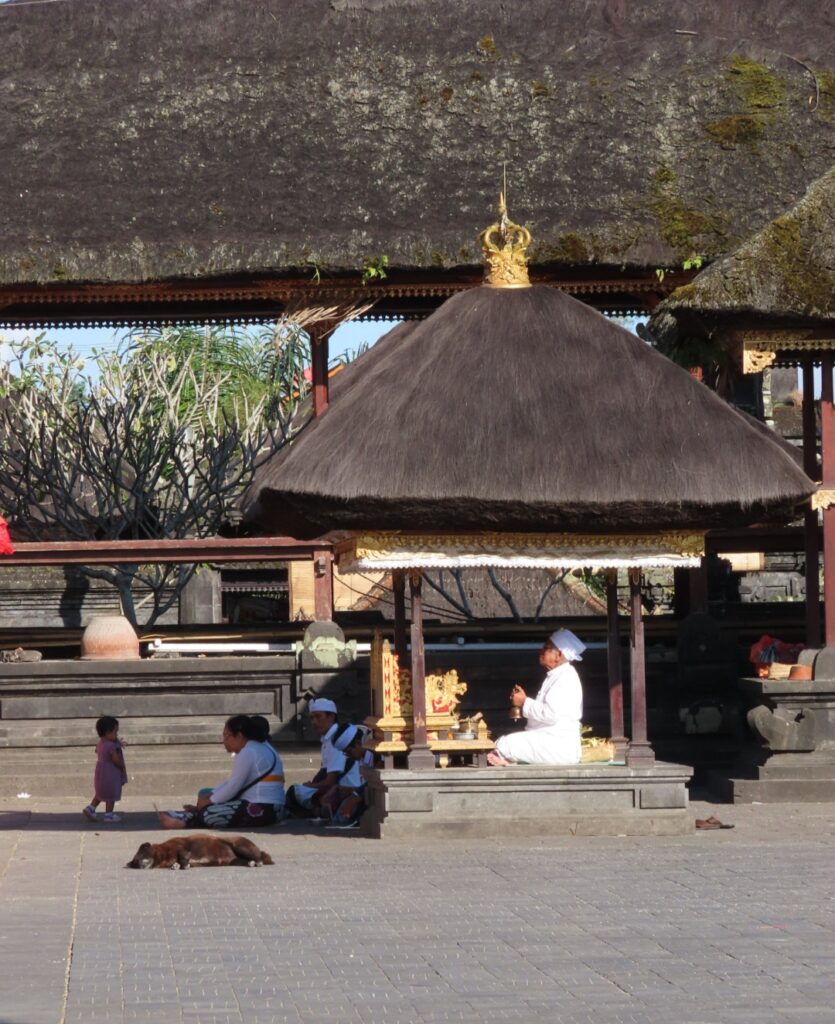
The main complex, Pura Penataran Agung, is dedicated to Shiva. The temples of the other gods and minor shrines dot the slopes and ridges around. Our guide, a chatty fellow who quotes scriptures being the son of a senior priest of a nearby village, lets us into the gate of the main courtyard. Three urns representing a god each of the Trinity sit on a wall under small umbrellas. A priest in white sits in a wooden platform conducting a ceremony for a family while a child runs around oblivious to the solemnity of the occasion.

Discover- Mystic Maheshwar : At the Center of the Universe

All creatures are welcome in God’s home.

This is as far as we can go… and somehow it is enough. As we return to the towering Balinese style gate at the entrance, the clouds finally part to reveal the picture perfect peak of Mt Agung.

Uluwatu’s Ultimate Show-

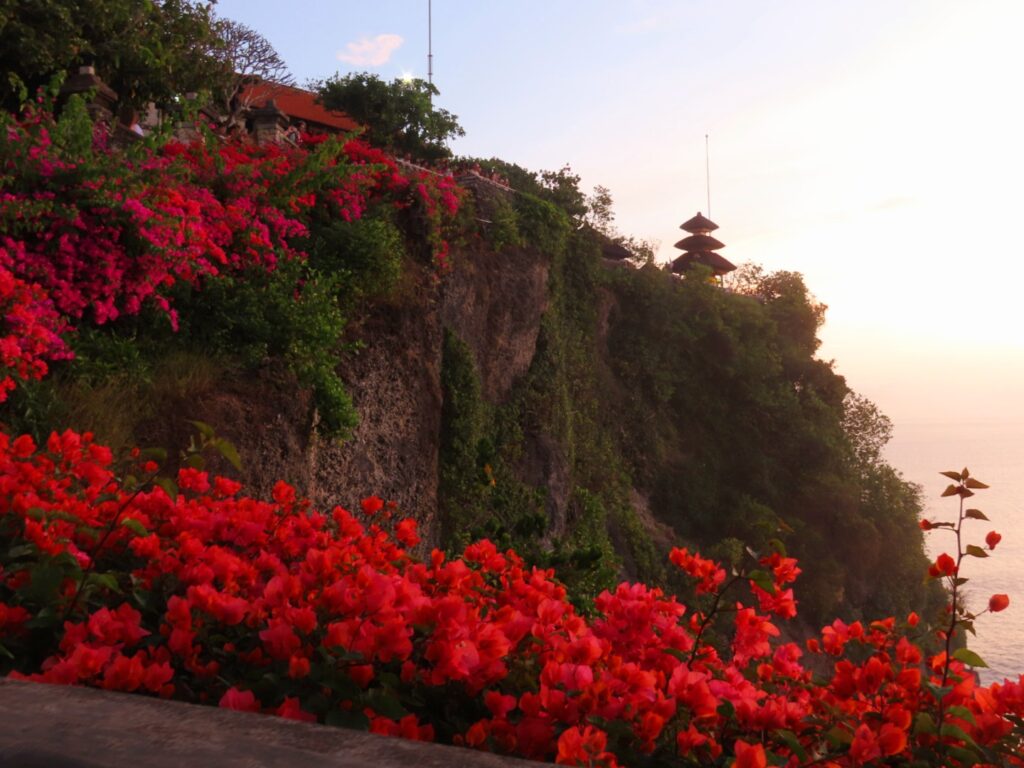
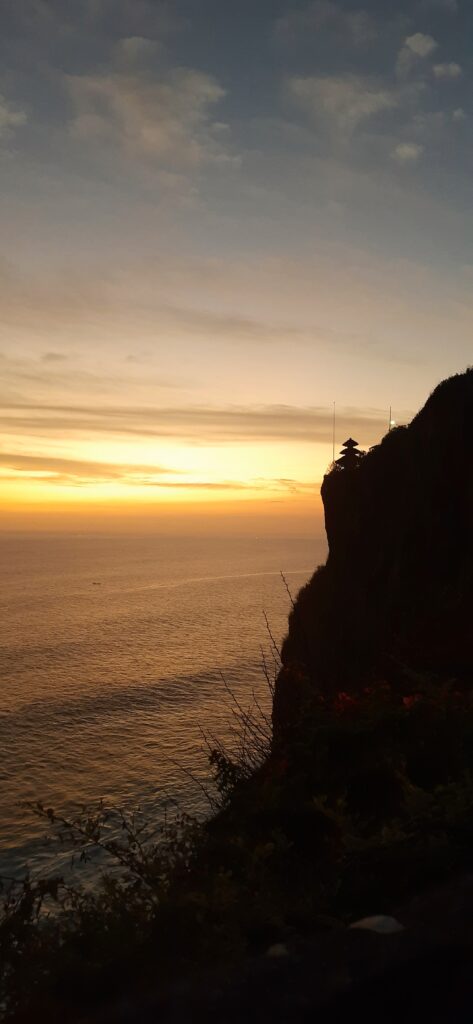
Our last evening in Bali and we hurry to Uluwatu temple where it is just an orange sash that we are given to wear. The sprawling green complex has a small shrine on the edge of a cliff with a stone wall running along the precipice lined with profusely flowering bougainvillea and people!

Drama in Technicolour

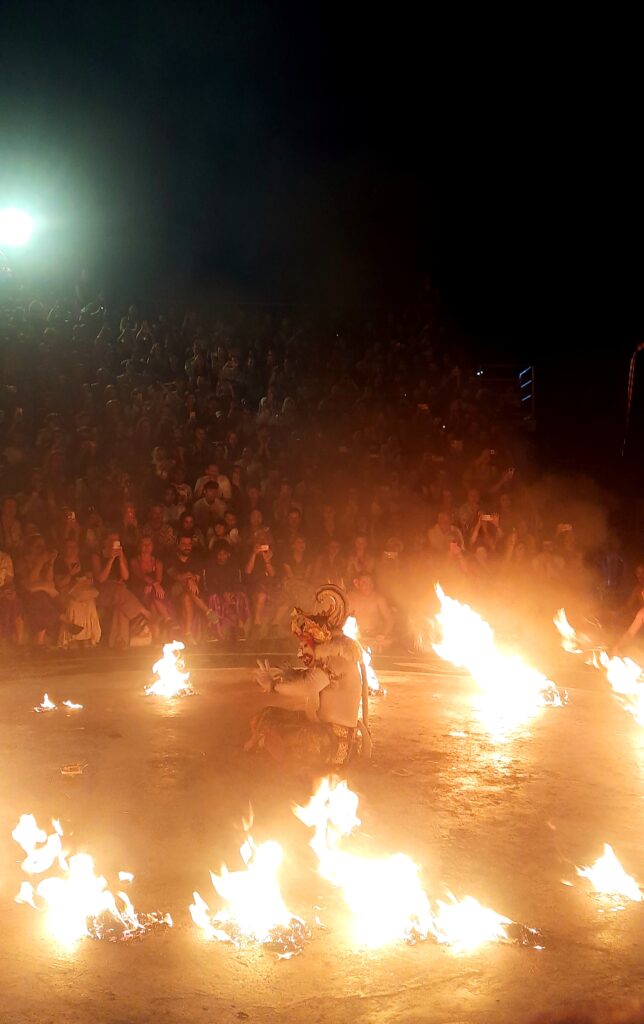
All here to catch the sunset as much as the Kecak dance. The fiery sun setting over dulcet waves that break violently at the base of the cliffs is as much a show as the ‘Fire Dance’. The Ramayana inspired dance drama starts with the chorus of ‘Kecak’ by a group of men who keep it up, with hand movements, throughout the performance. Who says it is easy being part of the background!

Set the stage on fire!

The star, and he is a rockstar in it!… jumping, mingling, posing for selfies, taking out imaginary lice, all the while without missing a beat in his part of the story, including setting the stage on fire, is Hanuman. It is a glorious goodbye from this Isle of the Gods.

Find gods in- An Ode to Ancient Life in Stone- The UNESCO World Heritage Site of Ajanta and Ellora

Fact File-

Temples– All have tickets starting from Rs 320. The cost includes the mandatory sarong and at Besakih, a guide and one way travelling by an electric cart.

Ubud Palace-There are different dance performances every evening and the tickets cost Rs 650 approx.

Uluwatu-The Kecak show tickets can be purchased online. The 6 pm show gets sold out fast.

Luwak Kopi Tasting– The tour is free and the Luwak tasting costs Rs500.

Tegalalang Rice Fields– Entry ticket is Rs 160 appox.

ABC’s of a Bali Itinerary


August, surprisingly, is not the best month to travel in many parts of the world. Europe is burning, South East Asia is rained out as is all of India. Central Asia looks inviting…someday! We armchair travelled across two continents and many countries to settle onto a Bali holiday. It was not on our first bucket list. Perhaps not even first on our second list…

Yet Bali is the whole bouquet! If exotic orient with top notes of touristy kitsch, full bodied middle notes of rich culture swirling atop notes of towering volcanoes, wild cliffs and aquamarine waters sounds divine, then Bali should be on your wish list. Atleast ten days are needed for a leisurely sampling of all that this island in the Indonesian archipelago offers. We had a week there and I am ready for seconds and this time I know what to repeat and what to skip….and August is High season in Bali!

Bali High

Top Notes

1. Accommodation should be central so you can walk and explore.

2.Traffic can be a nightmare! Factor in time and distances while planning activities and visits across the island. Use scooter taxis to get around town and for across the island, use cars. You can hire a two-wheeler also.

3.There are more temples than people in Bali. Pick and choose which ones to visit. The inner sanctums are not open to outsiders in any temple.

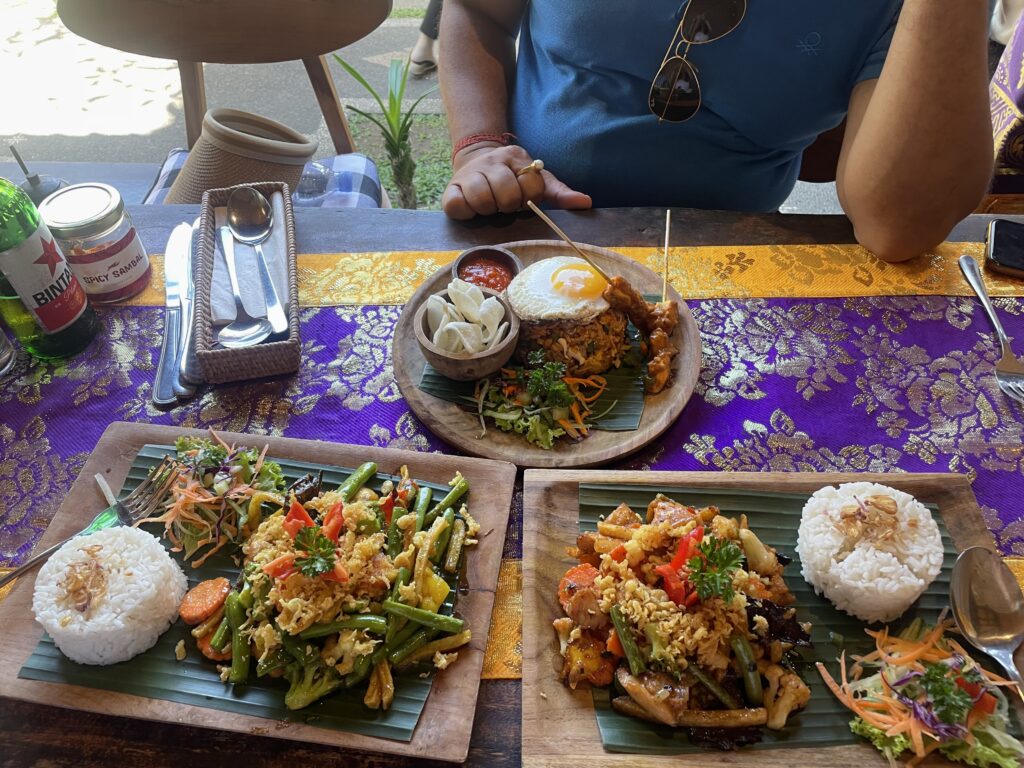
4.Eat at the warungs to get authentic local cuisine and nice ambience at a more reasonable rate.

5.For shopping, brush up your maths (the zeros are mind boggling) and your haggling skills. (it is expected!)

6.Pick up a local SIM so you have data.

7.We divided our time between Ubud, Gili Trawangan, Kuta and Nusa Dua.

Middle Notes

Unparalleled Ubud

Day 1

After a hearty breakfast at the guesthouse/hotel walk to the Ubud Palace. Soak in the atmosphere, the morning flower offerings dotting the pavements, the quirky shops enroute. The palace is a small affair. Pick up the tickets for the evening dance programme from there.

Doors can be Dreams.

Walk to the Saraswati Temple. Take pictures of the lotus pond and the intricate doorways.

Browse through the Art Market, a street market adjoining the Saraswati temple.

Grab lunch and a Bintang at a warung.

Depending on your capacity for shopping head to the Ubud Art Market in front of the palace or head back to your room for a short post beer nap.

Attend the dance performance at the palace.

Enjoy dinner at a warung or a restaurant nearby.

Pro Tip- To grab a ‘good seat’ for the performance reach the palace early.


Day 2-

Start early for Pura Tirtha Empul and Besakih temples.

Stop enroute to sample Luwak coffee, varieties of local teas and coffees. Experience the famous Bali Swing.

Swinging!

Visit the Tegallalang Terrace Rice Fields. (They also have some tea tasting and swings but it is not the same experience.)

Carry on to Tirtha Empul Temple. If you want to take a ‘purifying’ dip keep an hour extra. There is a long line.

Lunch at La Montagne Coffee with a stunning view of Mt Agung.

Visit Besakih at the base of Mt Agung.

Stairway to Heaven

Have dinner and get a foot massage back in Ubud.

Pro Tip-

Skip Tegallalang and stop enroute at the amazing workshops making cane and wood artefacts.


Islands Ahoy!

Day 4

Check out after an early breakfast and head to Padangbai.

My kind of blues

Catch a fast boat to Gili Trawangan. It takes an hour and a half but the waiting at the pier can be just as long!

Reach Gili T by lunch. Check in and change into your beachwear.

Hire snorkelling equipment and head into the water or just relax on the beach.

Evening dinner has to be at the Night Market!

Pro tip- If you are interested in diving stay for an additional day. If you don’t have time, Nusa Lembongan might be a better option.


Beach Yourself

Day 5

Head back to Bali on a fast boat. It island hops and returns via Gili Meno and Lombok so it takes 3 hours.

It takes two hours from Padangbai to Kuta.

After checking into your place, head for the beach to catch the sunset and then hit the nightspots.


Day 6

Take a morning walk on the beach and watch the early surfers.

Morning walking goals be like…

Book a surfing lesson or just lounge under a beach umbrella with a book and a beer. Grab a takeaway from one of the marts and have lunch on the beach OR head to one of the beach clubs. Finns and Potato Head are some good options.

In the evening head to Krishna Bali or Agung Bali for souvenir and trinket shopping.

The back lanes are also lined with shops and massage parlours.


Fancy Finish

Day 7

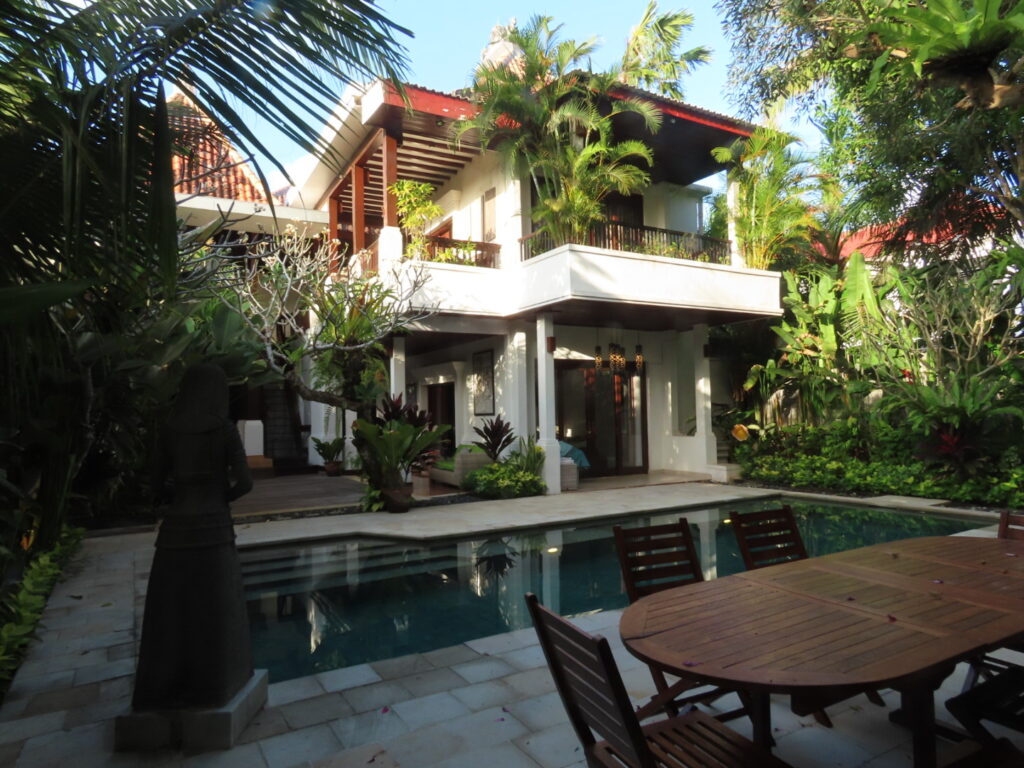
After a morning run on the beachfront followed by a cooling dip in the hotel pool and hearty breakfast check out and head to a nice villa with a pool.

Check in and just chill OR for some water sports head to Nusa Dua.

Select your activities and book a package. Think flyfishing, banana boat ride, parasailing etc.

In the evening head to Uluwatu temple to catch the sunset and the Kecak dance performance.

Sun-kissed Goodnight

End the evening with a grilled seafood feast on the Jimbaran beach while being serenaded by musicians.

Pro Tip- Book the tickets in advance for the sunset Kecak show as they get sold out and reach the temple early to grab good seats. One might get last minute tickets for the 7o’clock show.


Day 8

Spend a few leisurely hours in your fancy Airbnb till it is time to check out and head to the airport for your flight. Say bye bye to Bali with a heavy heart.

Dream home

Pro Tip-

Stock up on breakfast beforehand if your Airbnb does not provide it. There might not be a mart nearby.


Bottom Notes

Accommodation

One is spoilt for choice of hotels, guest houses to independent villas to choose from in Bali. We got good deals on Agoda. Stay close to your areas of interest or you will be spending more time in a taxi than anywhere else.

Places to Eat

Ubud- Sun Sun Warung for authentic local cuisine in a traditional setting is a must try.

Indulgence

Gili T- The Night Market cannot be missed!

Kuta- The pulled pork burger at Crumbs & Coaster was delicious!

Jimbaran- Choose your seafood at any of the restaurants lining the beach and it gets served with a basket of rice and vegetables, if you want.

Shopping

Essentials- Indomart, Alphamart, are all over. Make your own tea, coffee, instant noodles, grab ready to eat meals etc and find chilled Bintang in K Mart.

Souvenirs- Krishna and Agung Bali are big shops with very reasonable prices.

Getting Around

Taxi- Grab and Gojeck are local taxi apps. You can hire taxis for 8 hours for about Rs4000. We had Mr Putu driving us around and he doubled as a guide too. Phone no-6287861755884

Ferry- We booked a fast boat roundtrip through Adi Gili online for Rs13500 for 3 people which included a private pick up and drop. The waiting at the pier seems to takes forever and there is a nominal port tax.

Activities-

Temples- All have an entrance fee which includes the mandatory sarong. At Besakih the ticket includes a ride up from the entrance to the temple complex in a golf cart and a guide.

Coffee Tasting-Uma Pakel Agro Tourism.  The entry is free but the Luwak coffee tasting costs Rs500 approx.

Connoisseur’s Coffee

Snorkelling- Hire snorkelling gear in Gili T for about Rs300 per day.

Surfing Lesson- An hour will cost Rs1000 approx.

Water Sports- Price depends on the package of different activities but one must haggle. For Flyfish and Parasailing we spent about Rs8,500 for 3 people.

With this itinerary you are all set for a week of sun, sand, sarong tripping to temples and shopping!

7 Things on My Mind about Maldives

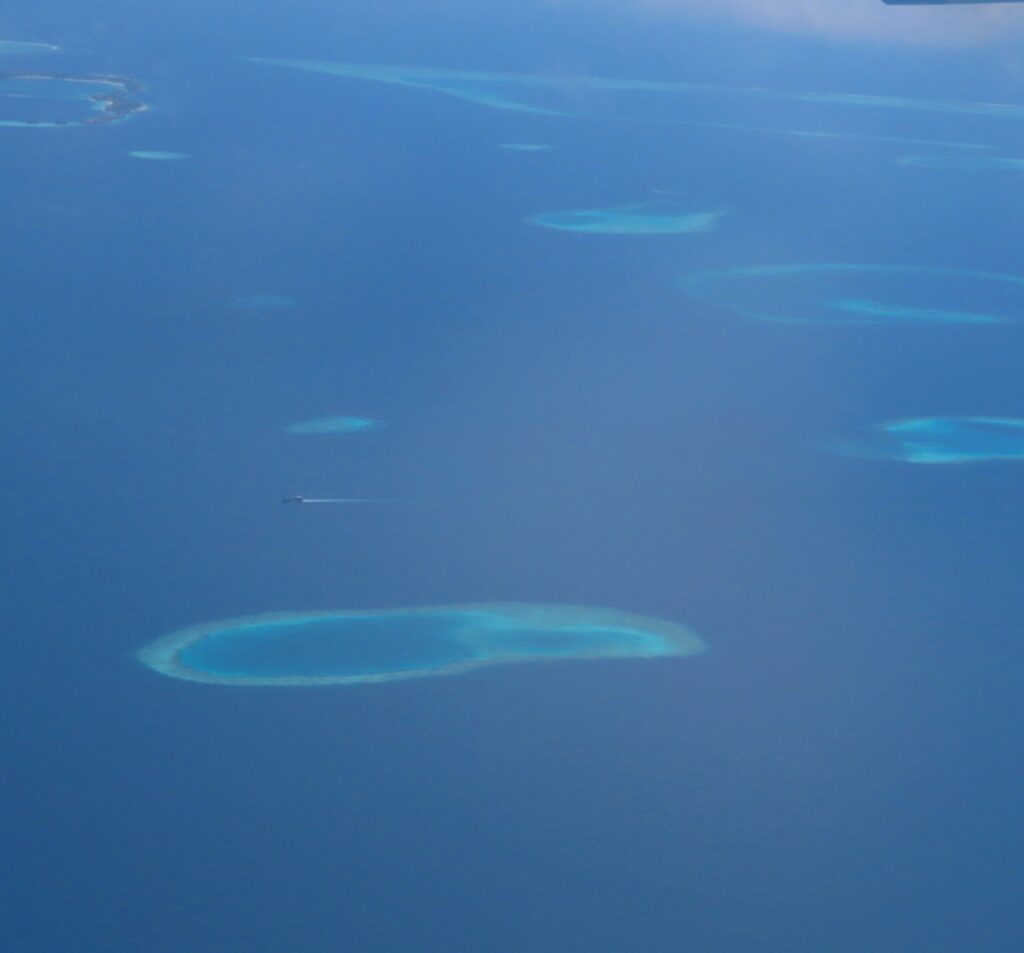
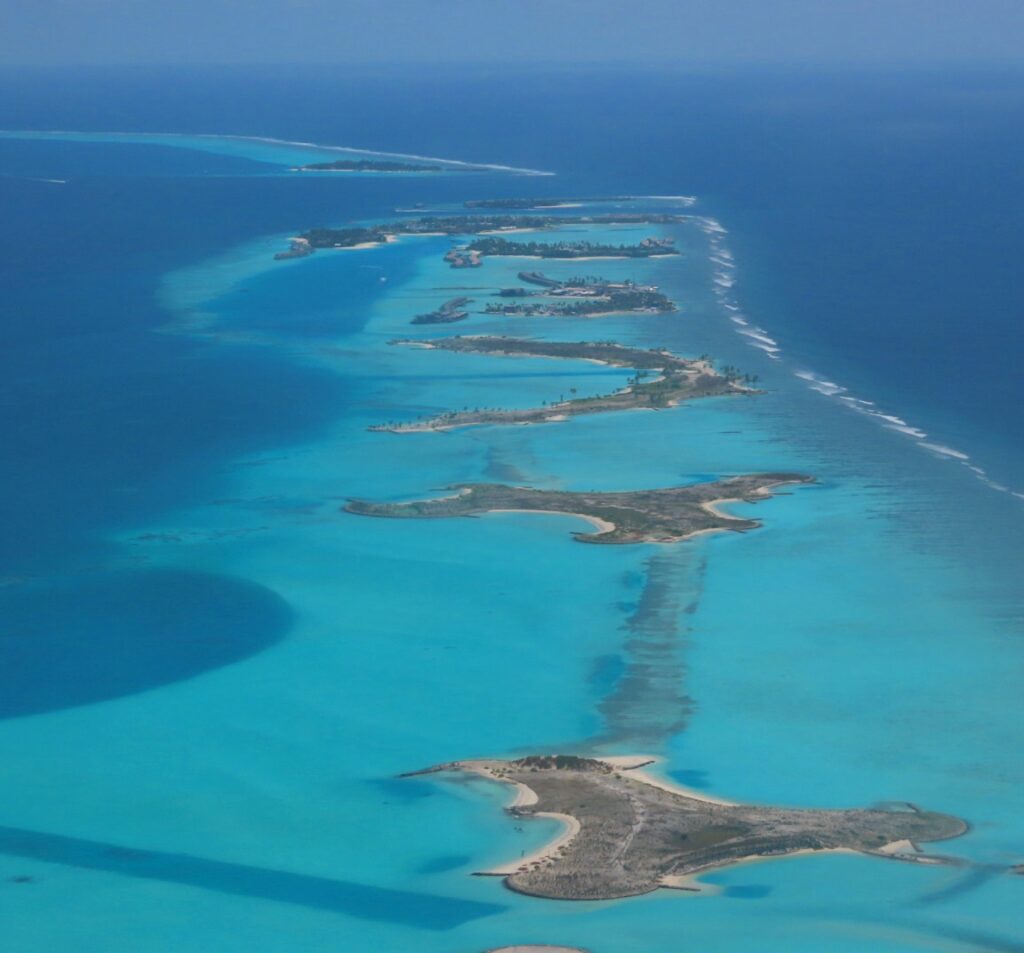
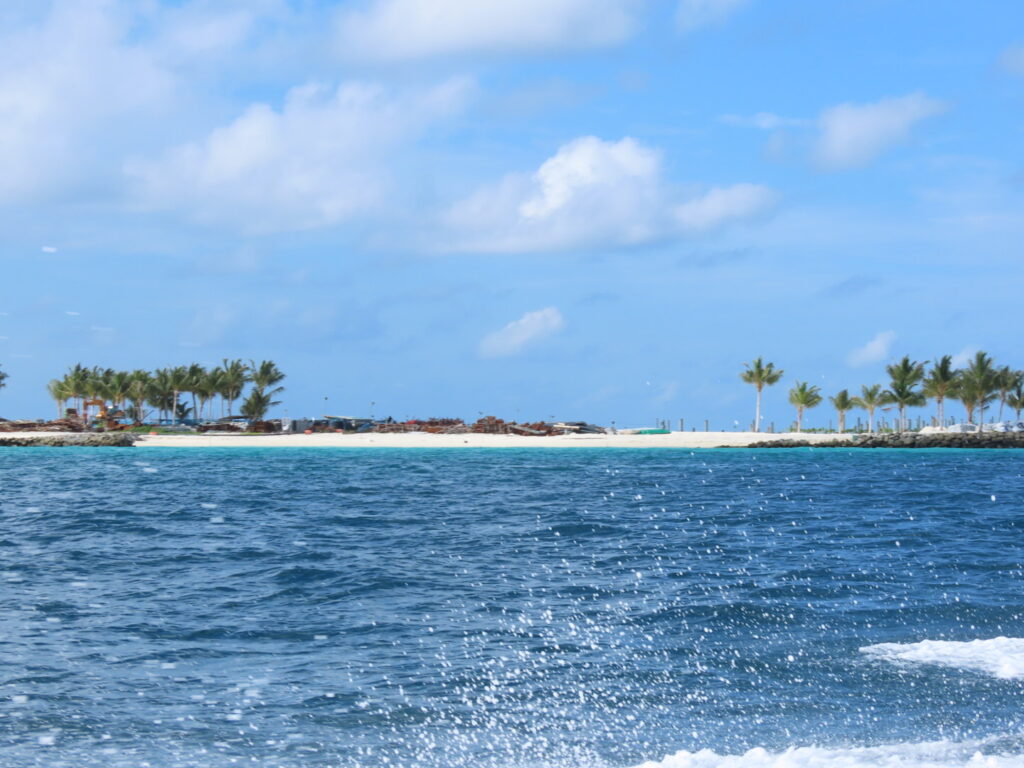
It was blue all around. Till an aqua ring popped up below and then some more…like Loktak’s phumdis. Only these were shallow reefs. An atoll followed, with slivers of islands guarded by a long reef where the ocean broke into white surf. Finally, the flattest piece of land, barely above the water. The airport took up an entire island. Outside, across the airport’s porch, speedboats bobbed up and down, waiting to whisk guests to islands nearby and for longer hauls, on the other side, the sea planes.

Bubbles of Blue.

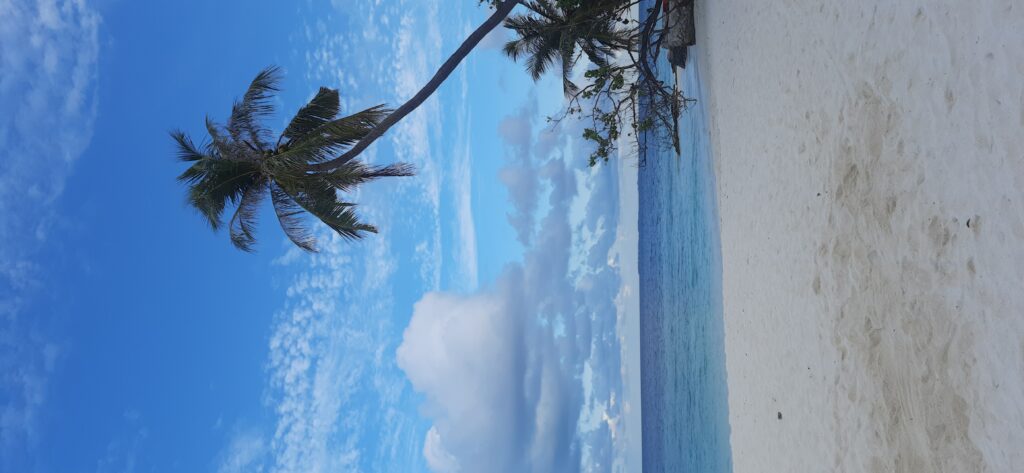
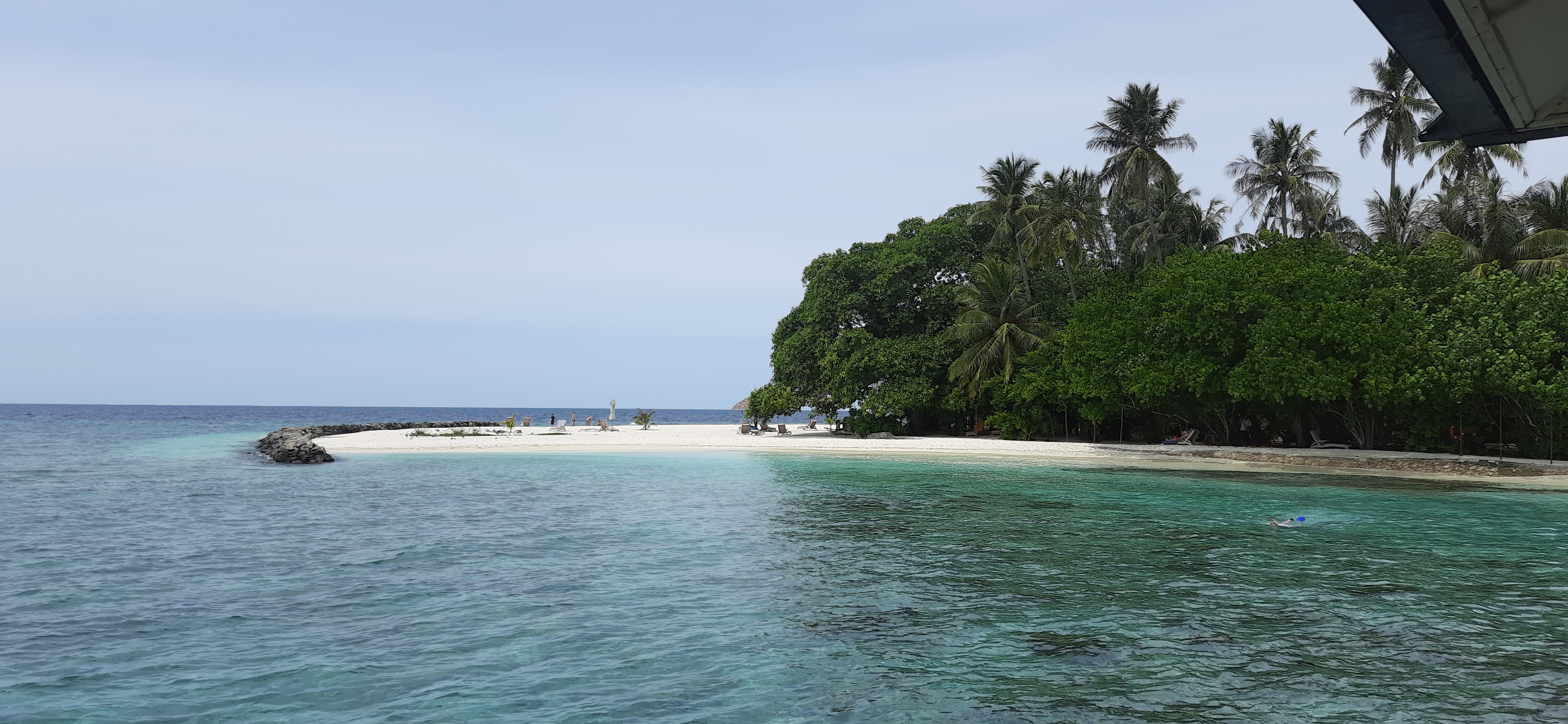
Here we were for a long weekend in the island paradise of Maldives. ‘Mala dweep, the garland of islands’. Cannot vouch for the veracity of that interpretation as one of the origins of the name but it seems apt. The archipelago nation spread over a vast area of water and barely any land, lies close to the equator in the Indian Ocean. An idyllic destination of water in every shade of beautiful blue alive with coral gardens teeming with sea life, and islands of green ringed with blindingly white sand of bleached ground coral. Where coconut trees pose, leaning just so, over a translucent shoreline, to give that perfect postcard picture. Our dream getaway was a smooth run thanks to our very own master planner but if you have to do it yourself what would you need to keep in mind?

Picture Perfect Pose!

IMUGA Form

Being a visa free country for Indians means all you need are your hotel booking details, ticket, beachwear, and your passport to hop onto a flight…and the IMUGA (Maldives Immigration) form submitted online. At Delhi airport the airline guys asked me if I had filled it. I had not because the site said I could do it ‘within 96 hours of arrival/departure’. They then gave me a heart attack by informing me that not filling it would make me incur a penalty of couple of lakhs! They tried to make me fill it right then and there, delaying security clearance which nearly gave me another heart attack! I filled and sent it while boarding and waiting to take off. At Maldives’ airport nobody asked. I filled up the one to exit at the hotel. Much as I had fallen in love with place I doubt I would have enjoyed the hospitality that might have followed if I hadn’t.

Explore beaches under the sea.

Footloose and Sandal Free

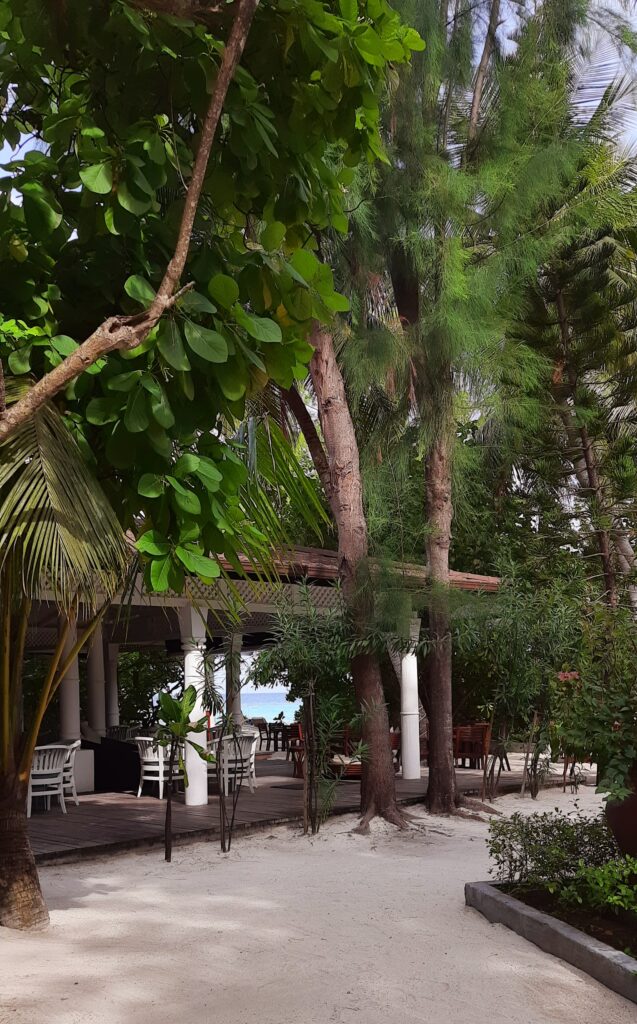
It does not really matter whether it is a days or a ten day trip when it comes to women and footwear. It is all about the possibilities. So even though I had carried cabin baggage only, I had catered. (even bought fancy flats!) Our boat docked at the resort’s wooden jetty and we walked into pristine white sand. More sand carpeted the reception, no flooring. Discovered that apart from the dining area, the bar and the cottage and its veranda, there was no flooring, no paths on the tiny island.

Flooring for the Footloose

The shoes came off outside the room and that’s where they stayed till I left for the airport. Since I had carried no beach slippers I was barefoot everywhere, curling my toes into the divine sand. Bliss! Best to check the pics of the island and resort where you are heading. Otherwise leave the heels to cool off at home.

No Home for Heels

Stash the Sunscreen but Ditch the Liquor

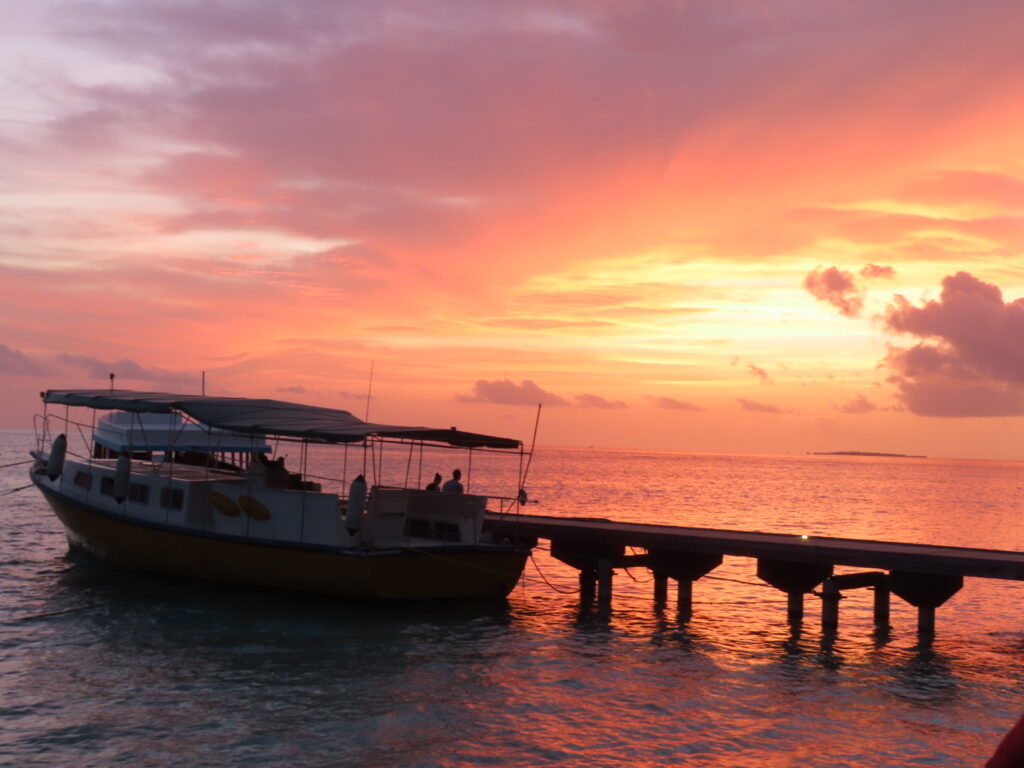
Duh! The first evening was slightly cloudy with a flaming Sambuca sunset. The following days were pleasantly clear with a balmy breeze and inviting calm cool waters. Perfect to put on the snorkelling gear to explore the reefs surrounding the island all day long. So, our faces got saved but the backs went from touchy red to sullen brown. We came back branded with tan lines and burnt skin that soaked in the sunburn cream. Pack a good aloe vera based one for good measure.

Sail into a Sunset?

Liquor is prohibited in Maldives since it is a Muslim country so don’t even think of carrying that hip flask, let alone a bottle. At the airport they flashed half a dozen things they don’t appreciate you bringing along and liquor topped the list. Having said that, it is served in the resorts. But the need for a sundowner is not always factored in the resort package for a perfect holiday. You might need to pay extra for an all-inclusive.

Setting for a Sundowner

So Near Yet So Far

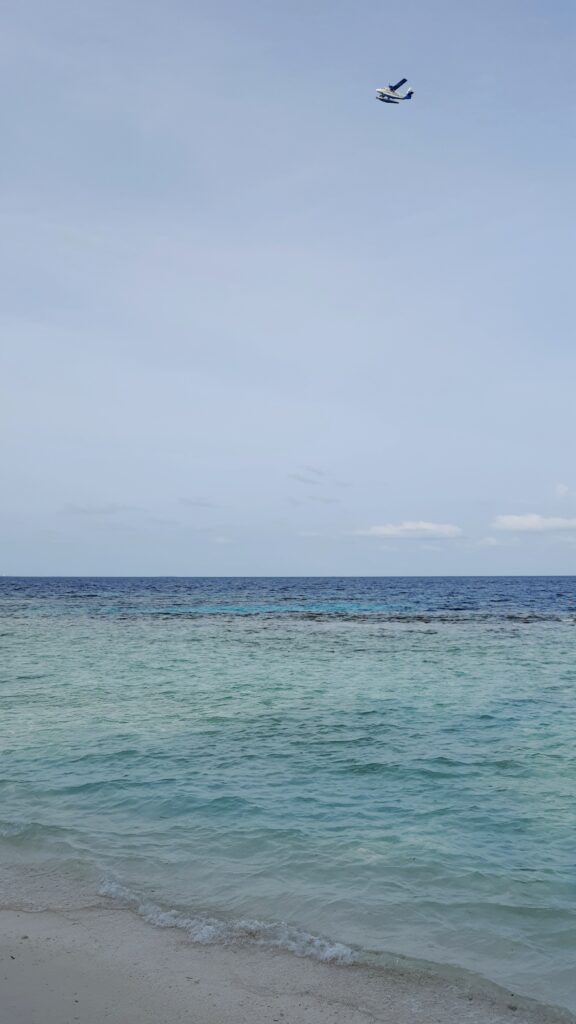
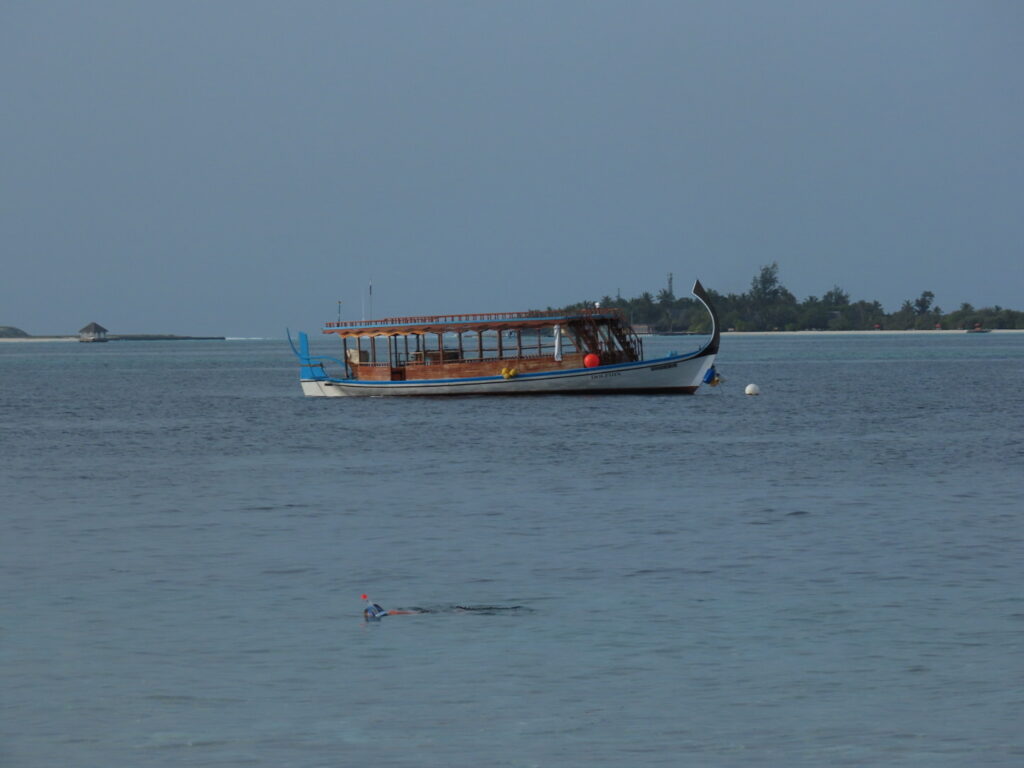
Maldives is an archipelago of atolls strung north to south like a turquoise necklace. Male and the Velana airport are on adjoining islands connected by a bridge. After landing, unless you are staying in Male, getting from there to your resort will involve a speedboat, a seaplane or another plane ride and then a speed boat. Besides adding to the cost, the seaplanes do not fly after 3:30 PM or so. If you land late, it will involve an overnight stay at Male or Hulhumale.

No Fly by Night Operator

The Seas Steal the Show

If you dream of lolling around on a sunbed with a tall cool drink and that book you’ve been meaning to read, while the rhythm of waves gently lapping the shore is all the music your ears need, then at Maldives you’ve hit the jackpot. Ditto for those diving and snorkelling enthusiasts. On our island there was a reef just off a beach portion where we had to float flat out to avoid scrapping ourselves on the corals. A coral garden teemed with the most colourful life imaginable in front of our cottage. We floated over blue-tipped and pink corals. Sighted translucent fish just beneath the surface.

Ways to spend your days

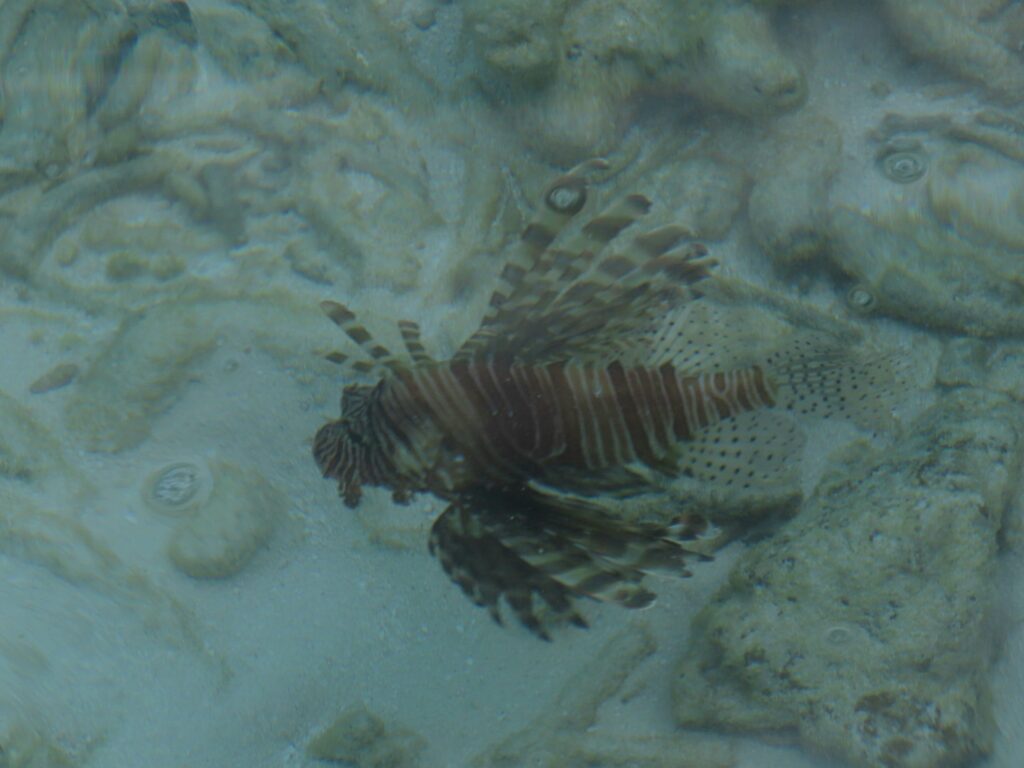
Swam with polka dotted, stripped, shaded and patterned fish and clams keeping time with the waves. Chanced upon frisky clown fish in the dancing arms of sea anemones and reef sharks going about their business. Oh, ah-ed over squadrons of Manta Rays gliding in front of the bar deck! Land looks bland in comparison. Only.. do not touch anything, it just might be poisonous. Life is as fragile as it is beautiful there and we saw swathes of bleached coral graveyards too. Check out the activity packages offered by your resort to max the wonders at hand.

Poisonous Pleasure

Souvenir Squirrel’s need for Retail Therapy-

You are rejuvenated albeit a little charred but FOMO will not let you board a plane home without some retail therapy? For a shopaholic and souvenir squirrel for whom no holiday is complete without the proverbial acorn, Male is your best bet. Head to Majeedhee Magu or Chaandanee Magu, the two main streets lined with shops. Inhabited islands have their few shops too. The resorts have their souvenir shops and some stock exclusive things so do check them out but the variety would be limited and the prices exorbitant. In the airport after you clear immigration, opposite the perfumes and cosmetic section there is a shop for those last-minute token gifts.

Idyllic

Maldives is a bang worth every buck whether you are a laidback luxury lover or a water baby. You’ll come back dreaming of it and the sandbar would have been set high for any beach holiday to follow.

Fact File-

Getting There-

  • Velana International Airport is very well connected.
  • From there you can take a taxi, bus or ferry to Male.
  •  Your resort could be domestic flight, seaplane or speedboat away. There are no local ferries to the resorts. It is best to tie up the transfer to your accommodation beforehand.
  • Local ferries connect Male to nearby atolls. Within the atoll ferries connect the islands.

Staying-

It depends on what you want to do. For a laidback holiday there is a plethora of resorts to choose from which go from chic to the uber luxurious. For budget travellers or those focused on diving, Male and other inhabited islands have hotels, guest houses and perhaps a few Airbnbs which are more reasonable.

We stayed at the Embudu Village Resort.

Best Time-

With its tropical climate it is a year-round destination. The high season runs from December to April. Monsoon season is not a bad time either. We went June end.

Mechukha in Arunachal Pradesh Must be the Last Shangrila

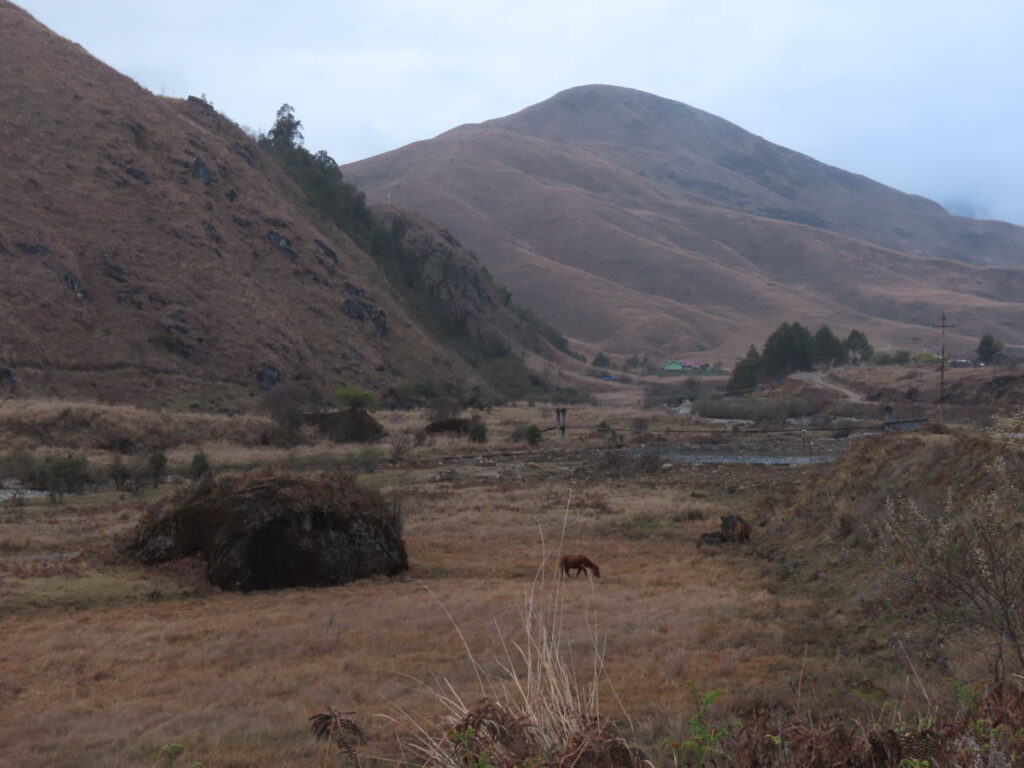
‘It was golden brown? You should see it in the summer when it is green or in winter when it is white.’ We are told upon our return from Mechukha, making it sound like a seasonal chameleon. It took us almost two days of being on the road.. Correction.. one day on a road and thereafter a dirt track that went from bad to backbreaking to enter the traditional Tibetan style gate at the beginning of Mechukha. Chameleon or not, what Men-chu-kha or ‘medicinal snow of water’ (As the name means in the Memba language) at 6000 feet was, was tonic. The cold wind blew all the tiredness away and the sight of bare moulded hills, golden in the afternoon light with a gentle grey Yargyup Chhu was a vision of timeless tranquillity. What else was it?

A sight for sore eyes.


Technicoloured Mechukha

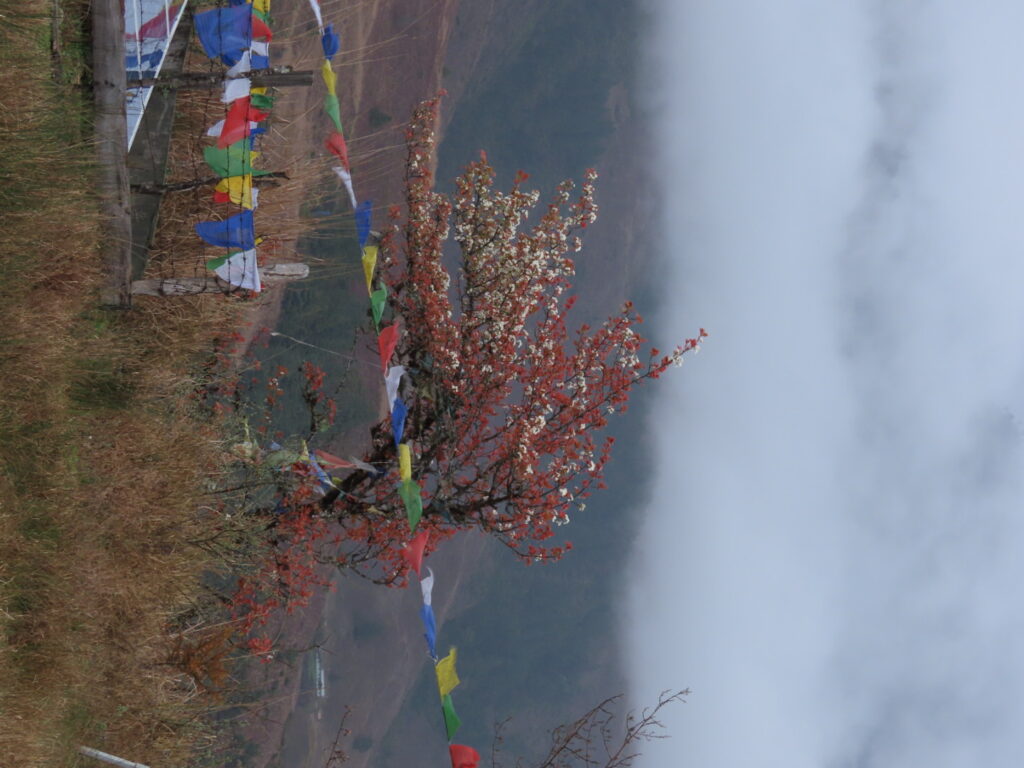
We enter the town‘s wide main street lined with shops, their windows displaying colourful wares but everything makes its way up, like us, and adds to the cost. The gaily painted stilted wooden houses sit surrounded by barren kitchen gardens and trees in bloom. Most have colourful Tibetan prayer flags. The river is a smoky grey thread skirting the low range with sagging bridges connecting the far bank.

A Sight for the Soul

After a quick late lunch, we make a run for Dorjeeling village tucked behind the range which has Hollywood inspired Mechukha written on top. A great day hike, I think. The village spreads out in the shallow moorland. Scattered houses in technicolour, accompanied by prayer flags and flowering trees are a recurring sight.

Dorjeeling’s moors.

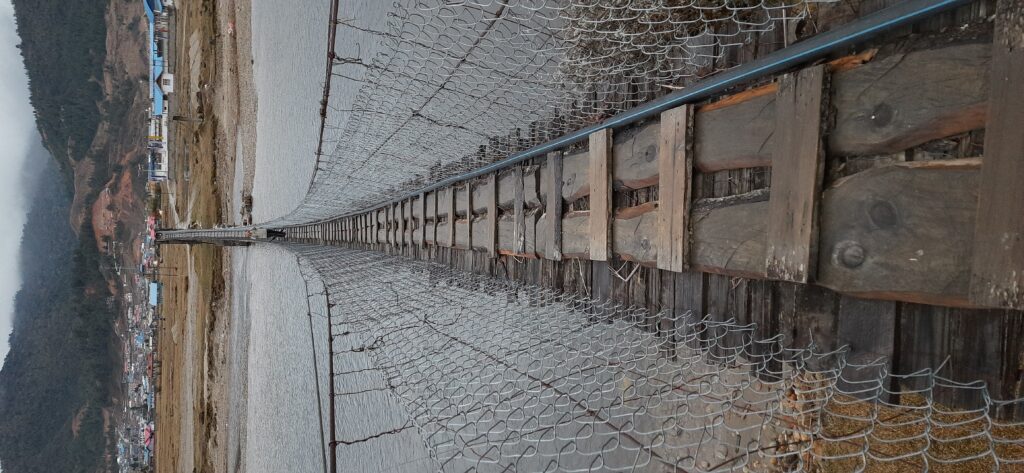
We make our way to a low walking bridge hanging over a stream but some planks are missing as are bits of the side steel mesh. Having explored the land of swinging bridges a bit, I have yet to cross one but this is still not The one. Dinner is a warming bowl of thukpa and ubiquitous chowmein at one of small eateries in the Mechukha market.

Snow Show

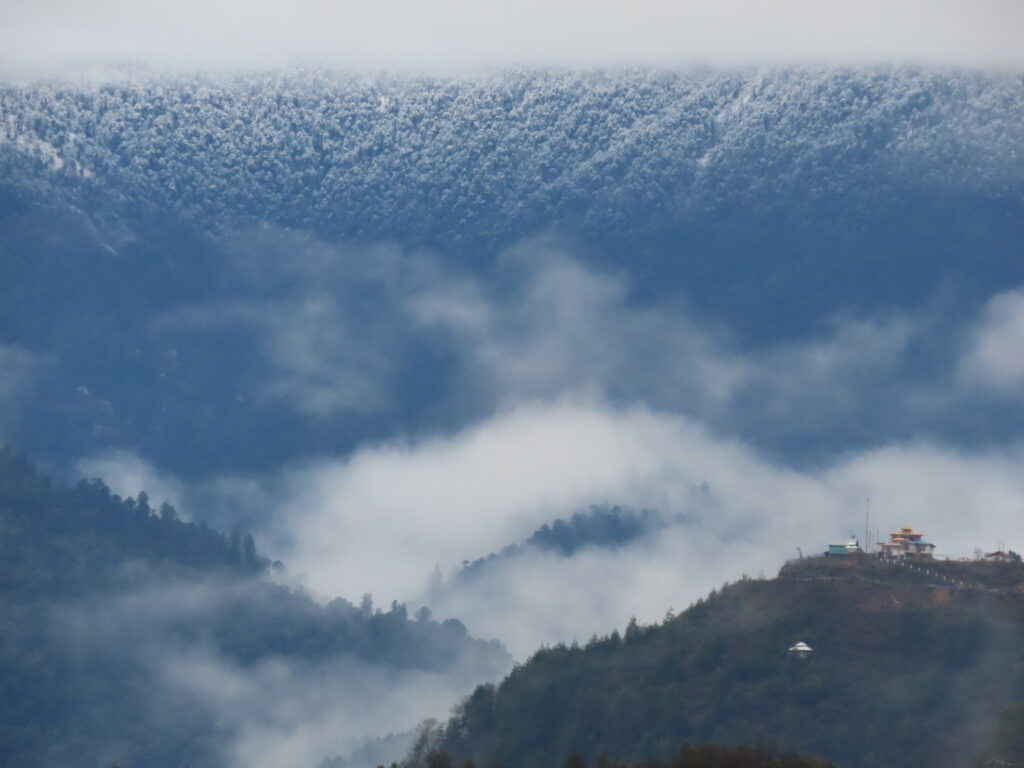
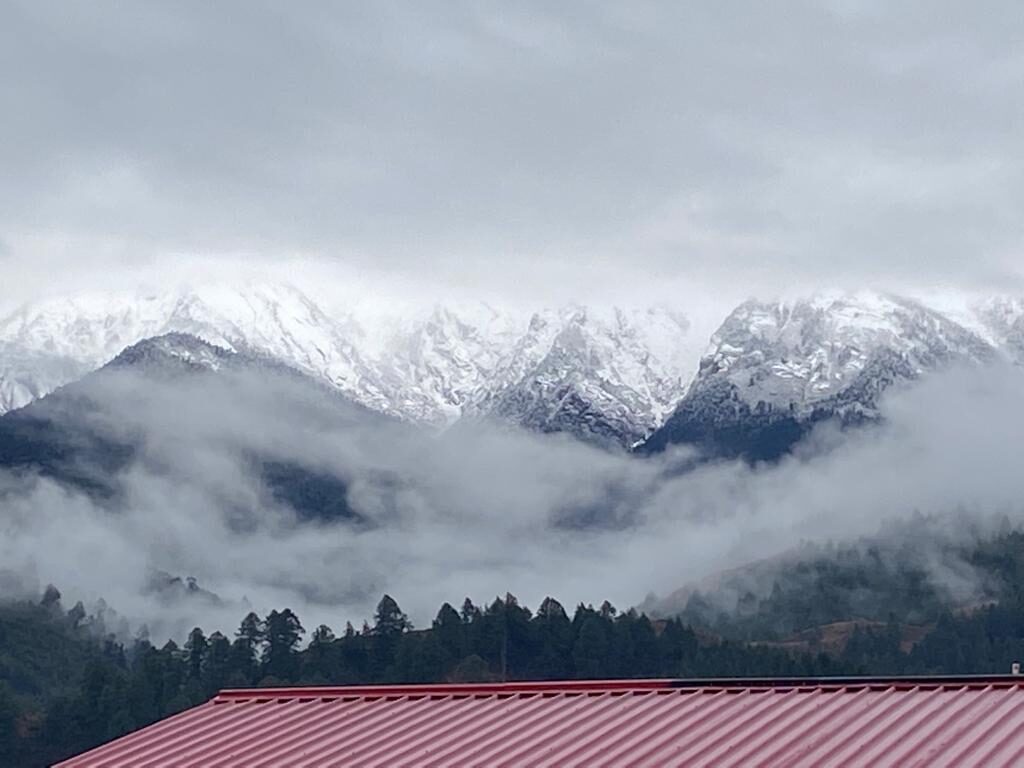
I am woken up early and dragged out of a super cozy bed. One look at all the snow and the cold ironically ceases to matter. The clouds, like stage curtains, have risen to reveal the day’s show and though a wide V in the immediate range the towering forested range is visible. Its crest and trees covered with fresh powdery snow. All around, the dark blue mountains have a white mantle.

Dark Drama.

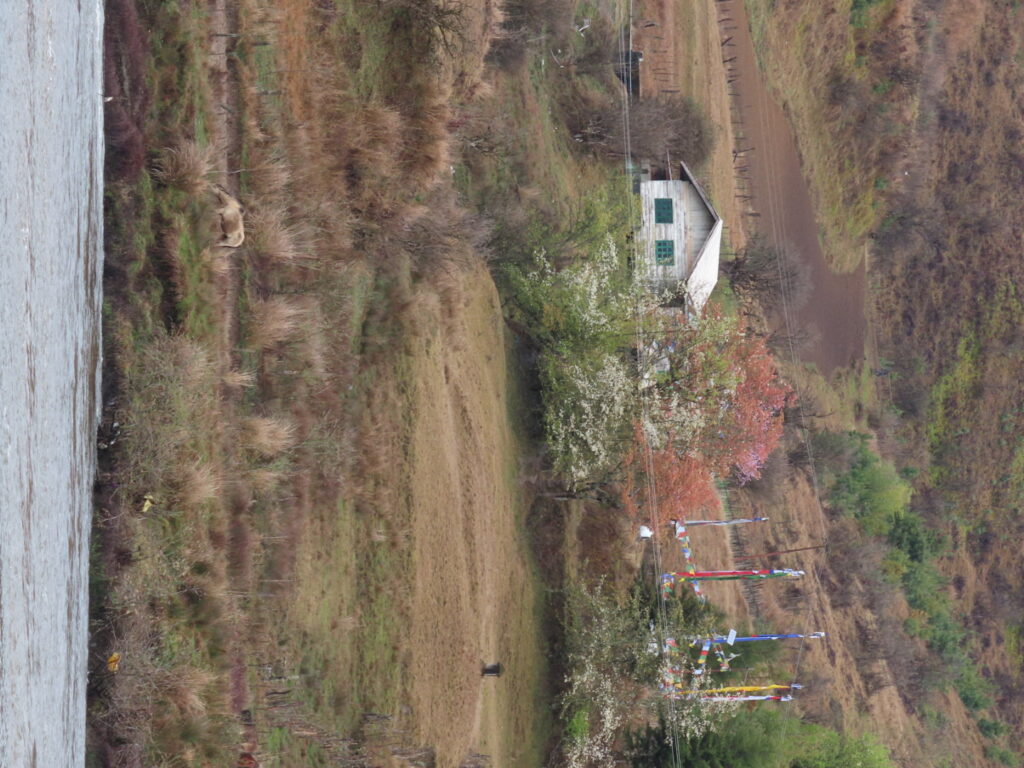
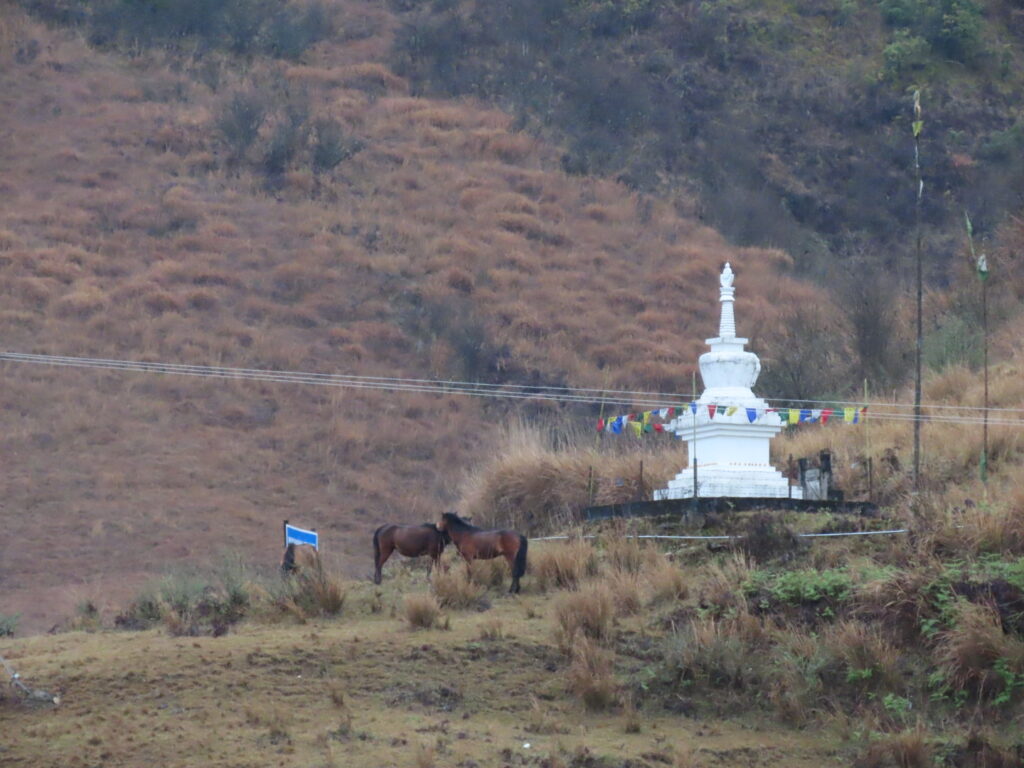
The tiny yellow red monastery on the hillock guarding one end, makes a dramatic picture against the descending clouds and deodar covered mountains. Across the river the prayer flags have yet not been woken by the breeze but the ponies chomp around a Chorten.

Two is Company.

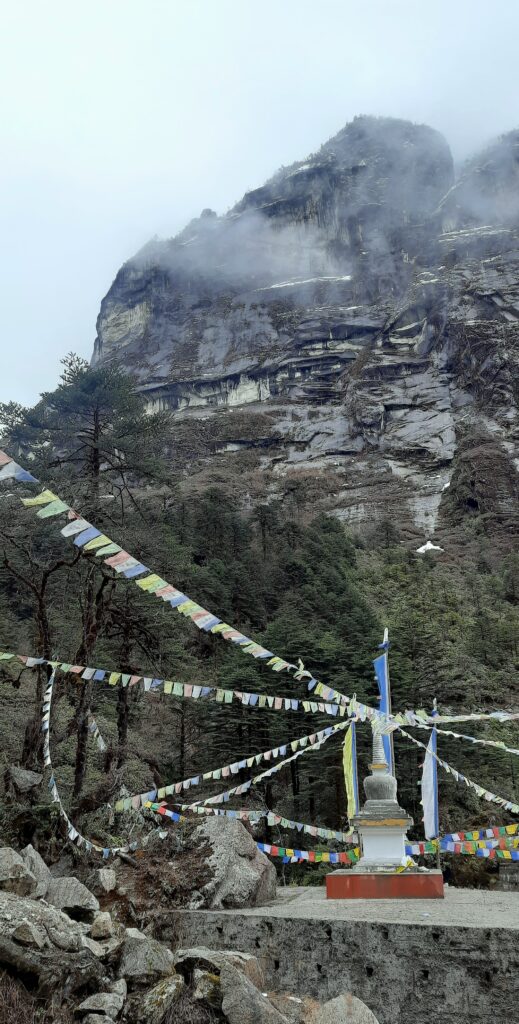
We are on the road soon, climbing into a narrowing valley. Blooming white and pink rhododendrons dot the deodar forest. We reach the ITBP camp above the confluence of the Yargyup Chhu and Lemang Chhu on the only flat ground for miles. A permit is needed to go beyond but couple of scooters whiz past. We cross a churned-up dirt patch beyond the camp, swerving and tipping crazily. I close my eyes and curse my choices and pray. (Again!) We make our way up to rocky, snow bound Lemang, the last post on the Indian side where civilians are permitted, crossing a small bailey bridge and chorten looking gay and festive with prayer flags below a gigantic rocky massif.

Prayers move mountains.

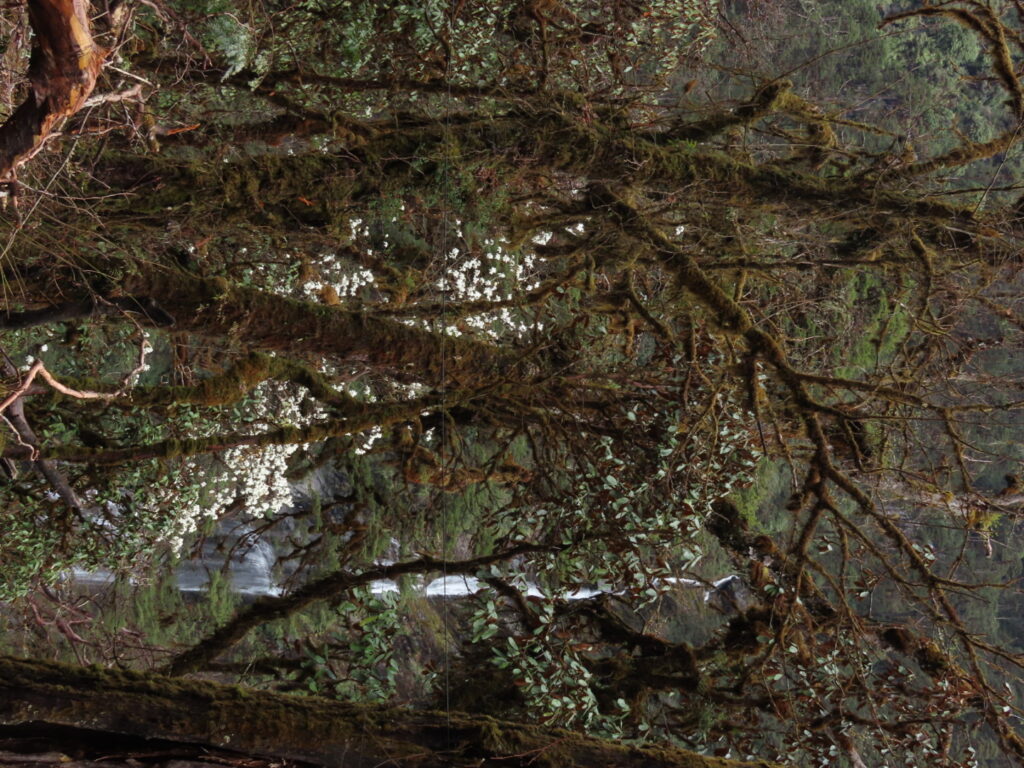
Milky waterfalls, twinning with the rhododendrons, disappear into the depths of the gorge. I am gifted pink ones by the man. (Later I read about a genus discovered recently that is found only in that area) We enjoy the fresh snow against a backdrop of grey clouds shrouding the bowl of whitened rock and trees that is Lemang. While returning we hear a crackle, then a rumble and see a mini avalanche on the heights above. Nature is magnificently raw here.

White as melted snow.


Many coloured Monasteries

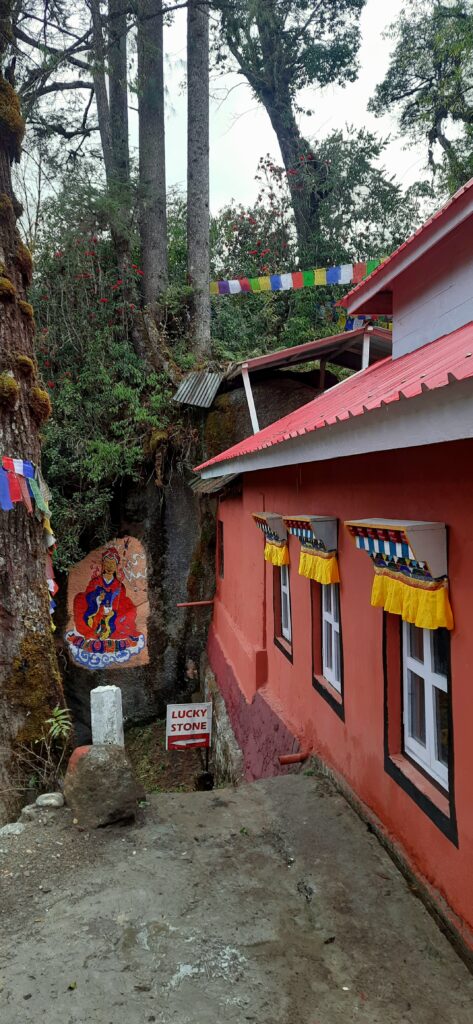
While returning, the rain gods hold on and don’t rain on our parade, too hard. We stop to see Hanuman’s face on the rock face. Nature has hewn a face alright with heavy brows and a wry look. But Hanuman?… At the confluence of the Yargyup Chhu and a pretty stream brightened by white rhododendrons and colourful flags, a Gurudwara made by the army is a pit stop for most visitors. I think the langar is the main magnet because the legendary rock is tucked away across the road. A narrow path marked by prayer flags brings us to a bright red temple abutting a boulder.

Lucky Rock

This place, claimed by two religions, has a rock with deep indentions made supposedly by Guru Nanak or Guru Padmasambhav meditating under it, depending on whose story appeals more. Another legend takes us down a slippery wooden staircase to a cracked boulder which only the ‘pure’ can pass through. I look through the crack and feel my claustrophobia hold my adventurous spirit’s hand and nudge it towards the stairway to the stream below. I tamely follow to the stone bank below. Small piled up stones are reminders of the faithful and we hunt for the fabled wishing pool. In a rock we find a milky bowl with a never-ending supply of water and pebbles. I hesitate and with que sera sera shrug gamely fish out the three pebbles that will portend our luck. With a mixed bag deposited into the adjoining pool we make our way to the next monastery- the five hundred year old Samten Yangchag.

Gods thankfully have insight. (Pic Credits-ASR)

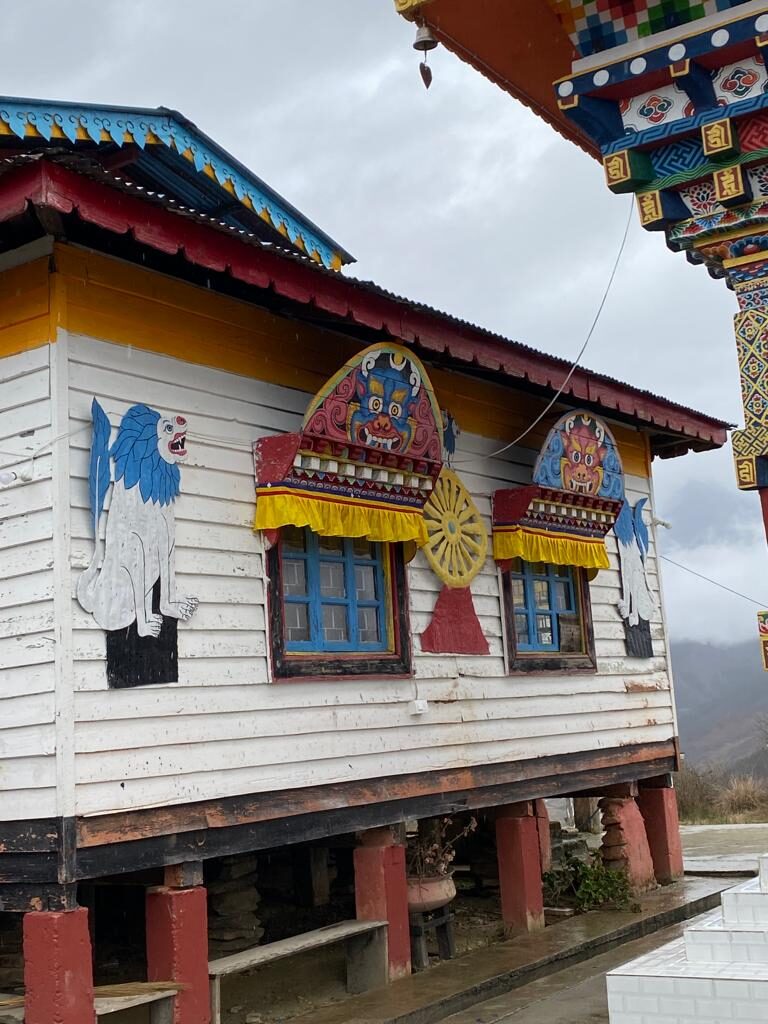
It sits on a hill with a commanding view of the valley, which the gods inside cannot see anymore thanks to the massive new chorten with a base of white bathroom tiles. The double storied simple wooden structure on low stilts has brightly coloured eaves and multicoloured windows. It is being repainted inside and the deities look scattered but still dwarf everything inside. The caretaker’s wife and impish little son, Dorje show us around. He scampers around laughing happily but baulks at being photographed. Outside the wind has whiplashed a peachy tree nearby into a permanent stoop.

Poetic Pose


Low-hanging Fruit

After a late lunch we walk along the river to a hanging bridge. It is low over the shallow and silent river. To do or not to do? Lets just do it! I realise if it doesn’t sway I’ll be fine but that means traversing it alone.

Walking the Plank!

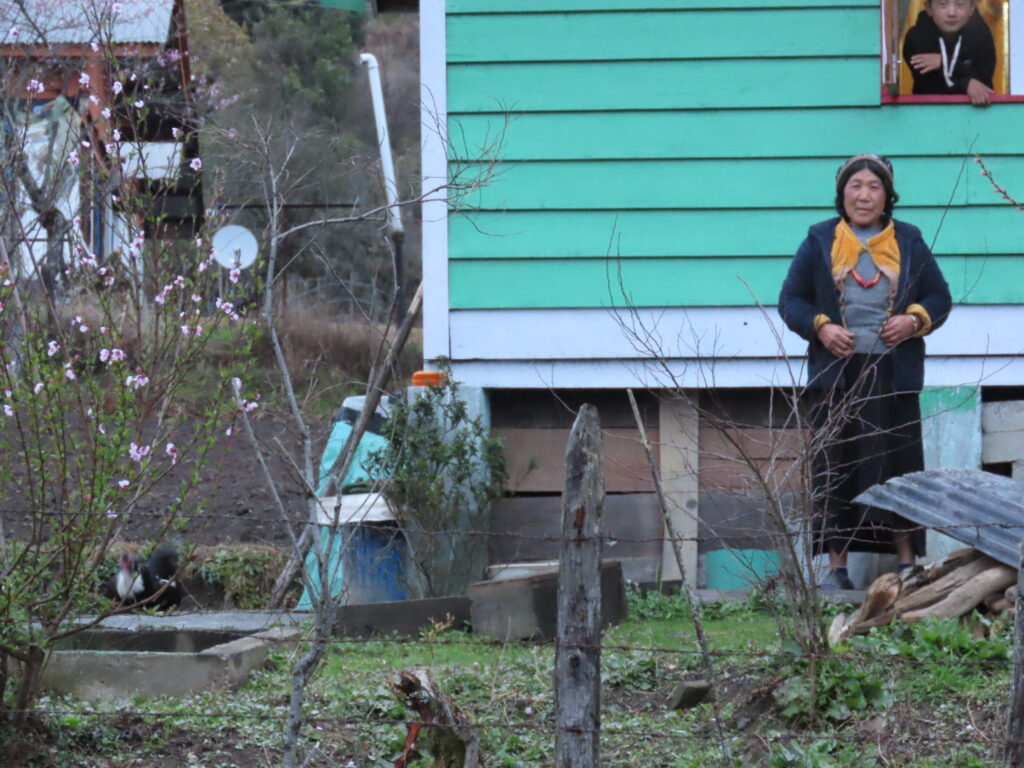
Also, there is no other way to walk to those picture postcard houses across the river. I do it! Haha..I hope I can repeat the feat, else it’ll be a looong walk in the dark. In the fading light a lady chasing her duck out from under her green house while a little boy peers out of the brightly lit kitchen window. We exchange greetings and she poses for a photo, asking how does she look. She looks like a warm sight on a cold evening.

Warm hearts and hearth.

Early next morning after a night of heavy rain, the deodars and the crests of the higher horse-shoe ranges cradling this golden valley are liberally dusted with white. On the road I turn back to see the peaks being swallowed up by the clouds. The show is over for the day. I’ll be back. I’m ready for an encore, in any colour.

Early morning show. (Pic Credits -ASR)

Fact File-


Getting there-

Rail– Take a train to Dibrugarh, Guwahati or Naharlagun and then a taxi to Mechukha.

Road– Mechukha is a two day journey with a night halt at Aalo.

Air-Pawan Hans helicopters connect Naharlagun (Itanagar) via, Pasighat and Aalo to Mechukha on Mondays and Saturday. But they are weather dependent.

Staying– Aalo has simple budget hotels and homestays.

Mechukha has mostly homestays and one or two small hotels.

Best time to visit– September to May. But carry your raincoat and the water bottle!

Avoid plastics or carry them back .


Loktak, Keibul Lamjao and Ima Market- The 3 Must Dos in Manipur


The mountains ranges below are like endless green waves pushed into crests and then just as suddenly they give way to a vast valley with a lake on one end. Welcome to Manipur! With just three days to spare for this trip our destination is essentially the Loktak lake of the phumdi fame. But first the shopping bug has to be dealt with and not anywhere but at the iconic Ima market! As we drive towards town the traffic is sparse and the shutters mostly down. We reach the market but the priestess at the market’s temple (also shuttered…Gods are also only that available on an off day) informs that the one day in the month that the shops shut i.e, on Ekadasi is today. She smiles and beckons me closer to put tikka. I say a prayer and take it as a propitious sign, closed market notwithstanding. The language is different as are the Gods, old rulers of the realm- Sanamahi, are the presiding deities in the temple here. We make haste for Moirang and Loktak…driving past step-fields lying fallow at the foot of the hills ringing the valley.

A propitious start looks like…


Loktak is more than a Lake

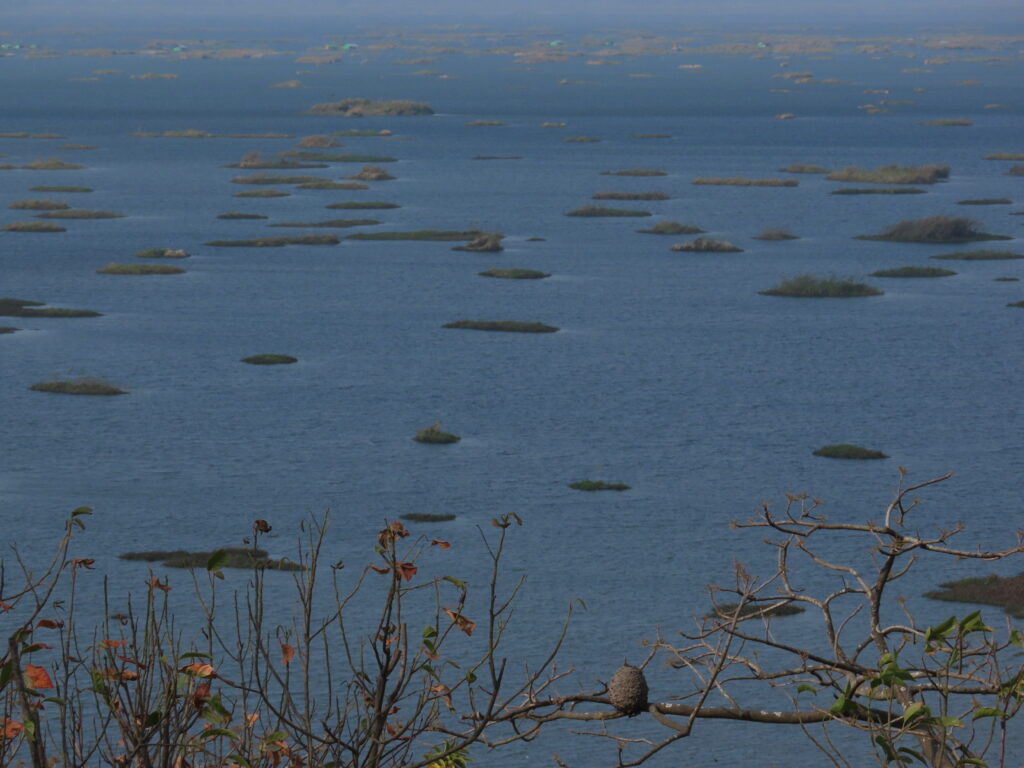
We have just an hour of daylight left and the new jetty at Sendra, all spruced up thanks to G20, with it’s hastily planted carpet lawn, instant flowers, colourful flags and giant dredgers lined up, closes at 5. We head into the lake like eager beavers and make straight for a phumdi. The floating biomass looks solid enough and we get down from the wooden jetty where we have docked. It bobs a bit but holds. A few pictures and it is time to head back.

We are islands all.

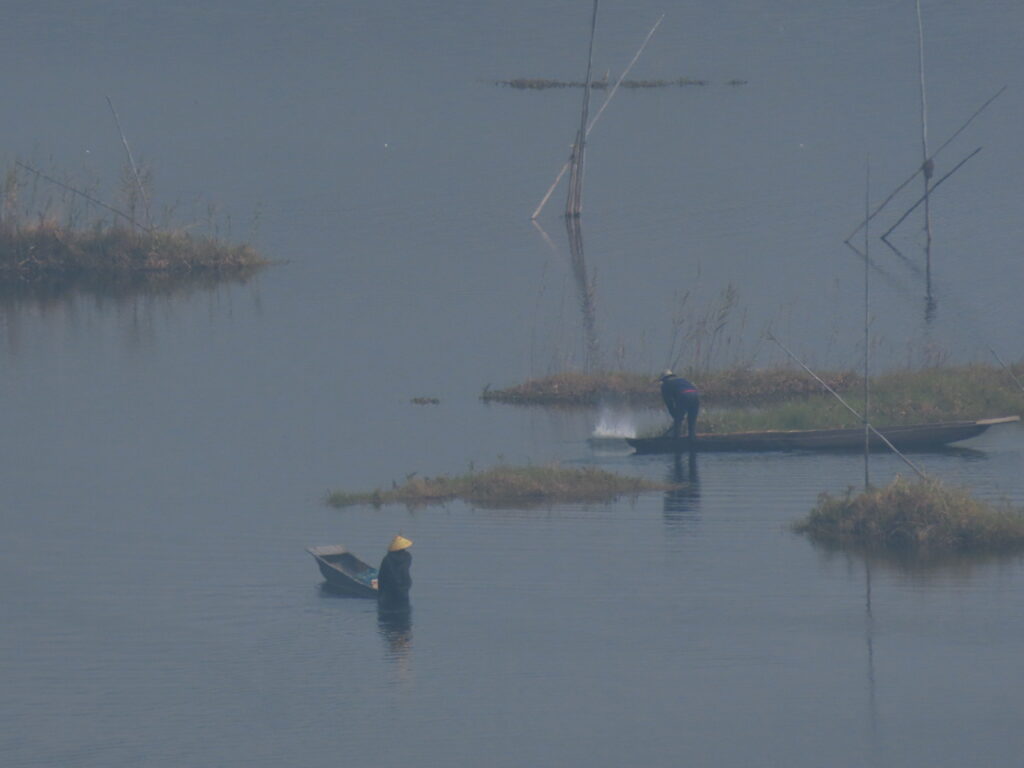
We cross lone figures on their lean long boats heading home in the falling dusk. In the night solitary lights twinkle in the dark waters. Loktak gets its name from ‘Lok’ meaning stream and ‘Tak’ meaning the end. It is Asia’s second largest fresh water lake but it’s the floating phumdis– floating greenbergs of soil and grass, a few solid enough to be inhabited, with their own cyclic regeneration which is now threatened, that are the star attraction here. The circular photogenic ones though, are manmade and are essentially like fishing ponds.

All in a day’s work.
The Extraordinary in the Mundane

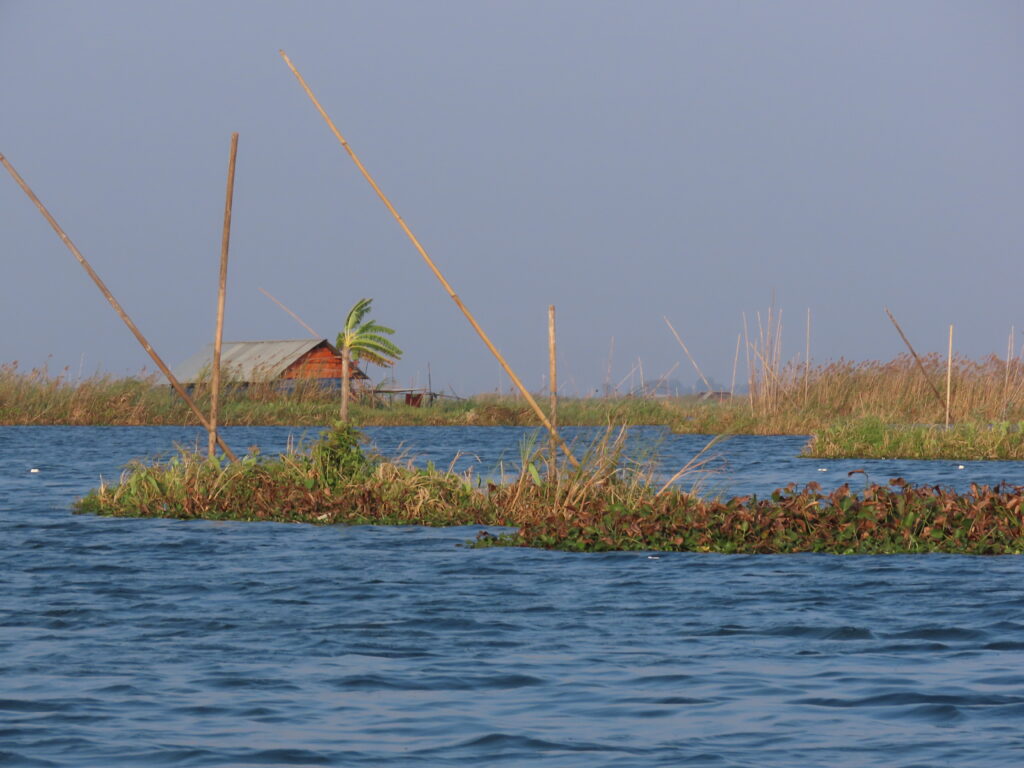
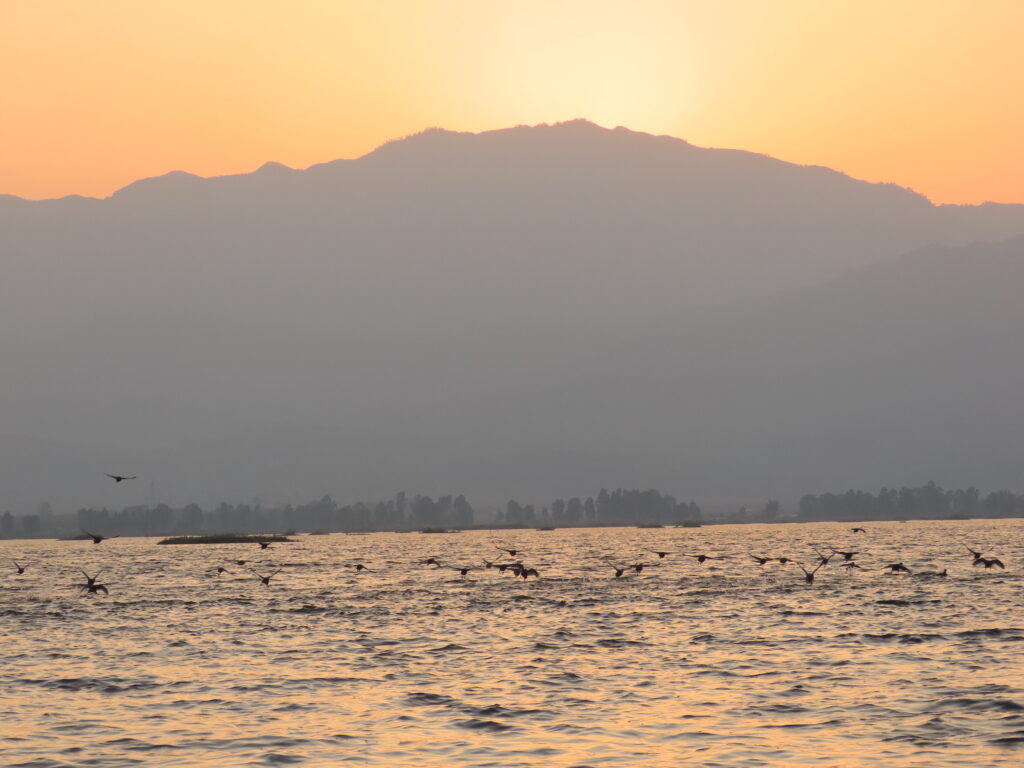
The next day the sky is clearer as is our agenda. After an early morning date with the Sangai, followed by a local cuisine lunch which includes the tasty eromba and divine black sticky rice pudding, we head for a fisherman’s hut on a phumdi for a tea picnic. We are told that the government has recently cracked down on the motley lot of homestays which had sprouted on them. Not to be deterred, it is ‘self-help tea in a thermos’ that we carry along! We skim over reeds barely underwater, past fishing poles strung out on the water and make a whole raft of coots and ducks take flight reluctantly to make way for us.

Two peas in a green pod.

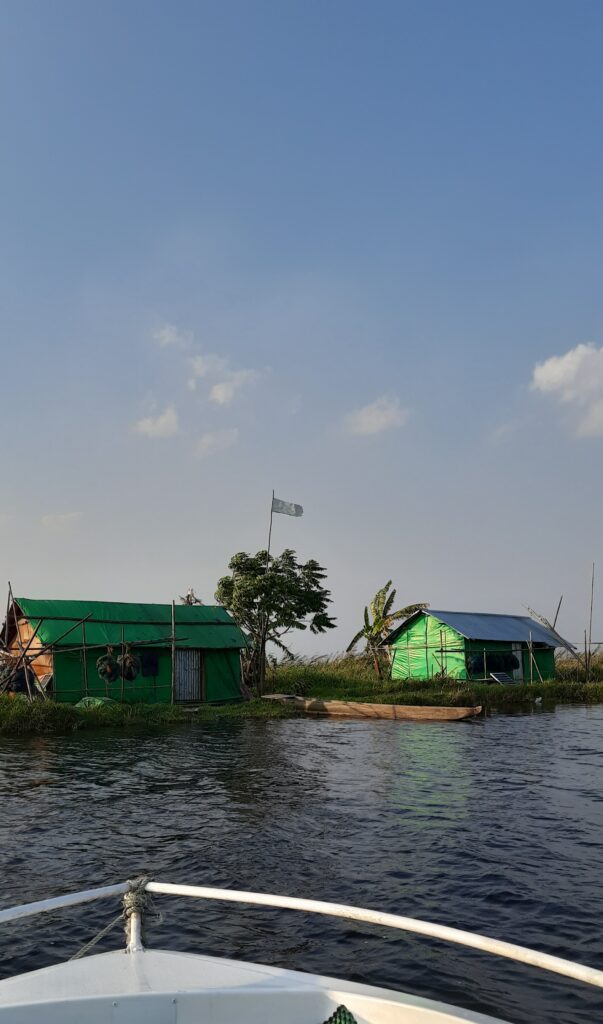
We nose onto a phumdi with a tiny hut, a log boat parked in front, a banana tree growing beside the hut, and balled up nets to catch the fast drowning sun. We walk on the wooden planks to the adjoining one with another hut. There isn’t a soul around other than a mewling hungry cat. The boatman pulls out a few sprigs of some plant and offers me one. The stems have a strong flavour. A lot of the island is edible it seems! Sitting in the log boat we drink in the silence with sights of huts on tiny floating islands around, along with our tea. The hills are silhouetted against an orange sky as we reluctantly leave this oasis of green huts on greener grass.

Water bed.


The Dancing Deer of Keibul Lamjao

The Shy Sangai

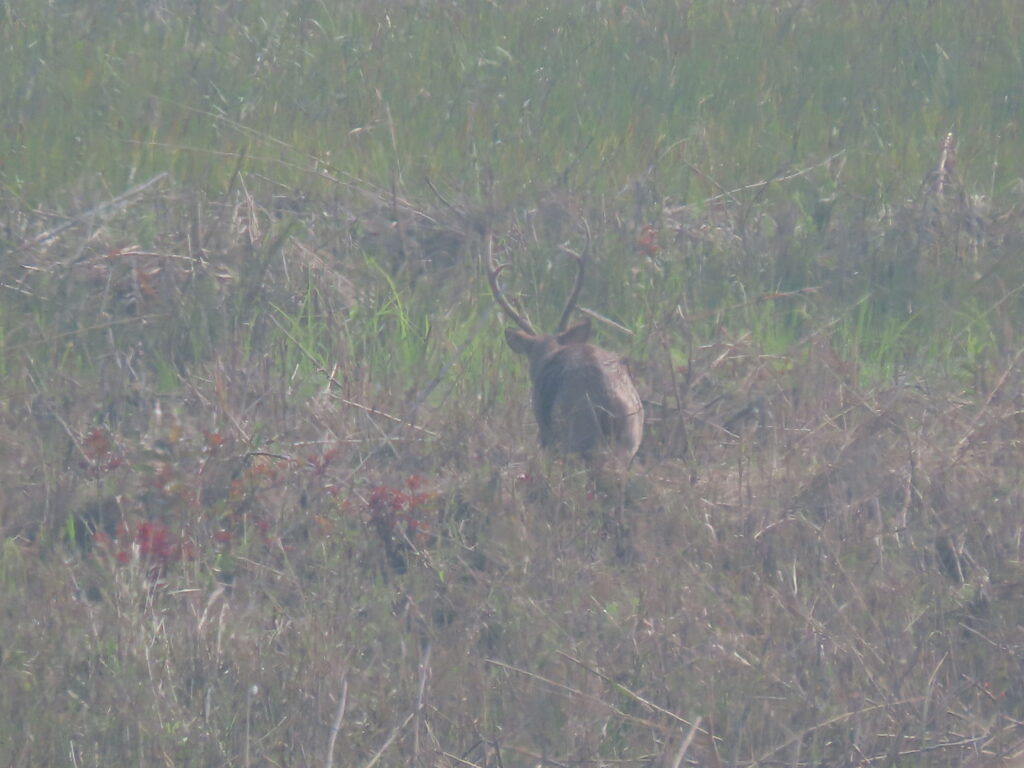
Its an early start for the world’s only floating sanctuary which is home to the endemic and endangered Sangai. The deer is an integral part of the Meitei culture and is considered one of the rarest species in the world, yet it’s home is just a forty square km national park, threatened by a reservoir created to feed the Loktak Hydel Power Project. The stags have four antlers with two seeming to sprout from it’s brow.

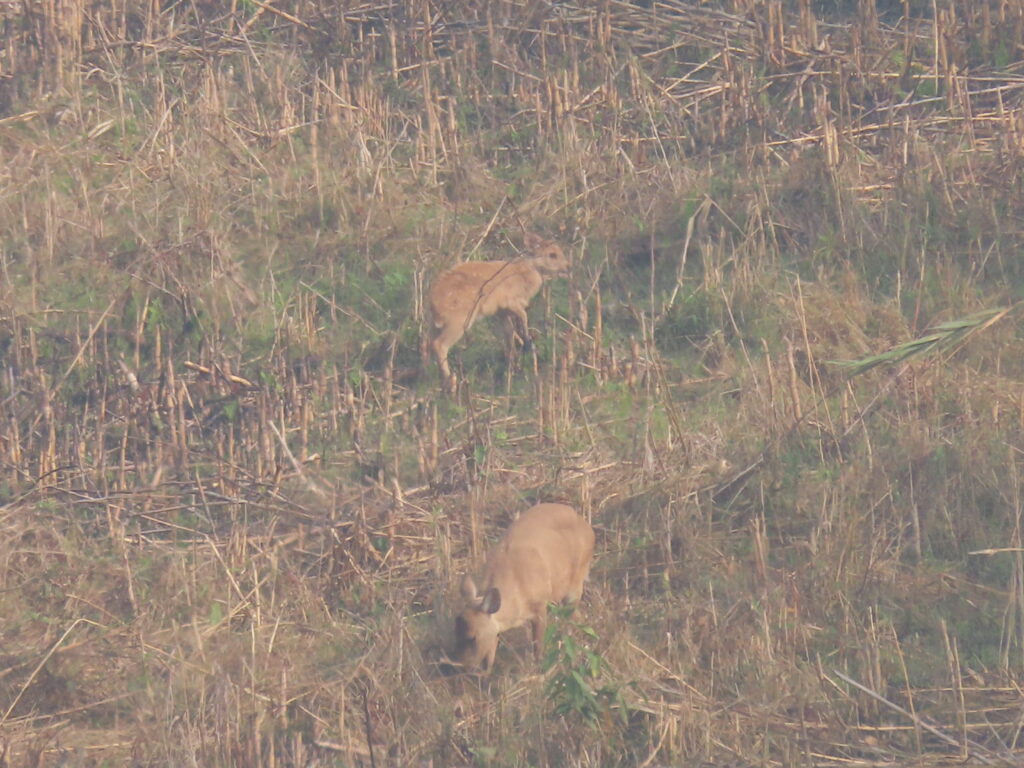
We head up to the viewing point and the ground in front is a bowl of drab yellow brown grass covered by a lid of haze. What feels like a long futile wait ends when out of the tall reeds a brown bit steps out. It is a female Sangai. Soon another emerges, this time with a fawn.

Dancing Doe.

Then in the far distance in the fire line a stag or two appear. Their antlers dipping as they feed. The forest guide is a young, chatty fellow. He is the only one left out of the couple who were trained since there is no pay (how does that even work??!) He offers to take us into a narrow channel below in his canoe. A running commentary on Meitei culture ensues while he steers us towards a clearing. This is where he got Rocky (of Highway on My Plate fame) we are told. The phumdi’s black soil is still churned up as we gingerly get down. As the soft carpet of soil and grass sinks under us and undulates with each step, I tell myself it has taken on weightier things. No wonder the deer look like they are dancing! The boat feels so stable and solid in comparison.

The man who knows it all.

As we reach back another fellow in a smaller boat is stripping bits of the tall reed. Food here is sourced from things that grow naturally. Imagine not cultivating and yet never running out of food!

Moirang’s Moment of Glory

How green is your plate?

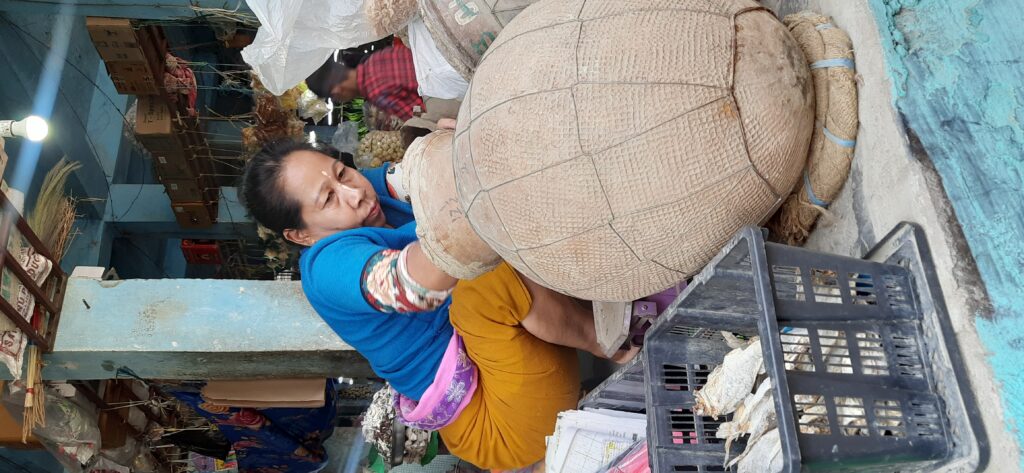
Moirang near Loktak is a small town with a big place in Indian history. The Moirang king was the most powerful of the various clans in Manipur and it was here that the tricolour was first hoisted by the Indian National Army on India’s mainland in 1944. There is a small museum dedicated to it. The vibrant innaphi (stole)and phanek (wraparound skirt) worn by the women in the quaint market are too much of a temptation and I end up buying a phanek which is stitched up in a jiffy behind the shop and the owner indulgently shows me how to wear it. The fresh market has women selling giant cabbages and string beans amongst other greens and buckets of snails. A woman churns what smells like fermenting fish in a giant earthen pot.

There is something fishy about this…


Imphal’s Iconic Ima Market

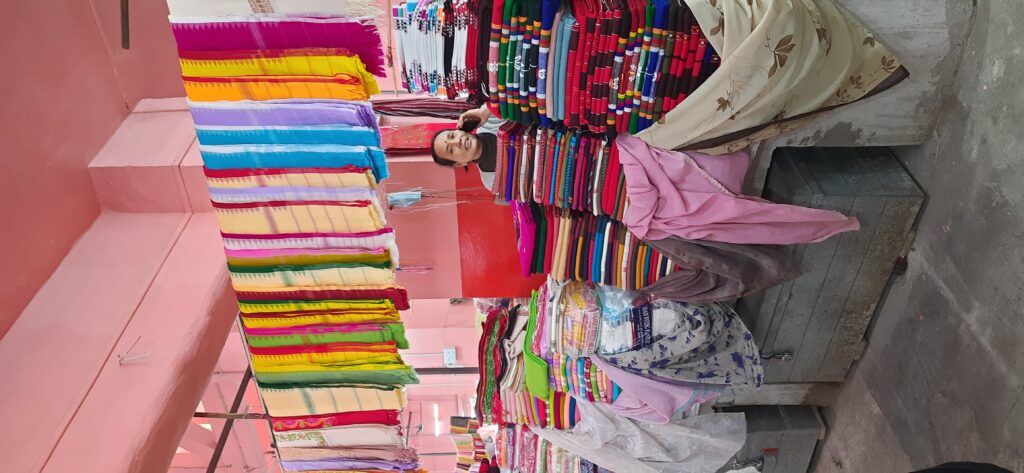
One cannot leave Imphal without a visit to the iconic Ima Keithal or Mother’s Market. The nearby Kangla Fort will have to wait for another trip. The nearly 500-year-old market run and managed exclusively by married women is housed in three adjoining buildings. The buildings are an airy, spacious and clean affair with open stalls on elevated platforms. The extra stuff gets stored into giant trunks below as we see in the other two portions where brightly coloured local textiles vie for attention.

Colour to suit every mood.

The fresh produce section is bustling early in the morning and today the temple at the entrance with its circular paper prayer flags is open. Women stop to pay obeisance and get the traditional long sandalpaste tikka put.

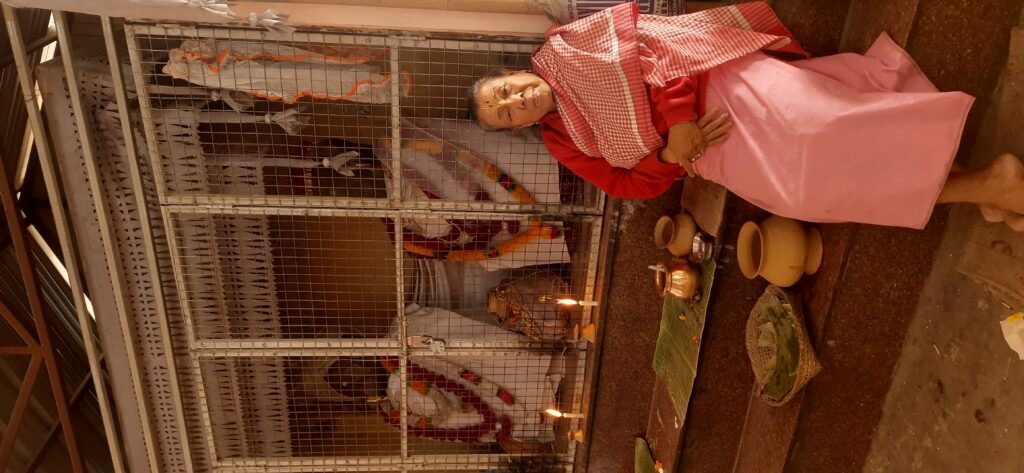
Pensive Portrait

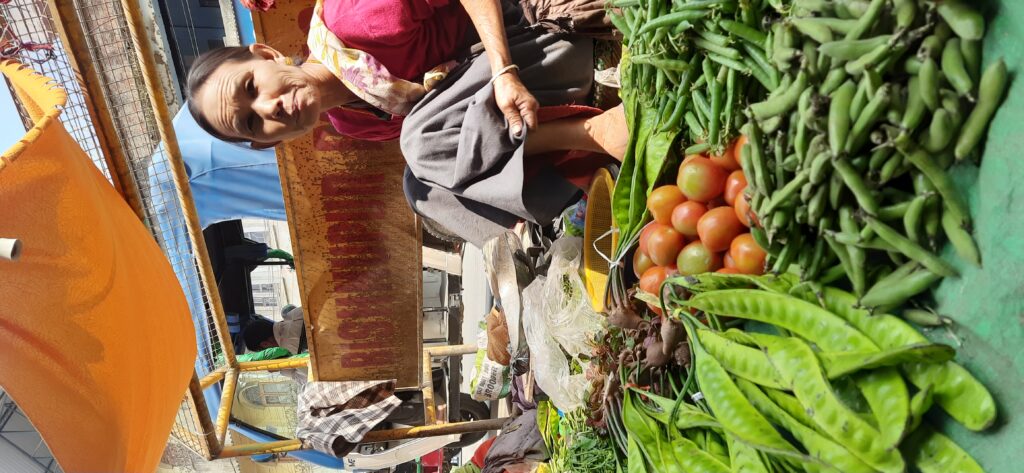
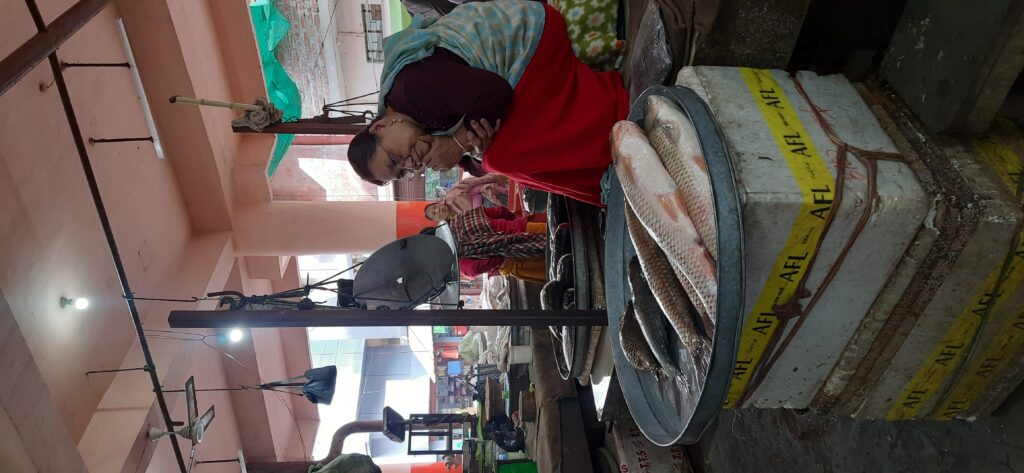
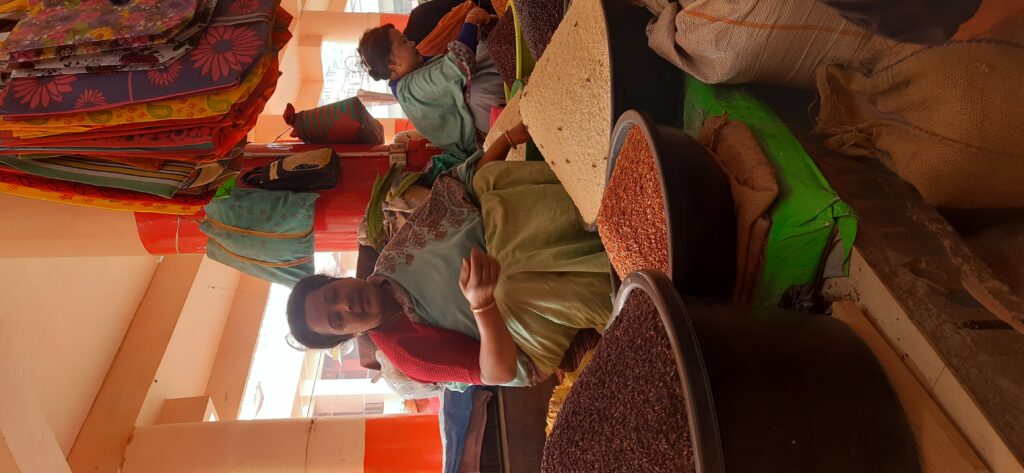
The wares here range from handicrafts, everyday essentials, groceries, local food items to fresh produce and everything else in between. A woman admonishes me like a child for smelling some fresh vegetable, another encourages me to check out the varieties of mushrooms piled up (so tempting!) and one sitting with mounds of varieties of rice being feasted on by bees laughingly chides me for wanting only her picture and not her wares!

Lady with Honeybee Rice.

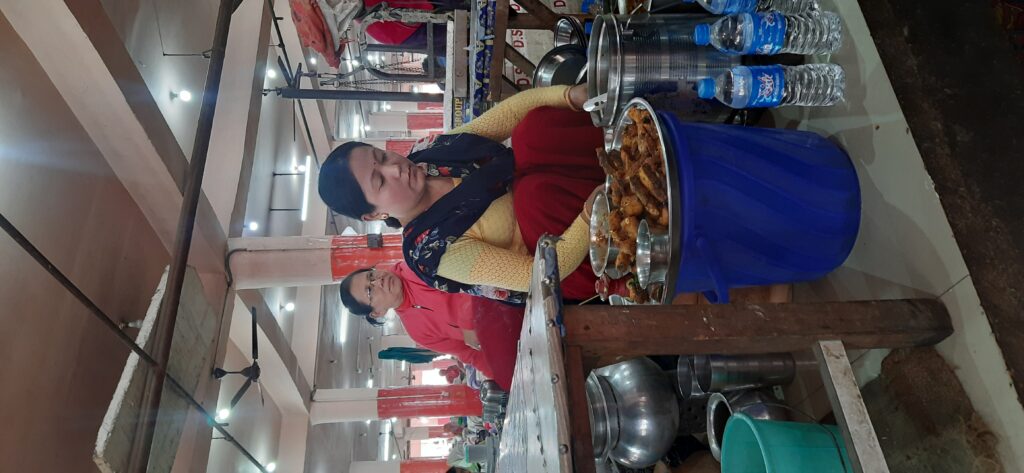
The fish in the trays still have pink gills and in a corner we discover food stalls dishing out fresh local cuisine. Its too tempting to pass on so I clamber onto the platform where the proprietress sits in between the low table and bench and doles out copious quantities of rice and portions of fried fish, vegetables and chutneys in bowls. Fermented fish is the staple ingredient in a lot of local dishes and the eromba here is flavoured with it. I am given a mug to wash my hands into and a towel to wipe them. Only a mother would think it through.

A King’s Breakfast

Fact File-

Getting there-

Air- Imphal has an International airport and has regular flights from Delhi, Kolkata and Guwahati.

Rail– The nearest railhead is 200kms away at Dimapur. From there buses and taxis are easily available.

Loktak is approx. 40 kms from Imphal.

Keibul Lamjao National Park is a 20 minute drive from Moirang.

Staying

At Moirang and Sendra there are a few basic homestays and hotels.

The Sendra Park and Resort offers cottages.

Miscellaneous

The boat rides start from the new Jetty at Sendra and an hour’s ride cost 2000/-.

The entry fee for Keibul Lamjao is 30/- for Indians and 200/- for foreigners and there are extra charges for cameras.

Language can be a challenge as the locals often do not speak Hindi or English.

Best time to visit is post monsoon November onwards to March.

As always, be a conscious traveller and carry your own water bottle.

Kohima-At the Cultural Crossroads where East meets West

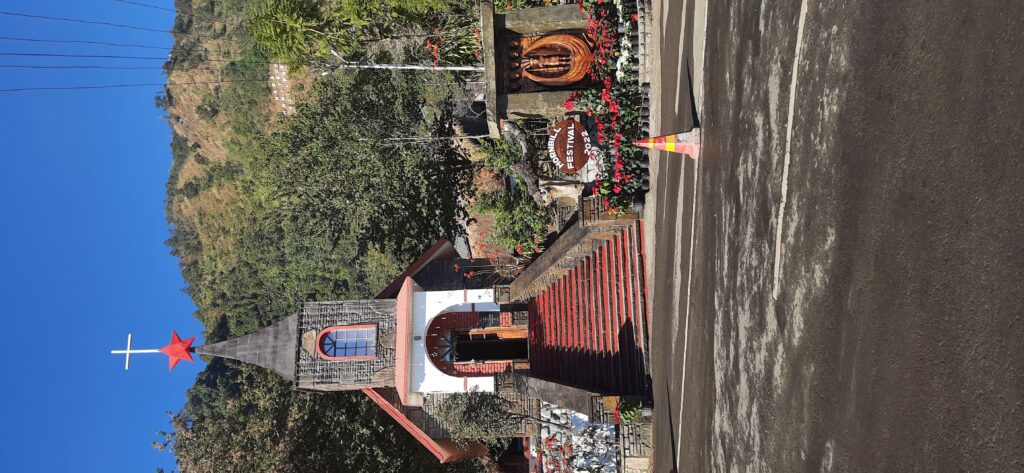
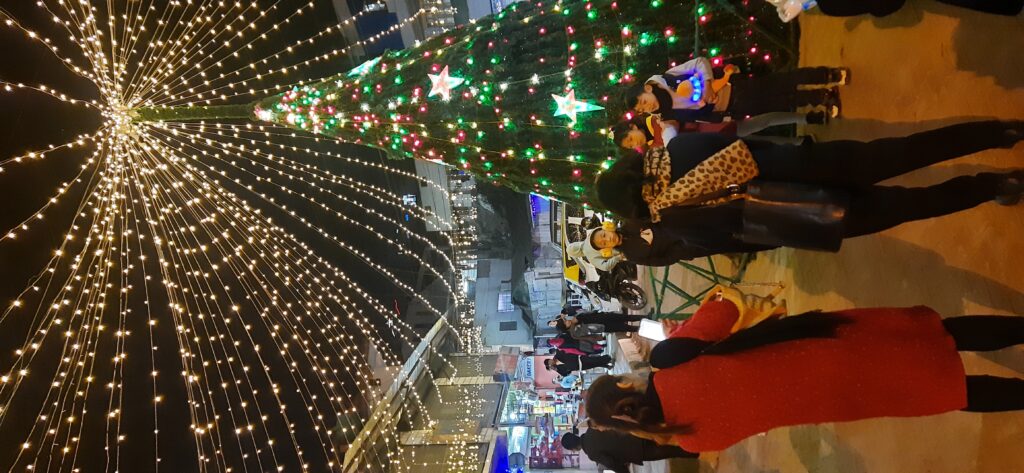
The poinsettias grow wild along the road as we enter Kohima. The red leaves announce Christmas is round the corner. Infact the festive season is evident as we drive out of Dimapur. The traditional gates to the ‘model villages’ are colourfully decorated. Enroute small houses have red stars tied to bamboo poles. A religion from far away has found a home and eco support! Makeshift shops along the way sell potted hybrid red and white poinsettias. So, so tempting!

Christmas Colours

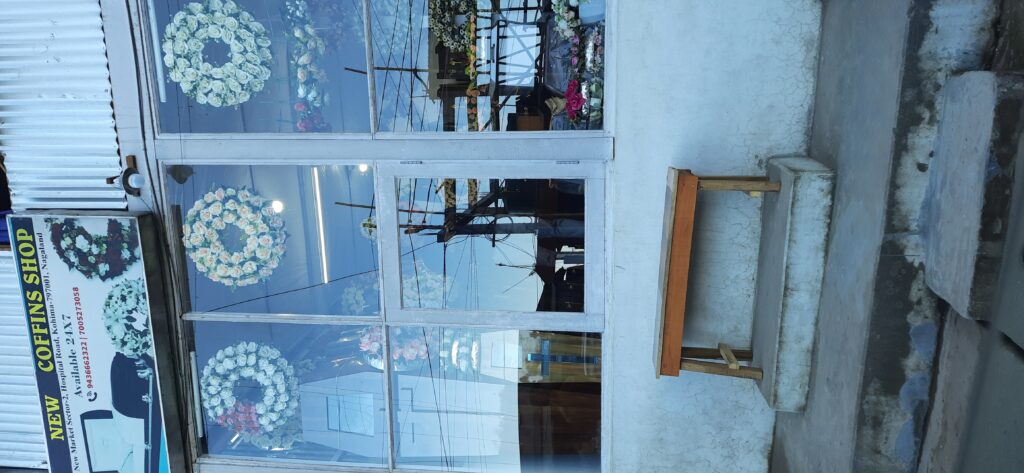
Then we cross the funereal shops…. Stocked up with a profusion of bouquets, arrangements and wreaths, at first glance I mistake them for flower shops. Then I spy a polished coffin lurking behind cascading artificial flowers….. what ?? When I look for the shop names, I see boards announcing ‘The Final Resting Place, The Last Journey’…okay then…

And what of the old..?

Night falls by the time we reach Kohima and driving on the dusty, broken road the lights of the capital draped over several hills are visible from a distance. A traffic snarl so typical of a hill station greets us. Most come for the Hornbill Festival but Kohima has lots more to offer than a bed and breakfast for the visitors. What should be on your itinerary while visiting this quaint hill station?

Beyond Kohima go- Into a Bamboo Bowl: A Hike to Dzukou Valley

Come, sit awhile.


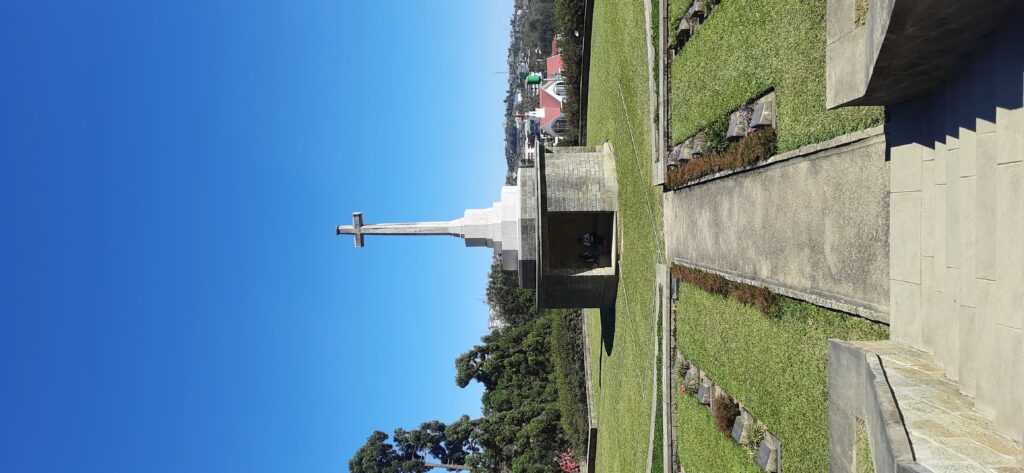
Kohima’s War Cemetery

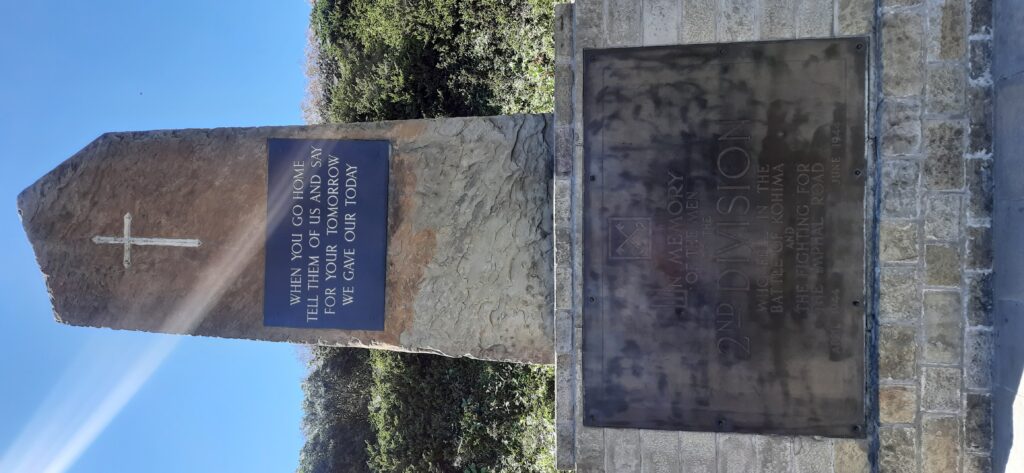
Standing in the heart of town above the traffic crossing where we got stuck in the night is the stone with the famous epitaph ‘When You Go Home, Tell Them of Us and Say For Your Tomorrow, We Gave Our Today.” Set in the War Cemetery’s lowest step in an alcove, these words on the tall obelisk have been oft quoted. Kohima is one of the few places in India where a World War II  battle was fought. A battle so fierce and bloody, it laid waste thousands of lives and earning the sobriquet- Stalingrad of the East.

Read about a lost path, a forgotten road in- Discovering Digboi’s 3 Must-Dos

Soldier’s say….

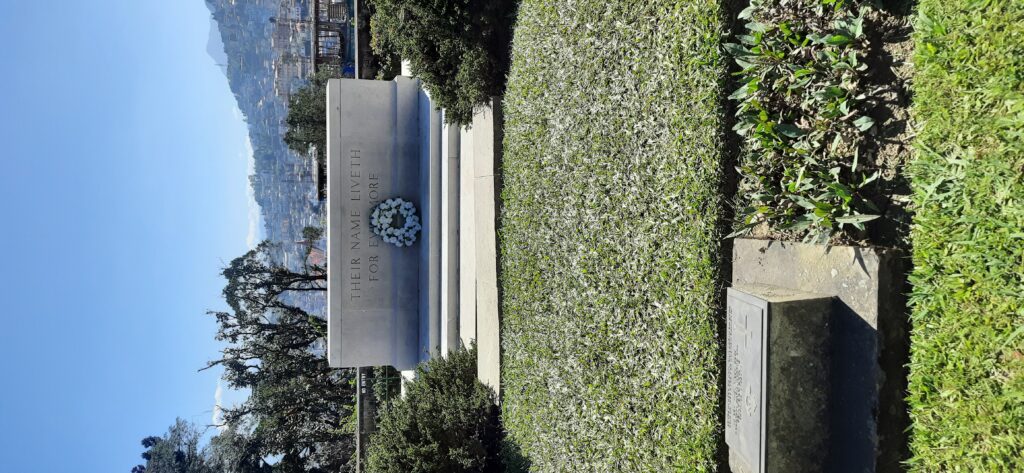
The war cemetery is laid out on the ridge where the Deputy Commissioner’s house stood, with a tennis court on its estate. Nothing remains of the house but the tennis court on a higher step is marked out. A band practises somewhere on the premises as we slowly walk around the terraced lawns with rows upon rows of stone markers with bronze plaques stating names and touching messages, giving glimpses of loved ones lost in honour, names that cut across creeds, cultures and continents. The tunes of ‘The Last Post’ and ‘Rouse’ wafting around make the experience even more poignant. A cherry tree grafted from one that stood here during the battle survives like another memory kept alive.

Read what lies- Along the Lohit on the Long Road to Walong

Gone but Never Forgotten.

The Cathedral of Kohima

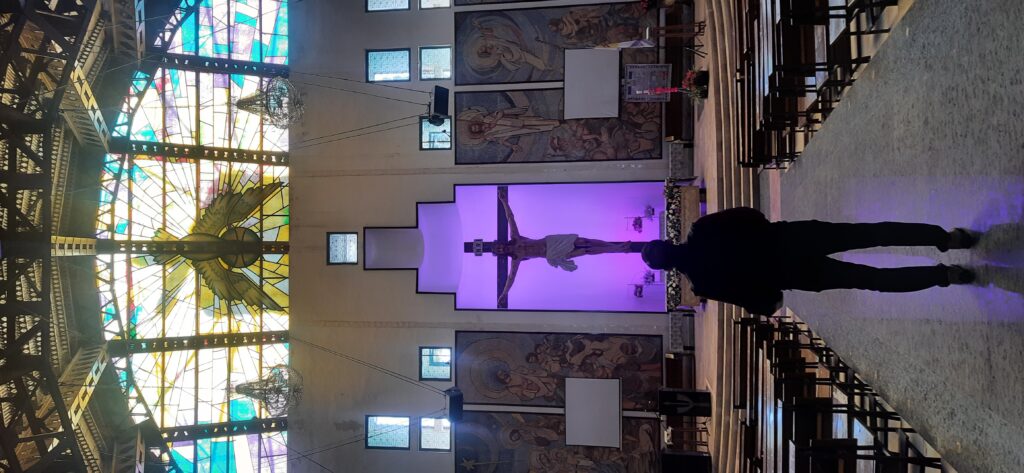
The religion might have come from another part of the world but the structure of the most important church in Kohima is visibly native. The first church in Nagaland was set up in 1872 but as the church of the Bishop of the diocese of Kohima, Mary Help of Christian’s Cathedral is not only important but its architectural rooting sets it apart. Inspired by the traditional Naga house, it is all soaring angles outside. Its spacious, vaulted interior is held up by steel girders.

Read about the eclectic collection of the- 3 Churches in Mhow: Discovering Obscure History and Outstanding Carols 

Some seek the light.

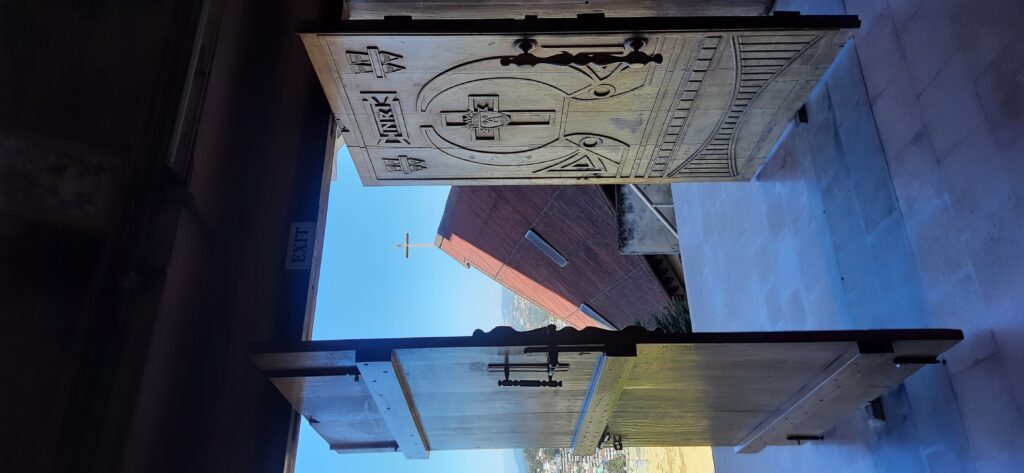
Painted glass above the altar lets in ample light to show a semi-circular seating and the revolving wooden doors carved with traditional motifs among others open to steps leading to a ground with a view. A wooden crib here has supposedly been made from wood of an olive tree from Bethlehem. Kohima’s story is somehow linked to the Japanese…the funds for the church came from survivors and families of the Japanese soldiers in remembrance of their ones lost here in battle.

The Revolving Gates to Redemption.

Main Street Night Market

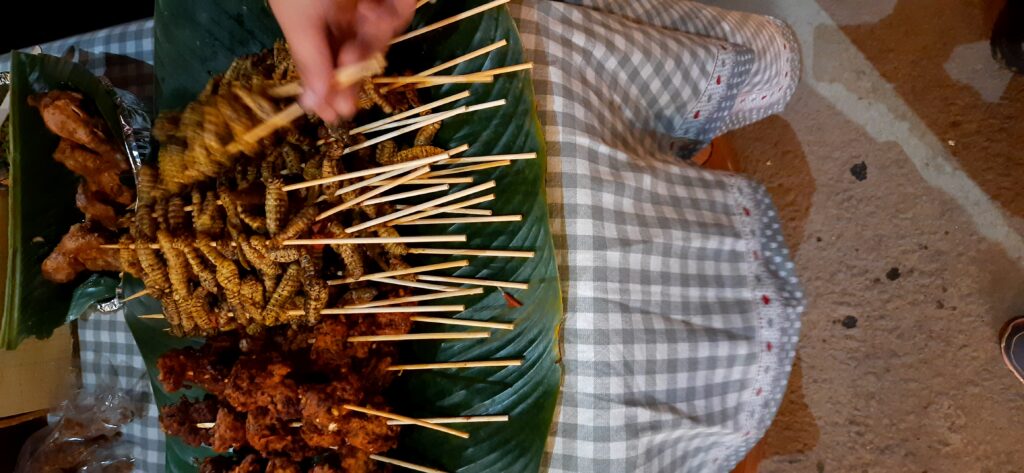
I couldn’t find time to visit the famed Mao market on my flying visits to Kohima but I was not going to miss out on the night market on the main market street. During the Hornbill Fest the road closes to the chaotic traffic that plagues it during daytime and the street market keeps time with sunset. It hits the nose and makes me salivate, but I take my time. I walk the length of the festively lit up road lined with makeshift stalls, some with tables to dine, to see the fares and build up an appetite. Meats are being dabbed in oil, grilled, fried, doused in sauces. The pork momos come with a fiery chutney (This is the land of the Raja Mircha!), the sausages and tender grills on thin bamboo skewers, the crickets are fried crisp and I am allowed to sample one but the larvae are too generously packed on a long skewer. I pass.

Read what could not be passed on in –Satiating Nostalgia Under the Winter Rain at Junia

Acquired Taste

Thukpa is soul food and cannot be passed on, even here. At one stall the chatty young girl serving is from the Sumi tribe and teases the boy wearing a jacket with a bull, manning the counter. A mithun he corrects her, as he is from the Ao tribe. Another boy is wrapped in a Sumi shawl I am told. (By and by one realises it is not just a ‘Naga shawl’! Its everything! From a skirt to a dress to… well, a shawl!)
What else to do on a short holiday?- Part Two- What Not to Miss on a Weekend Vacation in Shekhawati

‘Tis the season to be merry!

There are game stalls, stalls selling knick-knacks and souvenirs and ofcourse lots of eateries. At one end a group of men crowd around a table and let up exultant shouts now and then. Gambling for live chickens I discover later. Luck lays out a feast for some and nobody seems to gamble their winnings!
This capital city is a melting pot where influences from far flung lands add a piquant flavour to the local tribal cauldron. The final dish served is worth sampling and savouring.
Fact File-

Getting there

Dimapur is the nearest railhead and airport.

It is about 70 kms but with the road widening and construction takes a minimum of 2 hours to reach by taxi.

Food

At the night market the skewers start from 100/- but options for vegetarians are limited and the stalls serve mostly meats.

Miscellaneous-

Entry at the War Cemetery is free. It is shut on Sundays.

Sunday is a day for prayers and rest for the entire state!