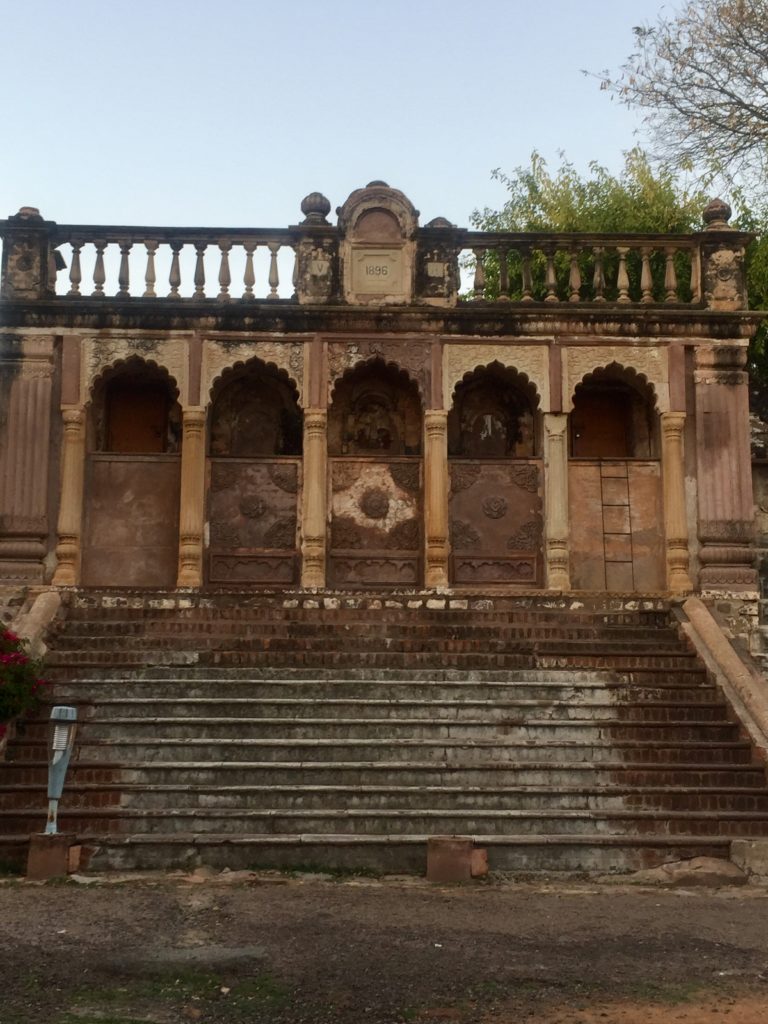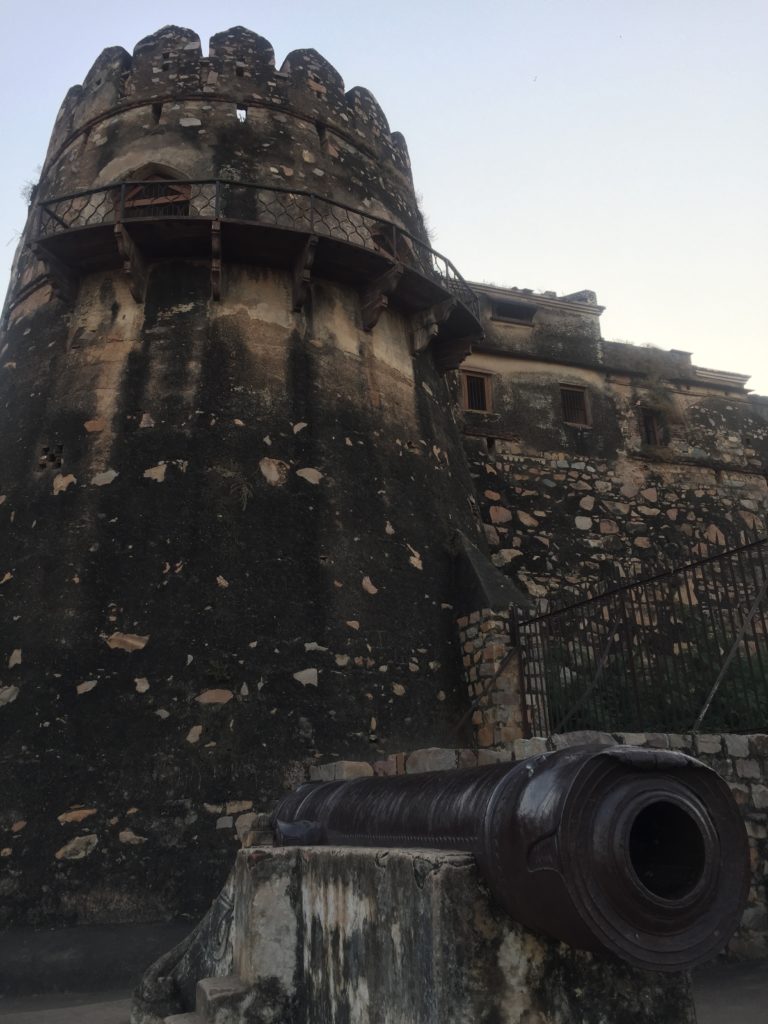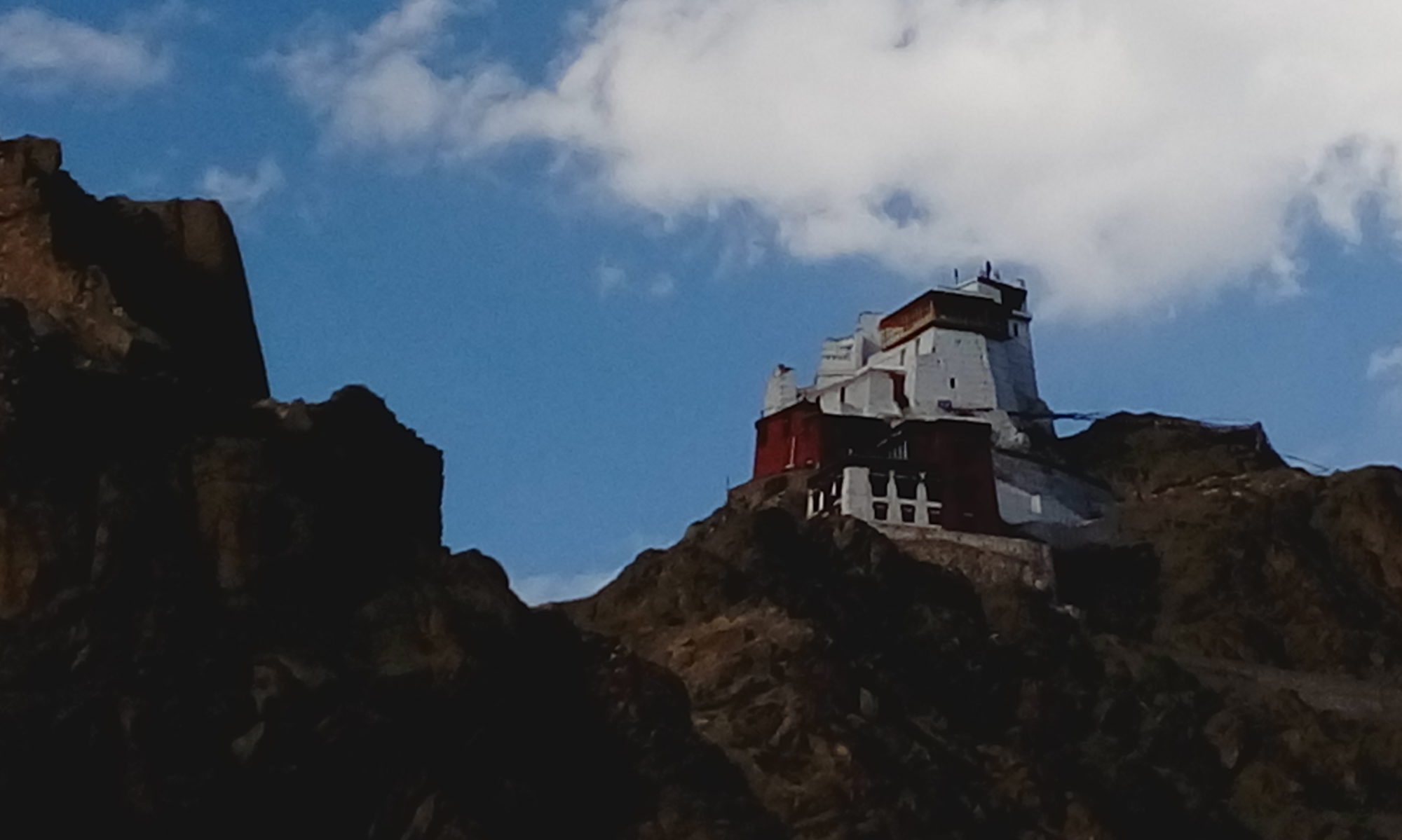
Part One- On the Wild Side of Outstanding Orchha

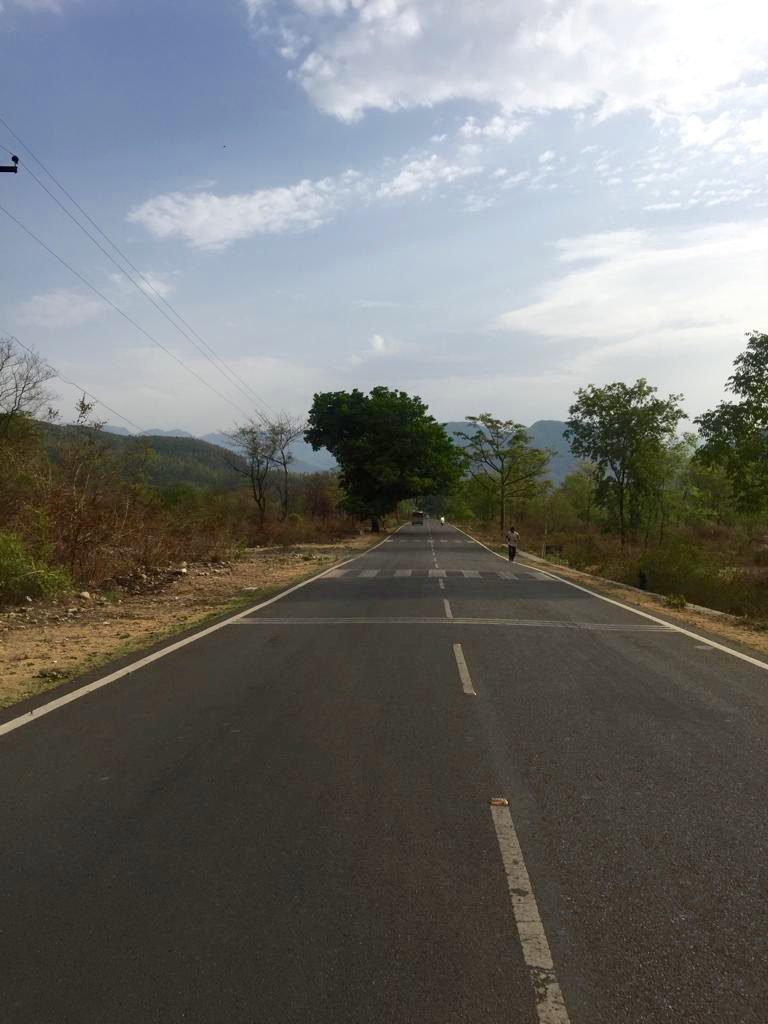
Zipping on a fantastic road, through the teak forest with the odd Flame of the Forest adding that dash of colour, from Jhansi towards “Hidden” Orchha, we have had a latish start, so I don’t get to see the famed chhatris  (or cenotaphs) either at sunset (as originally planned) or at sunrise…oh well God proposes and lazy man disposes. If India has its own standard time which has a certain time lag, it seems Madhya Pradesh is in a time lapse mode.. Ah! That explains the time warp feeling…

Read some more timeless tales in- An Ode to Ancient Life in Stone- The UNESCO World Heritage Site of Ajanta & Ellora

Picnic Breakfast with a View
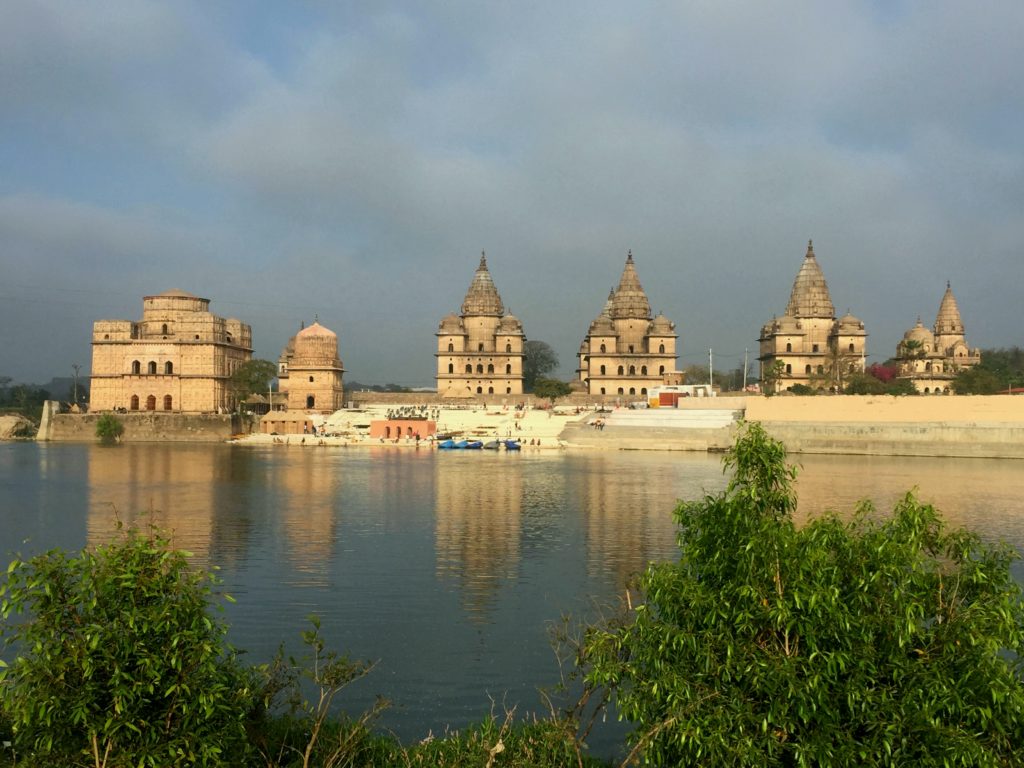
Ethereal cenotaphs, ephemeral reflections

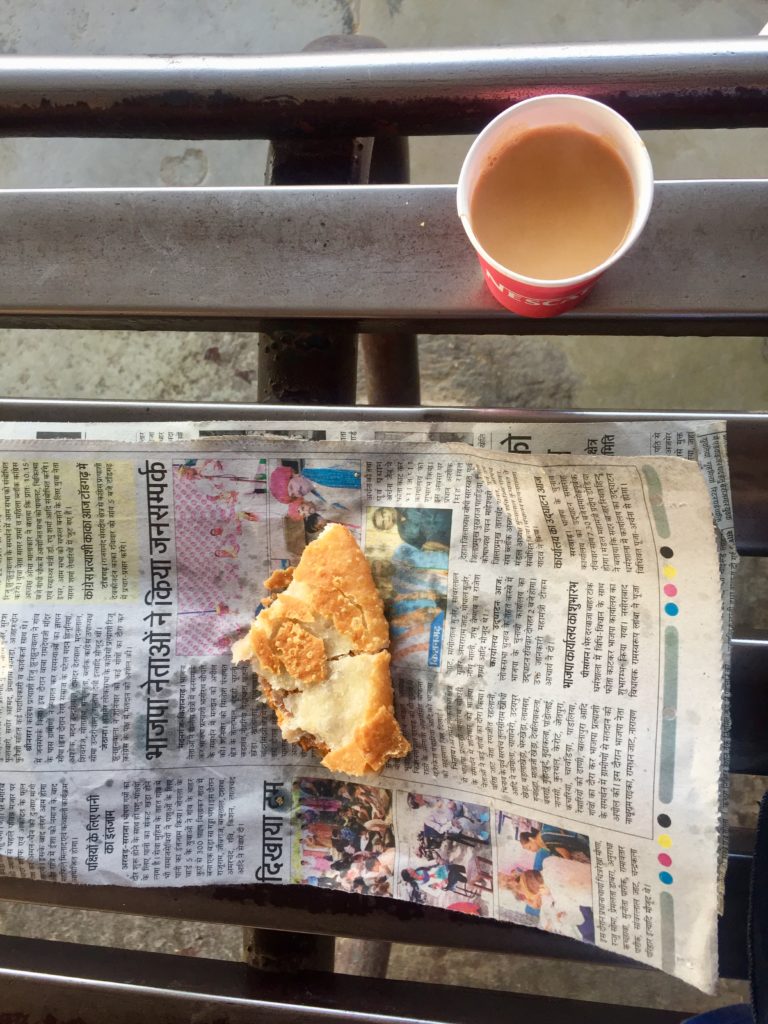
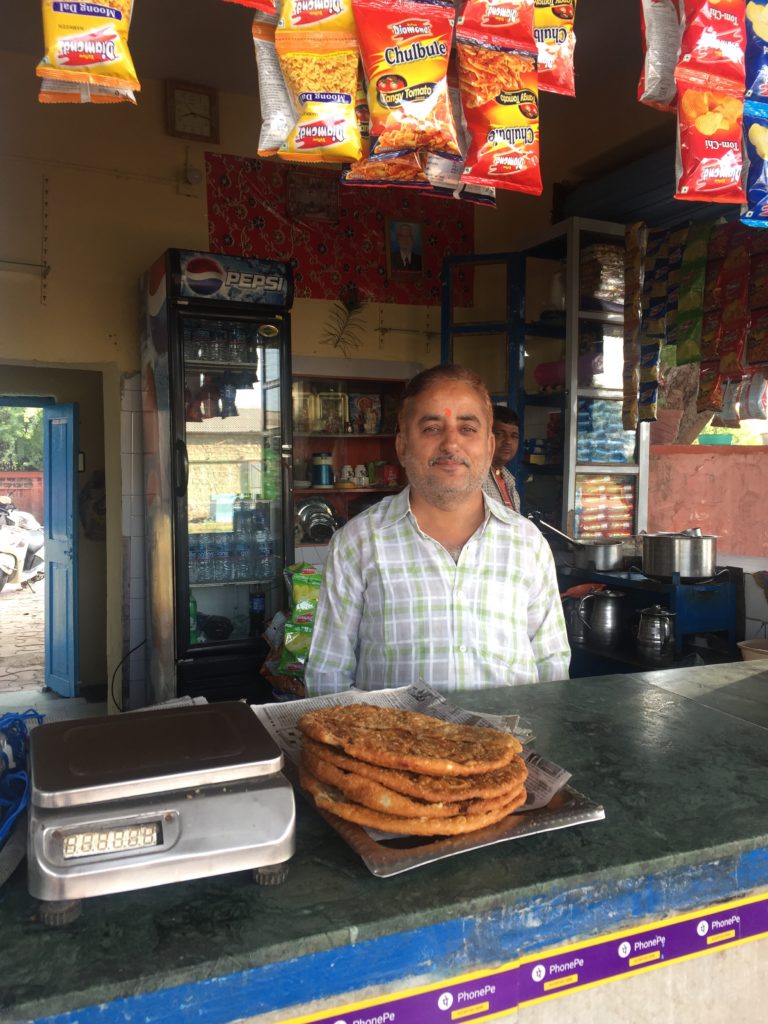
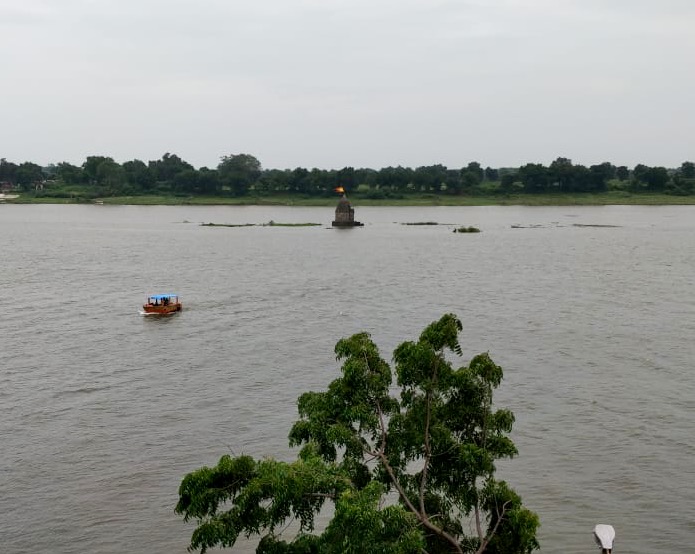
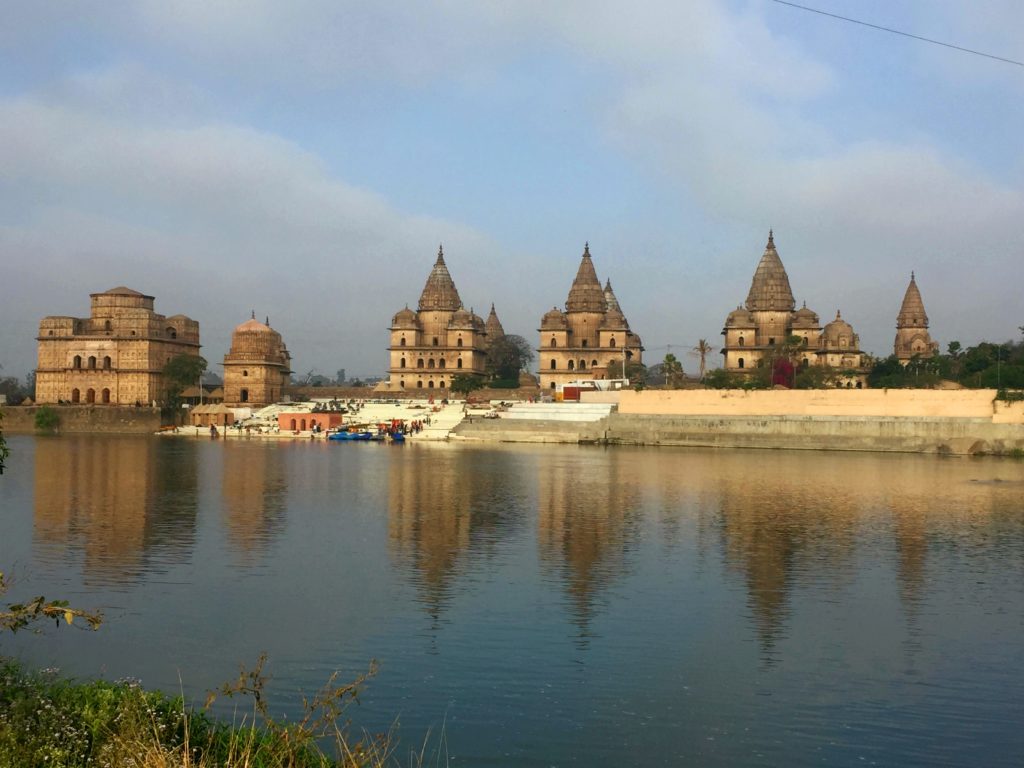
We head straight for the park on the bank of the Betwa opposite the chhatris. It is deserted and we put our packed breakfast, picked up from a shop on the main thoroughfare, on a bench close to the waters. We soak in the sight of the ethereal chhatris by the ghats on the Betwa, their ephemeral reflections bathing in the river, the clouds behind in retreat. A huge kingfisher breaks the silence of the cool morning as we sit down to sip our tea and help ourselves to the hot jalebis and pohas. We spy massive vultures nesting on the slender spires of the chhatris, their colouring making them seem like living extensions of the carvings.

Read tea tales & more in-Dera Jaipur: A Homestay for Stellar Style and Exceptional Experiences

Wildlife Discovers Us
Blackening their good names

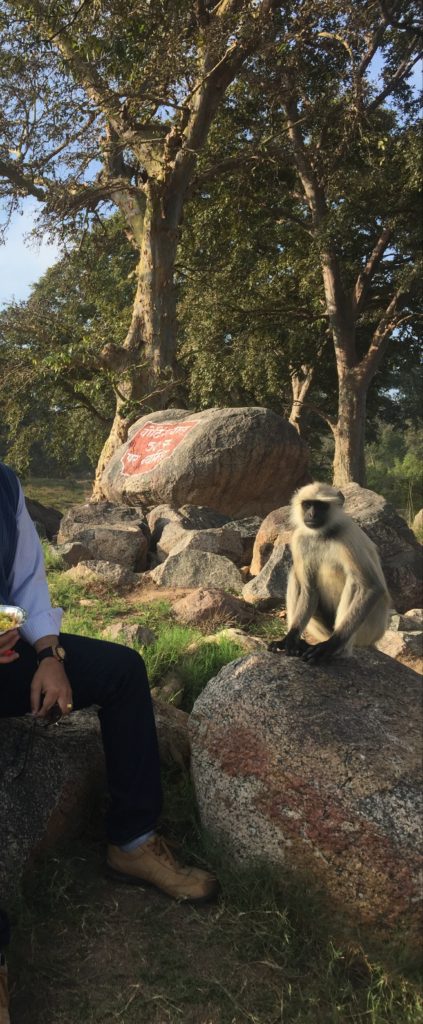
Then pandemonium ensues. Two langurs decide to join us for breakfast. To be fair they are polite…,at first, sitting in companionable silence with the husband as he wolfs his poha. The cousin and I jump around, as she has had a run in with a boorish one as a child and isn’t too keen to renew the acquaintance. Just then three-four more lope in to make it a party. I put my plate down on the bench and back off as I get dirty looks from one and then they proceed to sit there and dine on our breakfast, technically theirs now, as we stand at a safe distance and wring our empty hands. The cousin’s husband, the hungrier and smarter one, has already had round one of breakfast at the shop itself. There is nothing left to do but to wait…and clean up after them!

Flying…oops, Cycling in the Jungle
The flying machine

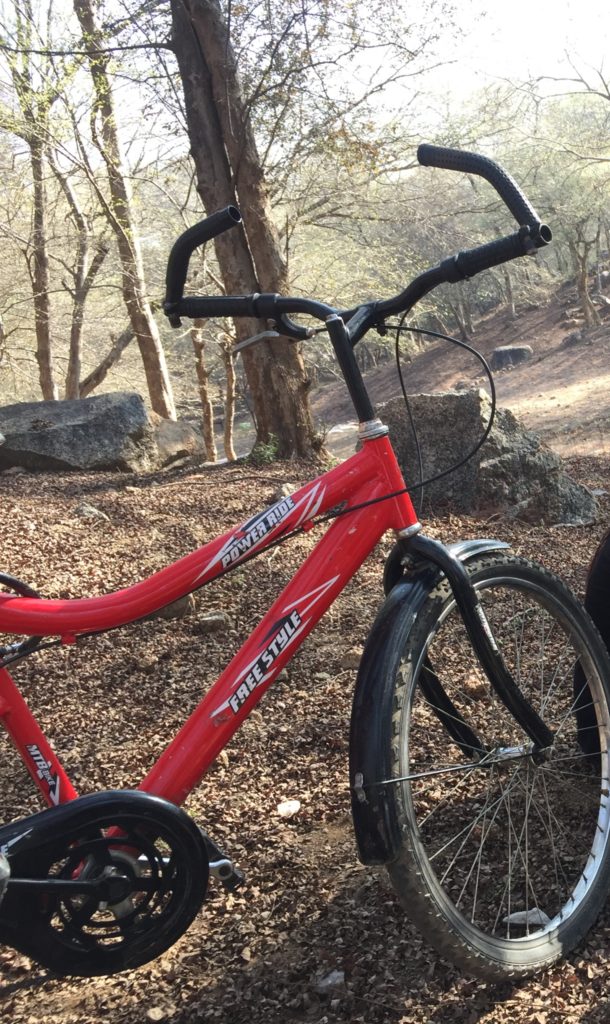
Giving up on breakfast as a bad joke (Entirely on us!) we get on to our next agenda- cycling through the sanctuary. It is an island spread over 40 square kms and is home to a variety of animals and birds. We get off to a wobbly start on a well marked trail and the path is gravelly and clean. The cousin feebly protests that she doesn’t know cycling but I remember (from twenty years back) otherwise. The route is undulating, the forest sparse and rocky but devoid of any undergrowth. The only animal we spot is the dog who decides to go for his morning run with us. With each winding curve we gain confidence till one downward one, where the cousin decides to leave not only the path but terra firma too. The flight is short, the landing hard and noisy.  No serious damage done, we decide that we’ve had enough adventures for the day and while we are in one piece, it is time to head to sedate civilization back across the causeway.

Read about other cycling adventures in- Cycling in Dehradun – The Best Routes for Leisure Rides

Melancholic Monuments
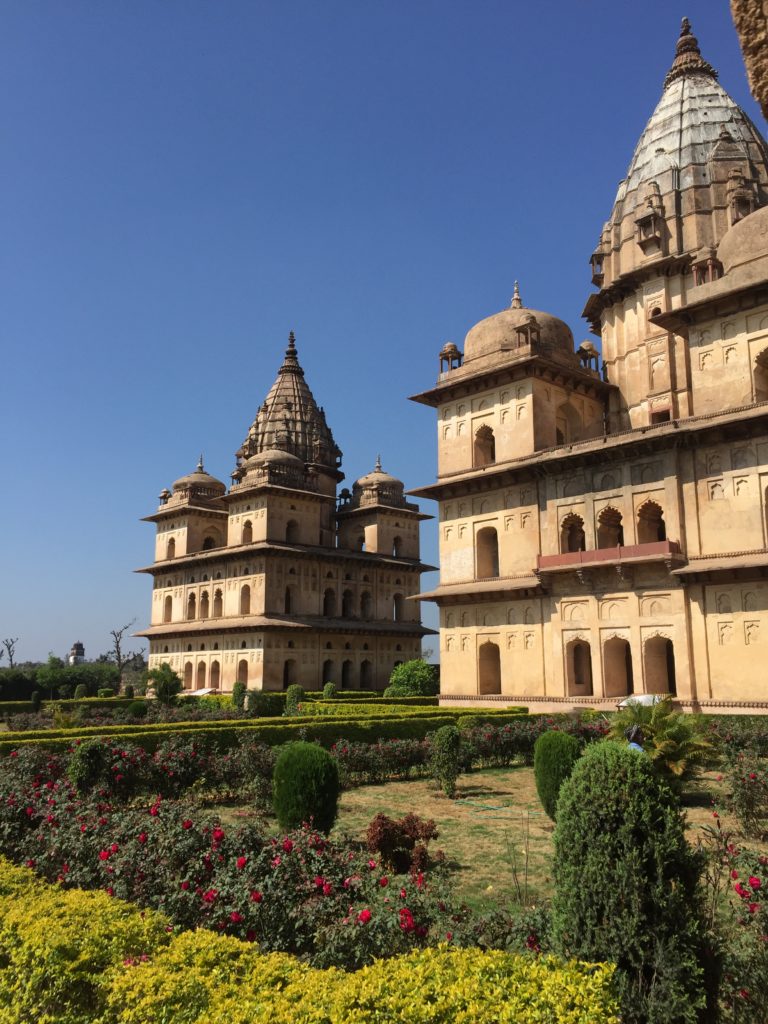
Silent sentinels of bygone kings

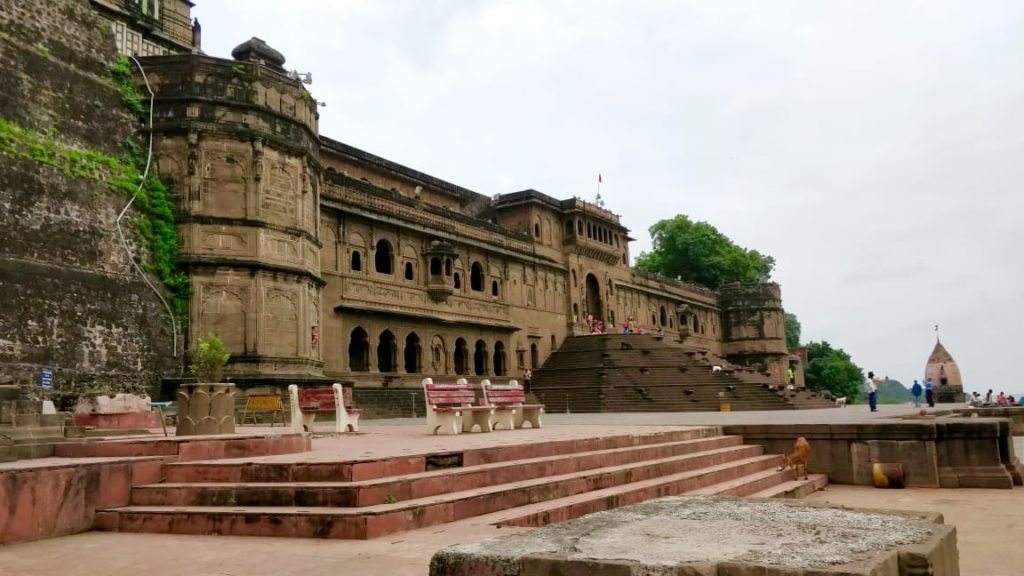
A leisurely stroll across the emerald river skipping over the rocks and dipping into clear pools brings us to Kanchana Ghat. The sepulchral chhatris built between the 16th and 17th century tower around us. Built in the signature style of Bundelkhand  where Mughal influence meets Rajput architecture, there are 14 of them spread around the ghat where the erstwhile rulers of Orchha were cremated. Bir Singh Deo’s, who seemed to be influenced by the Mughals, stands out not only in terms of architectural style but it also hugs the river, standing aloof while the majority huddle together inside the adjoining walled complex.

Discover the chhatris of another family in-Satiating Nostalgia Under the Winter Rain at Junia

The Monumental Show
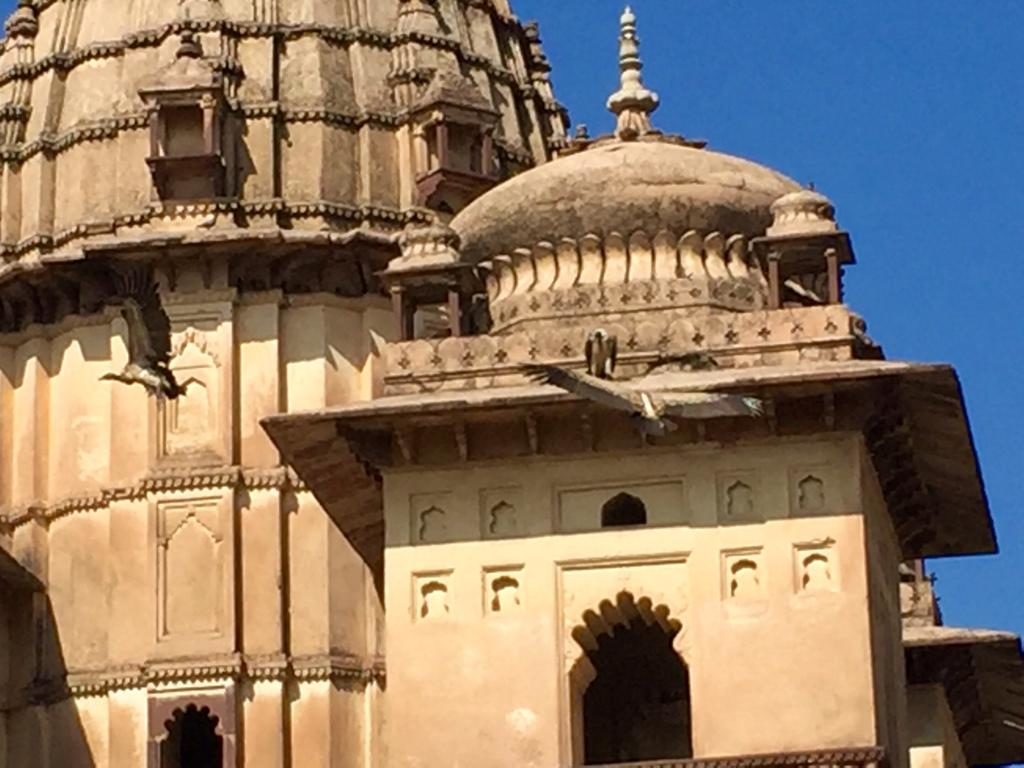
Ruling the roost

We walk into the walled enclosure with the chhatris sitting back in a laid out rose garden. The cenotaphs at Orchha are more imposing than any I have seen elsewhere. Their plain facades rise up three tiers to give way to spires and cupolas where the vultures nest. When they sit still they look like winged gargoyles but right now they are bickering with each other, showing off their magnificent size as they swoop through the garden from one melancholic monument to the other.

We then head towards the fort and the other monuments. More of that in the next installment of Outstanding Orchha.


Fact File-

There are entry charges for the park as well as the sanctuary. (Rs 25 per head for the park and the sanctuary charges depend on the mode of transportation.)

The cycles are available on hire at the ticket counter for about  Rs 100.

Helmets are available with the cycles but one has to ask.

The entry ticket to the Orchha fort complex covers the entry to the walled cenotaphs too.
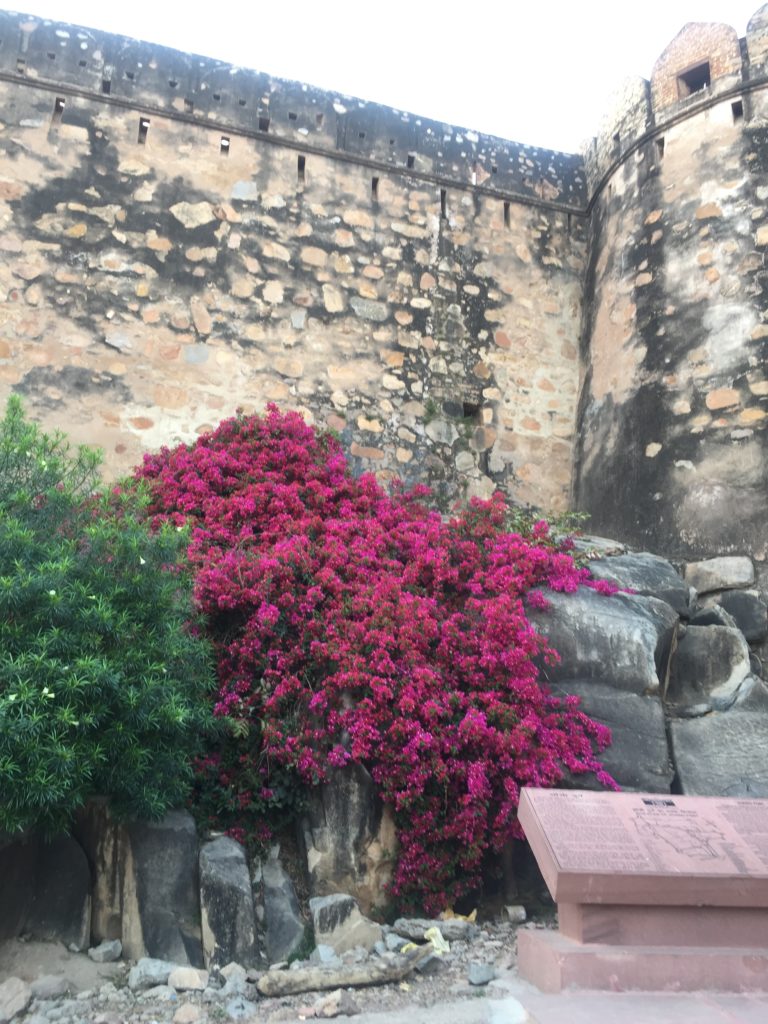
A Bard Sings a Story in Jhansi


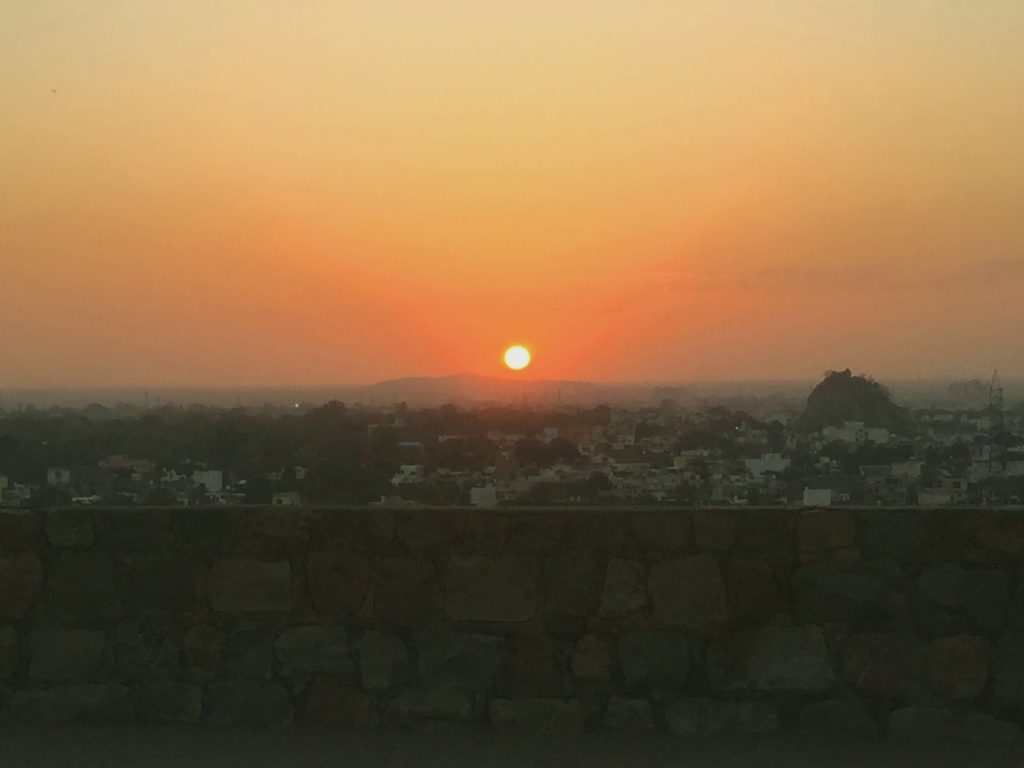
Lets face it, Jhansi is not really up there on the tourist circuit. But then again, who hasn’t heard of it? Made famous by Rani Lakshmibai, who still exemplifies courage and defiance, whose story the bards of Bundelkhand still sing….well, I like to think the guide sounded like one, reciting lines from the famous poem at the fort as the sun went down over the ramparts, giving me goose-pimples.


Reaching Jhansi

The colours flow down the fort wall

We were to RV with the cousins at Jhansi but the train was running late as we crossed the low lying lake on the outskirts of Jhansi town. A huge figure in a strange pose on a hacked hill caught my eye. Later someone enlightened me that it was Major Dyan Chand in a hockey playing stance. Infact it seems that this area gave a handful of hockey players to the national team. Since we were in Jhansi for the night we decided to explore a bit and catch the sound and light show at the fort.

Read about how we beat Murphy’s Law to get here in- Picture Postcards from Bundelkhand


Marching through the Fort

One of the remaining pretty structures

The guide took us for a bit of a quick march through the fort trying to give us our bang for the buck considering we’d landed close to closing time. Fortunately it is a tiny albeit well maintained fort with barely a clutch of buildings including a shaft, diligently pointed out to us, where people were hung regularly. It was a spot on the route taken by the queen everyday, to visit the temple nearby. So she apparently prevailed on the king to do away with this macabre affair which I’m sure didn’t help her reach a zen state.


Surveying the Town

Facing the fire

This cannon is placed above the Ganesh temple in the fort. It faces the old entrance(Now closed.) with a typical serpentine path leading in. Standing here we spied the orange coloured tower of a church and a butterscotch coloured building which the guide told us was the Rani Mahal. The place where Rani Lakshmibai was moved to when the British took over the fort. The Mahal has some fine wall paintings and is a sort of museum housing ancient stone sculptures. Both structures looked as if they had been transported straight from Spain.( I have no idea why I thought so.) Like a lot many old garrisons Jhansi has more than it’s share of churches.

Explore the churches of another garrison in- 3 Churches in Mhow: Discovering Obscure History and Outstanding Carols 


The Fort’s Fire and Fury

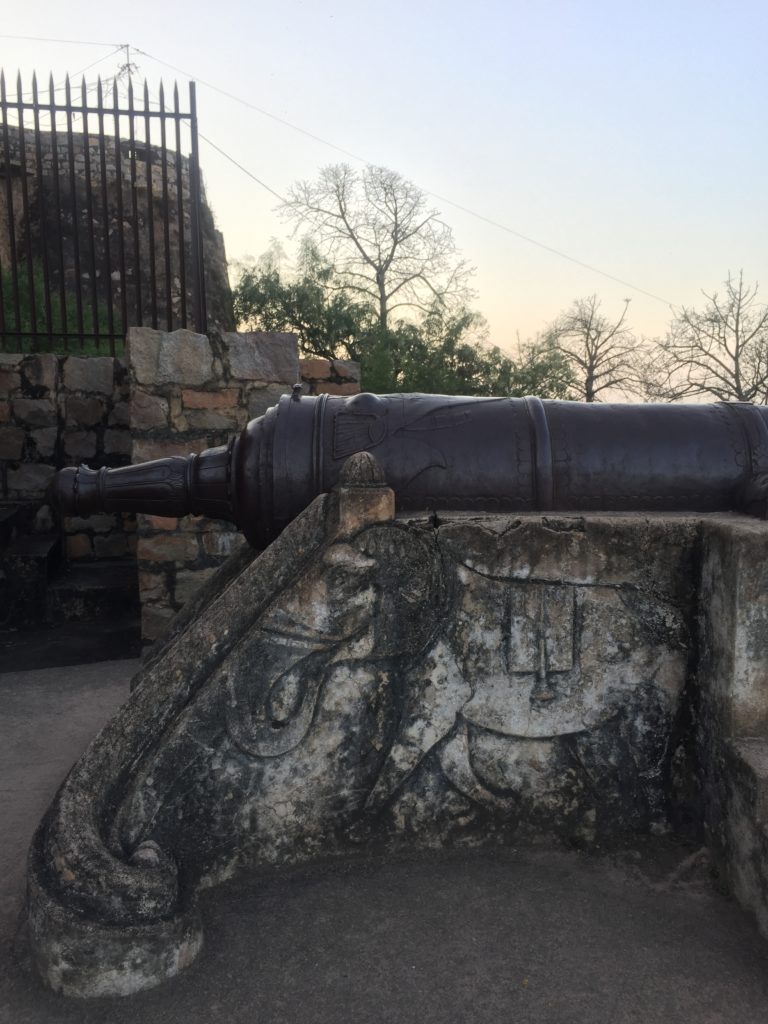
Bhavani Shankar on an elephant’s back

So one of the cannons is called Kadak Bijli and another Bhavani Shankar.  I think naming objects confers them distinct personalities instantly. This cannon was a piece of art and I love the way it looks as if it’s been placed on an elephant’s back with the stone base also curving like an elephant’s trunk.


More Than What Meets the Eye

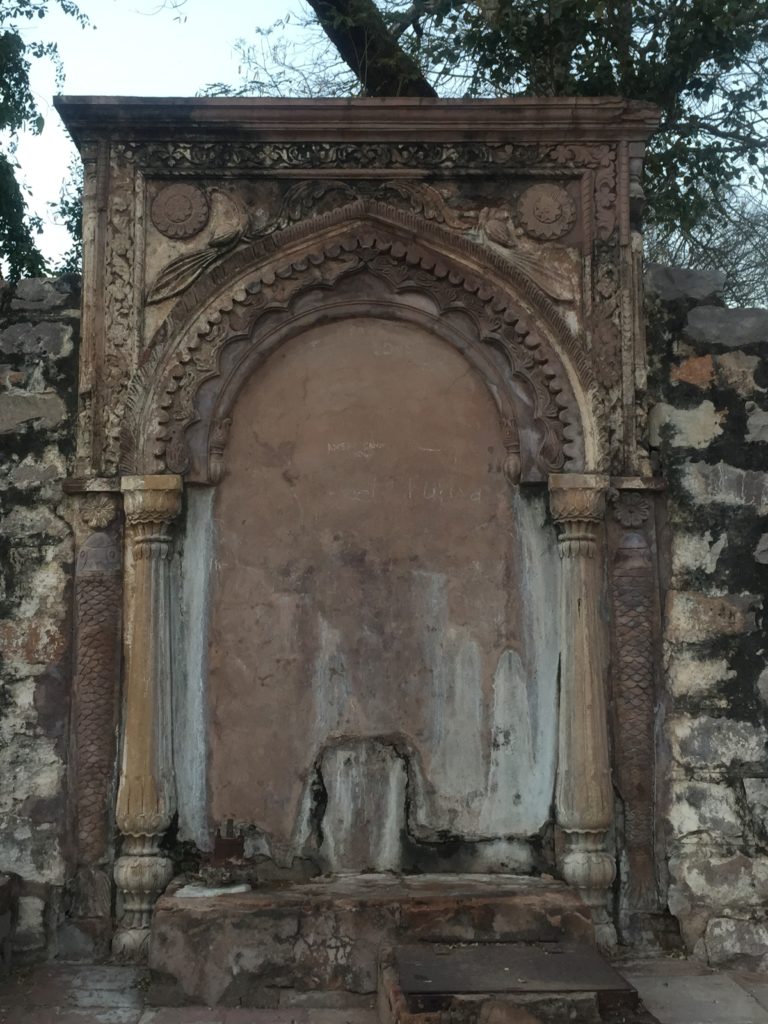
An archway to nowhere

The fort was made by a Bundela king around 1613 AD but was gifted to Bajirao a century or so later. A substantial part of it is actually underground including tunnels that disappear in different directions and several structures on top were razed by the British. The voices of Om Puri and Shushmita Sen tell the subsequent intertwined destiny of a fort and it’s last queen, who supposedly (and famously) said- I will never give up my Jhansi!


The Site and the Sights

The sun never sets on a legend

Standing literally on the spot where history was made- where Lakshmibai on her horse Baadal with her son tied to her back jumped to escape the British. She survived to fight another day but her horse did not last long. She met her end soon dressed, apparently, as a soldier in a last battle at Gwalior.

Discover the other place in Madhya Pradesh not to be missed in- Mandu & Maheshwar in the Monsoon Mist

Picture Postcards from Bundelkhand

I picturize Murphy’s Law as a pedantic bureaucrat who has no life so works overtime and holds every little slip up against you and then generally wants to throw you under the bus still for…just, it says with a shrug. It was just a weekend trip that I had in mind but Murphy’s law was working overtime. We had dilly-dallied so there were no seats available on the Shatabdi, there was no accommodation available in Orchha and then the final nail in the coffin -a flurry of travel advisories thanks to Coronavirus! But I think I had a ‘Bundelkhandi’ bee in my bonnet plus it was the last weekend before spring mothballs winter for the year and that area gets hot even in March. I’m a firm believer of the Indian calendar when it comes to seasons, although Mother Nature is in a snit, if yesterday’s hailstones are anything to go by & the blankets which had one leg outside the bedroom door are sprawled back on the bed.

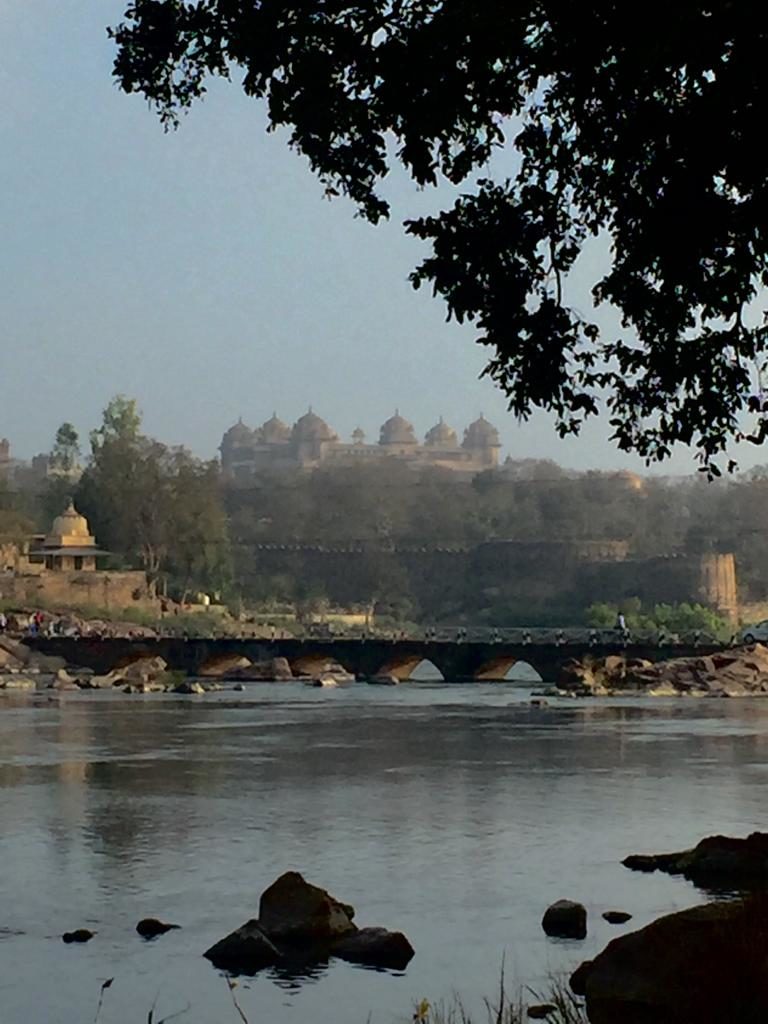
O’er the river lies a palace bathing in sunlight

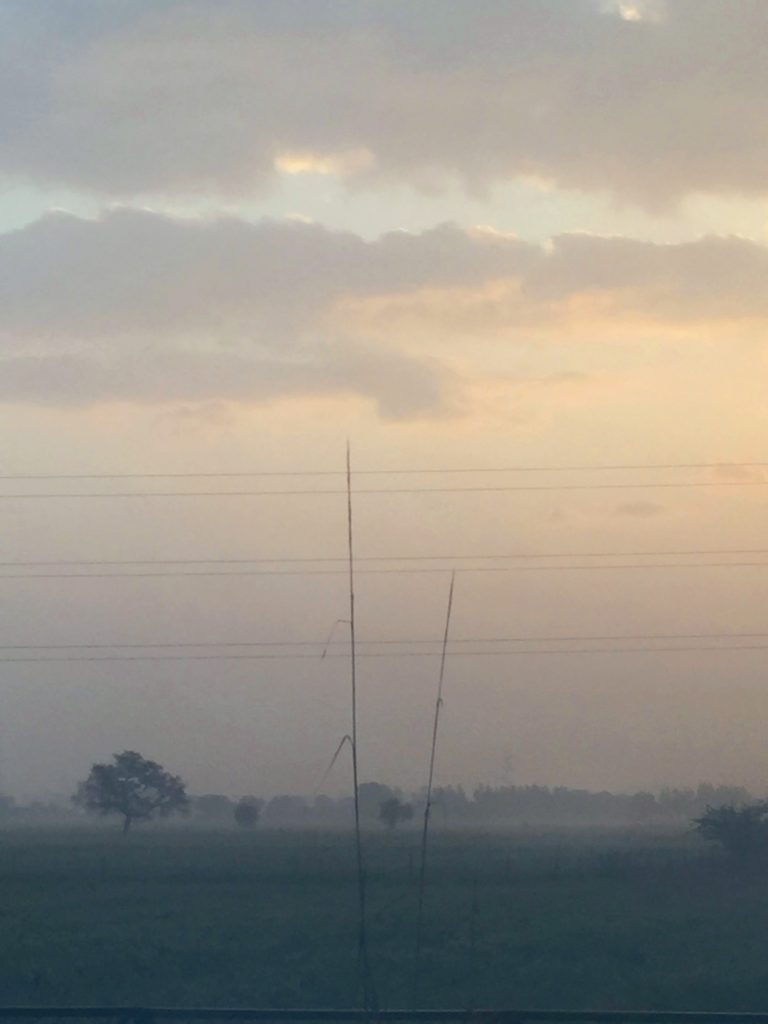
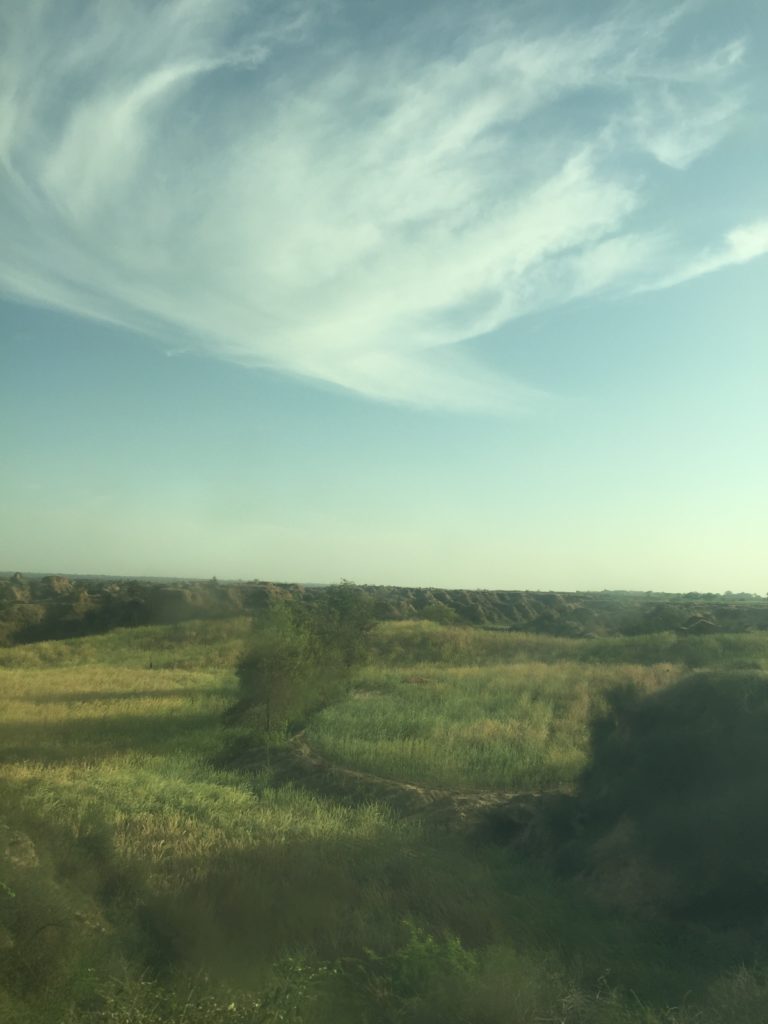
We finally managed to put some things in place and after nearly missing the train and getting into the wrong compartment full of foreigners, (All without masks!) which made me catch my breath, we breathed a lungful of relief when we found our seats in the next bogey, mask firmly on. Holding my breath wouldn’t have helped the holiday cause anyhow. We watched the sun’s slender fingers lift the misty veil blanketing the green wheat fields as we sped towards Jhansi.

A Shatabdi took me another place in-Dera Jaipur: A Homestay for Stellar Style and Exceptional Experiences

Dawn parts the clouds to touch the green fields

A gentle breeze blows the clouds from the Chhatris of Orchha

Couple of years back from another train I had first seen the towering beautiful lines of the Datia Palace across a lake. An old family connection to it added to the lure and then a little hunting on the net had thrown up the visuals of Orchha- the Chattris by the river Betwa and the magnificent Chaturbhuj temple. Reality didn’t disappoint. Jhansi was a last minute addition. These three places on our itinerary that weekend lie in a region where the state boundaries look like the ravines of the Chambal, a maze of furrowing lines. So while Jhansi is in Uttar Pradesh, Datia and Orchha are in Madhya Pradesh but history and a common socio-cultural identity bind this entire region. Named after the Bundelas, a Rajput clan who came into prominence around the 16th century, Bundelkhand seems to have always been given to strife and a touch of anarchy. So, no wonder that apart from kings, poets and writers like Tulsidas and Maithili Sharan Gupt it has given us figures like Mastani, Rani Lakshmibai and Phoolan Devi.

First stop -Jhansi, coming up soon…

For stories of kings and queens also read  – Mandu & Maheshwar in the Monsoon Mist

A new story is sown in the ravines of the Chambal

3 Churches in Mhow: Discovering Obscure History and Outstanding Carols 


Thank God Boney M sang “Mary’s Boy Child’ or the first carol in my first ever carol singing jaunt would have been an absolute non-starter. It had vaguely crossed my mind that apart from ’Rudolph the Red Nosed Reindeer’ and ‘Jingle Bells’ (Do they even count as carols?), I didn’t know any! Sitting in a church this Christmas eve, like good back benchers, when the carol name was called out, we frantically leafed though the hymn book looking for the said hymn and couldn’t find it. When the others sang out the first few familiar lines I shut the book and joined in lustily, relief fueled enthusiasm making up for the lack of any singing abilities.

A path to a haven is often paved and rose lined

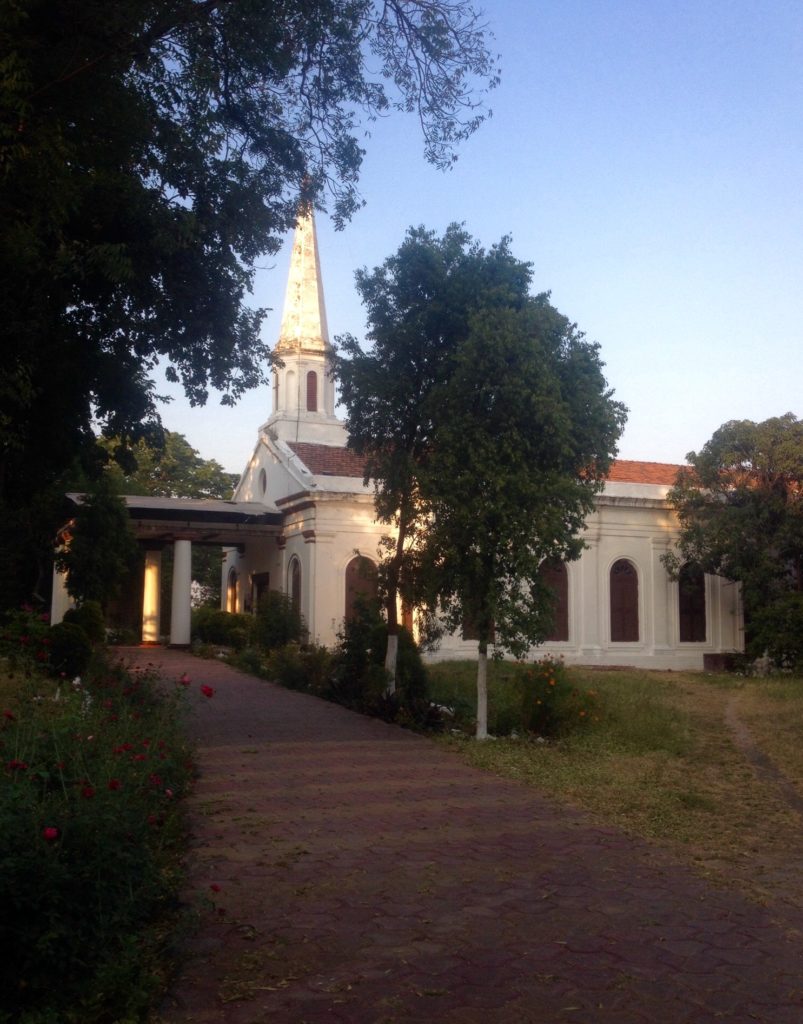
In Mhow for a short winter break, we knew beforehand of the carol singing outing. Only I didn’t realize it was going to be in the Christ Church. So we were reminded last minute to dress up (Really? Even at this age? Indian parents are relentless!) for the occasion. As we walked through the rose bush lined driveway of the church, the white steeple shone spotlessly in the fading twilight giving way to an inky starlit night. Inside the church was lit up warmly to host the festivities, reminding us of another such evening eons back…only that had been barn!

Discover famous neighbour’s of Mhow in- Mandu & Maheshwar in the Monsoon Mist

At the altar of art and architecture ( Photo courtesy Prerna Mankotia)

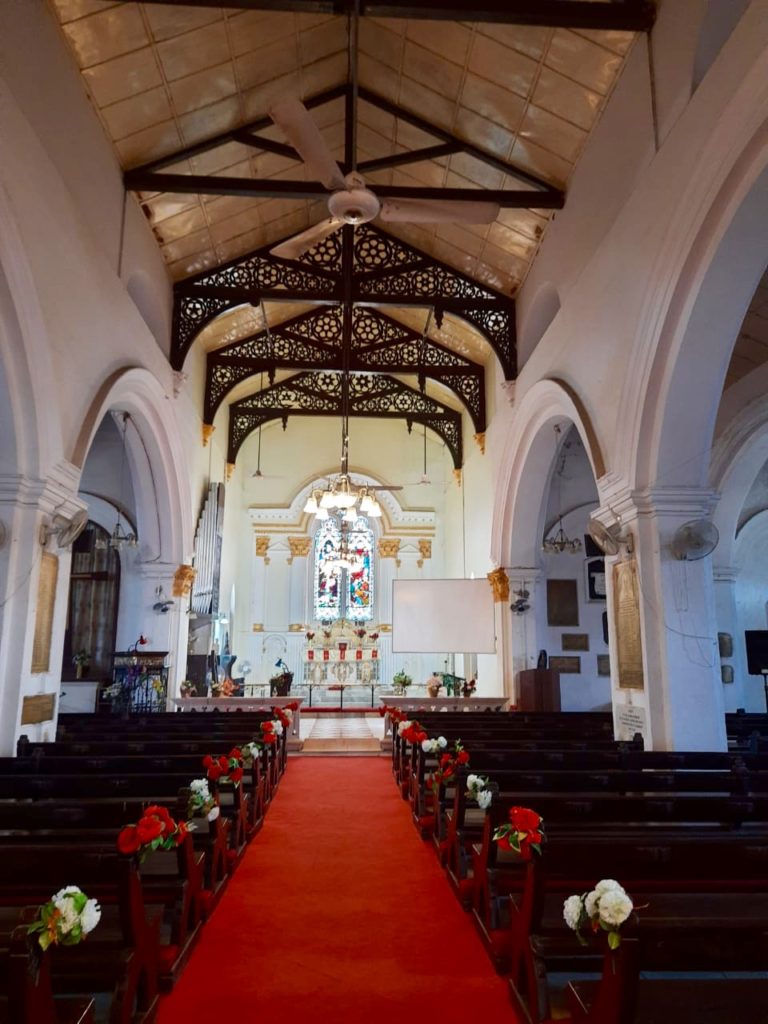
The Church, the first in this region, had come up within a few years of John Malcolm establishing the garrison town of Mhow after the British gave a bit of a bloody nose to the Holkars in 1817 at Mehidpur. Crossing this church on the Mall Road, (You can never get lost in an old cantt as there will always be a ’Mall Road’ to take you home.) I have often admired its sky kissing lean spire, which gives the structure a haughty look as it stands with a Baobab or two for company. On the walls inside, among the many plaques, there is one with the name of the first person to be killed by a tiger in Mhow. There are carved wooden arches in a row on the vaulted ceiling. The original wooden pews with brackets, an addition after the mutiny of 1857, to hold the rifles of the soldiers are still there. The mutineers burnt the outhouse of the priest on their way to Indore but spared the main building.

Read about another town made famous by it’s queen during the mutiny in- A Bard Sings a Story in Jhansi

As enigmatic as it is dramatic

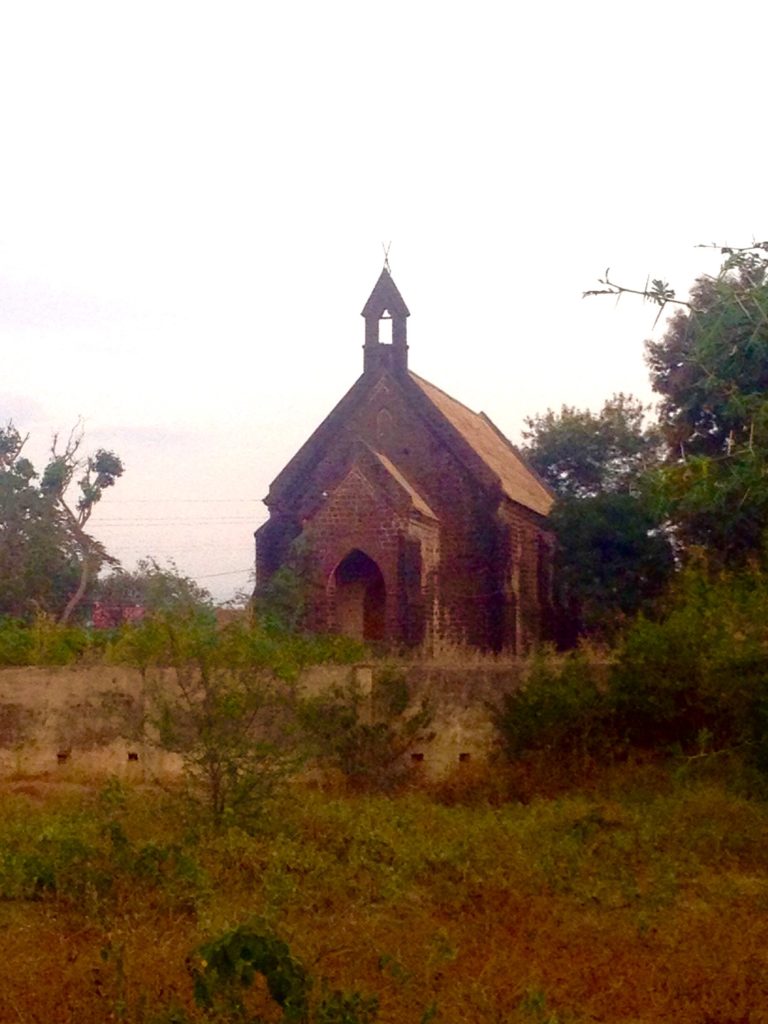
 Although, partly because of its name but mostly because of its setting- in a grove of old deodars with stain glass windows and a massive bell on the side, my all time favourite is St John in the Wilderness Church near Dharamsala. The other favourite is in Mhow- Standing alone in an expanse of brown overgrown grass, as if on a moor, without any adjoining drama. (If one doesn’t count the neighbouring hebejebeish cemetery!) The small, dark stone structure has had various names at different times – St Andrew’s church, ’Kirk’  among others and is now known as the Scottish Church. In my mind it was always ‘Scottish’. I have no idea why though, given I have never traveled to that part of the world much less been to a church there! It was a chapel originally, dating back to the 1880s and still looks timeless, bubble wrapped, untouched by the changing neighbourhood on the Post Office Road. So often we would cycle past it to Jeevan Bakery where, in the evening, the aroma wafting would reel us in and have us hooked on the still oven warm bread and buns. I would look at the church but with no desire to explore it. Full marks for curiosity, zero for bravery! Another church in Mhow which I discovered recently when I was dragged to light a candle in its grotto is St Antony’s church, in the Infantry School area, built by an Italian priest- Pius Benevento, a prolific church builder. The location maybe decided by the fact that the saint is a patron of horses and this area was called Ghod Khata or the horse stables. I found the Baobab next to it fascinating- much like a hydra trunked elephant with its massive girth. A sea of humanity during St Antony’s feast day, the church is popular with the Tamilians here.

Read about the cycling adventures in another town in- Cycling in Dehradun -The Best Routes for Leisure Rides


Silent companions

Mhow, all of 5 kms probably from end to end, has been such a cosmopolitan melting pot with people from all faiths and walks of life. There are numerous churches here, of all denominations, dotting the undulating vistas, catering to the spiritual needs of the Christians and the remnants of the Anglo-Indian community. The Parsis have their Agairy or Fire Temple tucked in one of the back lanes and their Tower of Silence still stands strong and proud on a ridge outside town. Bohra muslim women can be seen walking to the market mosque in their gay burkhas. The deities in the assorted temples, standing cheek by jowl with shops on the main market street, look benignly at people bustling about waiting for some to take a break from more materialist pursuits to pay obeisance. Our hometowns have their own distinctive zeitgeist. When was the last time you set out to rediscover your town’s?

Acknowledgement- A big shout out to Denzil Lobo, our resident Mhow aficionado, whose enthusiasm about anything to do with Mhow is truly infectious.

Discover stories of horses, churches and other surprises in-Nasirabad’s Kachora: More than a Savoury Story


Dera Jaipur: A Homestay for Stellar Style and Exceptional Experiences

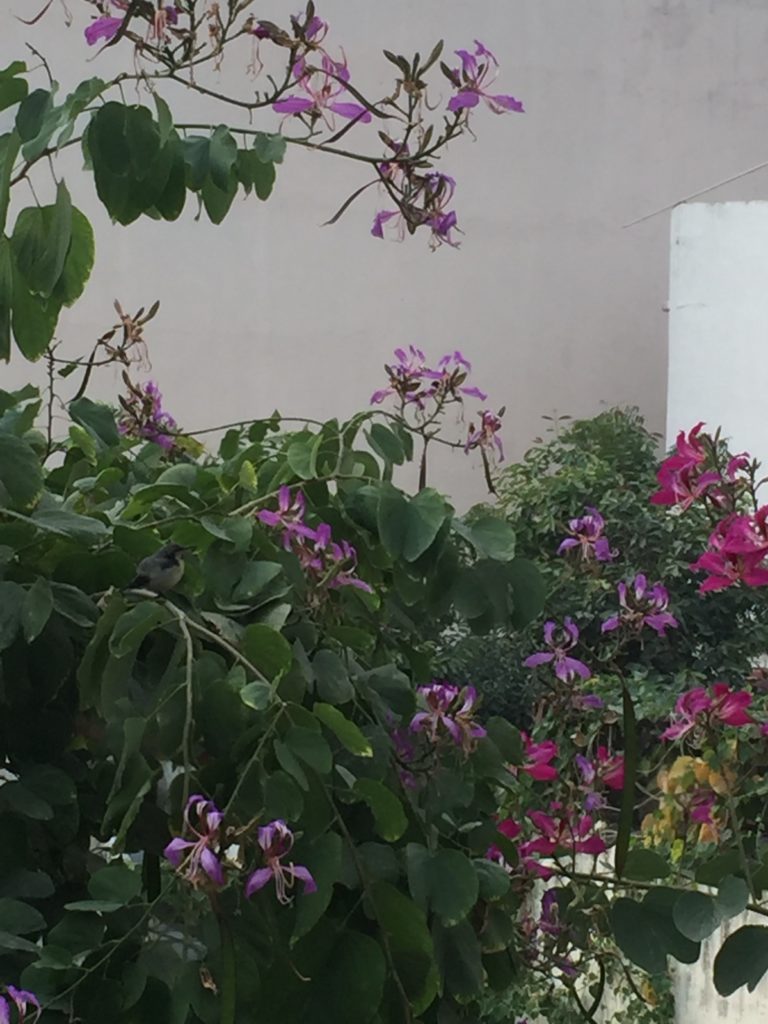
A knock on the door made me jump out of my cozy bed. Draupadi stood there with a beaming smile and the morning tea tray. (A well laid tea tray is a dying art.) As she placed the tray on the table I drew the curtains back in the big window of my spacious room. The Kachnar trees outside the window were swaying in the breeze and the purple, fuchsia flowers stood out starkly against a grey sky mirroring the colour palette of my room. I suddenly spied the Yellow sunbird I had seen the previous afternoon, as it took off to chase a bumblebee, through the canopy of flowers and leaves. What a sight to wake up to!

Sunbird and swaying Kachnars outside my window

Jaipur Jaunt

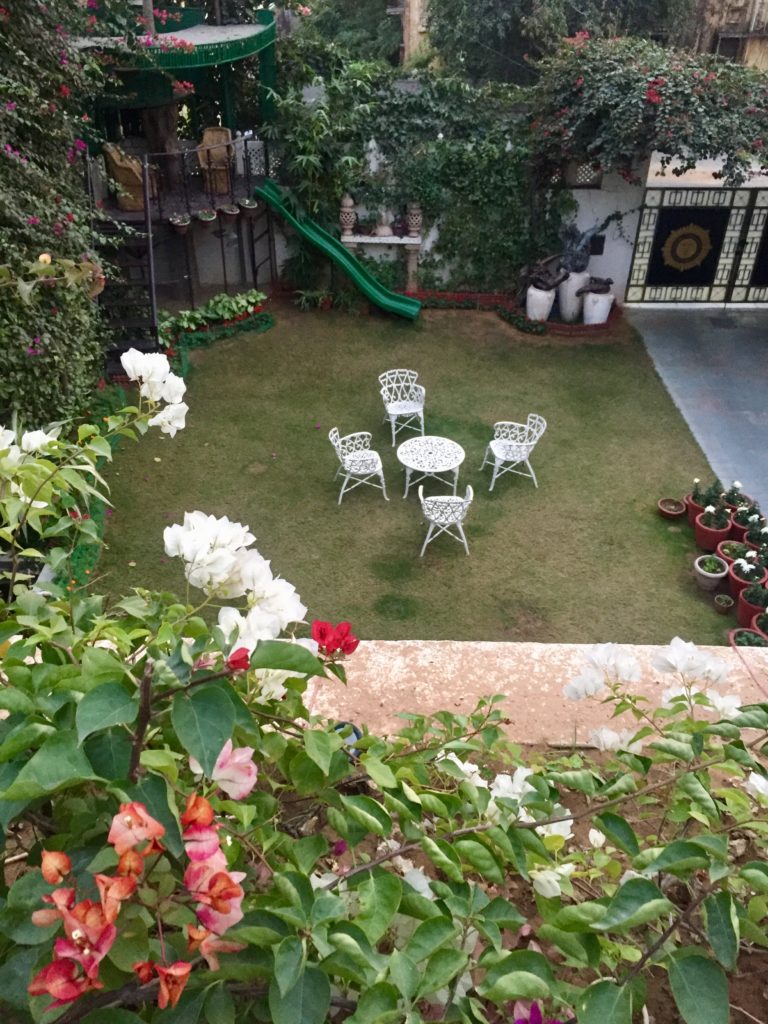
The morning I reached, at the Jaipur railway station, as I cancelled my second Ola ride, a man, who has obviously been eavesdropping tells me that Bani Park, the tony locality where Dera Jaipur is located, is too near for most cab drivers to bother with sometimes. I thank my stars for its proximity as I re-book. (My Ola booking experiences are stories in themselves.) My third Ola driver – Lalu Prasad Yadav, who acknowledges his name with a wry laugh, deposits me in front of the homestay in 5 min. The gate is opened by a woman in traditional attire before I can ring the bell- Draupadi. She whisks my luggage away as I follow her, admiring the garden with its bougainvillea creepers in a mélange of colours framing the wall fountain. Mrs. Rekha Singh, my oh-so elegant host is right there at the door to receive me. The 5 bedroom boutique homestay – Dera Jaipur, belongs to General Karni Singh and Mrs. Rekha Rani Singh of the House Gangiasar.

When taste and travel meet

 Dera Jaipur:  Serenely Soignée

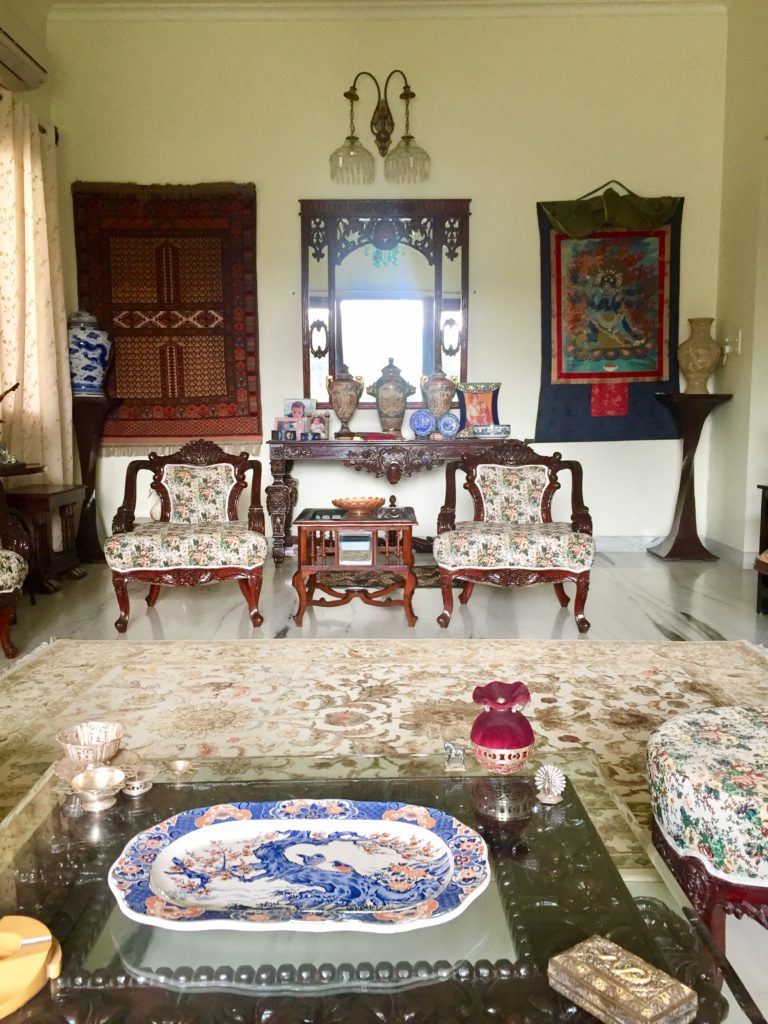
We sit down in her well appointed drawing room and exchange travel notes. Both she and her husband, General Karni Singh, a prominent neurosurgeon (Infact he was among the first to use Botox in India and is a passionate sportsman to boot. And no, I didn’t ask him whether I needed a jab or two.) are avid travelers and over coffee done to the ‘T’ in a giant mug (How did they guess that’s what I like my coffee in!) she regales me with anecdotes of their recent travels. As I admire the room, an eclectic blend of family heirlooms and tasteful bric a brac  from their travels, she points out the rug gifted by the erstwhile King of Afghanistan and the Thangka , gifted by the King of Bhutan, both having  been attended to by the General. What I particularly love about the place is that it is a home, classily done up, reflecting the times we live in but the hospitality is rooted in traditional ethos. The ‘wow factor’ is refined without overpowering and is centered mostly in the common areas.

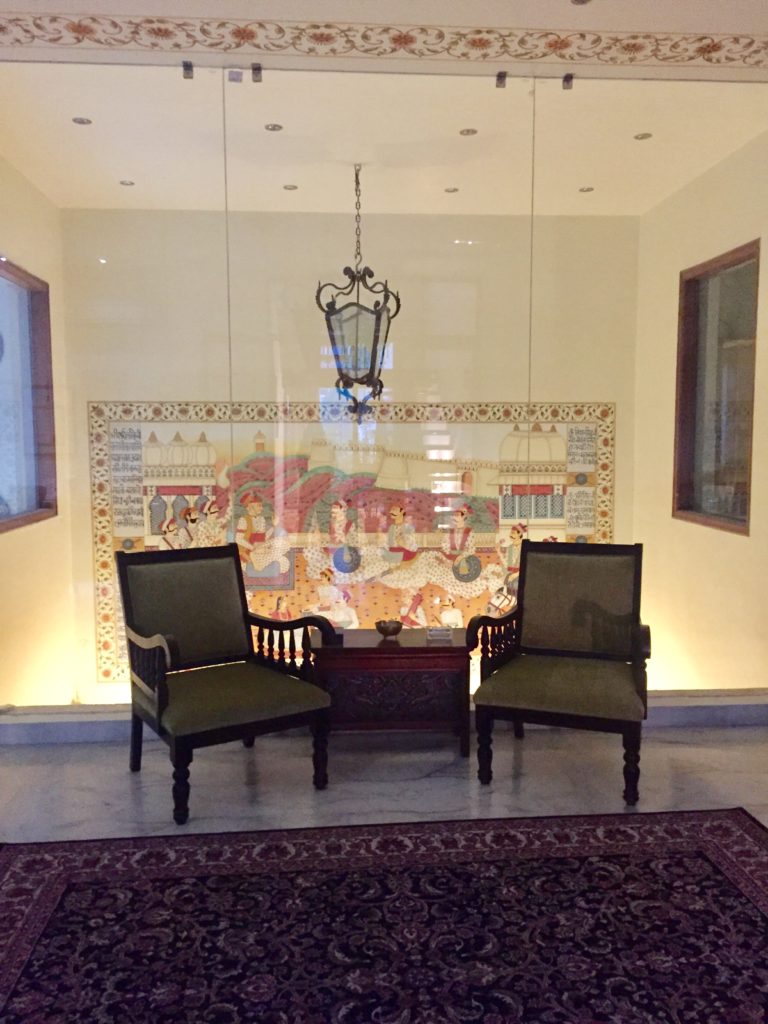
As we wait for lunch to be served, I am introduced to the family history and that of the Shekhawat rulers depicted in the mural dominating the dining area. The family is part of one of the ruling clans of the harsh and unforgiving Shekhawati region, which used to stand as a bulwark on the trading route, north of Jaipur and has produced a proud race of warriors. There are stories told down the generations, of traditions, alliances, and of aboriginal tribes now lost.

Discover the land of other warriors in- Picture Postcards from Bundelkhand and other stories.

History on the wall

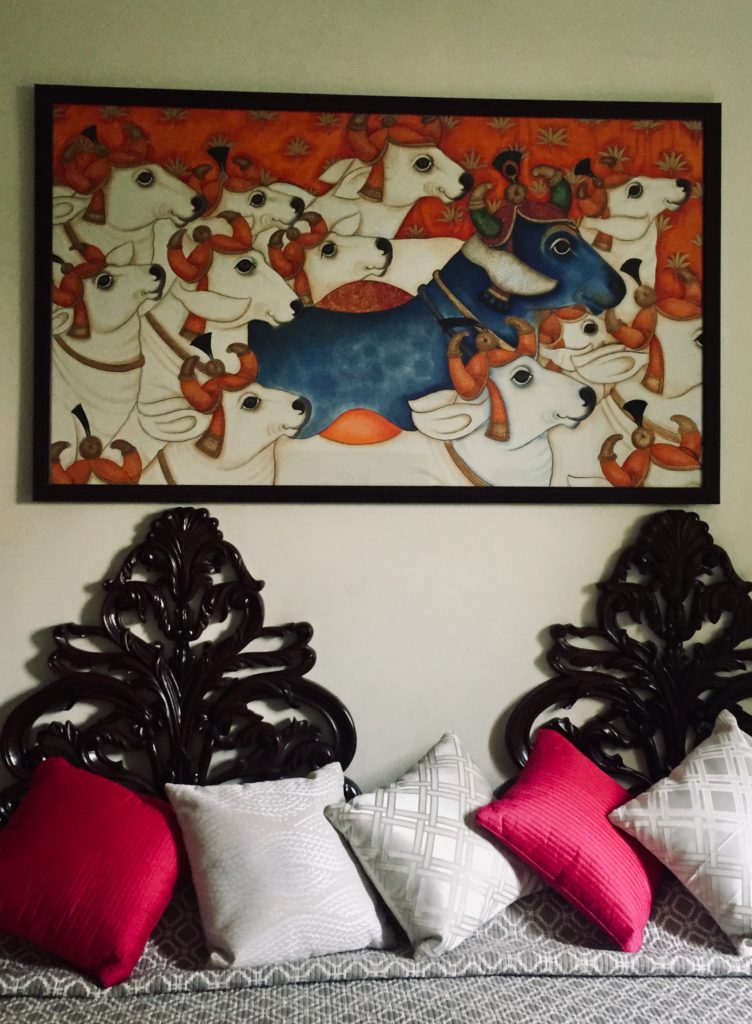
Lunch is a traditional fare of melt in the mouth patod and bajra roti along with mirchas made in typical Shekhawati style. After that and given the early morning start I’ve had, I happily crawl into a big inviting bed. (The one reason I dislike Shatabdis- their ungodly departure timings from Delhi.) The rooms are spaciously serene yet elegant and the hostess’ love for art and drama pops up here too. One has its own private marble waterfall outside the window, another has this painting conceptualized by Mrs. Singh to depict homecoming with the very Indian iconography of gaudhuli, happy cows being led home by a blue bull depicting Krishna with a Pichwai backdrop. An artful summing up of Dera Jaipur.
Indulge in some Rajathani food fables of another house in- Satiating Nostalgia Under the Winter Rain at Junia

Happy homecoming

The evening tea tray bears a generously filled, flaky kachori. I philosophically wolf it down. I mean Rajasthan is home to this and if not here then where? But after that thankfully someone in the house has read my mind and dinner is a light affair with a touch of the Raj starting with a flavourful Mulligatawny soup. The next morning after a hearty breakfast which includes Bajra Raab sweetened with organic jaggery I am so tempted to just hang out on the bougainvillea lined terrace with a book from the small library and a mug of coffee and totally skip the shopping planned at Sikar market. I just manage to make a quick dash as visions of missed steal deals nag me.

Discover the kachori’s big cousin in- Nasirabad’s Kachora: More than a Savoury Story

Choose a book and then a nook

I went as a guest but I left feeling like I have a home to go to in Jaipur now. The experience is distinctive and thoughtfully planned and one might be tempted to forgo the charms of Jaipur. I experienced hospitality Gangiasar style and had a staycation at a special home. When are you planning yours?

Niche Experiences at Dera Jaipur

My stay was too short to experience the activities that can be organized if one wishes, at Dera Jaipur, apart from the usual.

Attend a culinary demo or better still, be part of a select crowd sampling a curated sit-down meal by a chef specially invited to lay out the gastronomical spread.

Dabble in mural art work under the tutelage of an expert and take back the masterpiece!

Over a sun-downer, have a fun photo session all dressed up like the rajas of yore.

Pre-book a special celebration during a family get-together.

Fact file-

Address –

D-226, Tulsi Marg

Bani Park, Jaipur, Rajasthan 

 Website- https://www.derajaipur.com/

Tel: 073575 42999


Nasirabad’s Kachora: More than a Savoury Story

Wake up and smell the kachoras

I think my taste buds are prone to sentimentality. They hunger for food that is tinged with nostalgia, which has its own piquant flavor. I don’t recall how old I was when I first had a ‘Kachora’ but I do remember it was pretty much love at first bite. Nasirabad railway station was a stop we started looking forward to in the journey from Ajmer to Mhow because it meant a quick dash to get about half a kachora…,indulgence enough as far as my grandfather was concerned, to be had with tea in ’kulhads’ (earthen cups), before that rocking meter gauge train chugged its way onward. The wheels of time turned and one day I stood seeing off the fiancé at Mhow railway station as he headed towards Nasirabad. Then those wheels turned some more and the railway line converted to broad gauge partly, derailing the journey on that route.

Another train journey gave us – Picture Postcards from Bundelkhand


Railway Station Rendezvous’

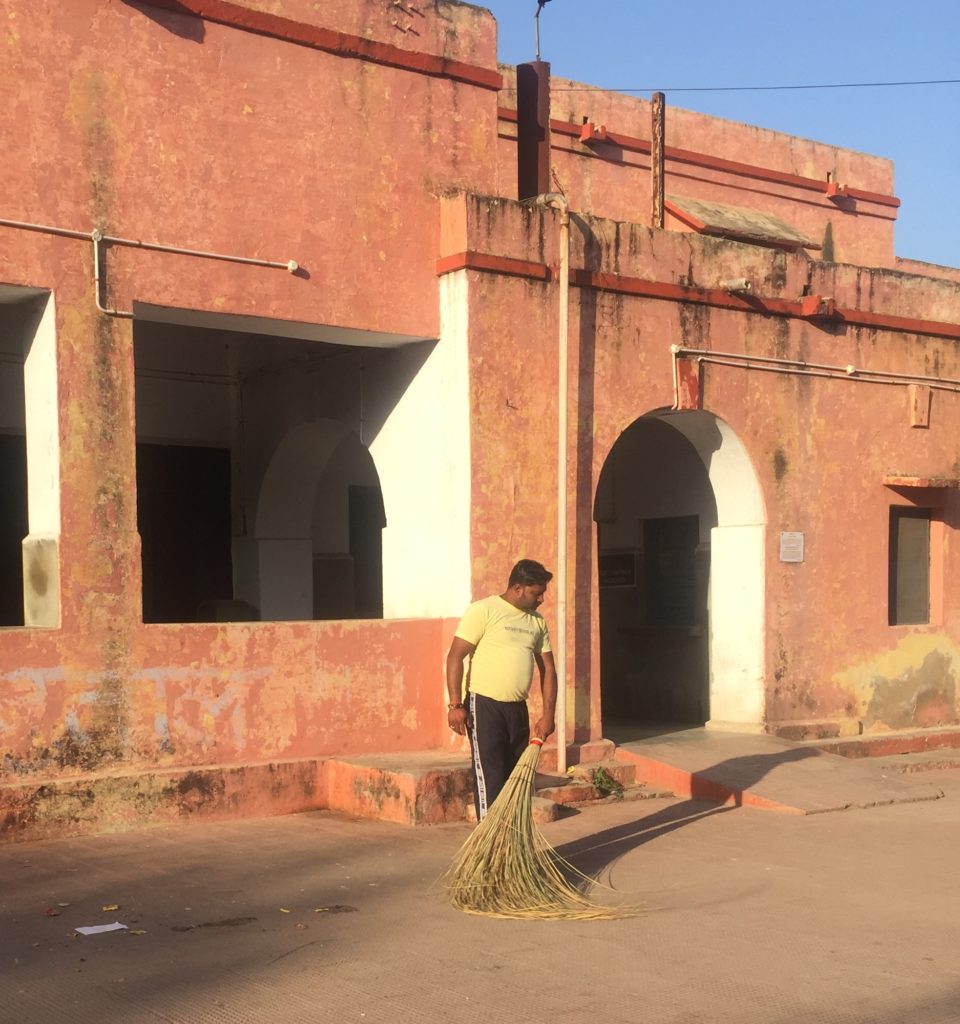
Those brooms mean business.

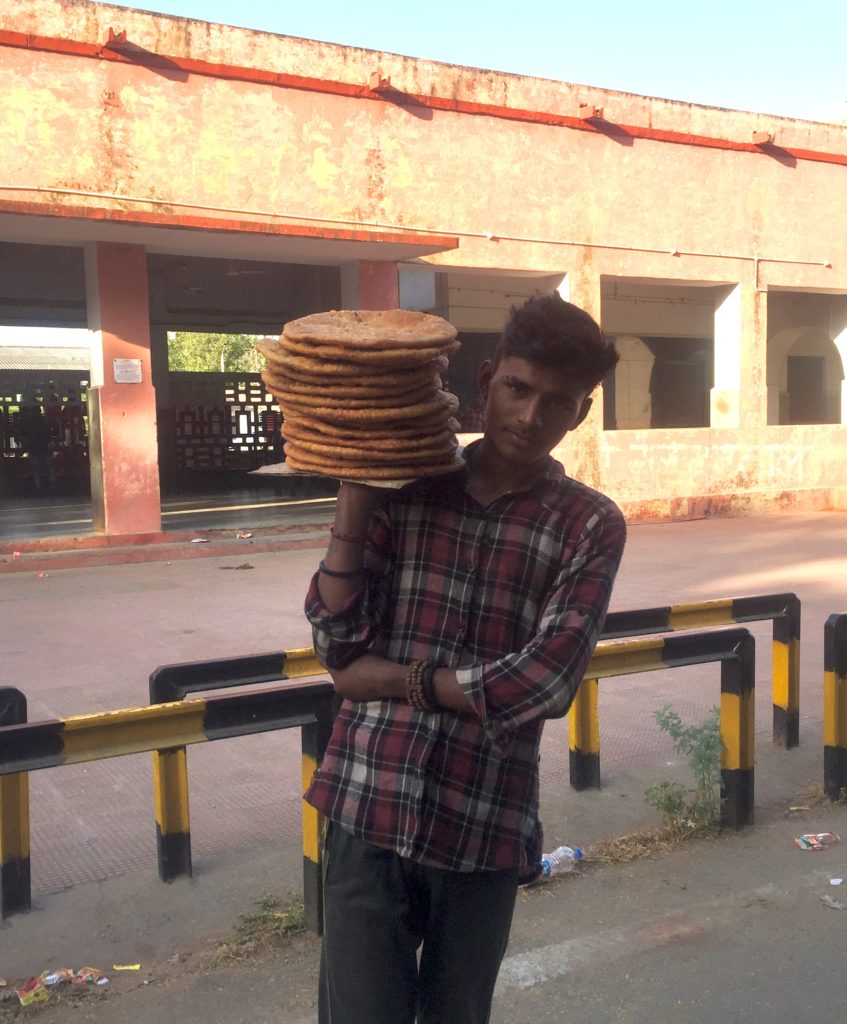
So while in Nasirabad couple of days back we see that we have a few hours to spare. The sentimental taste buds start pulling the emotional chords and I find us heading for an early (By my standard.) cup of tea to the station. We cross some immaculately kept churches. One looking very Scottish with it’s stone tower but still at home somehow in that dry setting. (Well it has had about a century to make itself comfortable.) We turn onto a road with no sign post but the railway line right there gives a hint of the possibility of a station’s location and there it is, one of the smallest stations I’ve ever been to, being swept clean with giant brooms. We are in luck! A young man is carting a big pile of fresh kachoras into the station from the dhaba behind where they are being made over wood fire. For two minutes I delude myself into thinking that they are baked! Only my delusions are half baked! We plonk ourselves on a vacated bench at the platform, watch a train pull in and the kachoras are hawked out in small portions.

Explore the churches of another town in- 3 Churches in Mhow: Discovering Obscure History and Outstanding Carols 

This is what nostalgia tastes like.

We sip chai and savour our portion of memories- warm, crunchy, the dal stuffing rightly spiced, served on a piece of newspaper. The piping hot cuppa although refreshing, is no longer served in the eco-friendly kulhads. I remember Lalu Prasad as Railway Minister redeeming himself in my eyes a teensy-weensy bit when he reintroduced kulhads on the trains. The proprietor of the shop at the station is delighted but I think a little perplexed too, that we would drive to a railway station for old time sake.

Illusion of options

Nasirabad is not a one-horse town!

Then we head towards the other more famous shop near the bus stand which serves kachoras – Chawannilal’s. We cross a ‘tonga’ (Horse cart). Oh my God! There are places where they have not been put to pasture! If there was one other thing associated with railway stations, it was them. The struggle to get a trunk on and off a tonga!! The happy cumbersome ride, the sound of hooves clip-clopping early in the morning through deserted streets & the rousing welcome when we reached the grandparents. We ask for directions and are told of a short cut. Always a bad idea but we never seem to learn! At a turn there is a shed where other horses are munching, untethered. The tongas resting at an angle and the drivers sitting around with their beedis. We turn into one of the narrowest lanes, barely wider than the width of the car. I’m sure the residents must have thought that our car was definitely bigger than our brains! Fortunately it’s a short lane. (It is supposed to be shortcut.) The older houses have jharokas embellishing the windows and colonnaded pillars but it seems the masons of today don’t possess the skills to redo them. So they are being smoothened out while being repaired. All the artistic carving will be one day ironed out into a bland cement wall in time.

Discover the history of another town in- A Bard Sings a Story in Jhansi

Chawannilal’s Culinary Cache

Golden, flaky memories being made

Chawannilal’s shop is right there and bustling. The owner in a crisp white kurta is sitting at the back with an aide, helping make the kachoras. He makes perfect cups of the dough, firmly pats the stuffing in, seals, then rolls them out and finally gently slips them into the massive kadai full of hot oil. (Definitely not baked!) Those half baked illusions of mine evaporate up the fancy chimney forever. Today some kachoras are being shipped all the way to Calcutta. The potato stuffed ones are good too but they don’t stay longer than a day or so. On a smaller wok, at the entrance, jalebis are being made. One guy has a generous helping put on top of his kachora. At the owner’s urging I take a jalebi. It is bite sized, thin, crisp & delicious! I’ve been eyeing the ‘mawa’ cake at the counter and what the heck; now that I’m in a food free fall I have one. Melt in the mouth and rightly sweetened! The cooled kachoras are packed and we have them the next day. They taste even better! Flaky crust peeling off, bits of fennel & coriander popping up in bites of dal, a hint of asafoetida now and then, nostalgia adding flavor, making it warmer, richer and satiating not just the palate. This snack is on my soul food menu, what is on yours?
For another superb Rajasthani culinary journey read- Satiating Nostalgia Under the Winter Rain at Junia

Fact File –

Nasirabad is 21 kms from Ajmer.

Cost of a Kachora –

At the Railway Station – Rs 160 / kg

At Chawannilal – Rs 180 / kg

For more Rajasthani food fables read –

Mandu and Maheshwar in the Monsoon Mist


India’s large heart – Madhya Pradesh, even after being cut down to size, still occupies a chunk smack in the middle of the country. That large heart can beat wildly like Pench or as peacefully as Orchha. Mandu and Maheshwar straddle a state of being somewhere in between. They make for excellent long weekend getaways when the monsoons revive the natural beauty to emerald green and make the Narmada flow full and deep.

Discover the emerald Betwa and Orchha in- Part One- On the Wild Side of Outstanding Orchha

Atop a Jahaz masquerading as a Mahal

Mandu – Tales of Mahals, Mausoleums & a Man-eater

The first of many trips one has made to Mandu was way back in the 80’s with three generations of the clan, like one mini Mughal army on the move, in a rickety jeep over a rutted road. The last visit was over a newly laid road good enough even for a Nano, part of a mini cavalcade now, to cater for another generation added to the expanding Mughal army! Two of my most abiding memories of that first trip were – at a waterfall overlooking a gorge being told the tale of a young trapeze artist promised a chunk of the kingdom if she managed to cross the gorge on a tightrope. As she neared the end, success nearly at her feet, the girl and the rope were cut down to size. The other, coming to know that a man-eater had just been caught at the Tarapur Darwaza the day before our arrival. It freaked me out so much that I imagined tigers outside the high vaulted airy room where we were putting up at the Taveli Mahal. (Which now houses the museum at the entrance of the Jahaz Mahal complex.) It made me oblivious to the setting of our accommodation which overlooked a lotus covered tank or the beauty around, cloaked in a misty veil much like the poetic romance of Baz Bahadur and Rani Roopmati, the chief protagonists of an abiding love story, who were proceeded and followed by others in the chequered history of a citadel said to be the largest in India.

A young Baobab gives company to an old monument

As one approaches Mandu, situated on an outcrop of the Malwa plateau, there are massive Baobab trees or ‘Khurasani Imlis’, as they are also called, maybe as a testimony to their winding journey from Africa to here, dotting the landscape. The road goes onto a narrow natural bridge before going through the first of three consecutive gates or Darwazas in a tight curve – Alamgiri, Bhangi (Yeah, sounds so politically incorrect now, but as per some stories in honour of the people proceeding an army heading out to battle.) and Delhi Darwaza, which should have made Mandu invincible but clearly didn’t, given the number of times it changed hands.

A place for the harem to perhaps frolic in the Mahal

Post monsoon is a special time to visit this place when it is emerald green, the ponds and tanks are full and the low clouds drift lazily in the breeze. Walk, hire a cycle (They are easily available.) or drive slowly and explore the green vistas and monuments that dot this place. Start at the square that makes up the bustling centre, where the barest remains of the Asharfi Mahal and austere Jami Masjid face each other. Behind the masjid is Hoshang Shah’s tomb which is supposed to have provided the template for the Taj Mahal. A short distance away, on one axis are the prehistoric Lohani caves, a part of Burra or Old Mandu and on the other, the star attraction – The Jahaz Mahal complex. Jahaz Mahal straddles a small lake and a large tank, both now devoid of the massive lotuses I remember from the first trip. Legend has it that the “Ship Palace”,(A name, if you ask me, more because of the location between the water bodies than any great resemblance to any floating vessel I know of.) housed fifteen thousand women at one time as part of the harem and hats off to the architect that the ‘jahaz’ didn’t sink! The sloping walls lend Hindola Mahal it’s name which is behind the Jahaz Mahal, and that adjoins a beautifully restored step well – The Champa Baori.

Explore palaces in- Part Two – The Old Gold in Outstanding Orchha

Baz Bahadur Mahal gazes at Roopmati Pavilion

On the far end of Mandu is Baz Bahadur’s Palace and Rewa Kund. The Kund, for some, is as sacred as the Narmada river itself. At a height, further on, right at the edge of the plateau is Rani Roopmati’s pavilion. An airy structure with a covered water reservoir was made so that the queen could see and pray to her beloved river, which seems to have shifted course or the haze obscured it or maybe I just have bad eyesight because I saw no river down in the Nimar plains. Enroute to these, but off the road are many small monuments, alone or in clusters. At one monument we saw carved blocks used upside down denoting pillaged older buildings being the source of the monument’s material. At another, a grave seemed to have walked out of the tomb only to come to rest under a tree nearby. The Neelkanth temple with it’s small courtyard is a few steps down literally carved out from a cave on the slope of the plateau and is on the road to Tarapur Darwaza.

A canopied resting place

The same darwaza where the trap had been set for the man-eating leopard, (Definitely no tiger!) one woman-eating leopard to be exact, many eons back. Mandu teems with stories and legends, real and fanciful and the only wildlife I have ever sighted has been a massive hyena, probably having the last laugh at my flighty imagination.

Find more wildlife in- Ranthambore Alert -Ticketing Trials and Tiger Trails


Weaving Sutras at Maheshwar

The grand ghat surveys the mighty river

Maheshwar, home to the much in demand Maheshwari fabric woven there, is about an hour away from Mandu. A gentle winding road down the plateau brings us to the Nimar plains. Their blistering heat tempered by the rains right now. The faint outline of Roopmati’s pavilion is all that is visible of Mandu from below. At Maheshwar, narrow bylanes of a small town with a faintly mofussil feel, still lingering in the air, end at the Maheshwar fort. One part, which houses the private quarters of Ahilya Bai, the most famous of the Holkar rulers, has been converted into a boutique hotel by her descendants. A stone path takes us towards the ghats and we see the exquisitely carved stone spire of a temple but are just as soon distracted by the sounds of a hand loom on our left. Right there are weavers at work on the fabric so much ‘en vogue’ everywhere. The cloth & it’s colours beguiling us, we promise to come back for a more leisurely shopping experience at the end.

Read what another city has to offer in- Dera Jaipur: A Homestay for Stellar Style and Exceptional Experiences

Marooned in the Monsoon

A few steps down bring us to two stunningly carved stone temples facing each other. The Ayhileshwar temple is the bigger one on the right and it’s balustrades offer a beautiful view of the ghats below and the Narmada river beyond. The ghat steps with the fort as an Insta-worthy backdrop, are the piece de resistance and invite us to just sit and let the murmur of religious incantations here and there wash over us. We soak in the serenity of the sacred river, the raison d’être of this place which runs swift and deep, carrying boatloads of people, nearly submerging a temple on a tiny island nearby. A river sutra & tales of bygone queens seems to weave a common thread & bind these two historic towns at almost gazing distance of each other.

Travel to another historic town in- A Bard Sings a Story in Jhansi


Cycling in Dehradun – The Best Routes for Leisure Rides

Into the hills

With my nose slightly in the air I can say that I started cycling much before cycling came into ‘vogue’. The accepted and expected mode of transportation in the small town I grew up was a cycle. So be it to school, to socialize, go for picnics, the fastest way was to get onto a cycle. No questions asked by the adults. It was safe, slow (That was only because the roads used to be, at best, potholed atleast!) and how far would we go on a cycle?( Ahem! Depends on how nefarious was the agenda.) Infact the first birthday present post marriage by the husband was a cycle and that fact has ensured that I have stayed faithful and not eyed the newer, fancier models! So I still have my almost 20 year old warhorse minus any fancy gears going strong. But I admit, cycling is still an athleisure activity for me and while I enjoy cycling immensely I have only that much stamina for it. So at times sleep, weather and sometimes just plain laziness makes me bury my head under the pillow while the cycle waits for another morning.

Cycle and explore – 3 Churches in Mhow: Discovering Obscure History and Outstanding Carols 

Whoa! Cow-sized speed breaker ahead

Doon Cycling Diaries
So this summer, on a longish holiday at Dehradun, courtesy the child (Definitely more teenager than child now!) who was doing some serious round of studies (Will know next year how fruitful/futile that has been.) at ungodly timings, by my standards, but trying to be supportive parents, we decided that the best way to match her routine was to go for cycling in the morning. An extremely short hunt got us to the Bike Shop and soon two cycles plus the slightly oversized helmets were home delivered. The pluses of a small town. The minus we were to discover is that, in small towns, although the number of cyclists has come down, it is still a de facto means of transportation so the other people on the road do not give a fig about giving way to them/us! I mean that wannabe space- age helmet should tell people something about what serious business we are on! Oh well! Our first cycling sojourn in the hills drove home some pertinent facts – east and west are the best for novices. It is undulating so that there is periodic respite and one can carry on for longer. Going northwards is generally an uphill task! Duh!! What goes up eventually rolls down too but God! Uphill cycling can be like fire in the legs not to mention the lungs. All the mountain air is left outside!

Breathe some mountain air in- Barot – And the Serendipitous Catch in the Uhl River

Weight lifting time

Rediscovering Dehradun on a Cycle – A Road at a Time
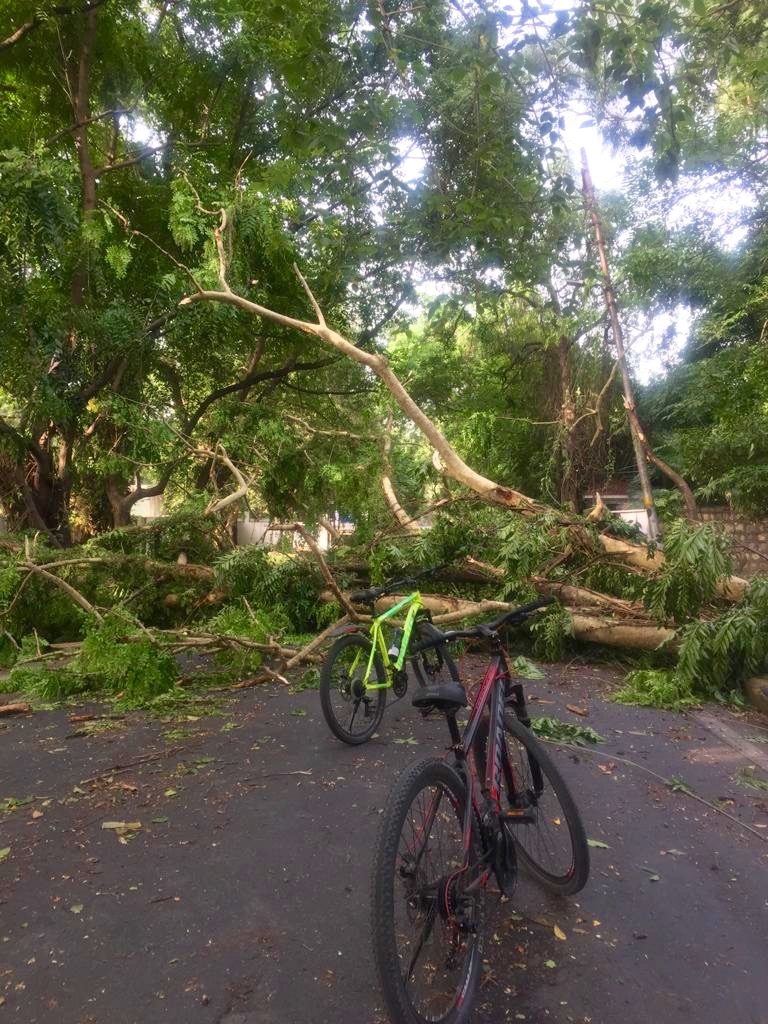
Crossing Garhi Cantt we would see ardent golfers, joggers and young ones out in full force making the most of cool summer morning playing football and cricket. We would zip past Doon school closed for the summer and head back through the main market past the iconic Clock Tower. One particular morning we came across an old tree brought down by a summer storm the night before lying right across a road in the cantt, when we were finally through with the uphill huffing and puffing and looking forward to rolling down. The choice was between going back up a bit and hauling the cycles somehow across the tree. We decided to give our legs a break and exercise our arms instead and opted for the hauling!
Going on the Sahastradhara road we realized was definitely a north bound exercise, albeit a shaded and undulating one and the pedaling was nearly nonstop till we went down a steep slope onto a road that finally joined up with the main Rajpur road. There were parts of Doon I was seeing for the first time and I realized thanks to this slow mode, made slower by the fact that I could not pedal any faster on an incline, I could take in views which one would zip past in a car (like all the lovely houses and gardens I peered into!) and yet, on the other hand, reach places I would never be able to walk to.

Explore more places of Uttarakhand in- Disconnecting with the World on a Mountain Isle at Shaama

On the slow road, if you take a look around,there are stunners to be seen

We rode past the imposing FRI building sitting back in it’s expansive spread and it’s fairytale bungalows complete with green shutters and chimneys till IMA. Heard the marching practice and on the way back once overtook a learner on a Scooty minus her helmet (I guess according to her, her speed didn’t warrant the security of a helmet!) smack in the middle of the road oblivious to the jam in her wake. Zero for safety but full marks for confidence.
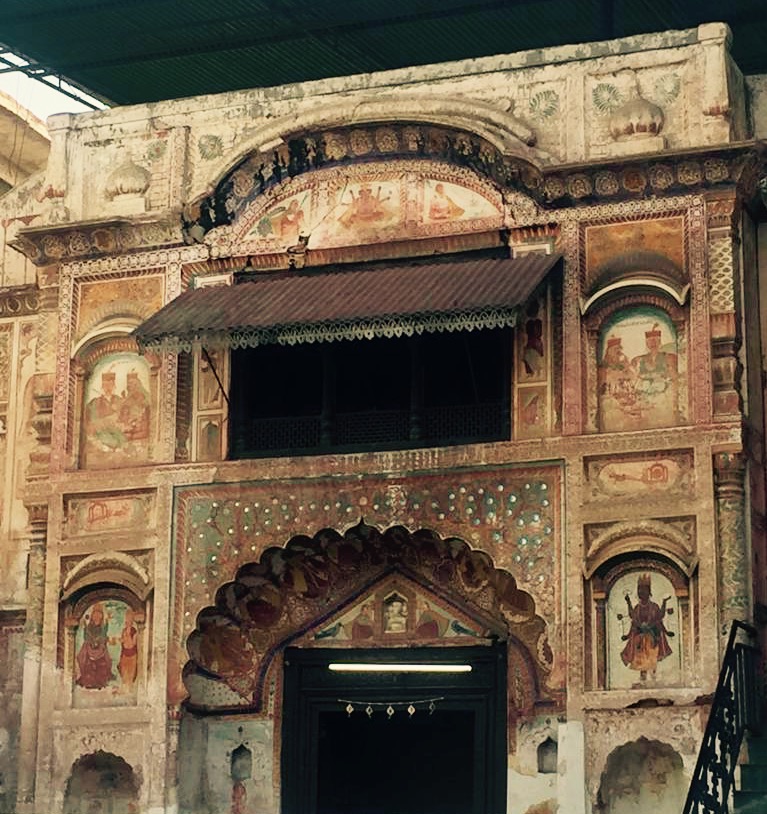
Our default setting became going on the Sahastradhara road to Raipur village through pockets of thick green cover of Sal and Mango trees near the Ordinance factory and then on towards either the airport or the road going up to Maldevata . The latter, initially, a one degree straight incline till it hit the hills. We saw jackals and their cubs scavenging by the roadside, not inclined to pose for a photograph. Towards the fag end of our cycling mornings, slowing down to give way to traffic we discovered at the end of Raipur the most beautiful ‘havelis’ with arched balconies, massive doors and in one, the most elaborate painted façade. Eye tonic early in the morning!

Discover more artwork in- Part Two- The Old Gold in Outstanding Orchha

Slow down & smell the flowers

Huffing and Puffing in a Cyclothon


& its a wrap

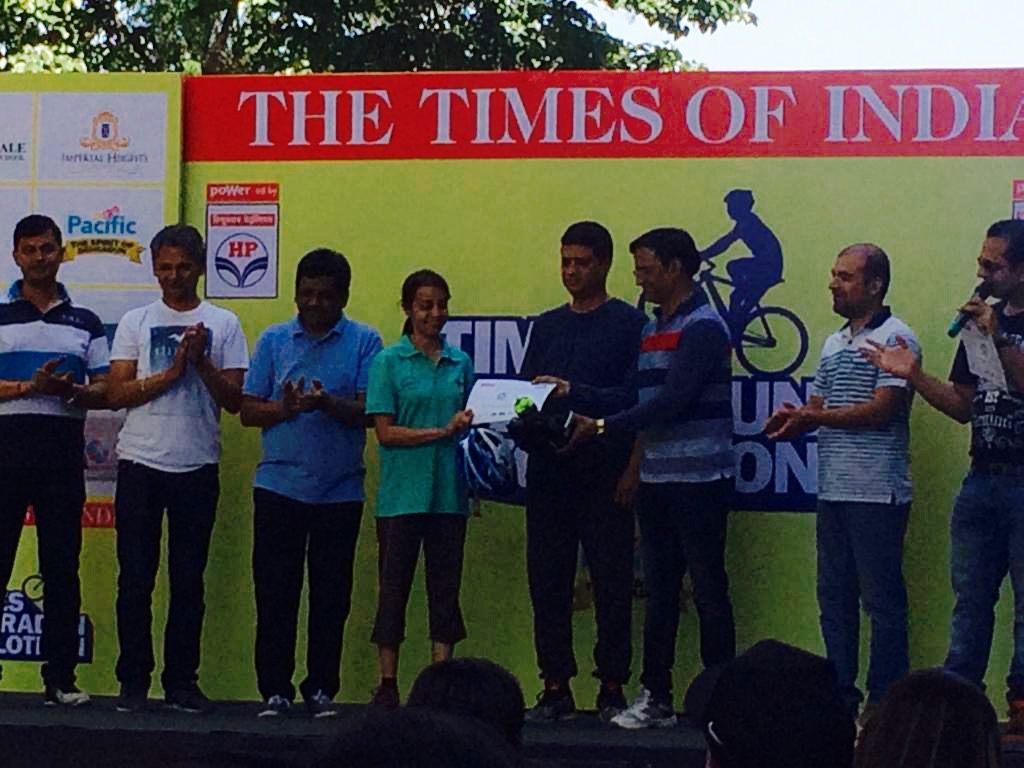
We not only managed to participate in a cyclothon but also got our two minutes of fame when the photographs got published in the newspaper! Must be one of the shortest cyclothon (Thank god!) but with a killer route for people like us who are in the ‘whatever category there is before amateur mountain riders’. We were left eating dust in five minutes flat while the regulars, ranging from experienced twelve year olds to sexagenarians disappeared up the road towards Mussoorie. We cycled, got off and pushed the cycle, I realized it is smarter to be on one then be pushing it uphill! Repeated the cycle (Pun unintended!) till we reached half way at Kuthal gate. Then we cruised back on the old Rajpur road, which was mostly downhill, with me eyeing all the lovely houses enroute and going through my favourite patch of remaining jungle in Doon, with the fluttering Tibetan flags. Somewhere the husband asked why I was putting my brakes on the down slope. I wanted to tell him that we were touching nearly 40kms /hour on what is essentially a metal stick with wheels and with just a notion of protection on my head. Even if I had remembered to pack in the parachute I doubt it would deploy incase I overshot a turn and my landing would be hard, fast and over even before he could get his superman cape on.

Read about another cycling escapade in-Part One- On the Wild Side of Outstanding Orchha

An Ode to Ancient Life in Stone- The UNESCO World Heritage Site of Ajanta & Ellora

The other day we went to the National Museum to catch an exhibition. While waiting in the foyer for the rest of the group to assemble we took a look around at some of the sculptures on display. (‘Whatever- o’clock- sharp’ is never sharp enough. Its always plus a few more minutes. Everybody, infact every place has it’s own ‘standard time’ and Indian Standard Time is almost always an approximation. I mean what are a few minutes when we talk centuries, nay, epochs in this ancient land! ) We see sculptures dating back to the 12th century. Wow! So old! 9th century. Oh my God! That’s ancient! 15th century. Hmm, okay. Behold the diminutive ‘Dancing Girl” in the Indus Valley Civilization section. 2500 BC. The very one whose pictures we grew up seeing in our school text books. Gobsmacked! Kindly stop gaping and move on to the next exhibit…

Explore another place in a time warp in- Part One- On the Wild Side of Outstanding Orchha

Although I don’t recall seeing any exhibit from the almost thousand year old Ajanta-Ellora cave complexes in the museum, my first memory of an Ajanta painting was when decades back, one exploratory afternoon while the adults took their siesta, I decided to investigate the contents the drawing-room in my grandfather’s house. The beautiful french-windowed room was tacitly out of bounds for us. Studying the pair of figures painted on cloth & framed, on either side of the windows, I recall finding them innocuously out of place in that mountainous setting. The mocha skinned, languidly posed couple with their strange hairdos & exotic clothing looked regal alright, but definitely not local. I wondered at their origins after my first art appreciation class of sorts. History lessons in school shed some more light in the years to come.

The Ajanta-Ellora caves despite being on the UNESCO World Heritage Site list have never featured in my list of go-to places. Maybe it’s something to do with caves…never been too enthusiastic about what one visualizes to be dark dingy places, never mind the treasures found within! But since we were in the vicinity & now as conscientious parents we feel the child must be exposed to history & art in it’s natural dwelling. So we set off early in the morning, to beat the heat that the stone cut caves start radiating even in winter, from Aurangabad, which is about  100 kms away. The old, tree lined highway is being widened & the way is littered with the remnants of the living history which is what I think trees are, exposing carcasses of roots, some the size of our vehicle. The end of an era of old canopied routes providing travelers with shade & succor in the pre-airconditioned days.

Serenity in the sanctum sanctorum

A  short bus ride takes us from the parking near the Visitor Centre, which has been developed with Japanese aid, to the winding shallow gorge drained by the Waghora river where the caves have been carved out of the  horseshoe shaped side of the gorge. It seems to preserve the immediate environs of the caves & adds to their aura of remoteness, although there is a full fledged restaurant ( Which we are more appreciative of at the end of our round of the caves!) loos and the ticketing counter near the caves, where we disembark.

Celestials on the ceiling

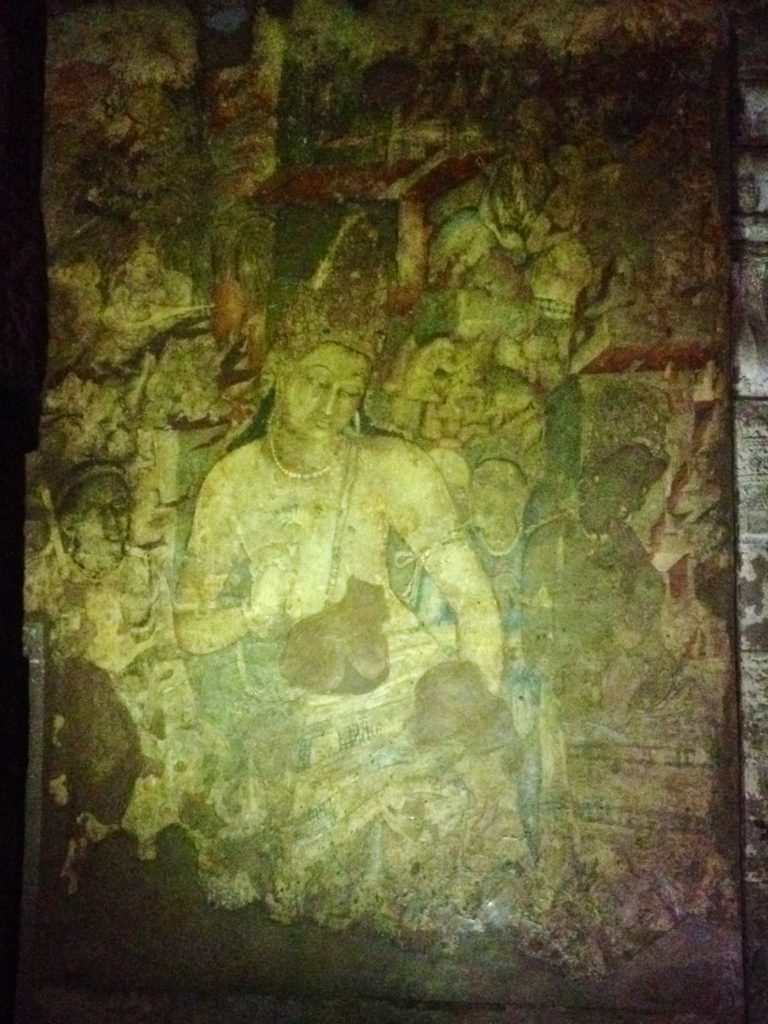
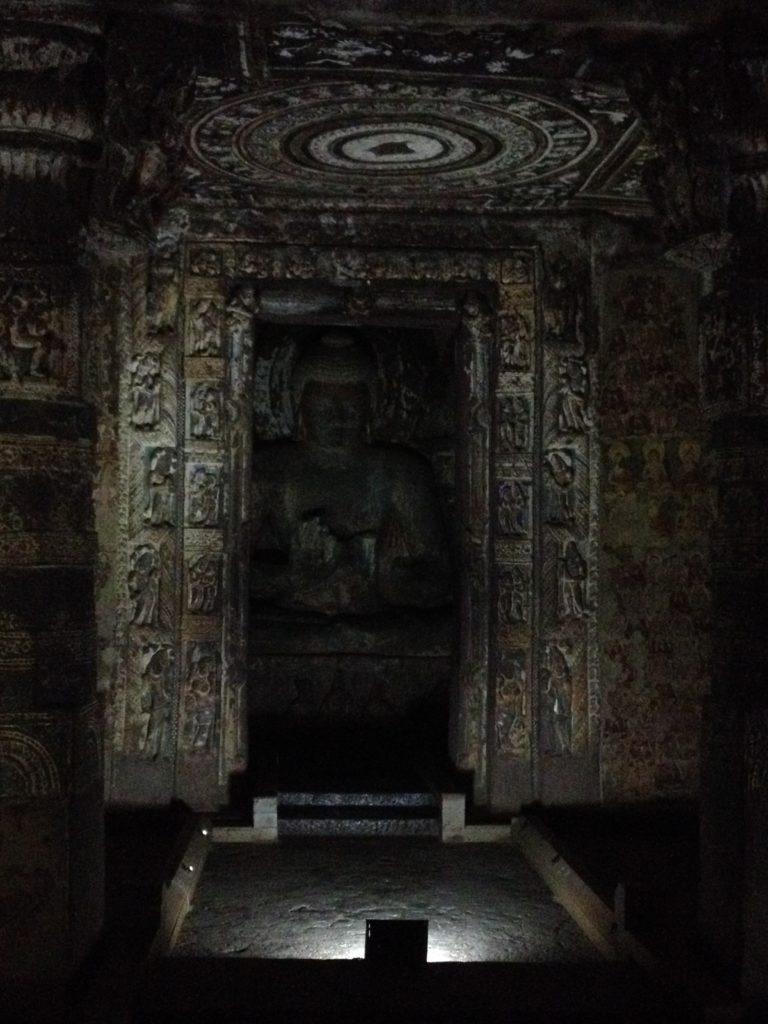
An entrance cut into a jutting outcrop sets the mood right away as we make our way into the caves one by one. The initial caves seem to focus more on wall paintings & the latter on sculptures. There is a wide courtyard initially & the caves have elaborate, towering facades. They are not dingy! Where there is paucity of natural light, diffused lighting has been provided along with wooden flooring & railings in some as well. It all illuminates the luxuriant murals that cover every inch of the walls. The masterpieces of Indian art not only depict the life of Buddha & stories from the Jataka tales but are also a visual commentary on the life & times of the kings & other patrons of this entire endeavour. The guide points out the exotic visitors discernible by their different attire in the artwork, giving a glimpse of the intrepid travelers of yore. The ceilings are painted with elaborate motifs, the pillars are colonnaded and in some caves instead of Buddha’s statues there are perfectly symmetrical Stupas. Cave after cave has an aura of opulent celebration of life & of ascetic piety in equal measure & finally in Cave 1,  I lay eyes on the original frescoes which inspired the copies on our drawing room wall. Here too, the masterpieces are on either side of the door to the inner sanctum giving a vague deja vu feeling. They are in parts sensuous & spiritual, utterly indolent…and now they have names –  bodhisattva Padmapani & Vajrapani. Names as lyrical & flowing as the  larger than life figures themselves…

Discover vivid and well preserved frescoes in –Part Two – The Old Gold in Outstanding Orchha

Bodhisattva Padmapani blooms serene in a sea of churning humanity

We take a breather in the cool veranda of the upper storey of Cave number 6 (Why are the stairs so steep in all these ancient stone structures? Absolute workout for the legs!) to replenish the child’s sagging energy & interest levels. Places like these can become too much to assimilate in one continuous go even for adults. As one tries to mentally teleport oneself back almost a thousand years to this bend in the river in the middle of a forested nowhere & visualize the painstaking chiseling to create, decorate the caves, the masters creating their art, the monks going about their lives here in the various Chaitya-grihas & Viharas centuries back, the antiquity & the magnitude of this cave complex gets more magnified. Its a strangely humbling experience.

Explore the monastery of Diskit in-Nubra Valley – Forging our own path

The hyphenated caves of Ajanta- Ellora are actually about 100 kms apart & in different directions from Aurangabad. The Ellora cave complex is about 30 kms from Aurangabad. After our sojourn to the Ajanta caves that evening we decide to visit the Biwi ka Maqbara in Aurangabad. We get hopelessly lost in this maze of narrow lanes because as we discover later the child has changed the GPS setting of the map to the shortest route & that is like I read somewhere, the fastest way to a  place you don’t want to go to! I mean eventually we get to our destination & the lateness of the hour ensures that the full moon is out in it’s glory, swathing the monument in flattering light & making the entire place way more beautiful than what it must be in stark sunlight & enroute we make another discovery – bakeries with mounds of ‘naan’. After crossing the  third one we can’t contain ourselves & have to stop but asking for two only gets us strange looks from men taking them home by the dozens. The piping hot ‘naans’ have the most distinctive taste & don’t need any accompaniments. Polished off in five minutes flat!

Looming larger than life seated on a lotus

The next morning we drive to the Ellora caves. The drive would have taken lesser time but for the traffic jam at an old gateway in front of the Daulatabad fort. It was clearly meant to handle the width of an elephant or two at the most but not today’s traffic or the erratic drivers! The route still has vestiges of the old route with old Banyans lining the road & the difference from the previous day’s drive is stark. We cross Aurangzeb’s final resting place & shops selling the famous ‘Himroo” fabric before going down the hillside which houses the Buddhist, Jain & Hindu caves which make up the Ellora cave complex.

Read about two other places with fine fabrics and history in- Mandu and Maheshwar in the Monsoon Mist

A vision of vitality occupying a whole wall

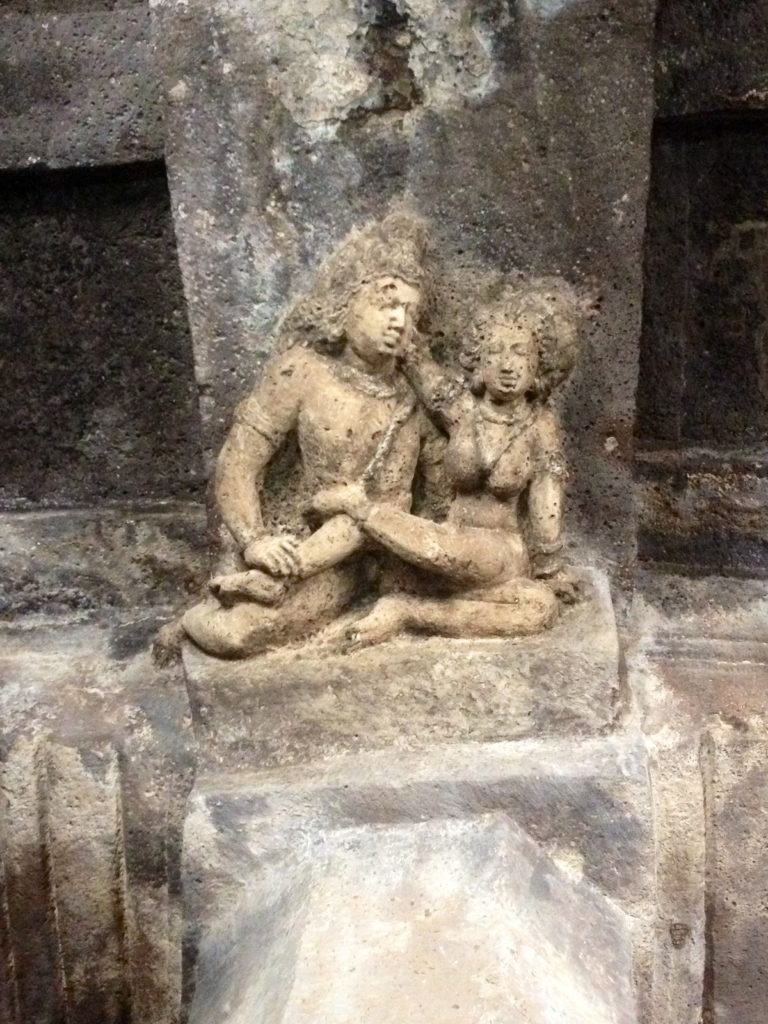
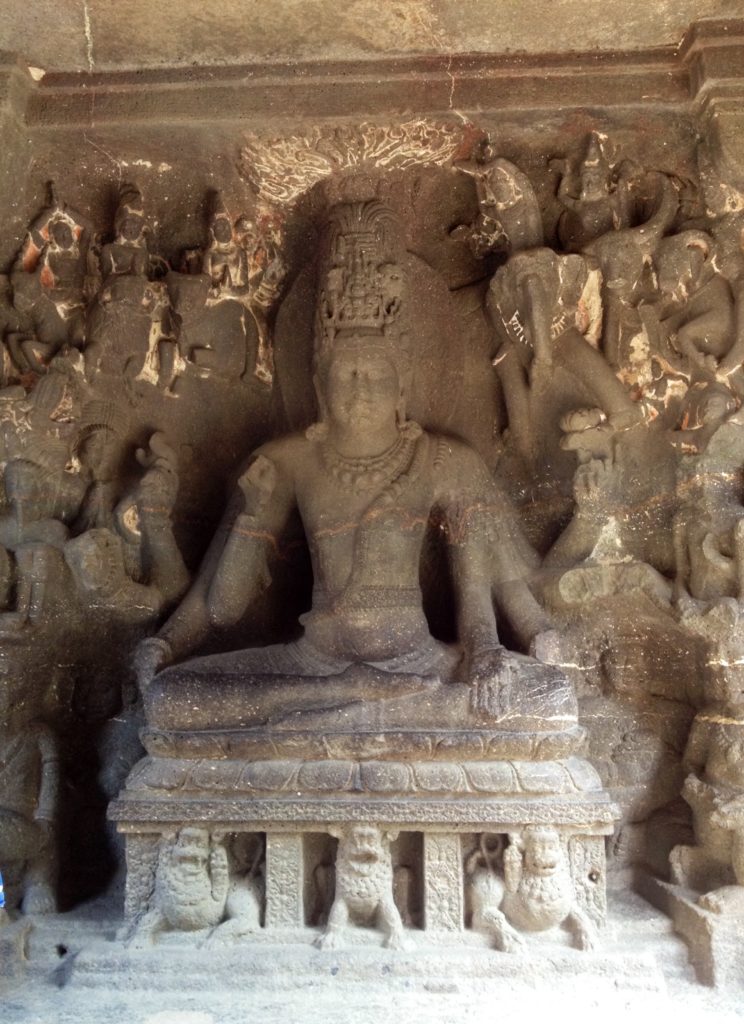
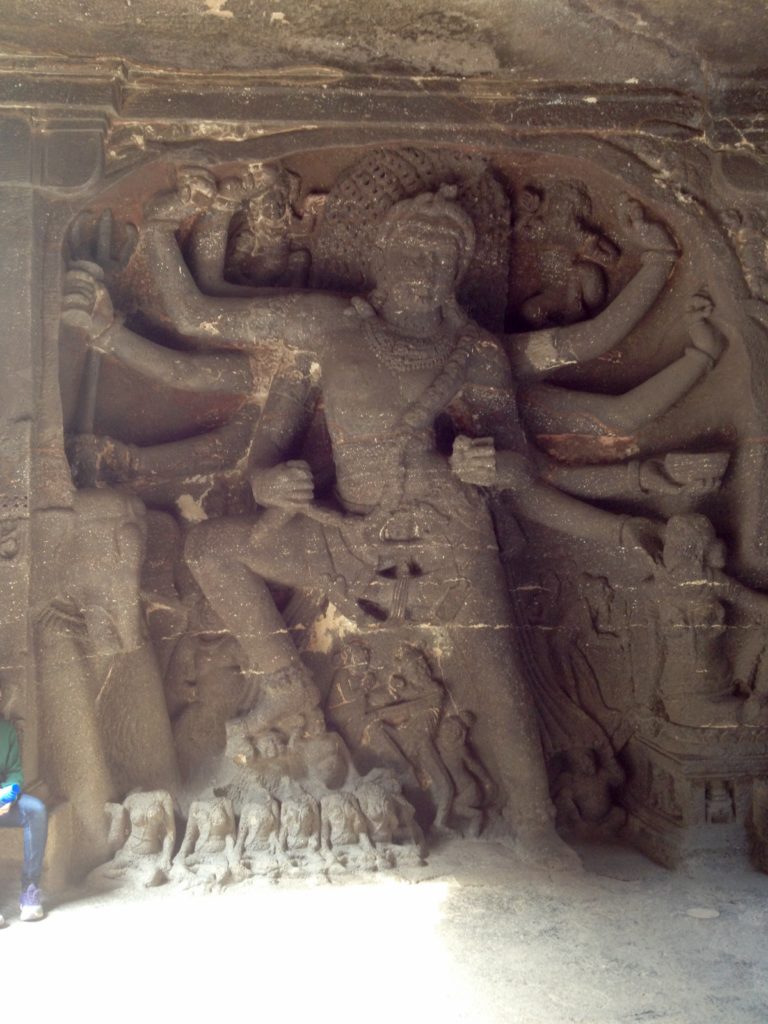
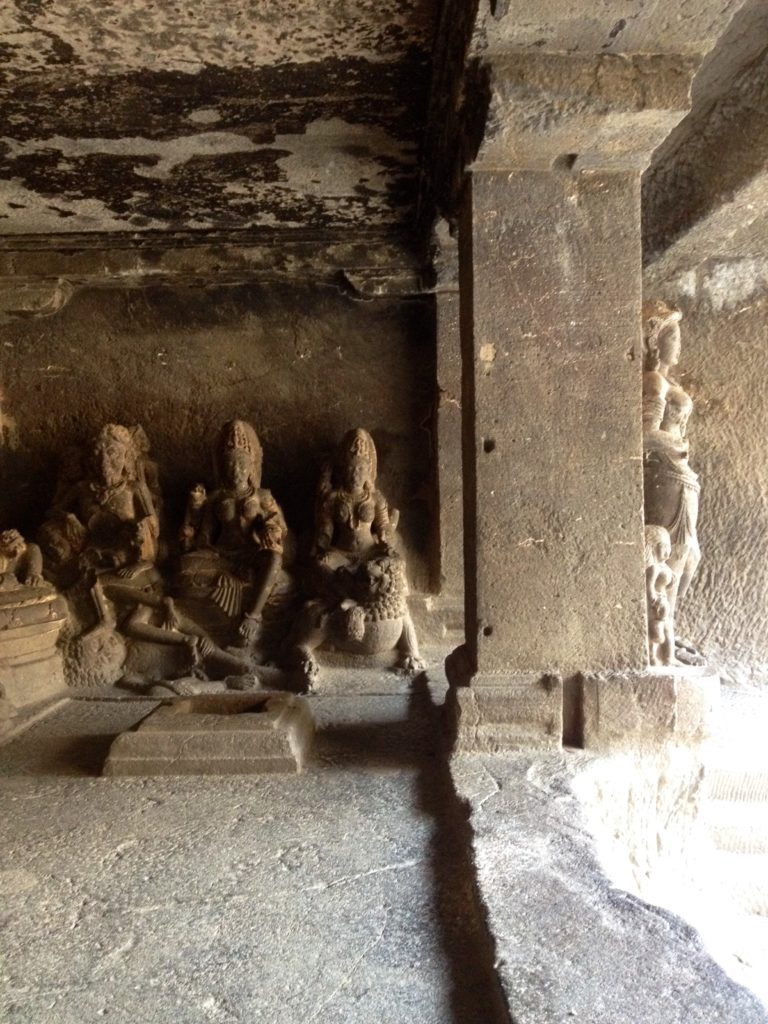
Its a short walk to the main Kailash temple at Ellora which seems to be the pièce de résistance of this place. No amount of reading up about the technical wizardry of it’s construction, the largest monolithic structure made top down cleaved from the hillside of basalt, can actually replace being there. As one walks through the entrance cut in the thick stone wall, the imposing structure hits you. All around grand gods imposing their literally larger than life presence, vitality in every pose take up all the space the rock walls can provide. The main structure is imaginatively carved with scenes from various mythological texts interspersed with plain rock so each one can be appreciated in it’s remaining entirety. But what blows my mind is this particular segment in the hall running in the hillside making up a natural wall around the main temple. It seems to depict a scene of an assembly of gods & goddesses. Seated as if partaking a ceremony in all their finery, the life sized figures seem to be frozen in stone exquisitely sculpted in fine detail. One particular slightly malevolent creature stands out sitting with feet firmly planted on a lesser mortal writhing below it, superbly carved showing all the frail mortality of man.

An assembly seemingly waiting for a breath of life


No book, photograph, painting or even the rich repository of some museum can bring out artwork in it’s accurate context unless experienced in it’s original surrounding. The whole place has a latent energy that dims the noise of the hordes of selfie-takers immersed in their own beauty. One leaves with a niggling feeling that maybe the gods were truly here.


Disconnecting with the World on a Mountain Isle at Shaama

Room with a view of Nanda Devi & Nanda Kot

There are some places which, on the first visit, make such an impression that they have to be revisited again, to relive, reconfirm the magic that was woven the first time around; because once is not enough. The love affair that is ignited continues, the embers linger in the memory, waiting to be rekindled.

One such place is Shaama. The first visit had been as part of a trek to the Namik glacier. Each piece & place of that trip had been utterly memorable but the one place that took my breath away was Camp Shaama in the village of Gyandhura. If I had my way I would live on that ‘almost island’ in the mountains for ever. (Like so many horses we can’t ride, so many wishes waiting on the wings…) But since that doesn’t seem possible in the near future I contented myself with a brief break there.

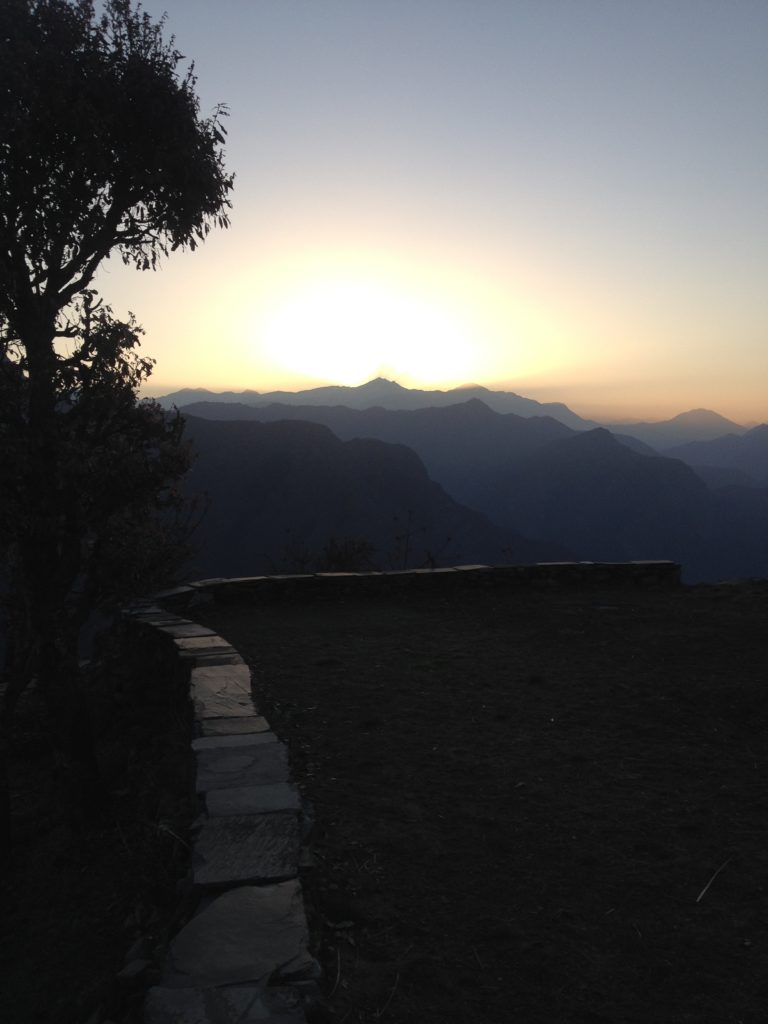
Glow of the setting sun at Binsar

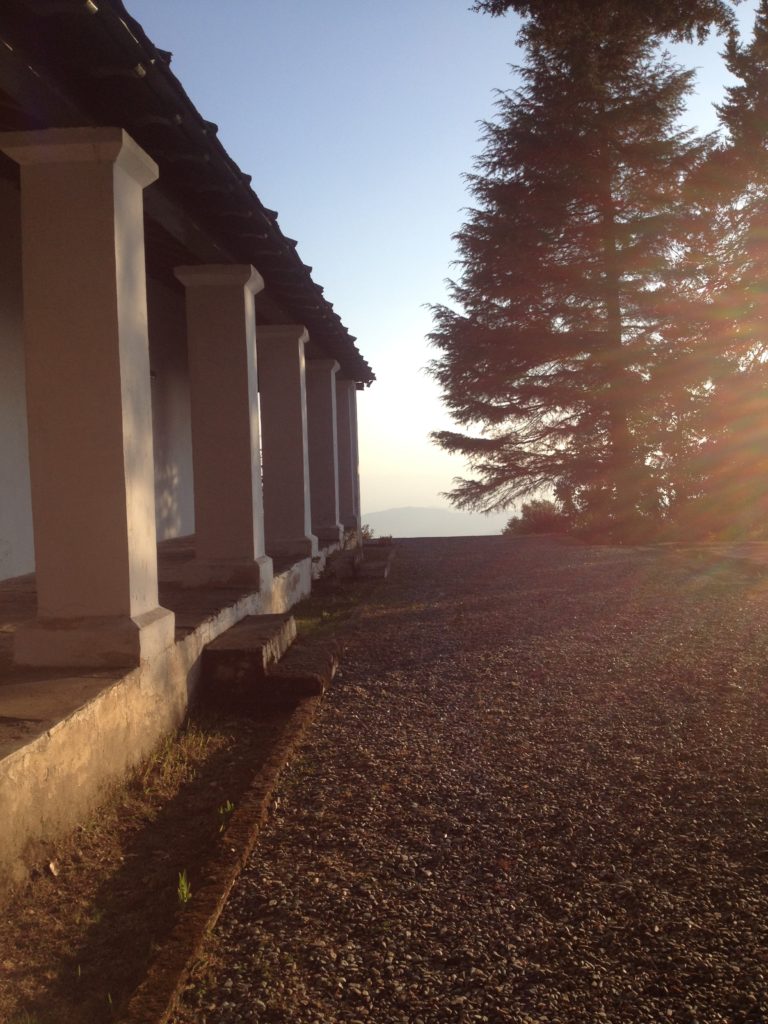
This time we combine it with a visit to the Binsar Wildlife Sanctuary, which is just as well, because staying inside the sanctuary at the Kumaon Mandal rest house is a preview of things to come, for the ‘need to be connected’ big city companions – limited electricity which ensures a perforce weaning off from all gizmos & no running water either to boot. Though the staff is geared to provide the buckets of hot water (Making one feel like a ‘Burra sahib’ of old.) in the otherwise refurbished modern bathrooms (Fancy faucets pour out icy cold water only!) & the rooms are delightfully cozy with their wood paneling, there is no T.V, no room heaters, nada! Just this beautiful silence & deep darkness broken at sunrise by birdsong & the oohs & aahs of an appreciative crowd braving the morning chill on the terrace to see dawn breaking over the mighty peaks on the skyline. The days are spent exploring the various trails through the lush, moist silver oak forest sighting birds & the occasional deer.

Another place with a lot of trails is- Ranthambore Alert -Ticketing Trials and Tiger Trails

So after two days of detoxifying & disconnecting intermittently, one bar less at a time with the world outside, we get out of the sanctuary & set off for Shaama. The drive is leisurely as the roads are surprisingly empty almost. The mystery is solved when we are told that Holi, which is a round the corner, is not a one day affair in the hills & is celebrated in all serious fervor so most people come home for it. We witness a few scenes on the way back, of the ‘seriousness of the affair’, when we cross motley groups of men carrying their local deities around in palanquins, full of merriment & colour. The stragglers in the groups happily lurching around, high on colour & whatever else, trying to keep up as God & men make their way to greet other Gods in this colourful carnival. Thank god mountain folks still walk instead of driving around everywhere!

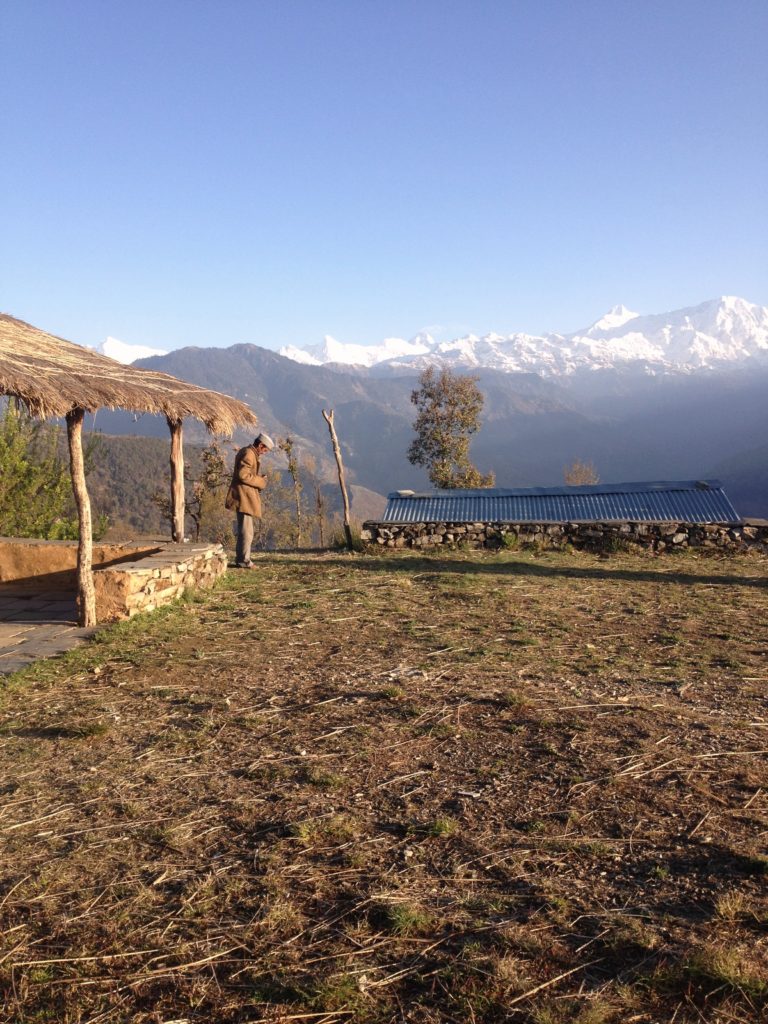
Man of the the mountains

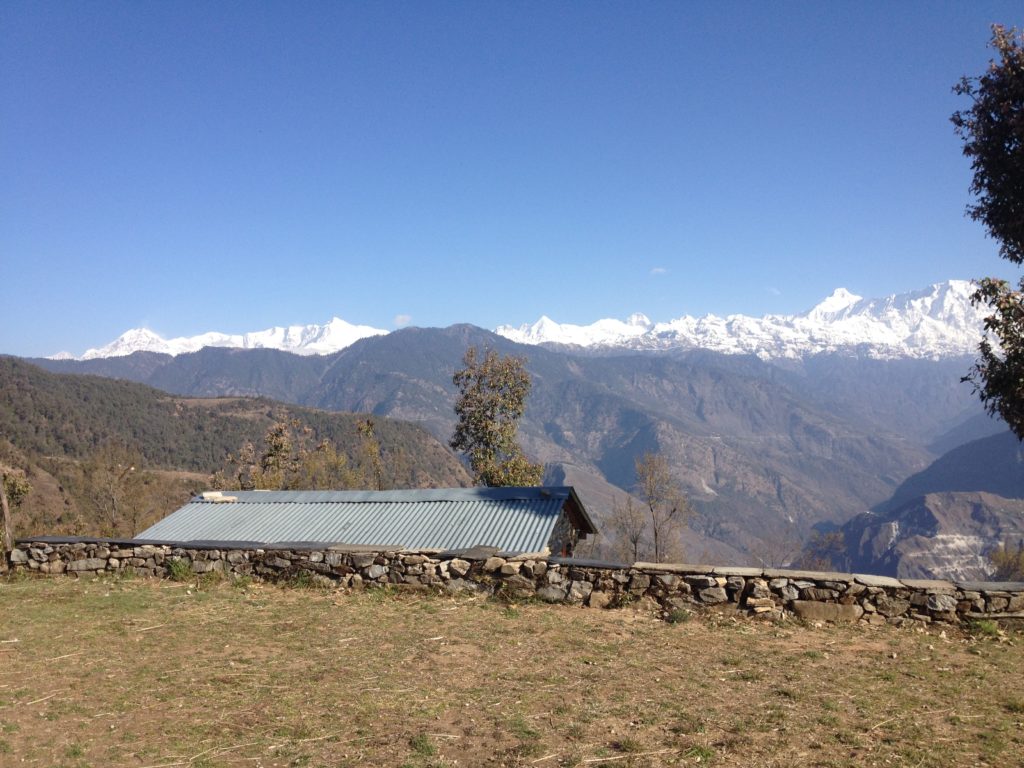
After Bageshwar we climb up & away on this gentle winding road, through a pine forest & cross the crest to the other side, more or less maintaining altitude now, getting a close view of the Nanda Devi massif peaks, enveloped in pristine white snow at this time of the year. We leave our vehicle at a hamlet & trek the last three odd kms on a narrow path, around this precarious, vertigo inducing corner ( The one speed-breaker enroute to paradise which slows down my steps & ups the heartbeat rate…all for the wrong reasons!) & behold – Camp Shaama, at the far end of the narrow spur that falls down dramatically on three sides into a sea of nothingness. We cross the few simple quintessential village houses set amidst the step fields of green wheat to reach the camp. It is set on this sliver of land seemingly floating so high up that one can barely see the Ramganga flowing down below on the north of the spur. On the east are the peaks near Munsiyari, on the south the world & on the north separated by just this deep narrow valley, the wall of the Nanda Devi massif & the Namik glacier. The dramatic setting offers a stunning almost 360 degree, to-die-for view!

The Karakoram mountains are right there in- Nubra Valley – Forging our own path

Dawn breaking over the still valleys

The beauty of the camp lies in it’s simplicity. There is a cookhouse on one side, doling out copious quantities of tea & piping hot pakoras & the most sublime food fresh off the land. A thatched structure has the place of pride right in the middle of the highest field, serving as the dining area & the place for congregating in the evening around a bonfire. A few stone & mud huts, each with a different yet fabulous view, scattered around on the lower fields make up the accommodation. I appreciate the fact that the camp ensures one communes with nature by keeping the facilities snug but simple. To lounge in a room in a locale like this would be a criminal waste. My absolute favourite is the washbasin holding on to the trunk of a tree in the washroom area. I can’t recall there being a mirror because I couldn’t take my eyes of the vista in front of me – the peaks visible through the trees, the birds flitting around the tree tops below…

Discover nature and hill food in- Barot -And the Serendipitous Catch in the Uhl River

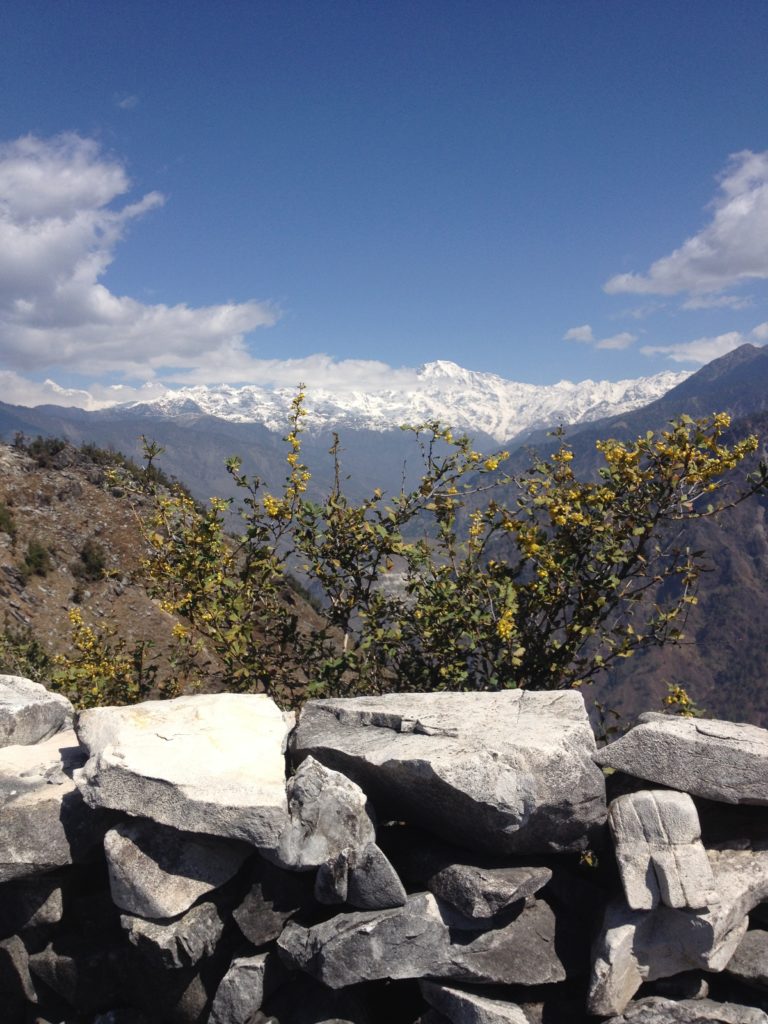
The wall & the vistas beyond

We spend three days bedding down early, in time with nature’s clock & getting up at the crack of dawn to catch the sunrise & the most peaceful sight – the first rays of the sun casting a glow on the peaks while the deep valley is still in inky darkness. We tramp around the fields startling pheasants into flight, do a day trek to the spur on other side of the village feeling a bit like mountain goats minus the finesse, as we traverse narrow ledges at times. Go down the spine of the spur beyond the camp along a stone wall (Mountain people can give mountain goats a run for their money with their agility at times!) which divides two village lands, collect suspicious looking herbs( Which turn out to be fantastically aromatic but sadly nothing more!) read & soak in the view. The peaks dominate the panoramic setting, each one – Nanda Devi, Nanda Kot seem right there & they are! (Unless you are actually climbing up to them!) We have a run of the camp as it is still early on in the season. In the evening sit around the bonfire with warming drinks, totally disconnected by now from the world as there is no electricity in the camp so no phones! (No portable chargers. That would be cheating!)

No wonder when it is time to head back to the world below from this suspended idyll, the trek to the vehicle seems to get over too fast & the sounds of the phone coming back to life is cold comfort.

Fact File – Camp Shaama is run by Wildrift Adventures.