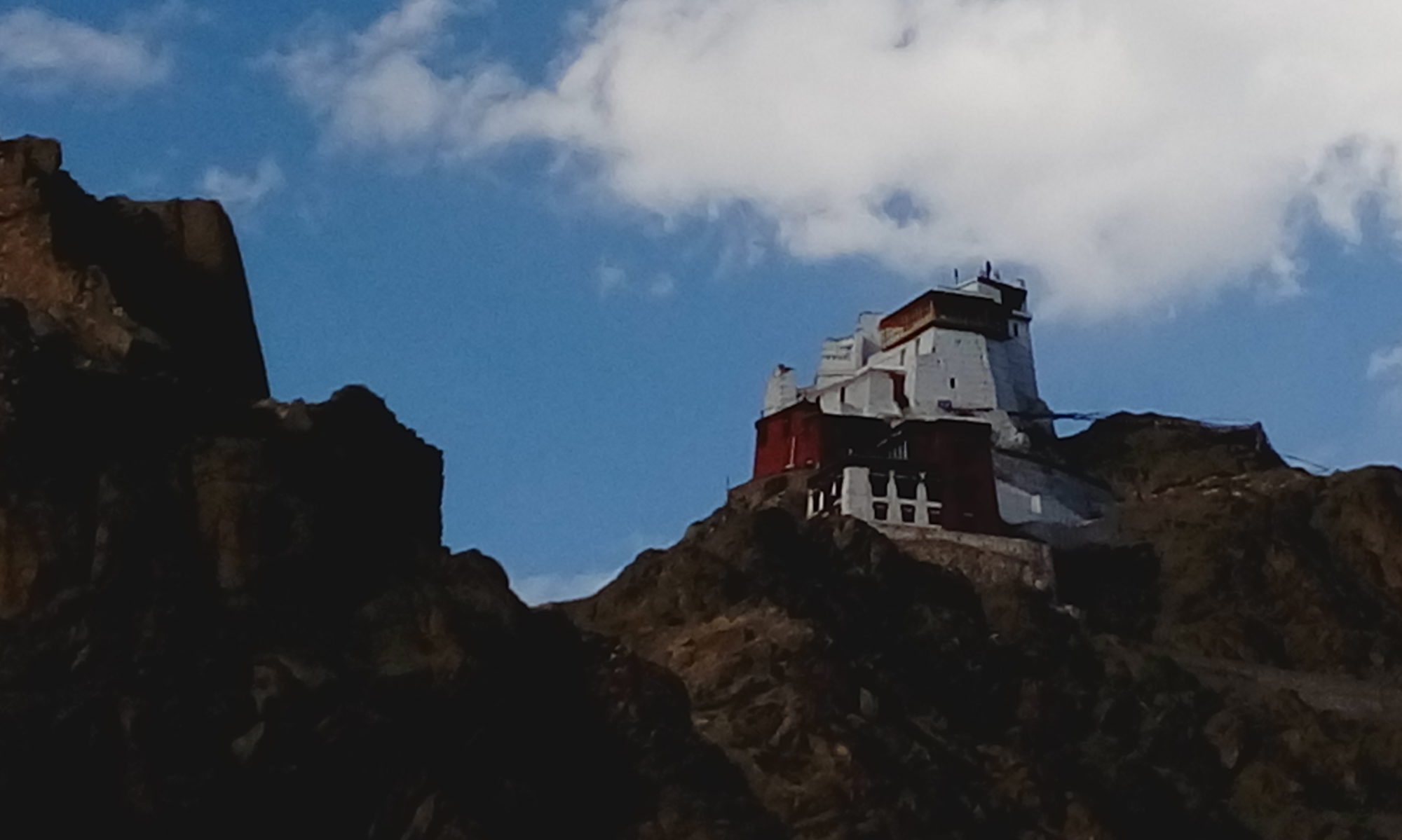
India’s large heart – Madhya Pradesh, even after being cut down to size, still occupies a chunk smack in the middle of the country. That large heart can beat wildly like Pench or as peacefully as Orchha. Mandu and Maheshwar straddle a state of being somewhere in between. They make for excellent long weekend getaways when the monsoons revive the natural beauty to emerald green and make the Narmada flow full and deep.
Discover the emerald Betwa and Orchha in- Part One- On the Wild Side of Outstanding Orchha
Mandu – Tales of Mahals, Mausoleums & a Man-eater
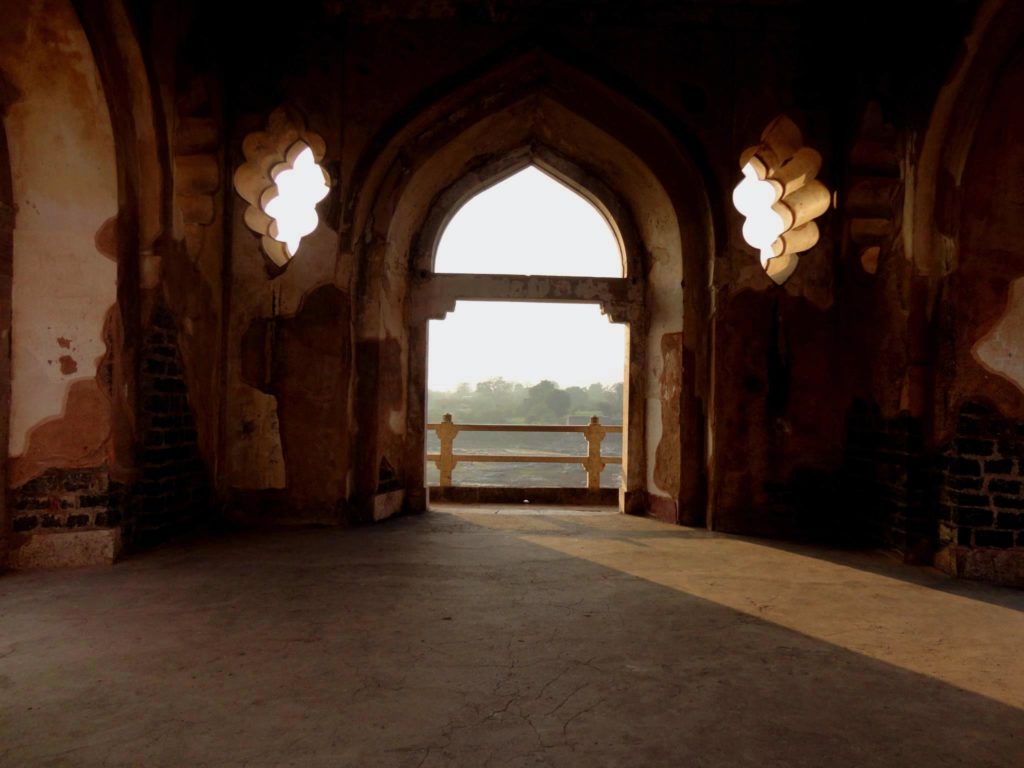
The first of many trips one has made to Mandu was way back in the 80’s with three generations of the clan, like one mini Mughal army on the move, in a rickety jeep over a rutted road. The last visit was over a newly laid road good enough even for a Nano, part of a mini cavalcade now, to cater for another generation added to the expanding Mughal army! Two of my most abiding memories of that first trip were – at a waterfall overlooking a gorge being told the tale of a young trapeze artist promised a chunk of the kingdom if she managed to cross the gorge on a tightrope. As she neared the end, success nearly at her feet, the girl and the rope were cut down to size. The other, coming to know that a man-eater had just been caught at the Tarapur Darwaza the day before our arrival. It freaked me out so much that I imagined tigers outside the high vaulted airy room where we were putting up at the Taveli Mahal. (Which now houses the museum at the entrance of the Jahaz Mahal complex.) It made me oblivious to the setting of our accommodation which overlooked a lotus covered tank or the beauty around, cloaked in a misty veil much like the poetic romance of Baz Bahadur and Rani Roopmati, the chief protagonists of an abiding love story, who were proceeded and followed by others in the chequered history of a citadel said to be the largest in India.
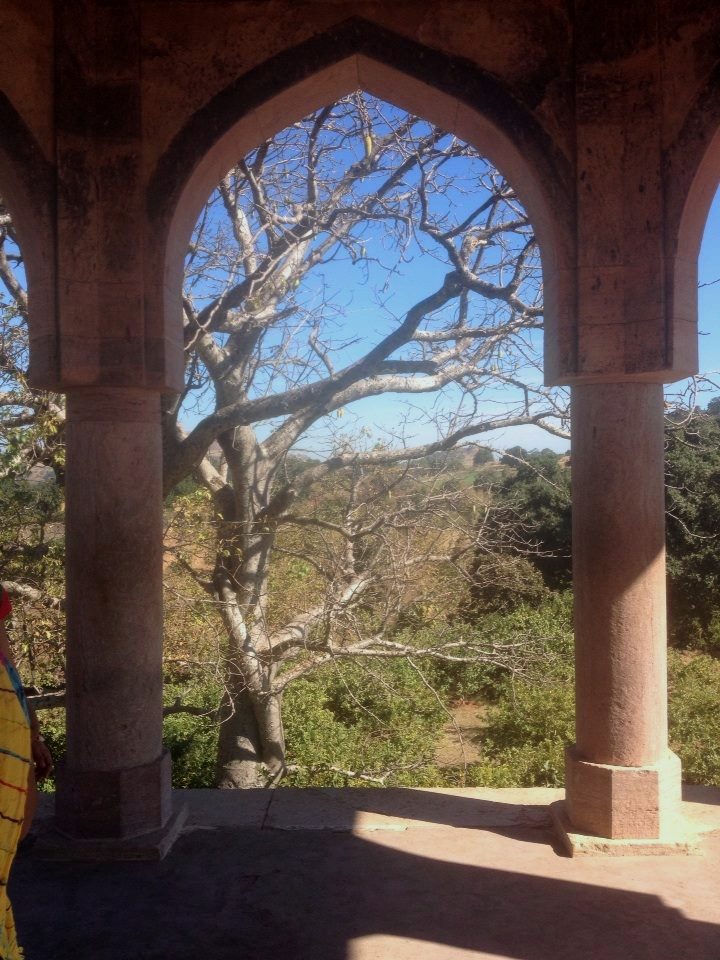
As one approaches Mandu, situated on an outcrop of the Malwa plateau, there are massive Baobab trees or ‘Khurasani Imlis’, as they are also called, maybe as a testimony to their winding journey from Africa to here, dotting the landscape. The road goes onto a narrow natural bridge before going through the first of three consecutive gates or Darwazas in a tight curve – Alamgiri, Bhangi (Yeah, sounds so politically incorrect now, but as per some stories in honour of the people proceeding an army heading out to battle.) and Delhi Darwaza, which should have made Mandu invincible but clearly didn’t, given the number of times it changed hands.
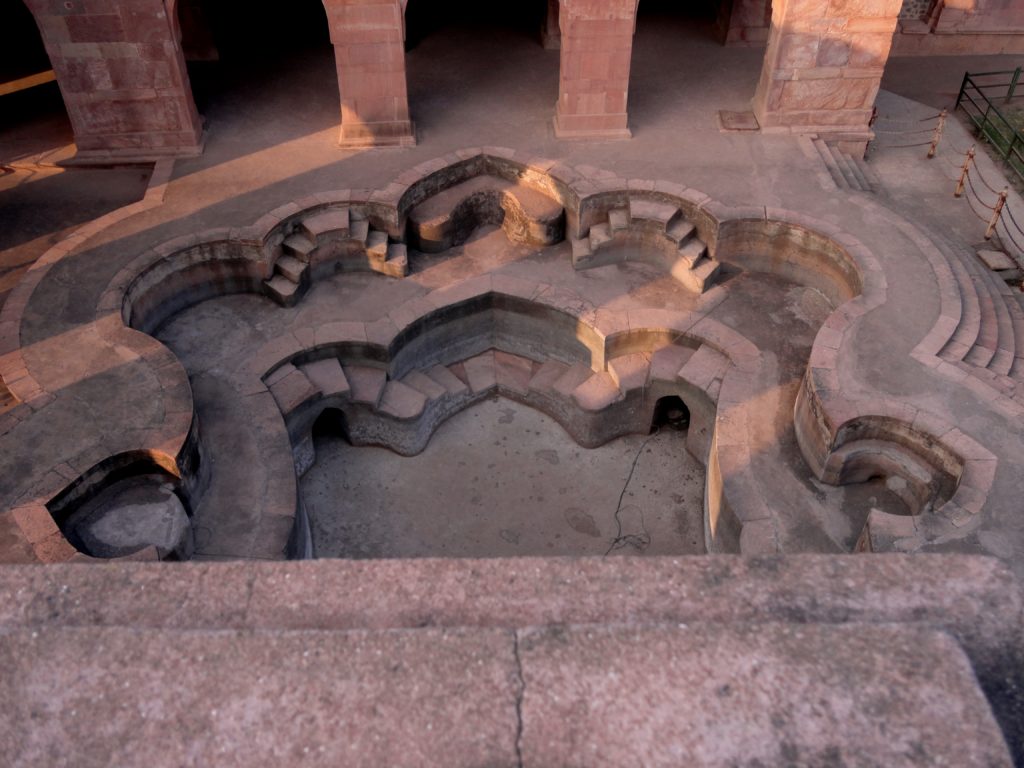
Post monsoon is a special time to visit this place when it is emerald green, the ponds and tanks are full and the low clouds drift lazily in the breeze. Walk, hire a cycle (They are easily available.) or drive slowly and explore the green vistas and monuments that dot this place. Start at the square that makes up the bustling centre, where the barest remains of the Asharfi Mahal and austere Jami Masjid face each other. Behind the masjid is Hoshang Shah’s tomb which is supposed to have provided the template for the Taj Mahal. A short distance away, on one axis are the prehistoric Lohani caves, a part of Burra or Old Mandu and on the other, the star attraction – The Jahaz Mahal complex. Jahaz Mahal straddles a small lake and a large tank, both now devoid of the massive lotuses I remember from the first trip. Legend has it that the “Ship Palace”,(A name, if you ask me, more because of the location between the water bodies than any great resemblance to any floating vessel I know of.) housed fifteen thousand women at one time as part of the harem and hats off to the architect that the ‘jahaz’ didn’t sink! The sloping walls lend Hindola Mahal it’s name which is behind the Jahaz Mahal, and that adjoins a beautifully restored step well – The Champa Baori.
Explore palaces in- Part Two – The Old Gold in Outstanding Orchha
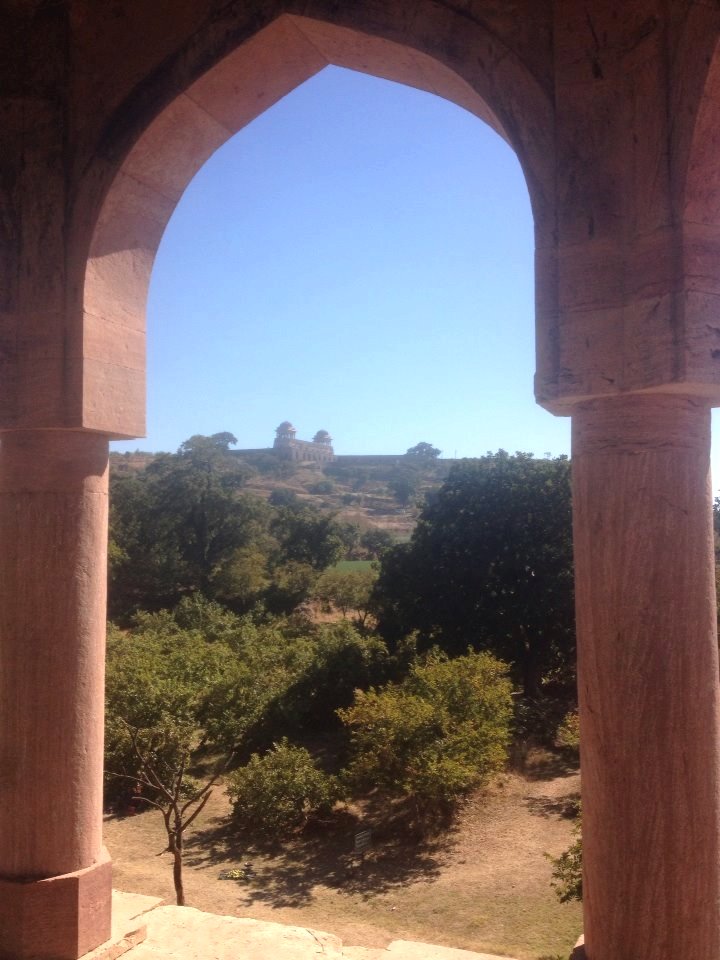
On the far end of Mandu is Baz Bahadur’s Palace and Rewa Kund. The Kund, for some, is as sacred as the Narmada river itself. At a height, further on, right at the edge of the plateau is Rani Roopmati’s pavilion. An airy structure with a covered water reservoir was made so that the queen could see and pray to her beloved river, which seems to have shifted course or the haze obscured it or maybe I just have bad eyesight because I saw no river down in the Nimar plains. Enroute to these, but off the road are many small monuments, alone or in clusters. At one monument we saw carved blocks used upside down denoting pillaged older buildings being the source of the monument’s material. At another, a grave seemed to have walked out of the tomb only to come to rest under a tree nearby. The Neelkanth temple with it’s small courtyard is a few steps down literally carved out from a cave on the slope of the plateau and is on the road to Tarapur Darwaza.
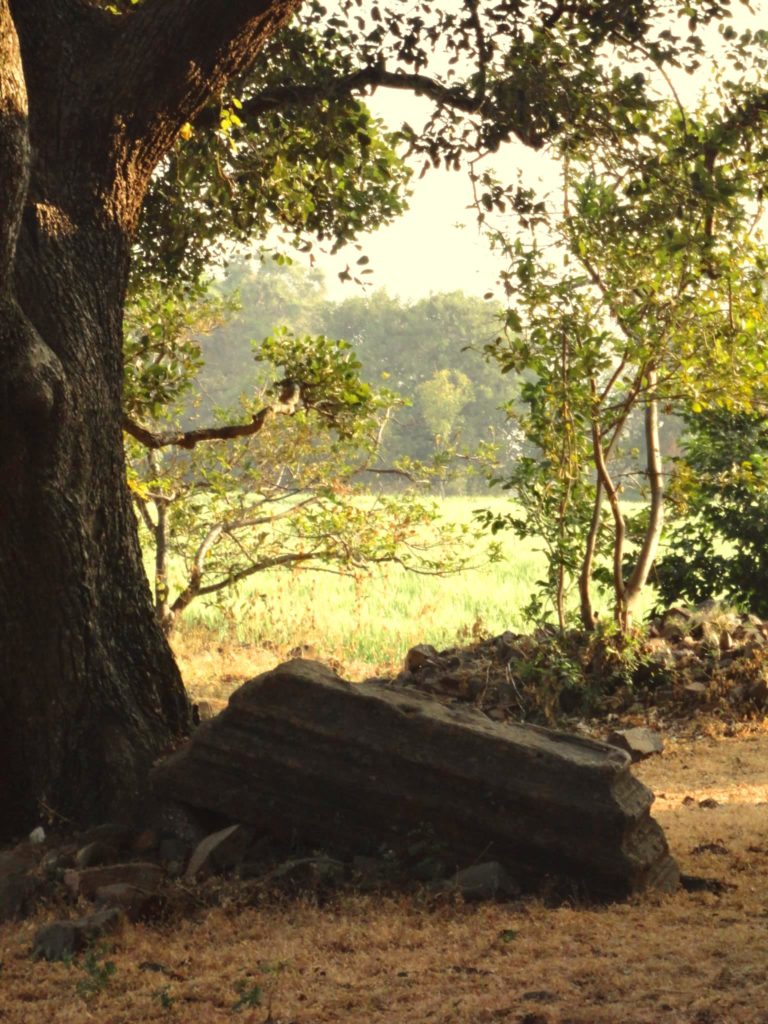
The same darwaza where the trap had been set for the man-eating leopard, (Definitely no tiger!) one woman-eating leopard to be exact, many eons back. Mandu teems with stories and legends, real and fanciful and the only wildlife I have ever sighted has been a massive hyena, probably having the last laugh at my flighty imagination.
Find more wildlife in- Ranthambore Alert -Ticketing Trials and Tiger Trails
Weaving Sutras at Maheshwar
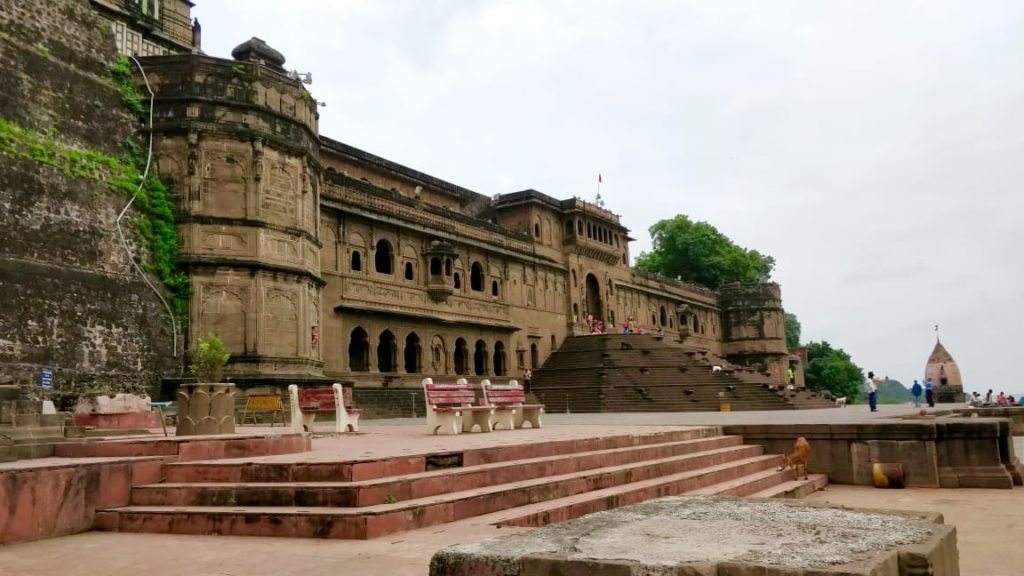
Maheshwar, home to the much in demand Maheshwari fabric woven there, is about an hour away from Mandu. A gentle winding road down the plateau brings us to the Nimar plains. Their blistering heat tempered by the rains right now. The faint outline of Roopmati’s pavilion is all that is visible of Mandu from below. At Maheshwar, narrow bylanes of a small town with a faintly mofussil feel, still lingering in the air, end at the Maheshwar fort. One part, which houses the private quarters of Ahilya Bai, the most famous of the Holkar rulers, has been converted into a boutique hotel by her descendants. A stone path takes us towards the ghats and we see the exquisitely carved stone spire of a temple but are just as soon distracted by the sounds of a hand loom on our left. Right there are weavers at work on the fabric so much ‘en vogue’ everywhere. The cloth & it’s colours beguiling us, we promise to come back for a more leisurely shopping experience at the end.
Read what another city has to offer in- Dera Jaipur: A Homestay for Stellar Style and Exceptional Experiences
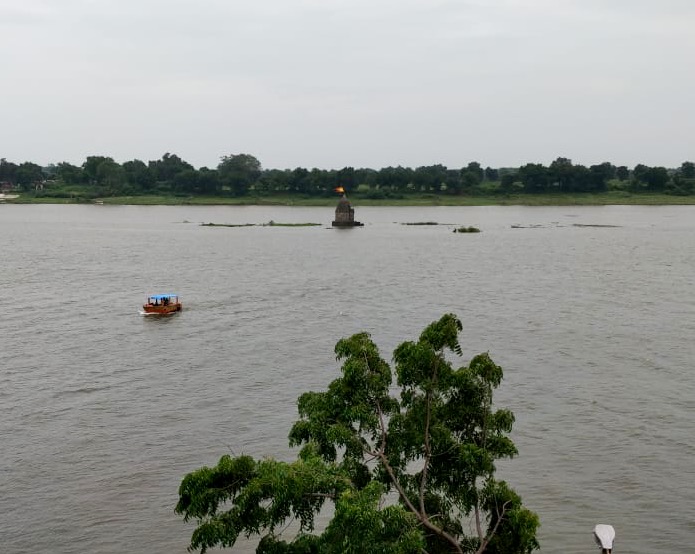
A few steps down bring us to two stunningly carved stone temples facing each other. The Ayhileshwar temple is the bigger one on the right and it’s balustrades offer a beautiful view of the ghats below and the Narmada river beyond. The ghat steps with the fort as an Insta-worthy backdrop, are the piece de resistance and invite us to just sit and let the murmur of religious incantations here and there wash over us. We soak in the serenity of the sacred river, the raison d’être of this place which runs swift and deep, carrying boatloads of people, nearly submerging a temple on a tiny island nearby. A river sutra & tales of bygone queens seems to weave a common thread & bind these two historic towns at almost gazing distance of each other.
Travel to another historic town in- A Bard Sings a Story in Jhansi