Walking by the Waters of Lake Bled

Stuck in the middle with you.(Photo credit ASR)

I caught my breath. Wow! We have to go here! The picture on my screen showed an azure lake with a little mole like island on its face, filling a bowl surrounded by densely forested mountains. Lake Bled as seen from a hiking trail. A hiking trail?…even better! Finalising our Slovenian itinerary was proving to be difficult. Apart from the capital Ljubljana, (not pronounced the way it is spelt at all) we were trying to narrow it down to two other places otherwise we would be on the road, crisscrossing the beautiful country on a ‘see-all-feel-none’ kind of trip.
Stately

Slovenia sits pretty, yet quietly between more famous neighbours- Italy, Austria and it’s Balkan cousin- Croatia, and that’s just as well. It is a tiny country not meant for the masses. You can drive across the country in a day, going from the Julian Alps to the Adriatic coast, crossing forested mountains criss-crossed by hiking trails and bears, valleys with quaint villages clustered around steepled churches and vineyards producing award winning wines to charming fishing villages clinging to the shore.

Discover- Barot – And the Serendipitous Catch in the Uhl River
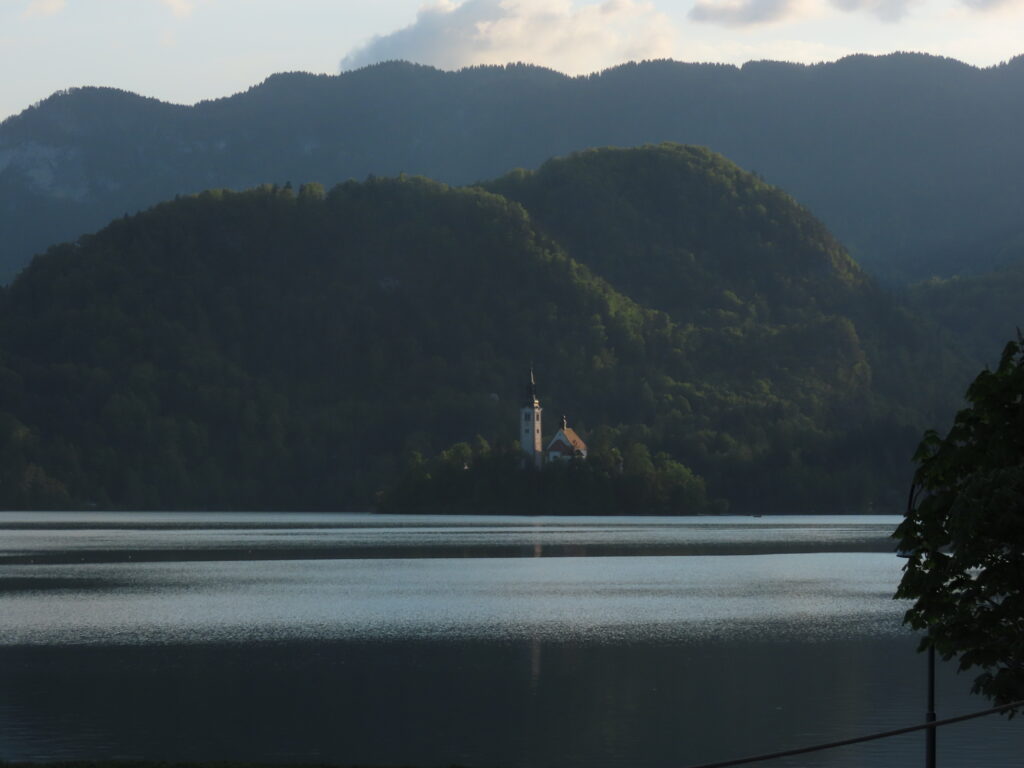
Charming Chapel

  There is Italy’s famous Lake Como, playground of the rich and famous, but with similar charm and a cozy, laidback beauty is what Lake Bled is all about and oh, this has a pastry named after it!

Speed up at Bus Stops

After exploring the smallest capital we have ever visited- Ljubljana (the name seems bigger than it!) with it’s castle and dragon stories, here we are at it’s bus-stand, no more than a cul-de-sac outside the railway station where the buses pull in, load up and depart on the dot. The grill door guarding the staircase leading to the loo in the basement of the ticket counter also does not wait a second extra I discover, to the exasperation of the guy with the key and my embarrassment as he probably catches me on the camera rattling the door trying to get out. All automated not to mention the most expensive loo in the entire trip!
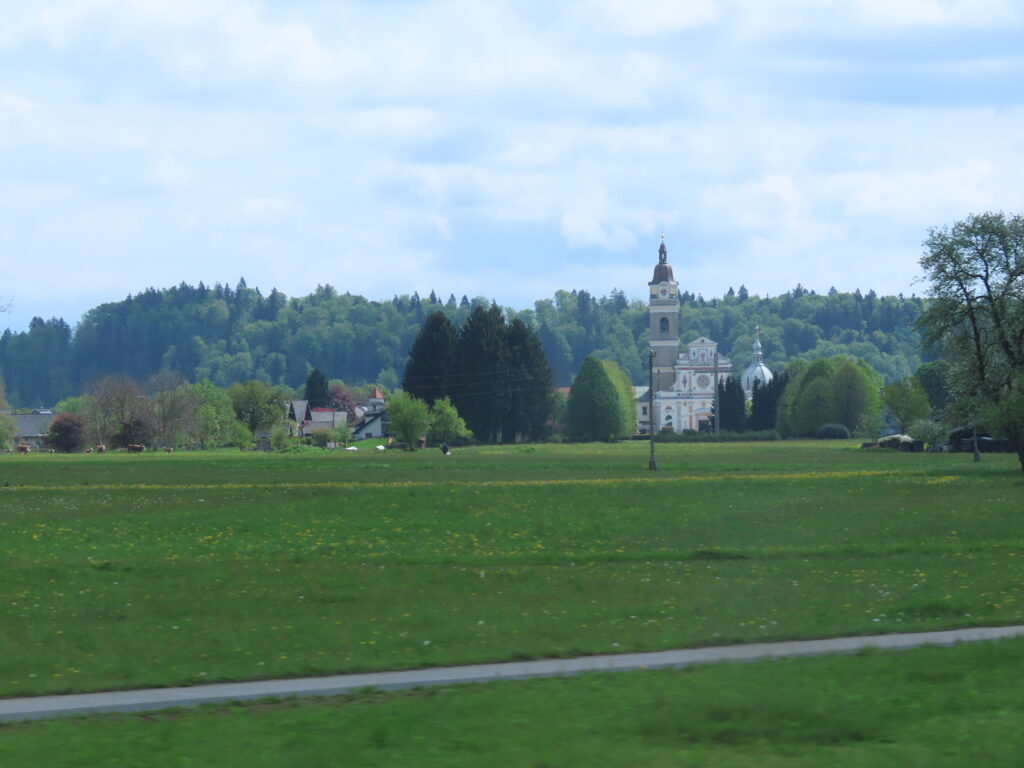
Fields, Flowers and Faith

Once on the move, we drive between mountain ranges, through lush green valleys and villages in a time warp, flocking like the faithful around fairytale churches with coloured spires, sometimes cherry red, some green and even a mulberry coloured one, towards the Julian Alps. The ranges close in and before we know it, we are in the small town of Bled spread on the only low-level opening to an alpine bowl. The bus-stop here is in the middle of a circular road in the centre of town. Clearly, the Slovenians see no point in wasting space for transiting vehicles. We wheel our luggage through the pathways winding down the gentle slope to the lake and to our small hotel overlooking it. It is more beautiful and alive in person. The lake catches the sun coming through the drifting clouds and chills the breeze blowing over it. It is a perfect day to be out and the crowds by the lake and those lunching on the patio outside the hotel all seem to agree.

Read about-  Harlequin Holi at Todaraisingh
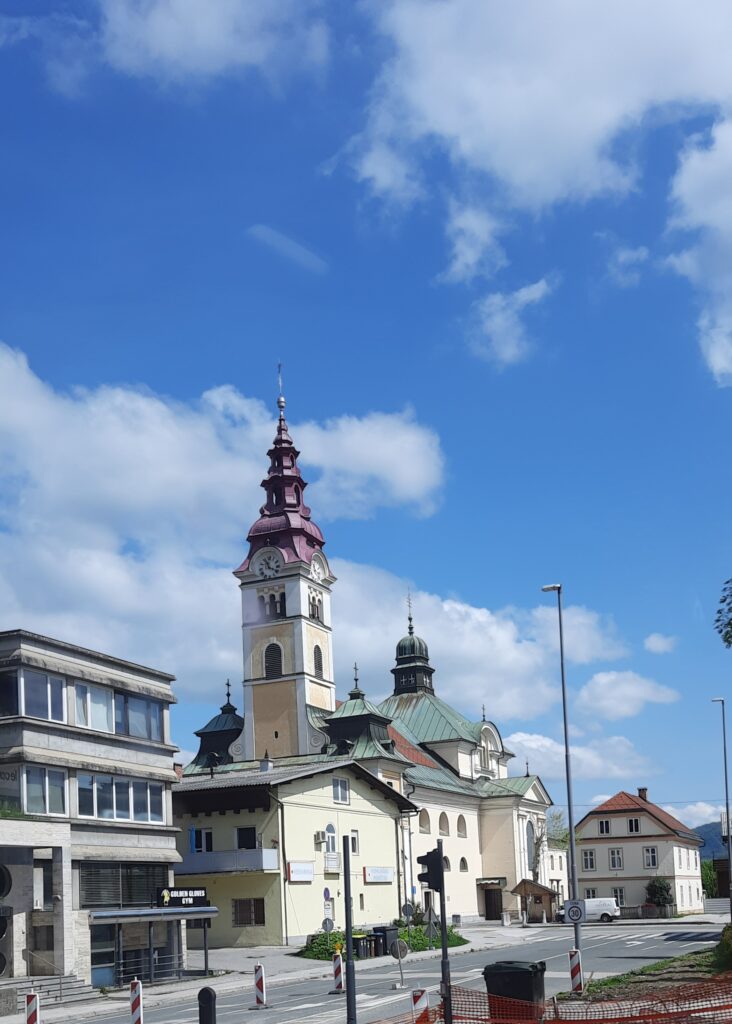
Magnificent Mulberry

Promising Path

We leave our luggage at the hotel and dive into the crowd, strolling on the path between our stay and the lake that promises to wind around the waters and it delivers! It skirts the lake, never leaving sight of it. Initially it is in the shadow of a steep forested slope, below the ruins of Rikli Villa. Arnold Rikli, a naturopath ahead of his time, recognized the therapeutic powers of Lake Bled’s bounty- water, air and light. We cross some manicured estates by the lake. Mansions sit in silence, facing the lake, impervious to the people at the back.

Explore- Bikaner’s Merchants and Their Mansions
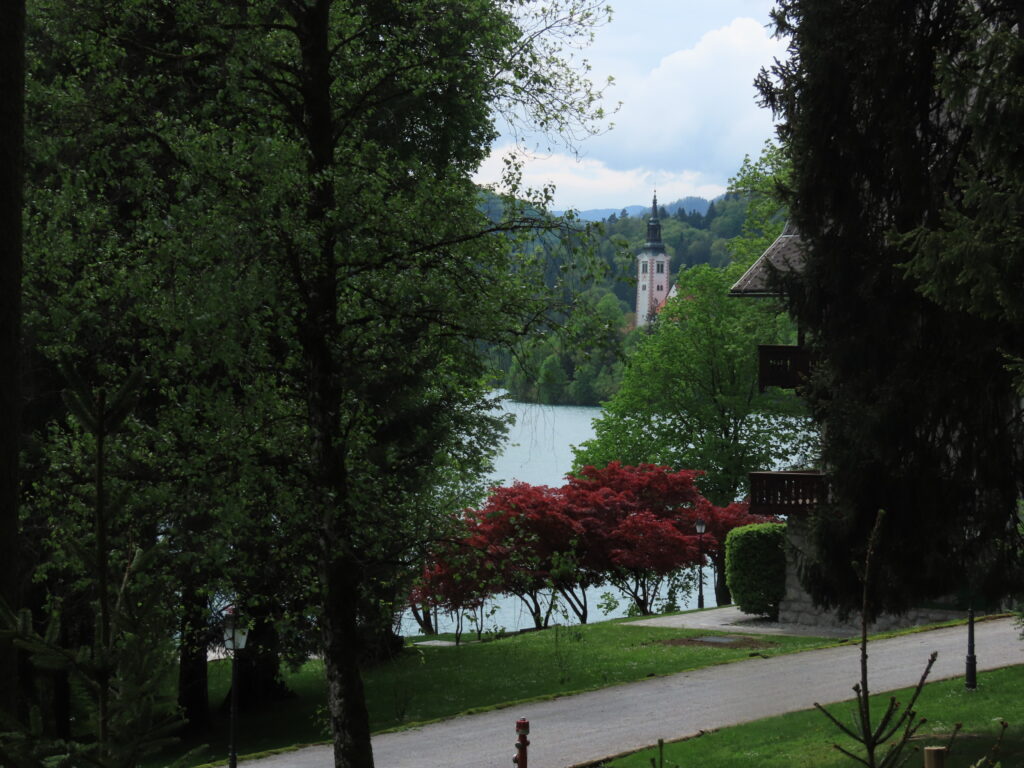
A Villa with a View

Some sort of endurance event is on, with people running and jumping obstacles. A penalty seems to be to jump in the waters. It does not seem to throw cold water on their energetic enthusiasm. We take a picnic lunch break on a bench almost at the other end of the lake. All the while the island in the middle, famously Slovenia’s only one, has been beckoning us to take a gazillion pictures. A lot of people are rowing themselves to the island but it looks like quite the workout so we get into a wooden pletna to be ferried across. From this end of the lake, the castle on top of the hill, below which we walked, is visible. The sun puts a spotlight on the trademark terracotta tiled roofs on top of sheer white cliffs. The dark Karavanke mountain range in the horizon half hidden beneath low clouds makes a perfect foil to the bright foreground.

Discover- Tarsar Marsar : A Trekker’s Take
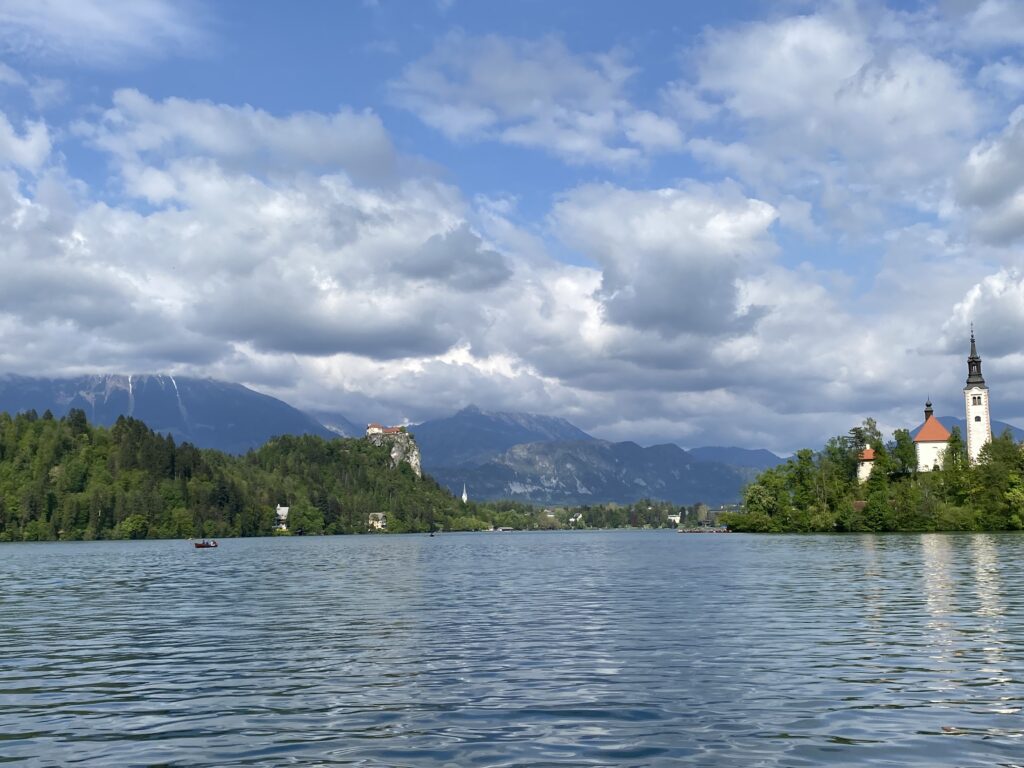
Bowl runneth over

Boats, Bells and Beliefs

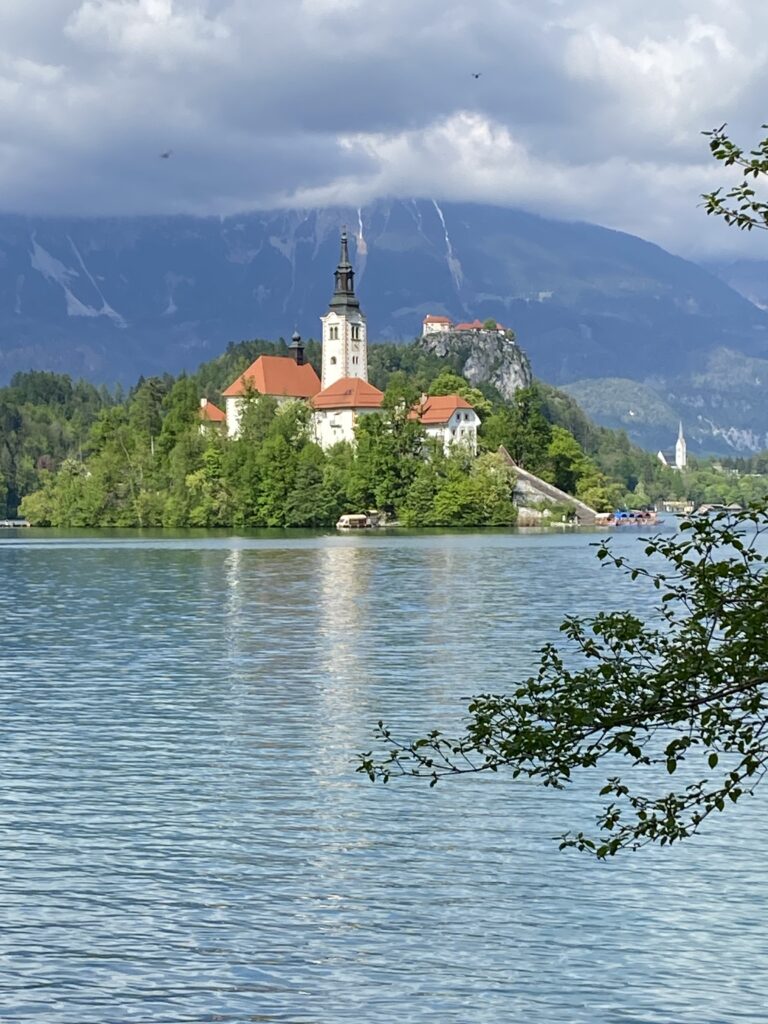
Getting off the boat at the island’s wooden jetty we climb up to the Church of the Assumption of Mary on top with its tall bell tower. Built over an ancient pagan site, the church has been rebuilt from gothic to the current baroque style in the 17th century. A café gives the church company and expansive steps lead down to the water on the other side. A small grotto sits midway, blessing the climbers. A pathway encircles the teardrop shaped island giving a view of the surrounding vistas. There is an air of wistful, wishful…peace? A bell in the nave tolls out every now and then, thanks to a popular belief that ringing it grants a wish. The sound carries the wishes far and wide into the valley.
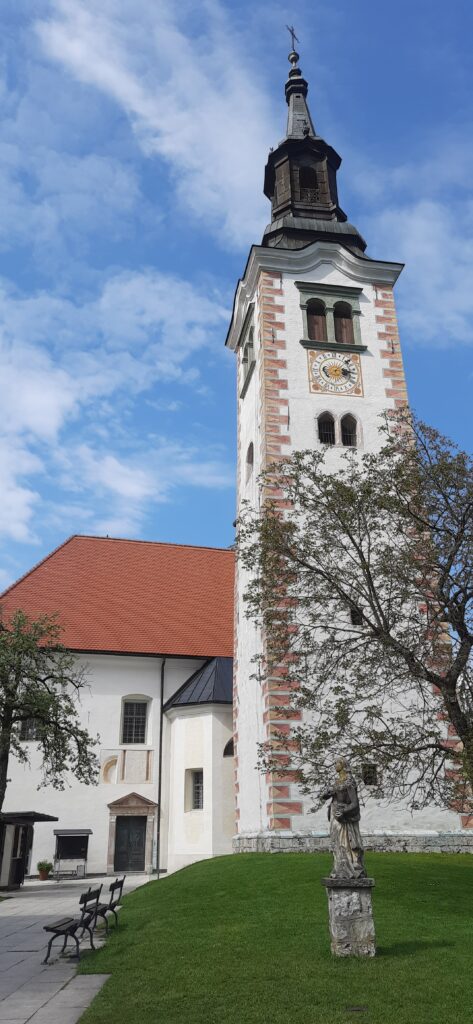
Wishful Thinking

 Back on the shore we head to complete the walking circuit. A wooden portion on the crystal-clear water is a nice surprise. We stroll past some more villas discreetly screened by fall coloured trees & cross a lone swan meditating near the shore. A toboggan rail snakes down the middle of a meadow behind an estate. Back at the hotel we discover our tiny balcony faces the lake. Perfect place to put up the feet and have a deserving perk-me-up-cuppa!
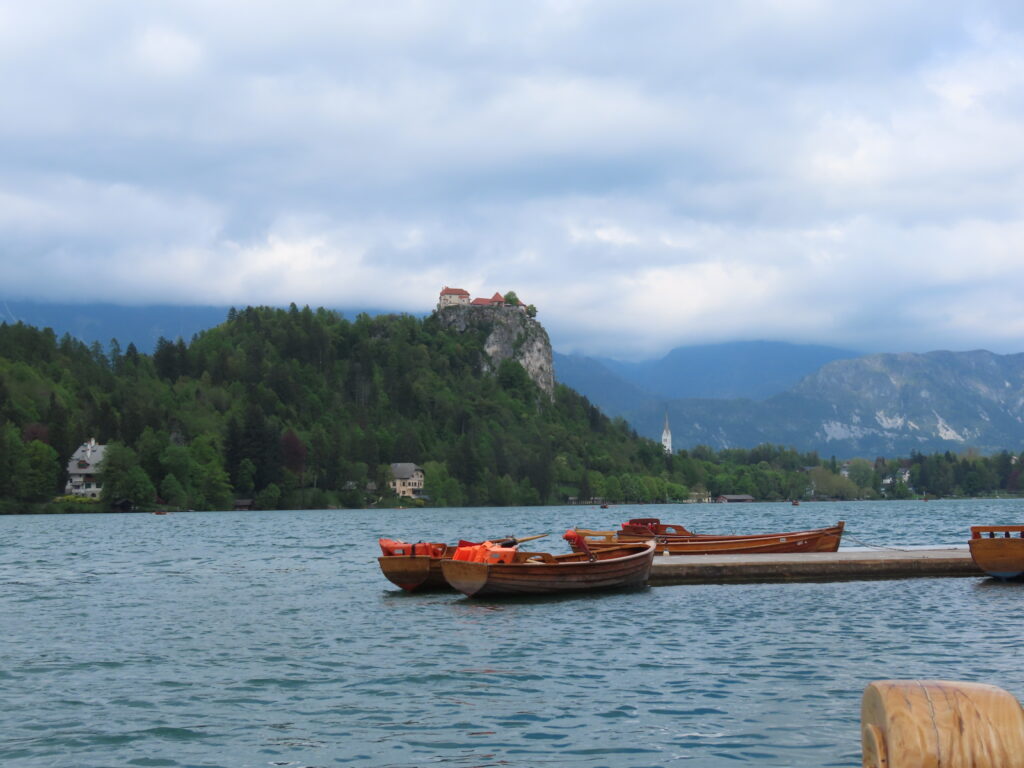
Pletnas aplenty

Waiting to be Fed

Afterwards we head out for an early supper. In the golden hour people are already sipping their sundowners in the eateries lining the main road of this little town. The place we are looking for has the appearance of a charming farmhouse. The waiting is long but since goulash it has to be and it has to be this evening, we book a table and wander into town. In the next hour or so we explore most of it, crossing nary a soul save two fat cats who, after socialising, settle down outside a restaurant waiting to be fed.
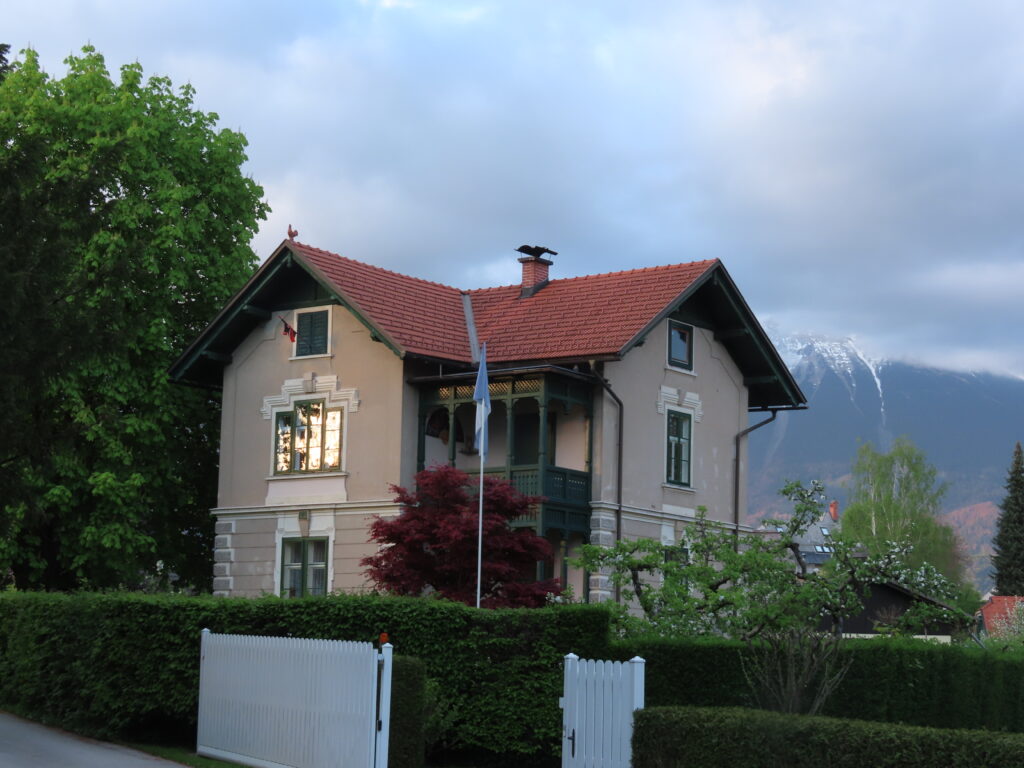
Beyond Balconies

We wander past the bus-stop right up to the foot of the castle hill. Admire some lovely houses and try not to pry into beautifully tended gardens! Exploring deserted bylanes we make our way back, to the still full quaint wood and stone interiors, for a definitely dinner time meal of flavourful game goulash. The hearty meal is a perfect rounding off to a dream day.
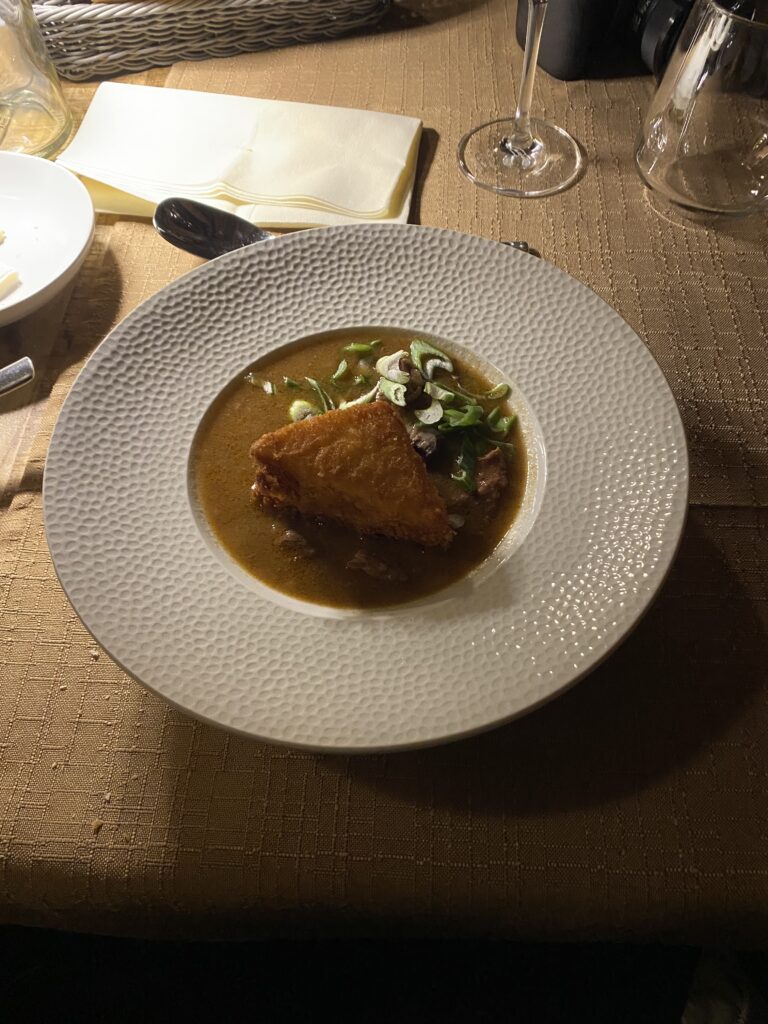
Game for some Goulash?

Bird’s Eye

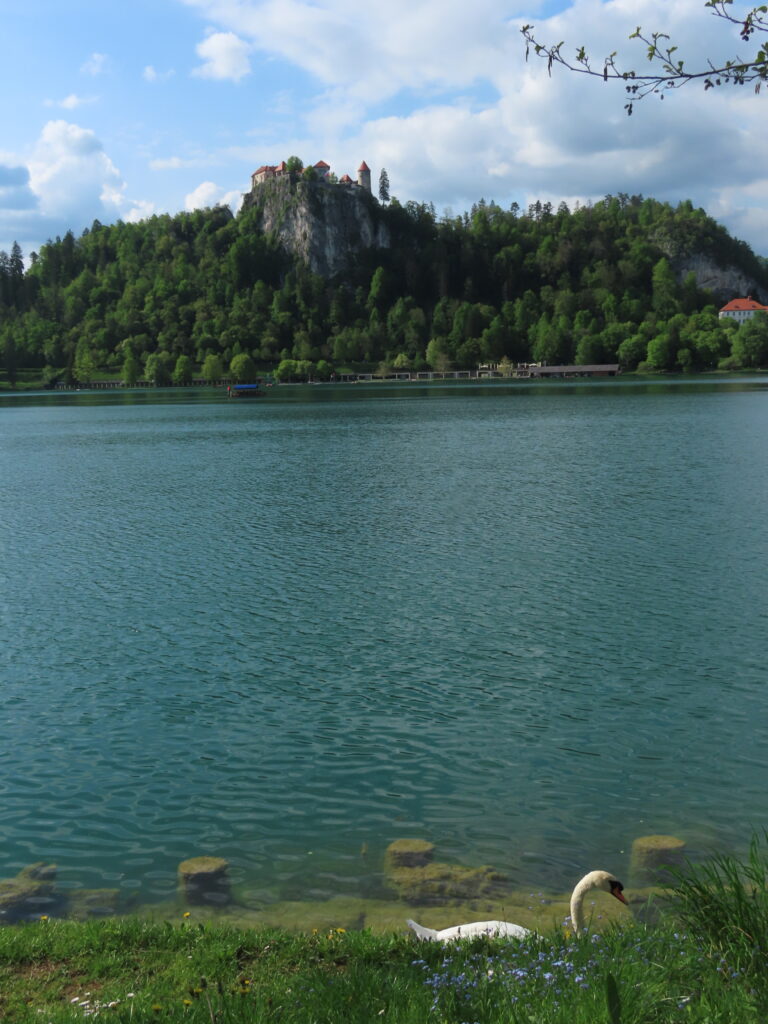
Early next morning we hike up from our stay to the castle on top. It takes a little searching to discover the start of the trail which begins from St. Martin’s Parish Church at the feet of the castle’s cliffs. The church’s spire stretches like a needle pointed at the sky. There is a beautiful stone sculpture of Mary in front of the church along with bushes of peonies blushing a bright pink in the spring air. European Golden Finches, colour coordinating with the wild yellow flowers they frolic in, and a lawnmower that silently finishes its work and parks itself with precision in its cover at the base of a tree are the only life we see till we reach the parking outside the castle. Made in the 11th century it is apparently Slovenia’s oldest. The eyrie-like perch of the castle, offers a bird’s eye view of the azure-coloured lake below on one side and on the other, villages that dot the wide undulating valley ending in snow peaked mountains. In the distance, a hot air balloon drifts lazily.

Discovering Dibang Valley, the Last Frontier– Must read
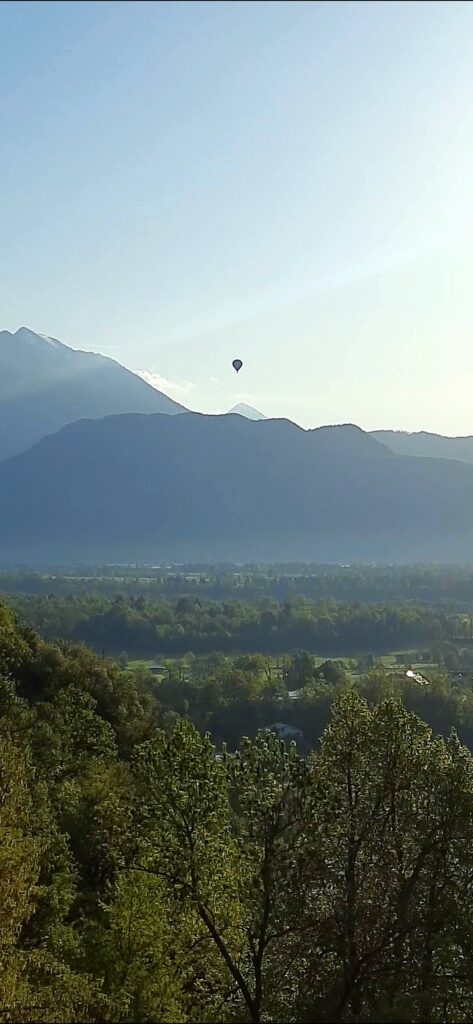
Bird’s eye view from a balloon

The sumptuous breakfast we are served on our return on the patio outside our hotel is a glutton’s morning dream! The spread on the table and setting- the lake dazzling in the morning light stretching out in front, a tree on a side bowing to it’s beauty, all vie for attention. Delightful sparrows join us to help us finish our breakfast. (They have fine tastebuds!). I could do this every day… A wistful thought and a ringing of bells in the mind follows.…. till then I will carry a slice of Bled, as light as it’s memory, to savour later.
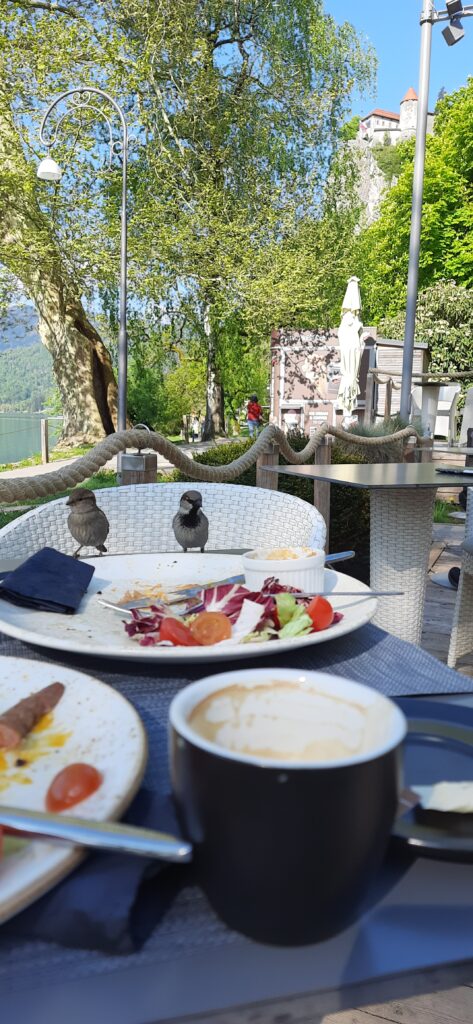
Company for Coffee

Fact File-

Distance-

Lake Bled is about 30 km from the airport and approximately 55km from Ljublajana.

Staying-

We stayed at Vila Preseren. A small and beautiful property with a fantastic location.

Eating-

The Oldest Bled Cellar is a charming place. The game goulash there is fantastic. It is best to reserve a table in advance.

The best place for Bled Cream Cake is the Park Restaurant where it was first made.

Entry-

There is an entry fee for the Church on the island and the castle.

The Castle timings are-

Summer: 8am-8pm

Winter: 8am-6pm
Budapest Beckons- A Ride at a Time

I could not believe the main item on my shopping list in Budapest was paprika and here we were in the iconic Central Market Hall buying it by the bushels. (What have I come to?!) The smiling sales lady did not seem surprised, guiding us adeptly through the different varieties and with a surreptitious look around I realised I was not the only Indian around. Have we lost taste for our homegrown fiery chillies? Sacrilege!! But, traditional Hungarian goulash would be just another stew without that smoked paprika…

 For me, in Europe the number one destination had always been Budapest and then Prague but when the man suggested adding it, as rather an appendage to a packed itinerary, I was reluctant but in the spirit of carpe diem I agreed. Budapest was a blur of 24 hours and we made the most of them, planning smartly. Sprinkled with a liberal dose of serendipity, like the paprika in the goulash, it turned out be a special sampling!

By the Danube

The hilly Buda and the flat Pest, conjoined names with distinct entities came together as one entity only as late as the 18th century to form one of Europe’s biggest capitals. Imagine the sprawl of the city which houses almost one third of Hungary, which once, along with Vienna was the co-capital of the Austro-Hungarian empire. The Turks also ruled here, their legacy the famous hammams or baths that channelize the natural springs spouting healing waters here.

Discover- On Uzbekistan’s Silk Route- The Golden Road to Samarkand and Bukhara

Time is of the Essence

With absolute paucity of time, walking was unfortunately the first to take a leap out of the window. Budapest, like all European cities has a plethora of good walking tours to choose from but none matched our time there. What we took instead, was a 24 hour pass that gave us seamless access to the metro and trams and buses.

Got a ticket for a ride

The afternoon we arrived we spent in Buda side and the following morning we explored the Pest Castle Quarter, not wasting time in doing to and fro.

Szia Budapest

We reach Budapest at noon, willing to get into the expensive cab ride from the railway station to our stay but no one is willing to take us. So, back we go into the station and down to the metro underneath it. A tram ride and a short walk follows, bringing us to our accommodation in District V. Quickly settling into the spacious apartment where a very thoughtful personal note for the man has been kept, we head out.

Pitter-Patter Pattern

Minarets and Markets

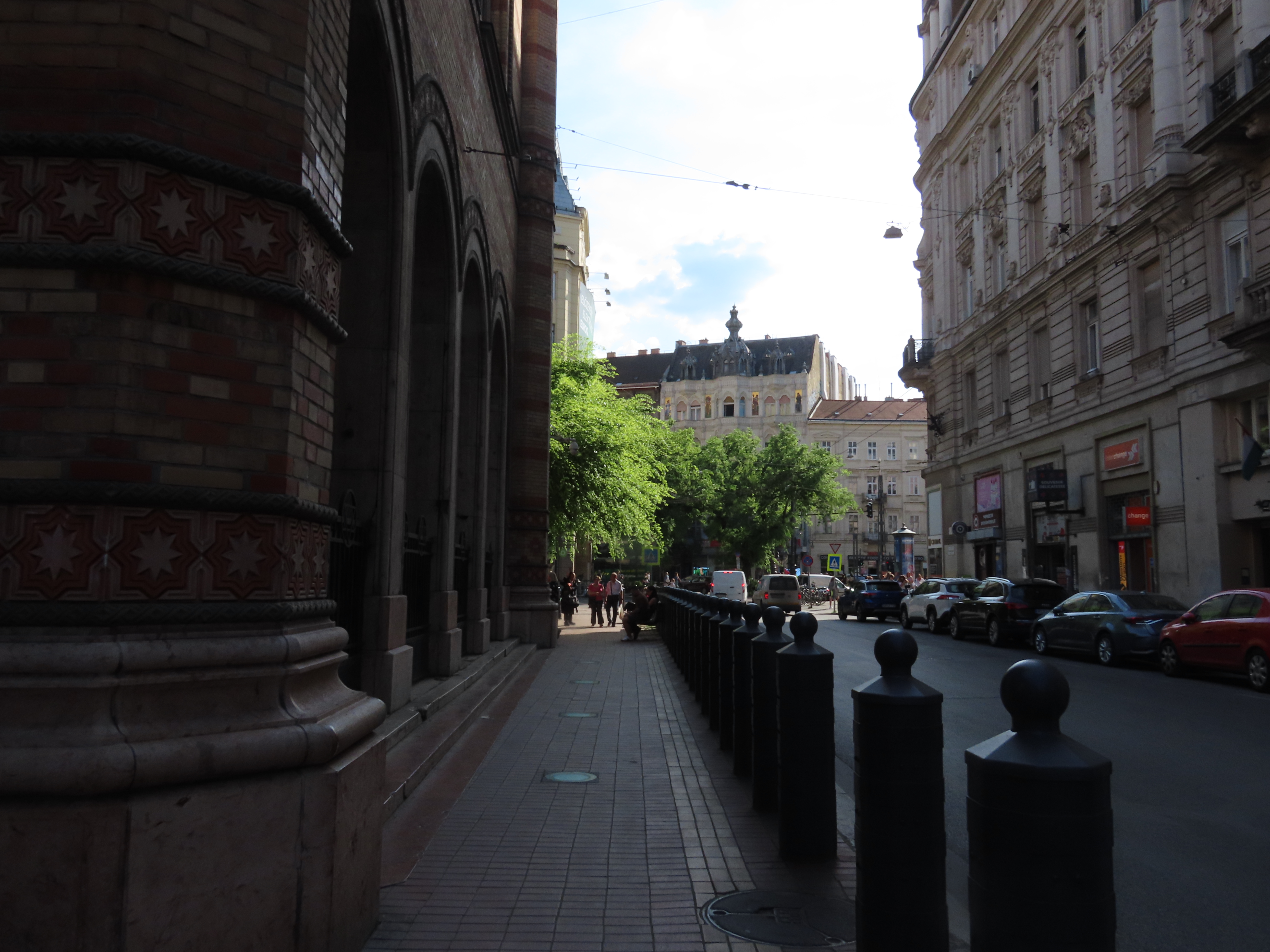
In the bustling streets of District V we discover there are enough restaurants and grocers catering for familiar, closer-to-home palate. At a crowded square we find thronging groups being taken inside a distinctly Moorish brick building. We stop to admire at the Dohany Street Synagogue, the biggest in Europe. With its onion domed minarets and exposed brick finish, it is unlike anything around. Made in the last century, it served the huge local Jew population and in the Second World War it marked the edge of the Jewish ghetto. Today it feels like a pilgrimage place with the complex housing a functional synagogue, a museum, a holocaust memorial amongst other parts.

Ghetto Lines

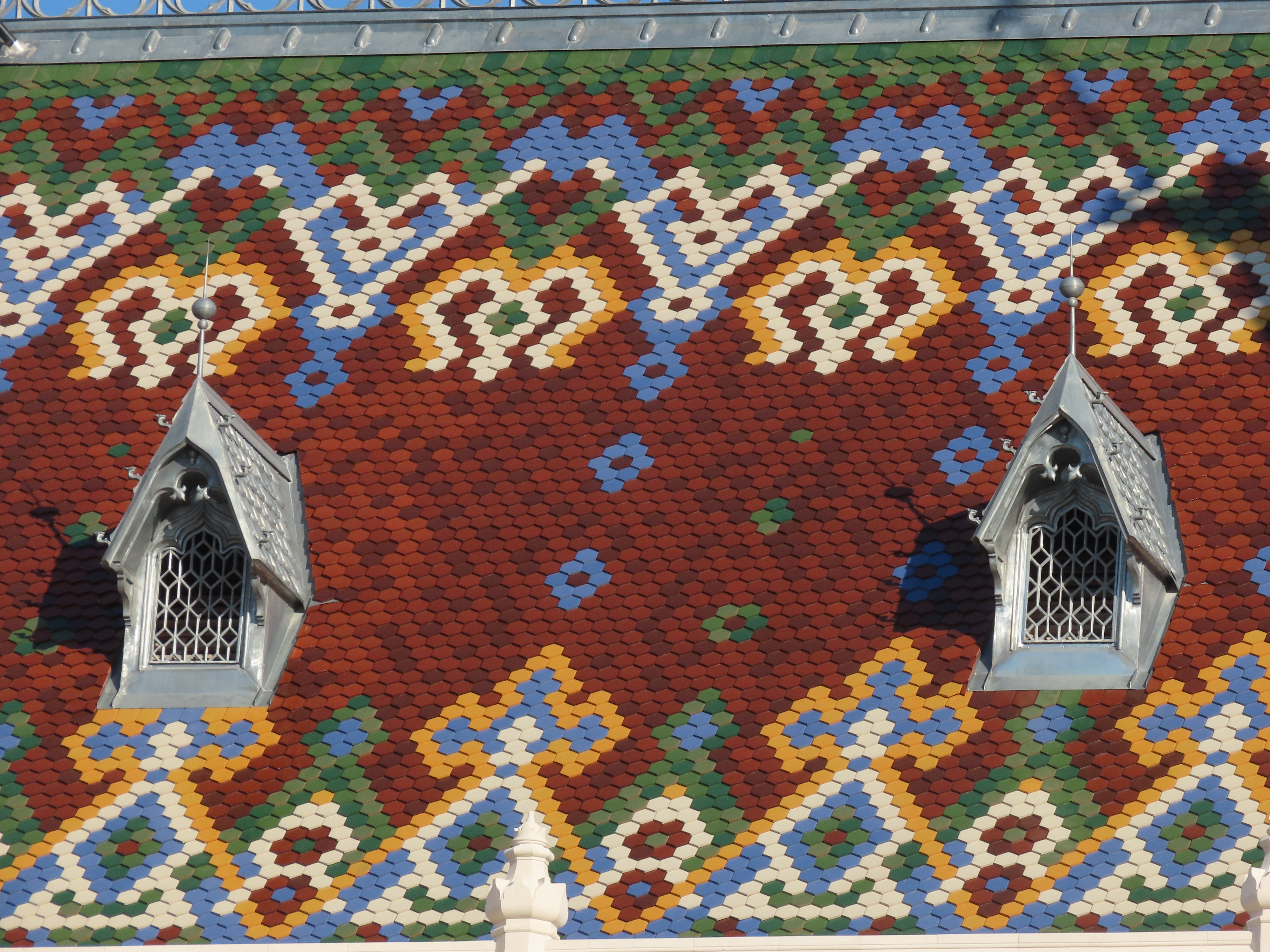
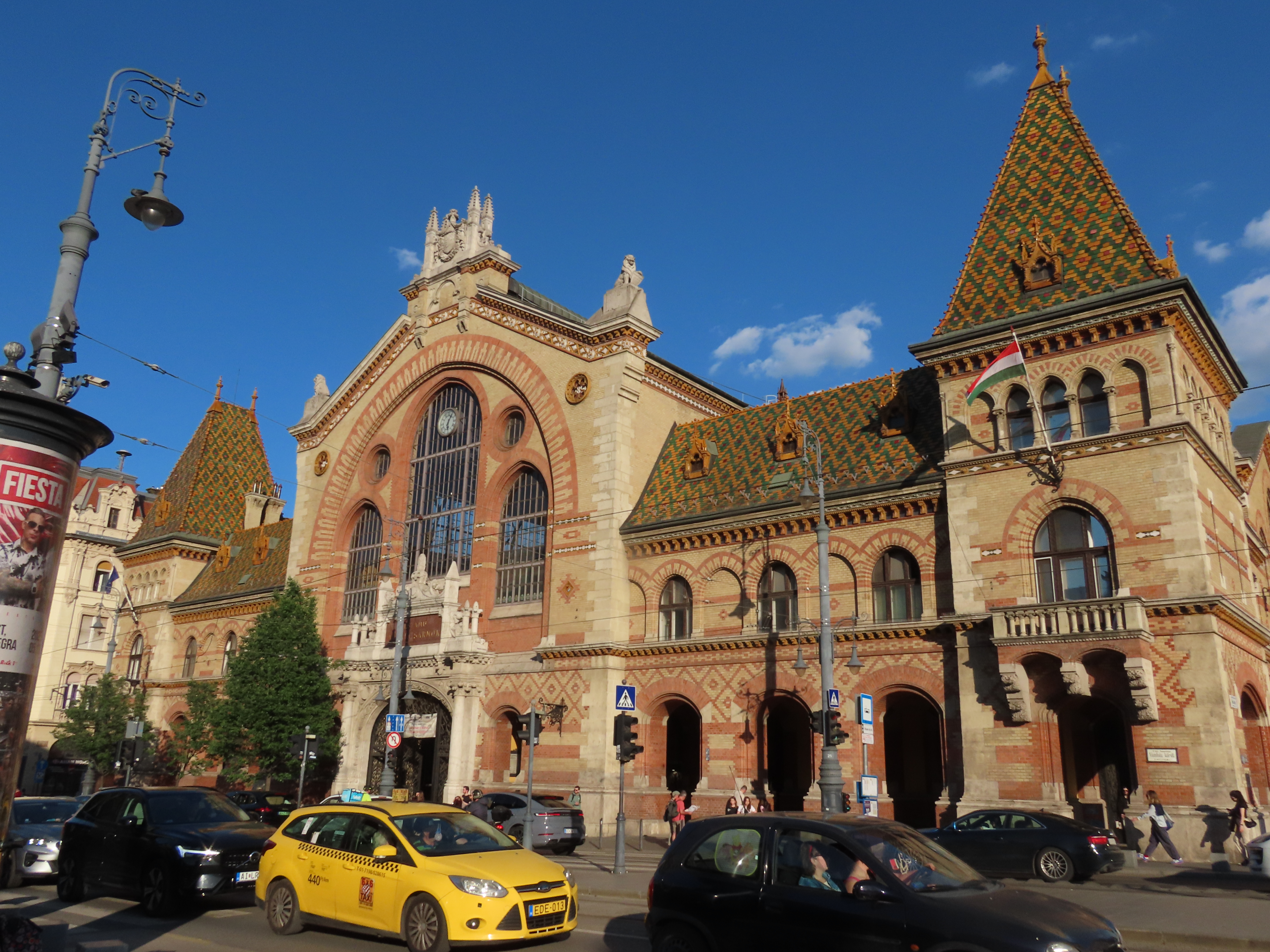
Then we make a beeline to the Central Market or Great Market Hall. This brick, iron and glass structure topped with a colourfully tiled roof is the largest and oldest market place in the city. The green and yellow Zsolnay tiles look warm in the evening light. In the vaulted interiors we find groceries (paprika!!), fresh produce, souvenirs, local handicrafts et al. Closing time is upon us so there is no time to linger and sample the street food available here.

Also read- Satiating Nostalgia Under the Winter Rain at Junia

Building Beauty Brick by Brick

By the Danube

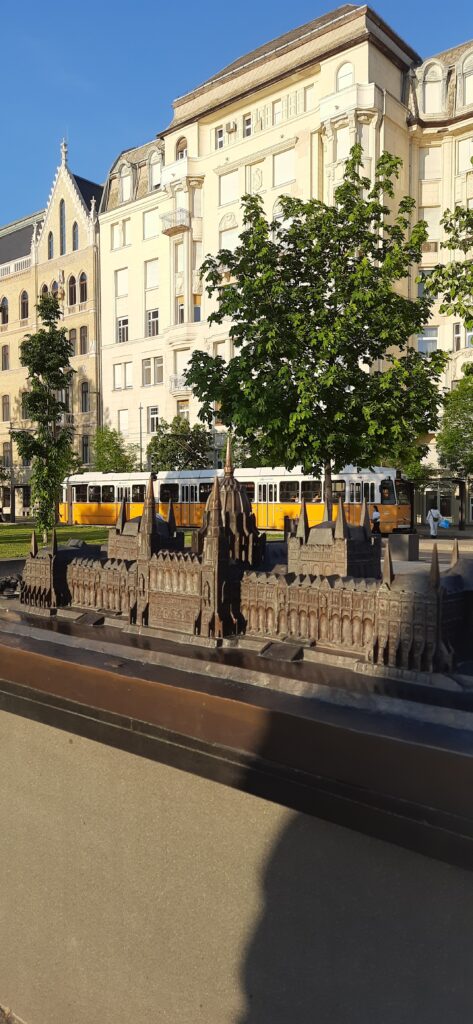
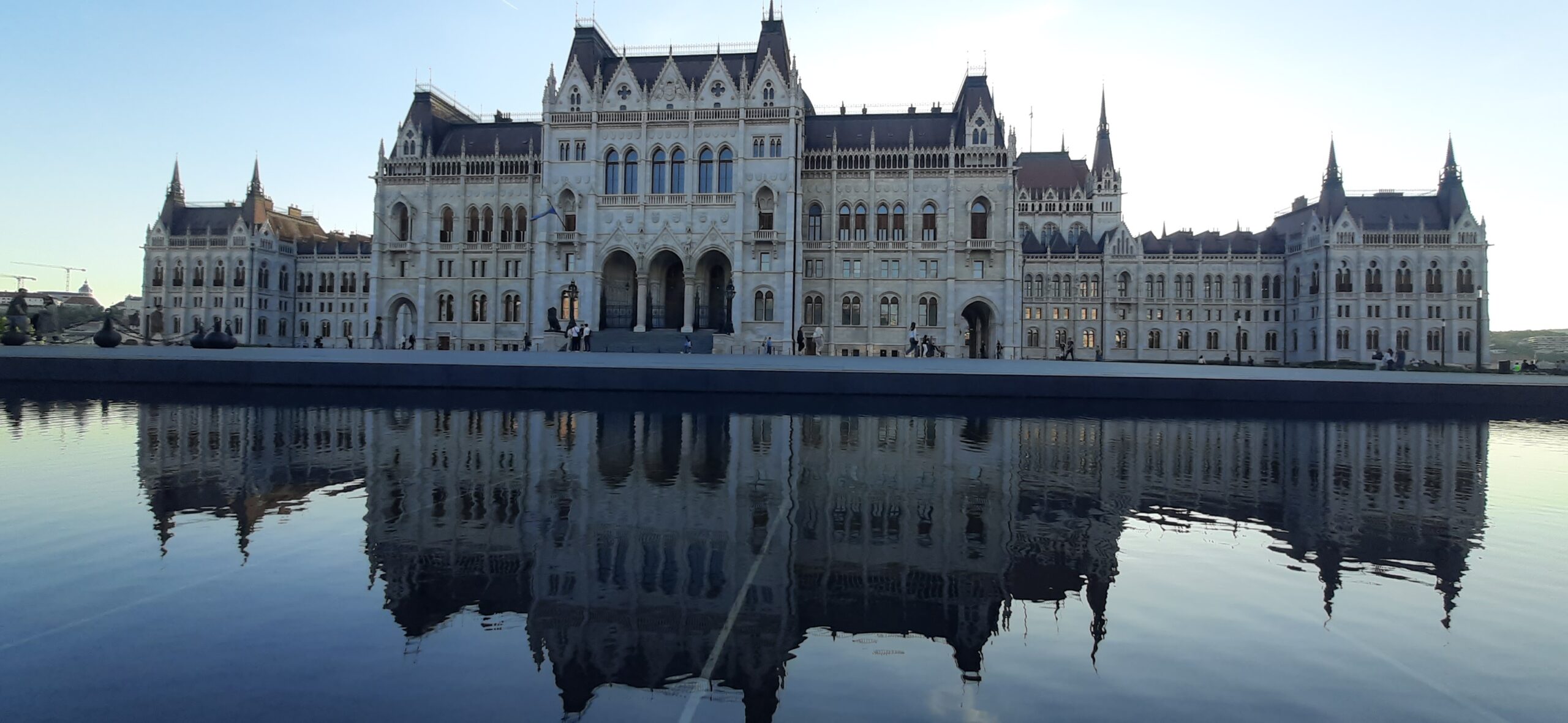
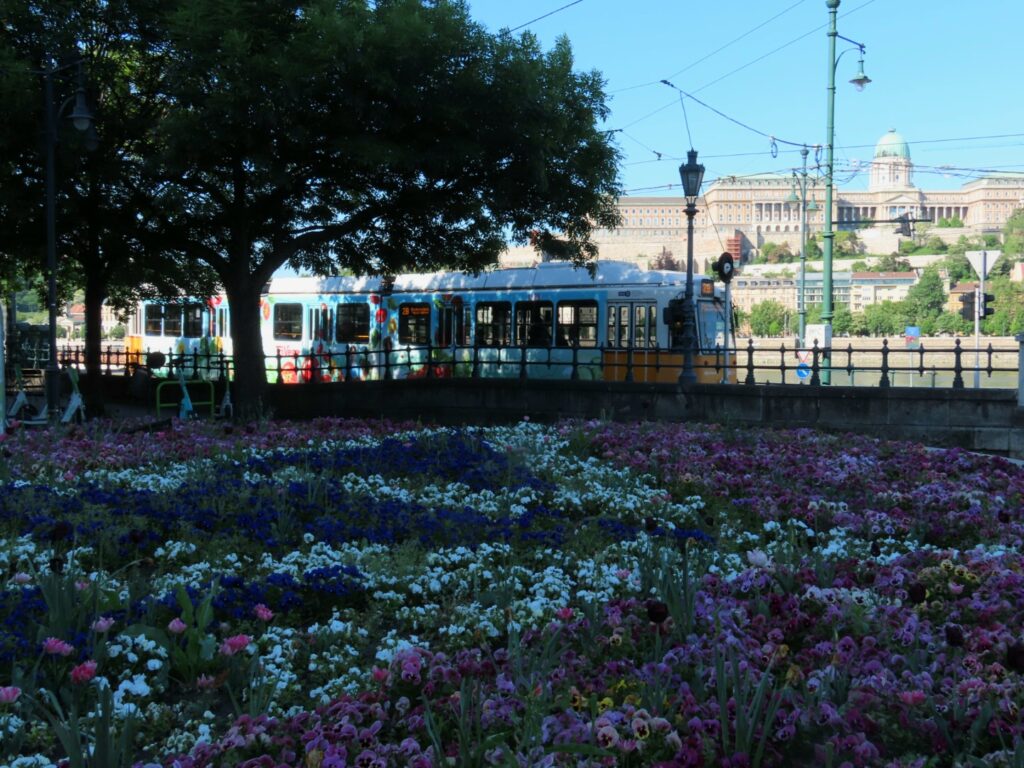
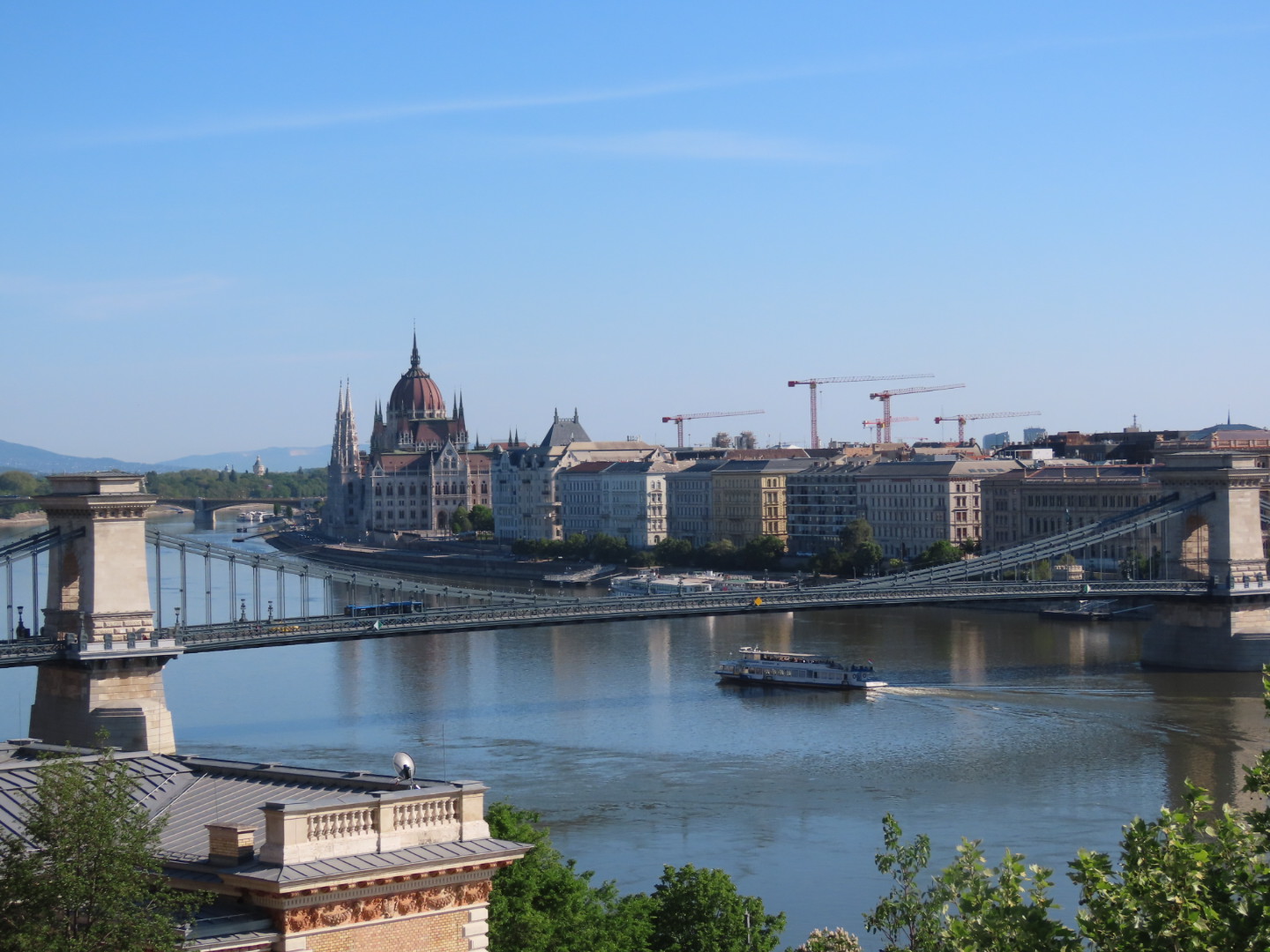
We catch tram number two from the intersection nearby for some spectacular sightseeing along the river front. The Danube, barely blue here, still has all the important monuments facing it. We alight at the parliament building to take in the humongous neo-gothic structure with perfectly symmetrical wings spreading on either side of a central cupola reminiscent of an Italian renaissance church.

Lionize

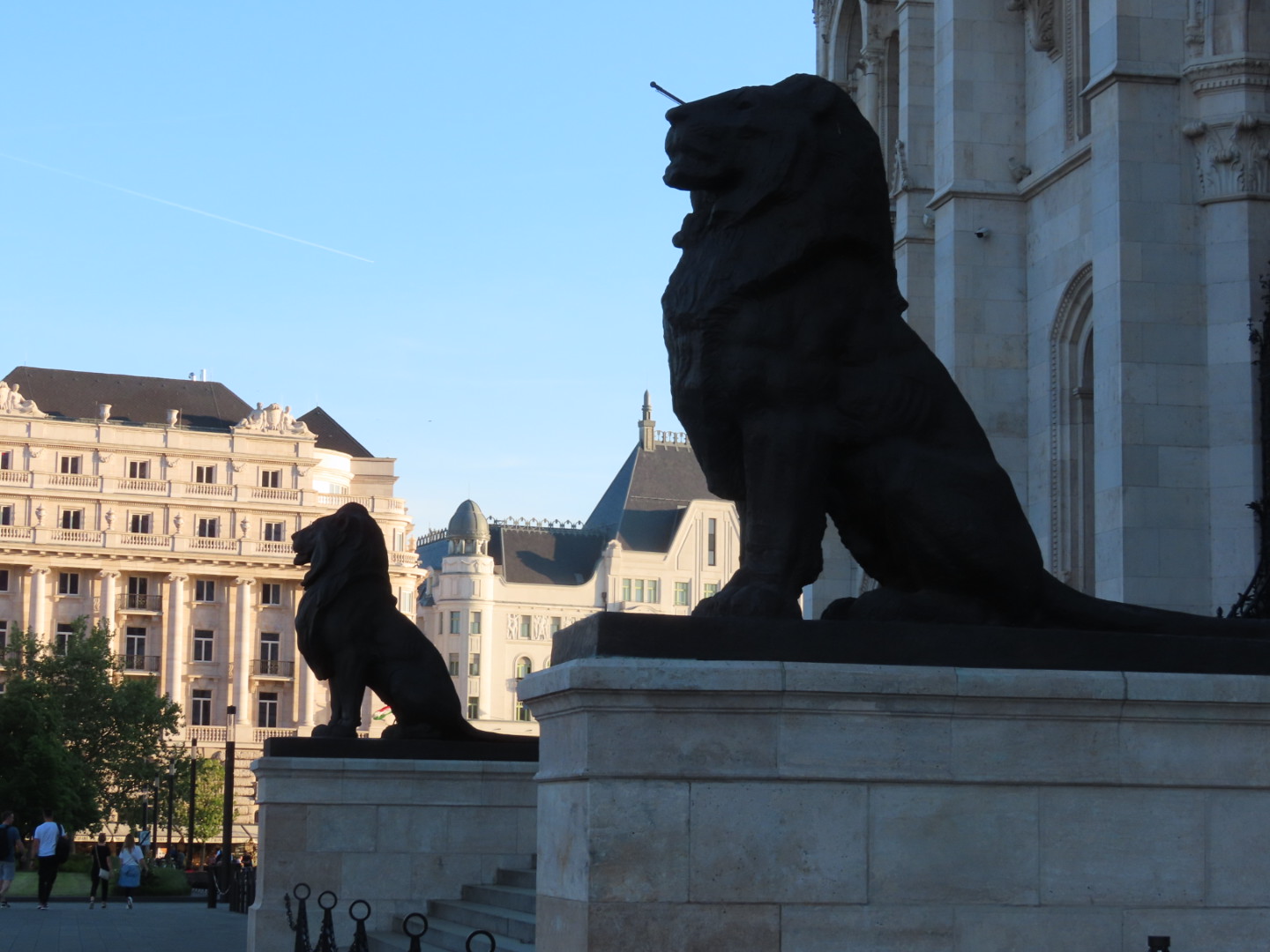
Two regal lions with their noses in the air and coiffed manes guard the entrance. Sadly it is not possible to take a tour of the interiors or waltz down the waters of the river to see it all lit up in the night. A lot of renovation work is going on around the expansive square but it is artfully camouflaged behind screens draped on the building with the purported final design printed on it. One can see the eventual façade long before it materialises.

Portrait of Power

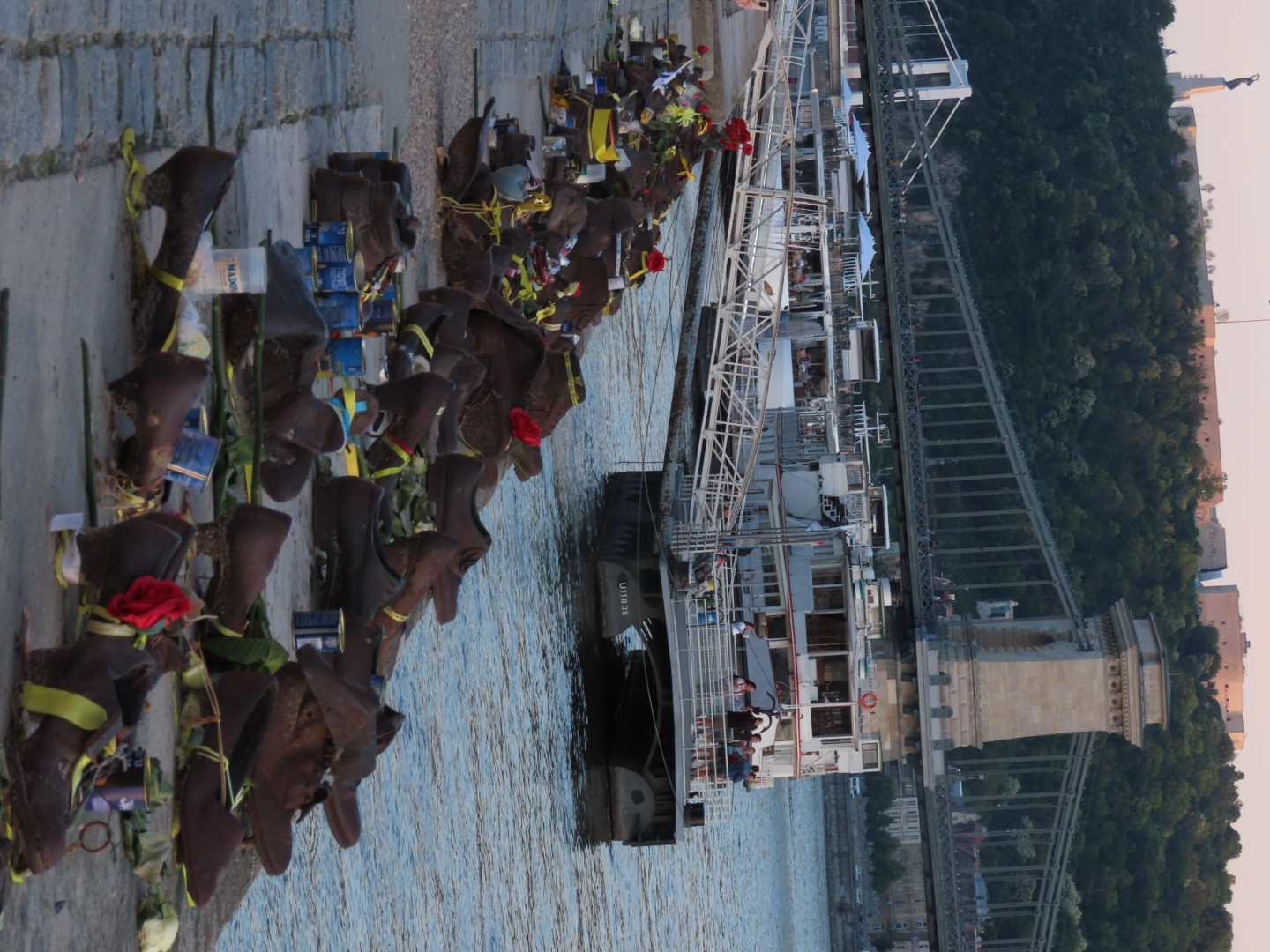
We stroll to the promenade by the river where the holocaust memorial- Shoes on the Danube Bank is. The brilliance of this poignant memorial lies in its simplicity. Cast iron shoes, of men, women and children point, a little accusingly perhaps, at the river which swallowed the Jews shot here after being made to take off their shoes. They are a moving reminder of the horrors meted out during the Second World War. The sun sets in a fiery orb, radiating light like the star it is, between the spires of a church across the river.

Discover- 3 Churches in Mhow: Discovering Obscure History and Outstanding Carols 

Melancholic Memorial

Tea or Tipple and Trdelnik

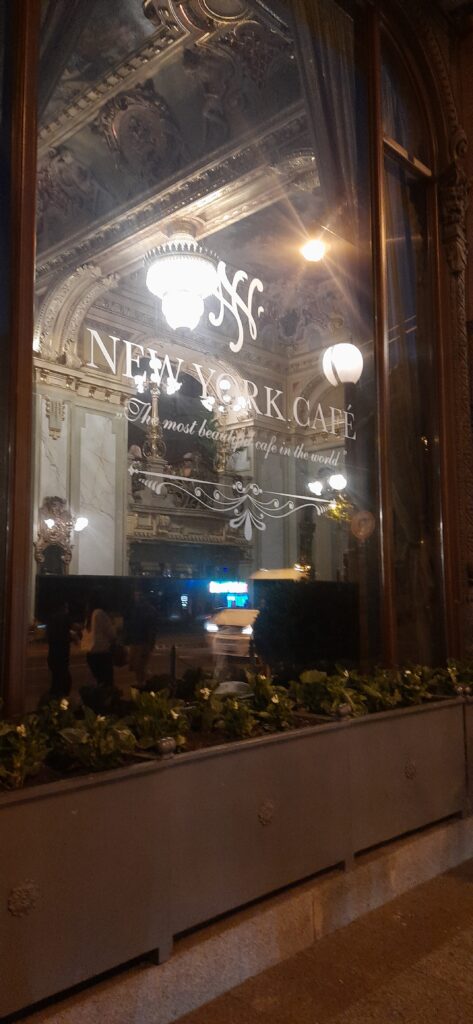
We retrace our rides and cross the iconic New York Café, rated as the most beautiful café in the world, with its opulent interiors brightly lit. It looks cozily inviting to us pedestrians.

Coffee and Charm

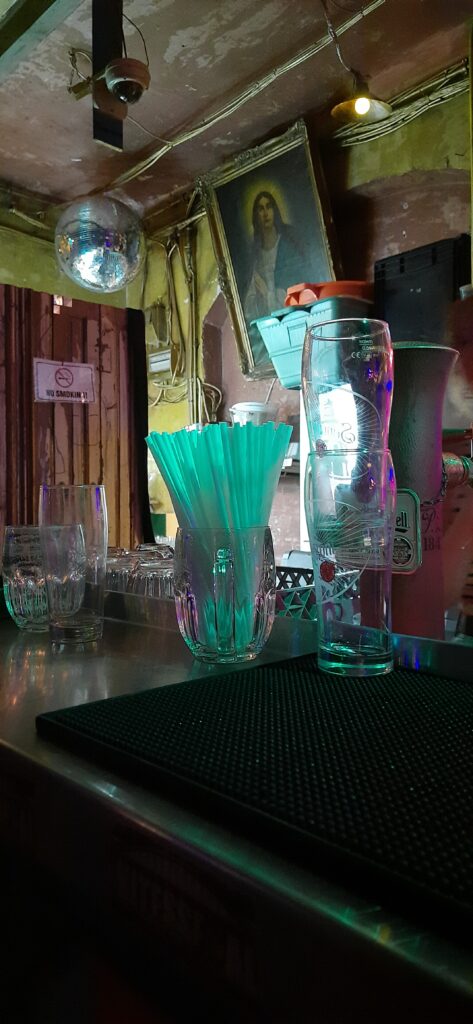
Later we head to sample the night life of Budapest and discover the bar that set the bar, and the trend, is within ambling distance. The crowd is still building up outside the ruins of Szimpla Kert, the original Ruin Bar. The music is pulsating, the setting eclectic and the drinks flow as do people, through the maze of rooms of the dilapidated industrial building living a rocking second life as a party hub. The evening ends on a sweet note with traditional trdelnik, freshly done. The layered pastry dusted with sugar and cinnamon, wrapped around a wooden roller being turned a toasty brown over fire, is demolished as soon as it is warmly served.

Resurrections

Phoenix Fairytale

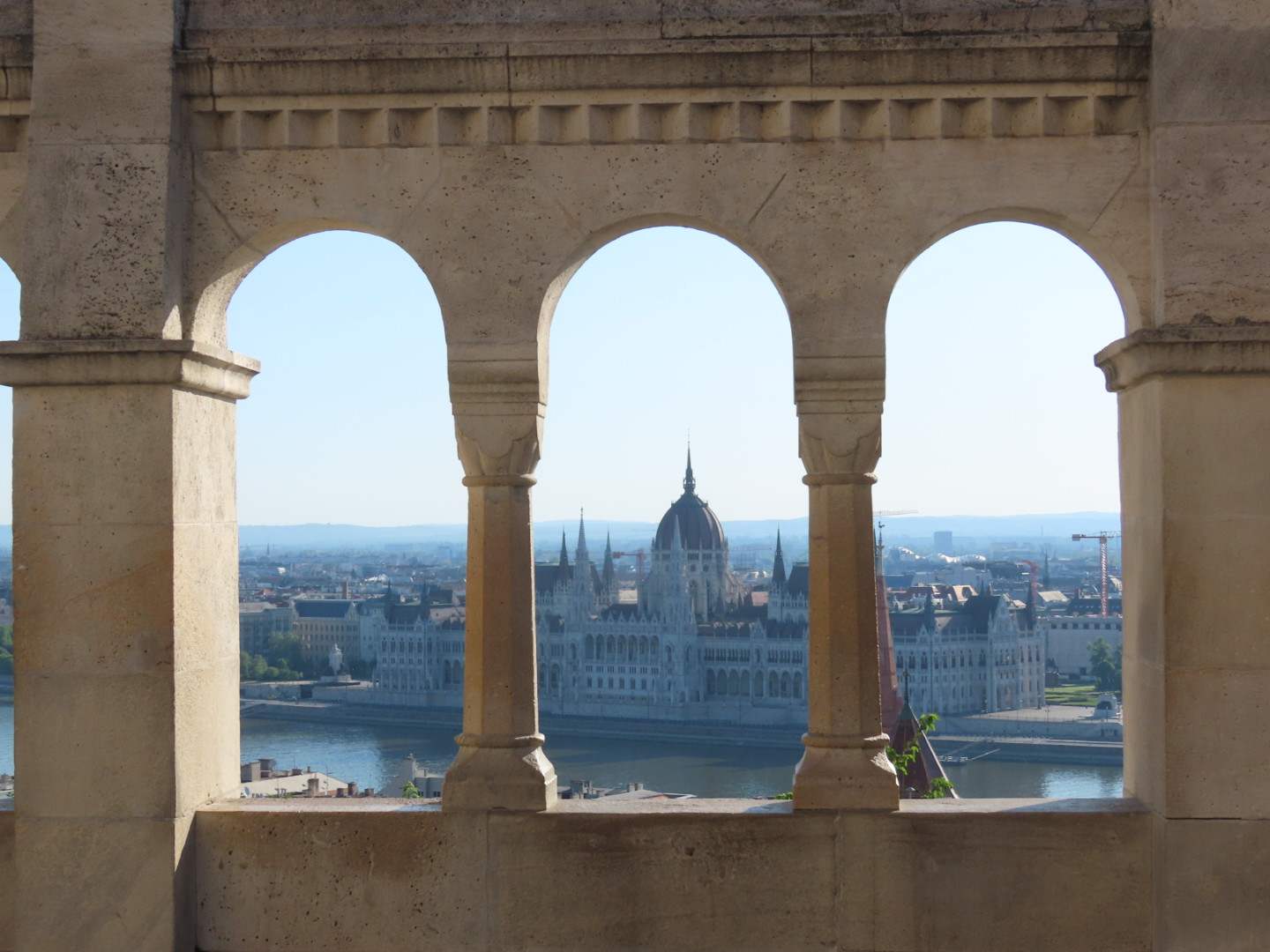
Early next morning we catch a bus to the base of the Buda Castle quarter. This historic hill, seat of the powers that be, has been reduced to near rubble, rebuilt and redesigned innumerable times since the 10th century. It has survived the Mongol hordes, the Turks, World Wars and the rise and ebb of numerous dynasties. We make short work of the long climb through deserted streets. There are just a handful of people at Fisherman’s bastion, a wall with beautiful arches which make perfect frames for the view- the deep Danube, a natural moat below and the vast expanse of Pest beyond the Parliament. Buda and Pest are bound together by many bridges apart from the famous Chain Bridge.

Buda’s Bastion

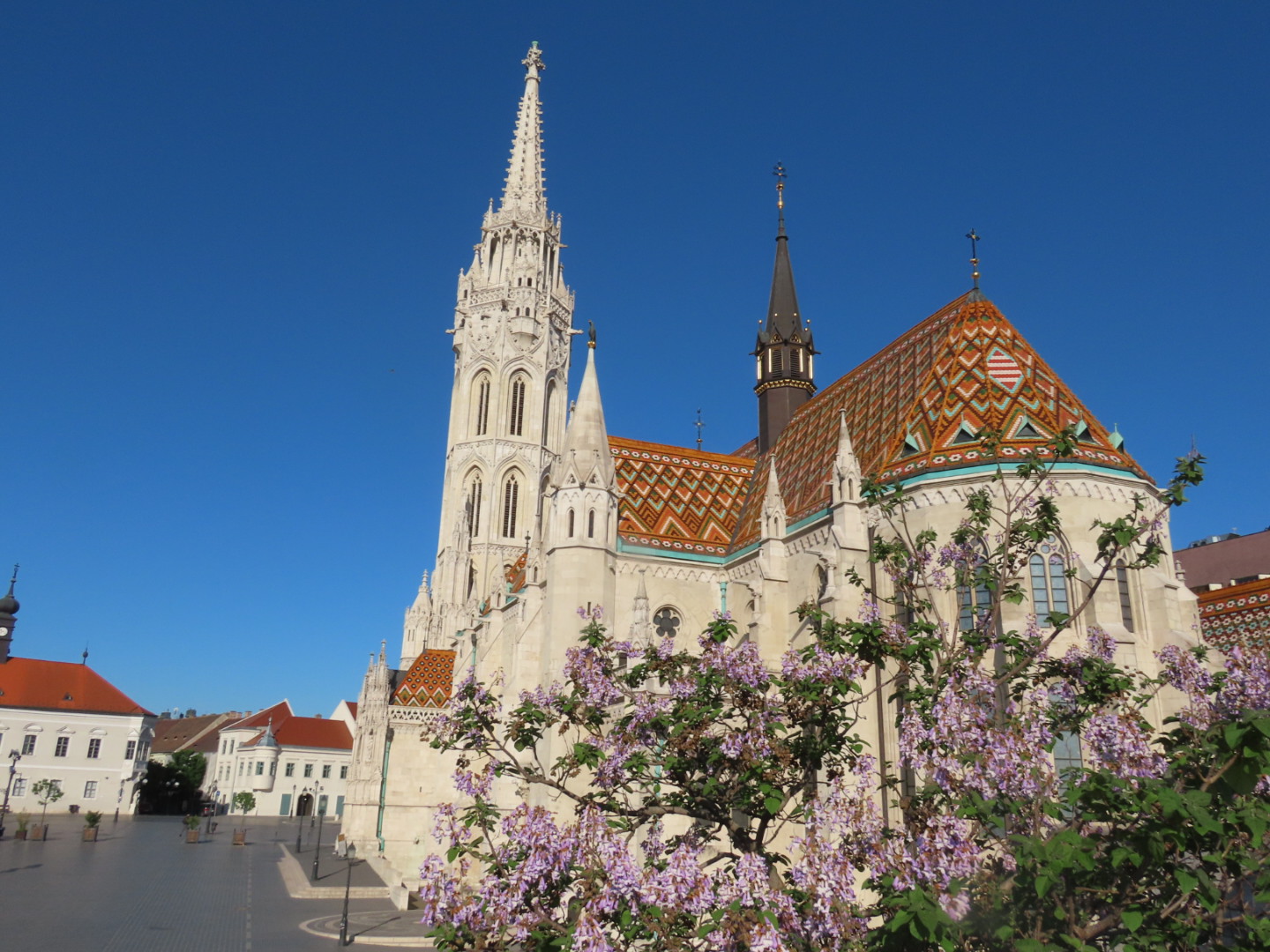
Chinese couples with their personal paps, make the most of the fairy tale turrets and arches in the morning light. (They know good lighting!) The massive neo-gothic Matthias church towers up and dwarfs everything around. The colourfully tiled roof adds an eclectic element to the pristine white exterior. The slender bell tower soars above even the church.

Majestic Matthias

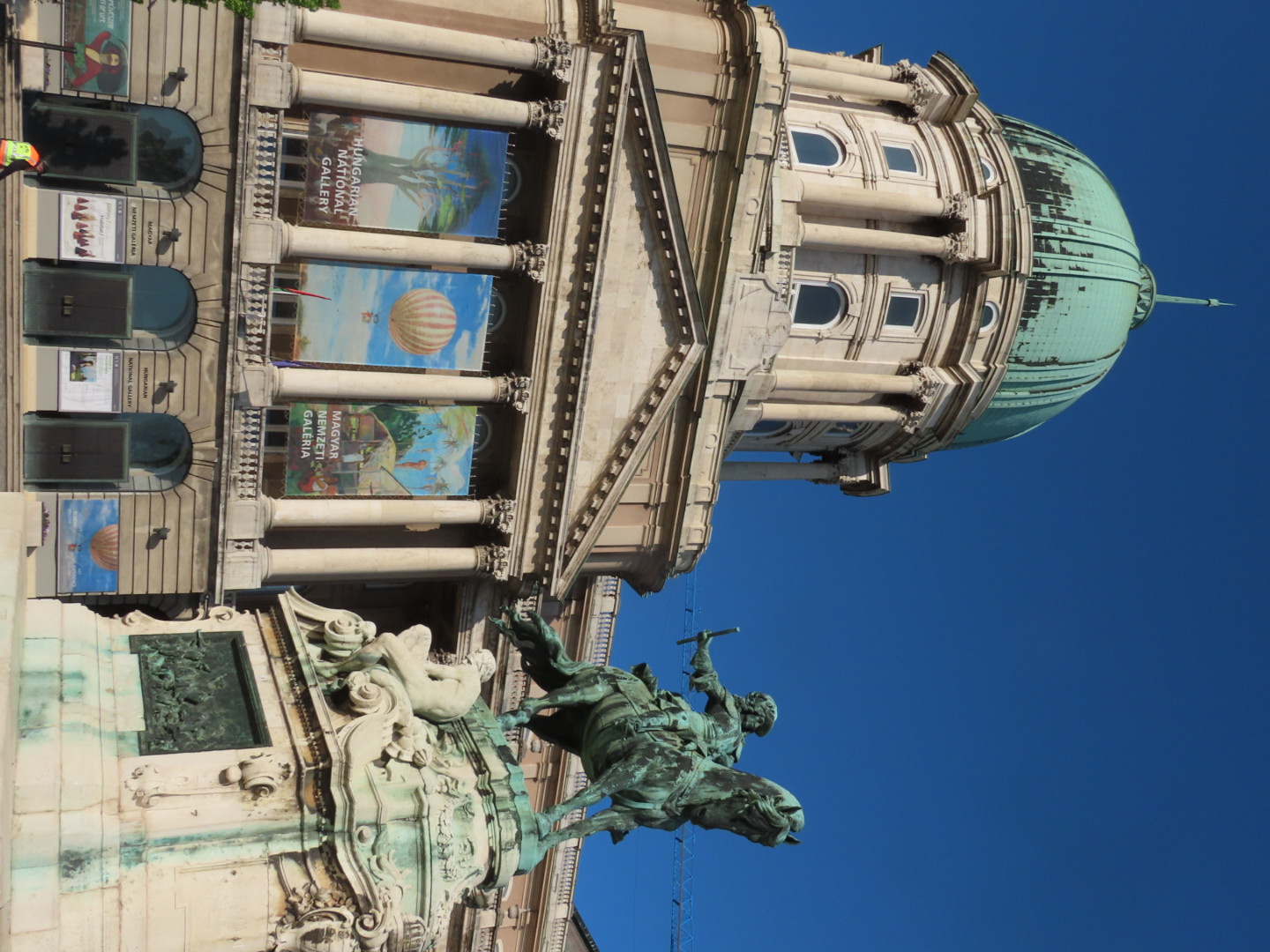
From the Holy Trinity Square we walk through a lane lined with quaint buildings, one which has a labyrinth underneath where Count Dracula was once held, crossing the Sandor Palace, home to the President, to the Buda Castle which now houses the national library, the historical museum and national gallery but it has not opened yet. Just the impressive statue of the Duke of Savoy is all the company we have.

High Art

The clock is ticking and we manage to find steep steps going down the outer wall and from the Chain Bridge we catch a bus and an underground ride back to the flat. It is difficult to rush when Budapest’s blooms beckon a lingering look and last picture. It has been a whirlwind trip to a city that has risen resiliently time and time again. Someday perhaps we will walk into what a peek is all we had time for from the outside.

Beguiling Blooms

Fact File

Getting Around- The Budapest Basic Travel Card(BKK) offers unlimited rides on buses, trams and the metro for different durations. They are available at all transport hubs.

Staying- In the Buda side stay near the Castle area or District I and in Pest in District V or VII. Another option is staying close to the Deak Ferenc ter, a hub where a lot of the metro lines and trams intersect.

The 3 Day Perfect Prague Itinerary

The Czech had a tradition of throwing people out of the window. So popular was this, of not dirtying hands and hoping the cobbled streets of Prague would finish the job, that they actually have a word for it- defenestration. Sometimes it did not work! In the third Defenestration of Prague in 1618, the nobles survived the fall. That led to murderous reprisals, war and the Austrian’s ruling over the erstwhile kingdom of Bohemia. Austrian influence shows up in the pastel-coloured pastry facades that stand cheek by jowl all over Old Town, looked down by tall gothic dark spires of the churches that belong to an older era.

Sometimes smokey, sometimes sparkling, Prague has a bohemian air… with gothic edging! She seems slightly mysterious, wise and definitely dances to her own tune. Lose yourself in her labyrinthine lanes or settle yourself in one of the many cobbled stone squares to watch the world go by. The people might have a slightly wary air but they know how to do a perfect roast not to mention a good tank of beer, apart from defenestrating people!

A Ride to Remember

Atleast three days are needed to explore the old parts of Prague- Prazsky Hrad or the Prague Castle on a hill, Mala Strana or Lesser Town at its feet and Stare Mesto, or Old Town across the sinuous Vltava River. How should one plan them in this ‘city of a hundred spires’, where tall tales and taller spires, legends and history blur like fine shaded bohemian crystal?

Day1-

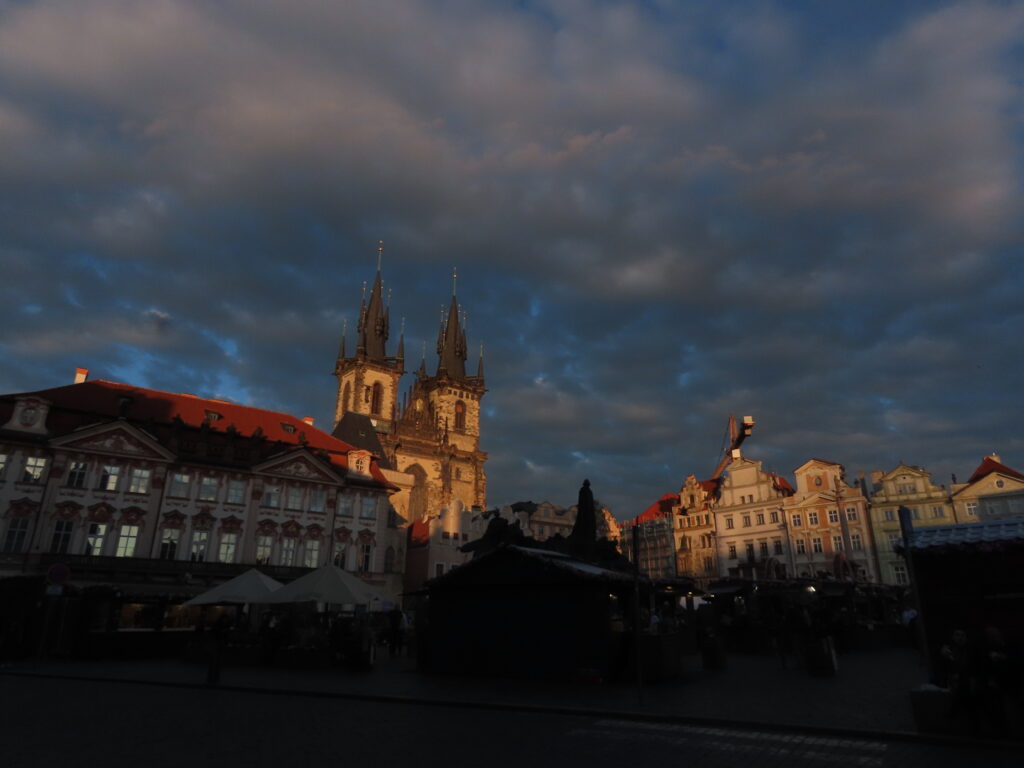
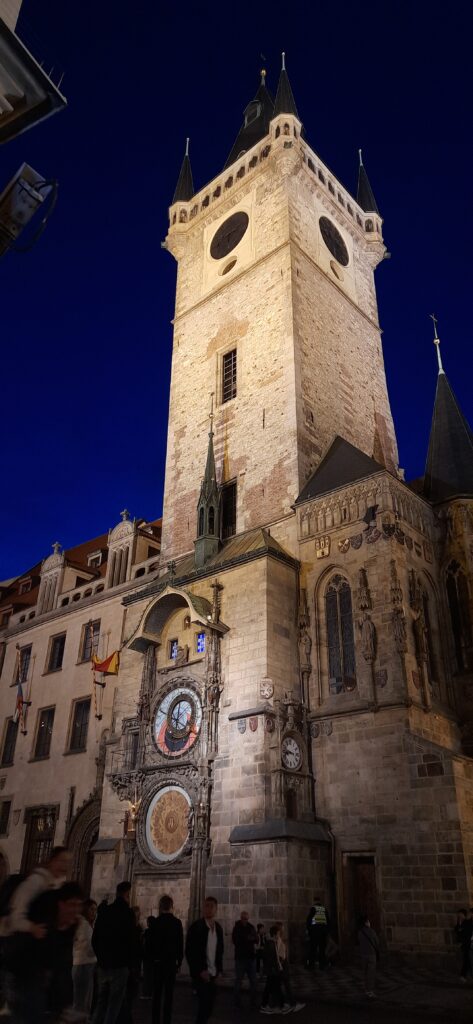
Walk to Old Town Square, the centre of gravity in Old Prague. Dominated by the twin albeit not identical towers of the Church of Our Lady before Tyn which date back to the 14th century, with the Jan Hus Memorial in the middle of the square. Prague’s iconic astronomical clock on the Old Townhall building marks the other side of the square but the clock faces a side like it wants all the attention to itself, and it gets it in hordes with crowds waiting for the hourly show of the apostles and a skeleton parading through the tiny windows. So, there is ample opportunity to see them. But the real beauty is the 14th century intricate three-piece clock.

Apostle Hour

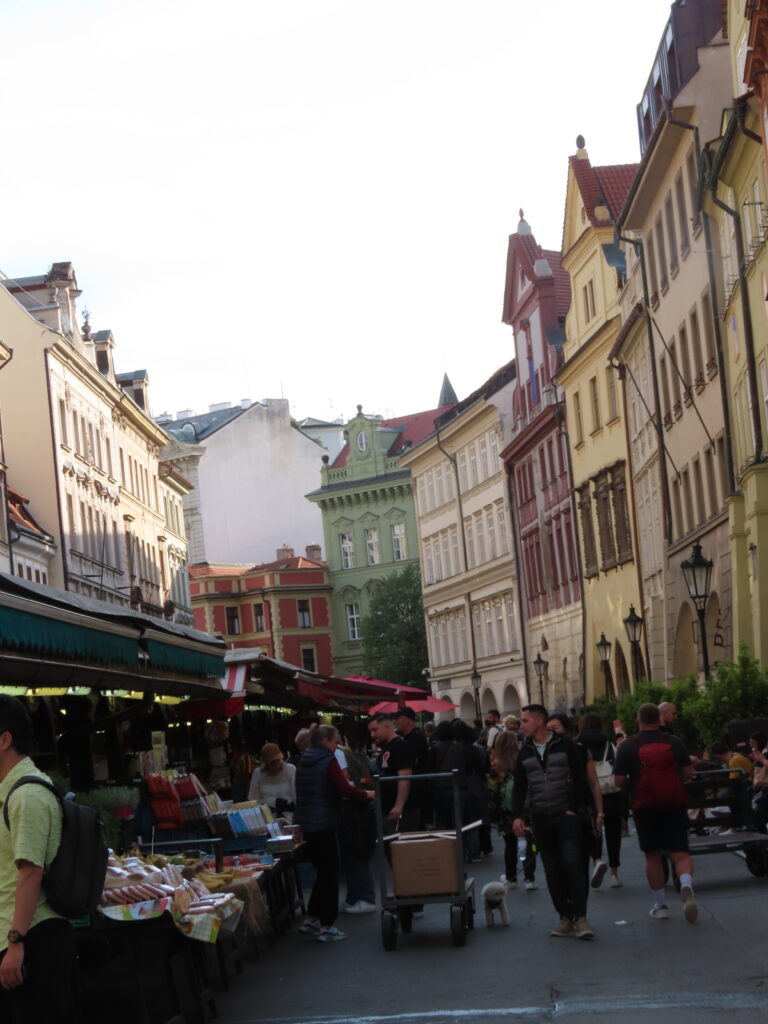
Then, through a narrow alley with a sex machine museum, (Haha, there are museums galore here, for things you can and cannot imagine) souvenir shops, eateries etc, head to Wenceslas Square. More like a wide promenade, it has been the stage for many seminal events in Czech history. It ends at the foot of a hill with the National Museum on top.

A lane to lose yourself in.

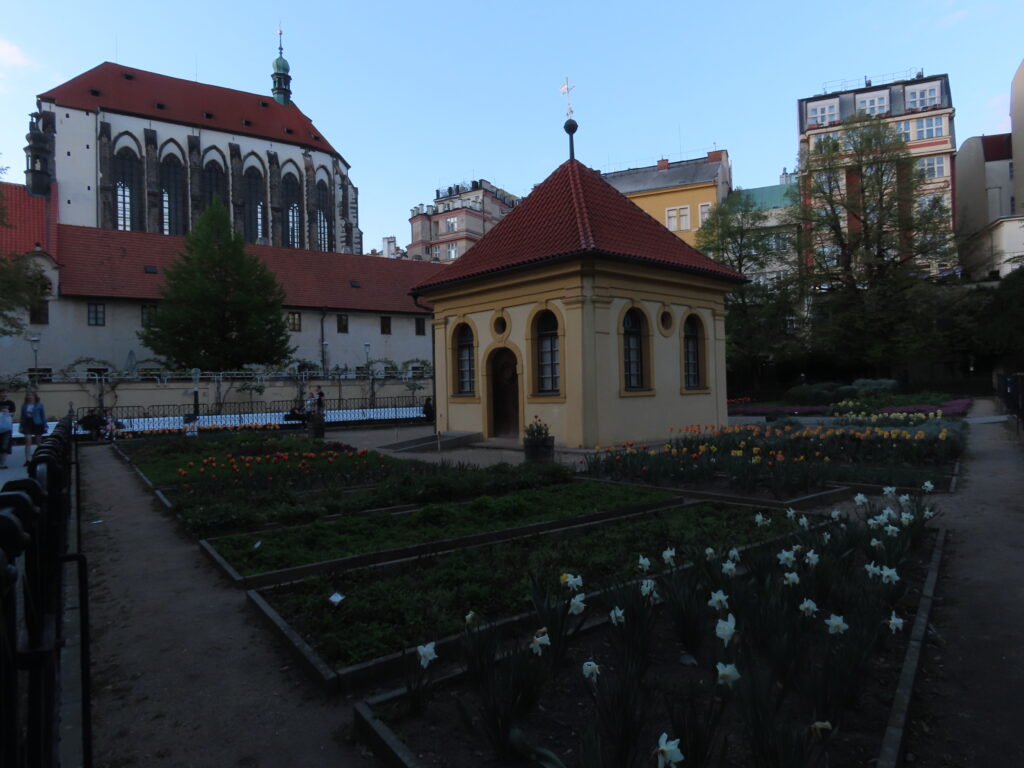
Grab lunch at one of the many cafes lining the squares. Spend the rest of the afternoon discovering the bylanes of Old Town, chancing upon hidden treasures like the Franciscan Garden.

A garden grows silently.

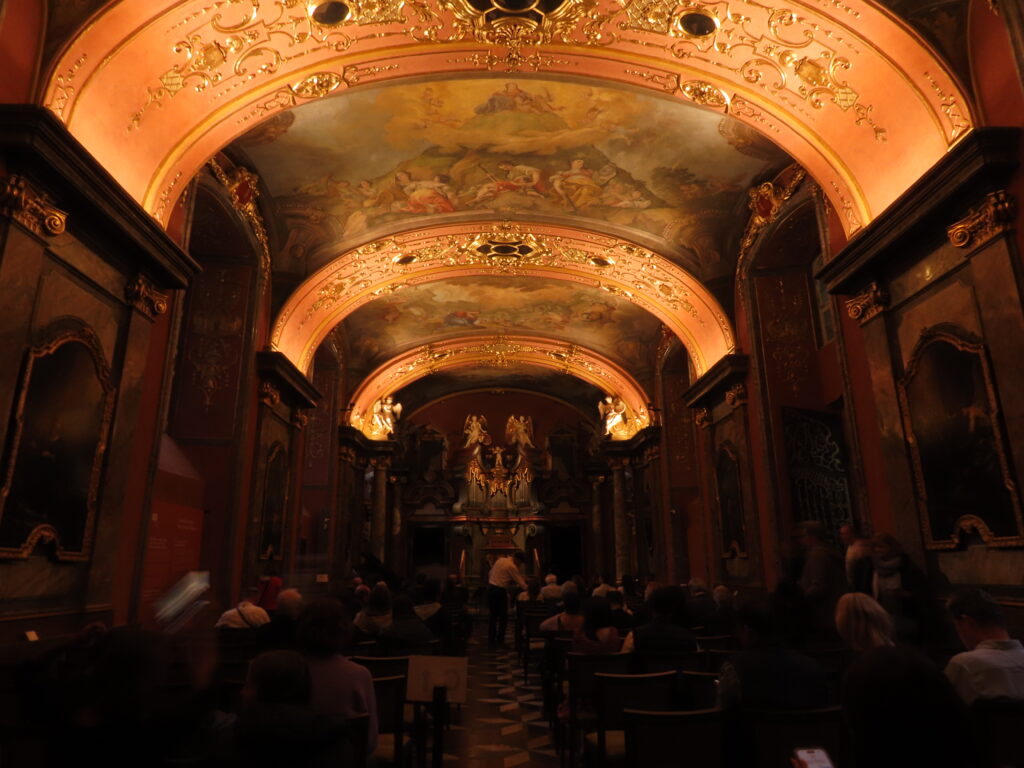
In the evening head through one of these lanes to treat yourself to a classical concert in a tiny chapel. The Mirror Chapel with its baroque interiors of gilded stucco, frescoes, mirrors and old organs is part of the Klementium, an old Jesuits’ College. An underrated place worth a visit as well. The experience of listening to soloists from the Royal Czech Orchestra is something even the cherubs on the roof seem to delight in.

Another underrated place is- Sojourns to Shekhawati

Mirror Chapel is the show.

Day2-

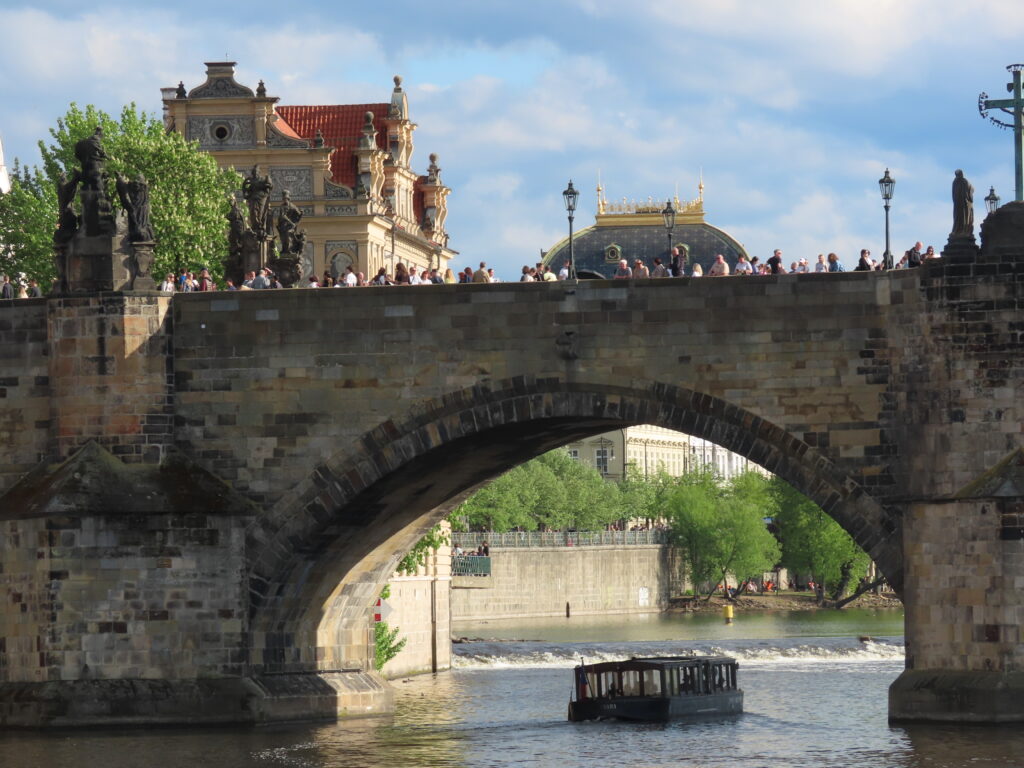
 Join a guided tour. Walk from the one of the oldest medieval relics- the sooty black, Powder Gate, past Charles university, the oldest university in Eastern Europe, through the Jewish Quarter with its Spanish Synagogue and a sculpture Kafka would approve of. Once one of the largest Jew ghetto it is now a tony commercial area. Cross a raised cemetery and reach the famous Charles Bridge over the Vltava. There are buskers and tourists, and statues that never leave the place lining the parapets.

Life Line

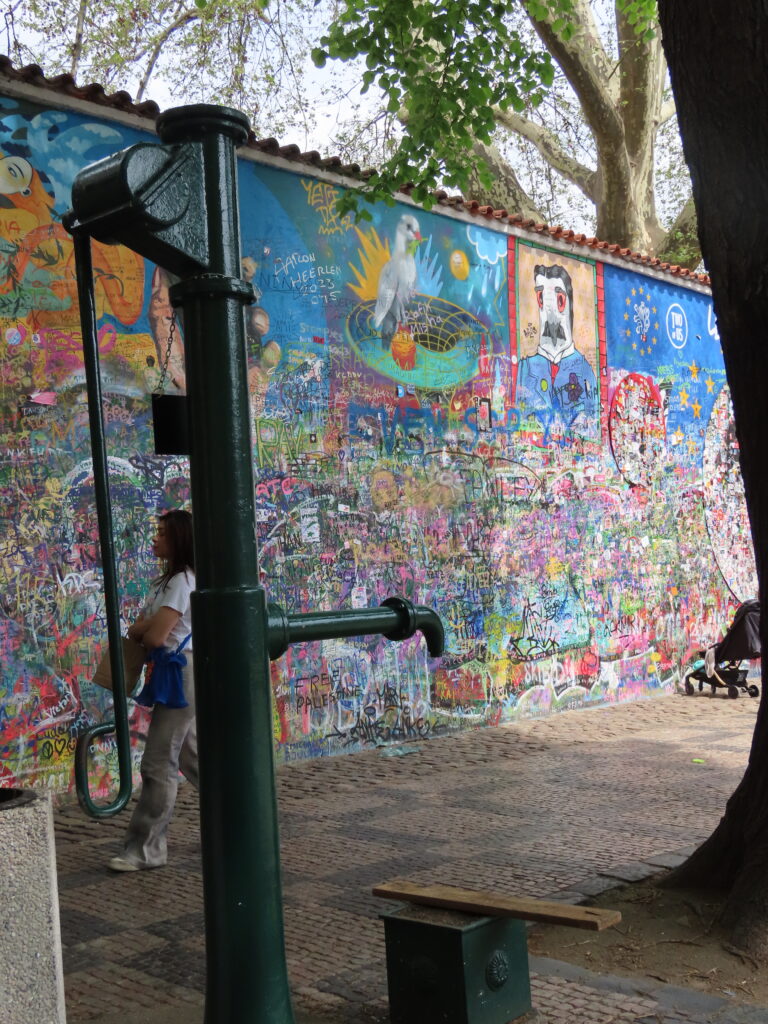
Walk across to Mala Strana, all the while listening to tales which add vivid colour to the dull sepia tones of history. Discover Lennon Wall, the chaotic layers of graffiti telling a story of peaceful defiance in the shaded alleys of a district which now has staid embassies.

The wheel of time slows for a cup.

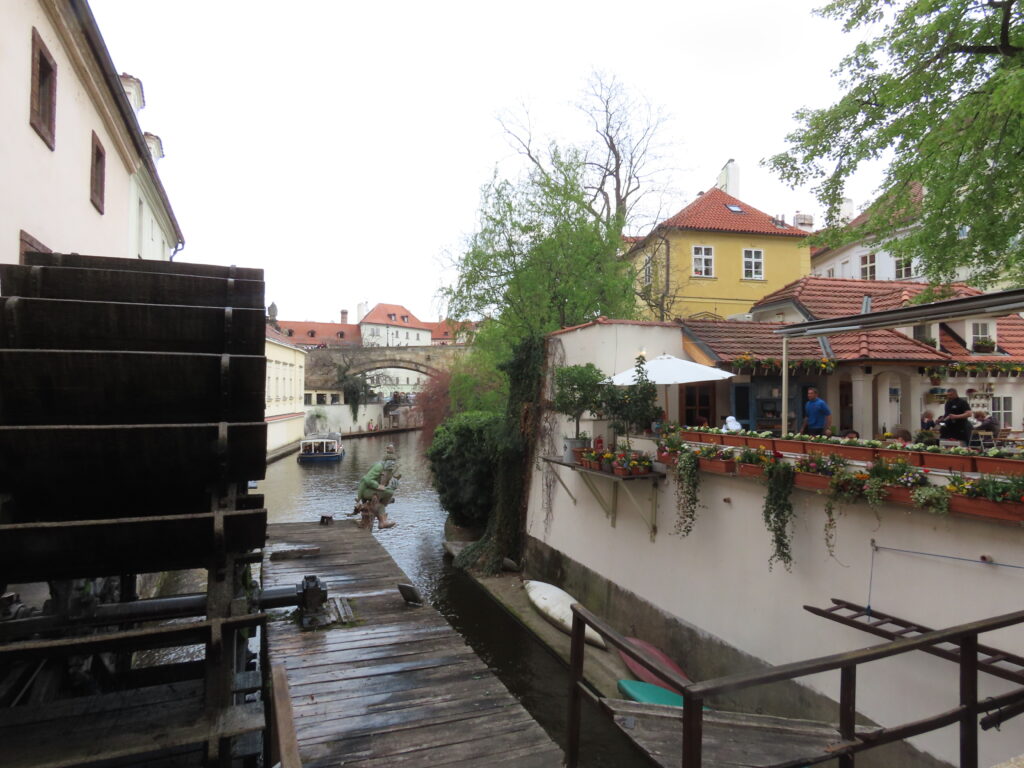
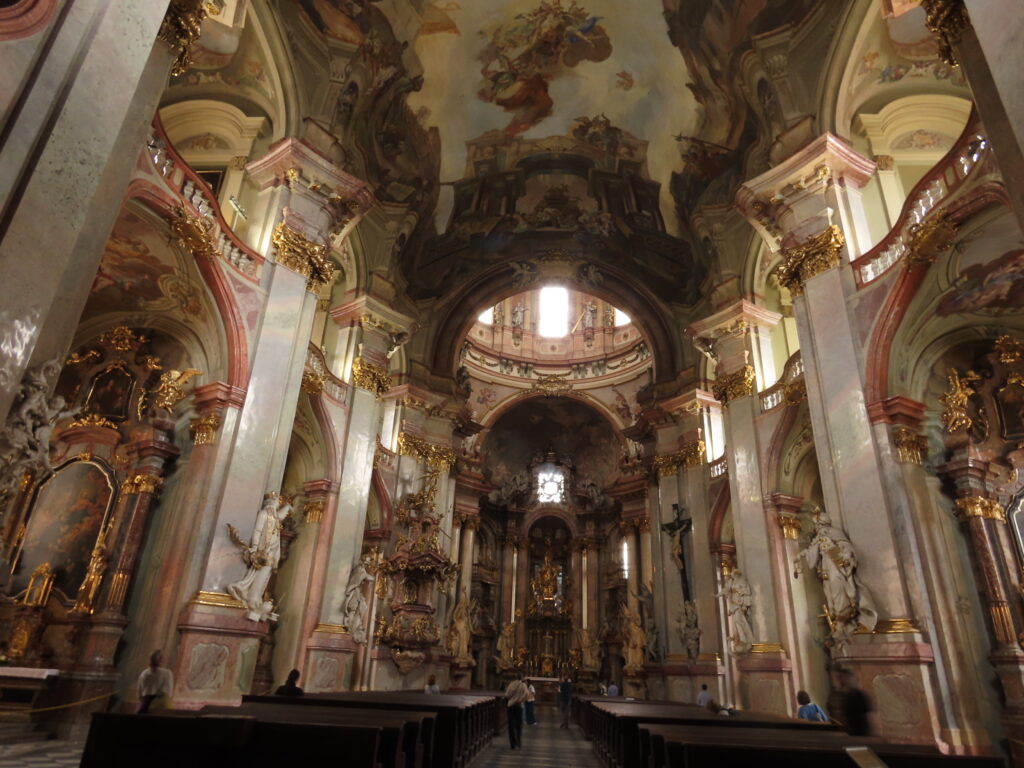
After a perk me up cuppa at the quaint café adjoining a giant waterwheel next to Lennon Wall head to St. Nicholas Church. It’s dome an oddity in a city of spires. Sit in one of the pews of the massive baroque church and take in the opulent interiors (and rest those tired feet.) Have chilled beer and lunch at one of the taverns. Board tram 22 from in front of St Nicholas Church and take a ride to get a glimpse the best of old Prague.

Heavenly abode

Spend the evening sipping champagne as you watch an abridged version of Swan Lake at the underground Broadway Theatre. It’s utilitarian interiors a complete contrast to the show on the stage. I felt I was in the communist era watching something subversive!

Subversive Art

Day3-

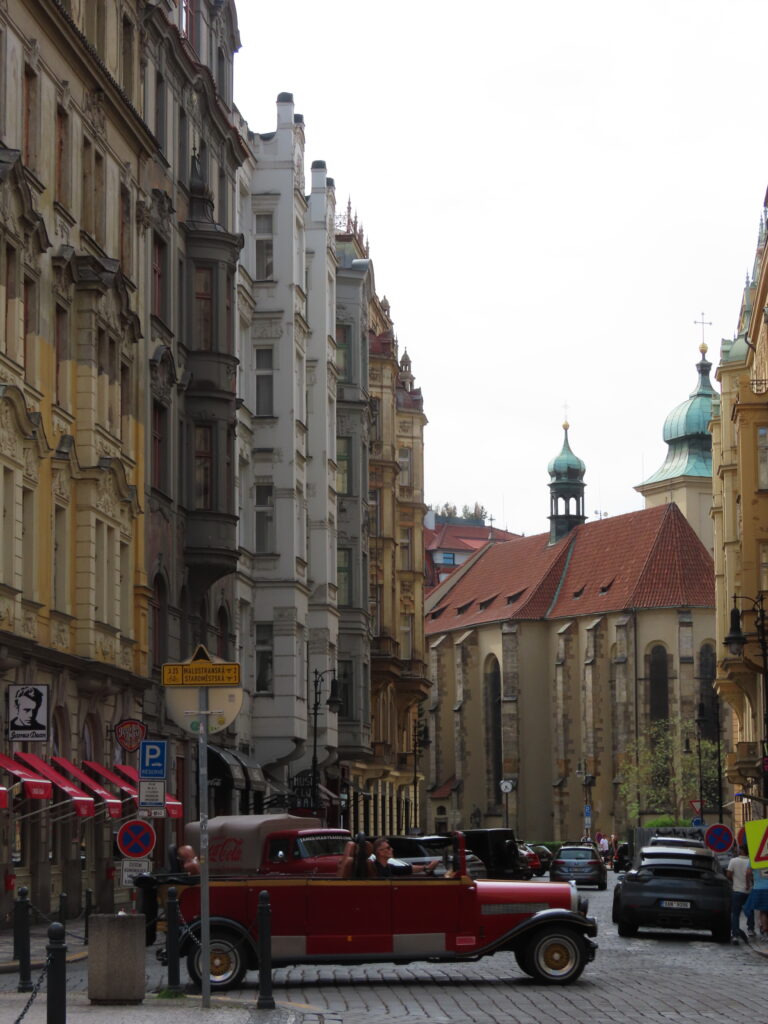
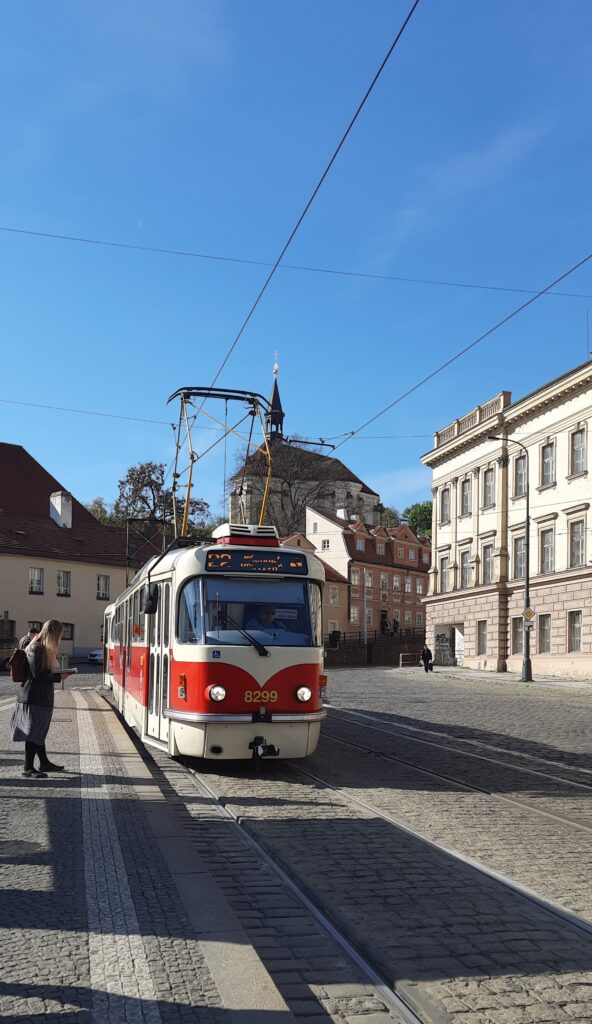
Walk or take a tram to Mala Strana early. (In the same line you could end up with a vintage or an ultra modern carriage) Walk up to the ship-shaped Prague castle complex with the towering, dark St Vitus Cathedral in it’s centre. From the bastions get a bird’s eye view of the gardens and hidden courtyards of Mala Strana.

Discover- The Gardens of Delhi – A Walk Not Only on the Green Side but Through History Itself

Coquettish Courtyards

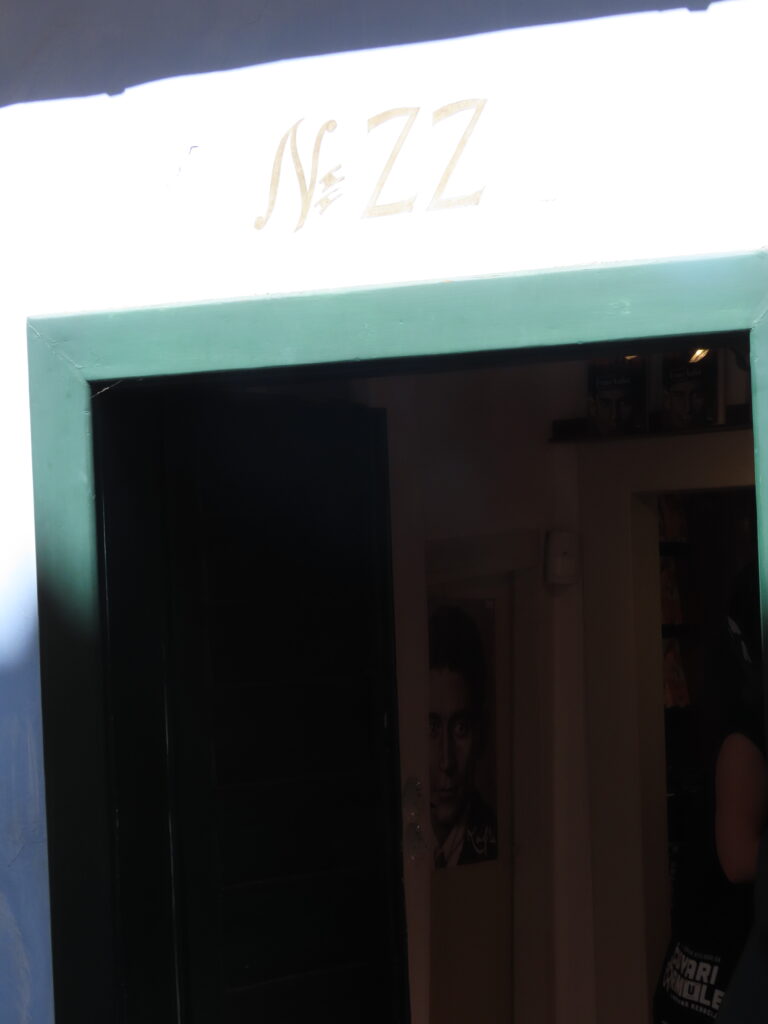
The palace interiors are plain per se save the gorgeous giant tiled heaters. Explore the narrow Golden Lane with its cubby houses in a row, including number 22 where Frank Kafka once lived. Each one has been restored to give a visual feel of different people’s lives back in the day. The upper storey runs across many houses and holds soldier’s armoury.

Kafka’s direct gaze.

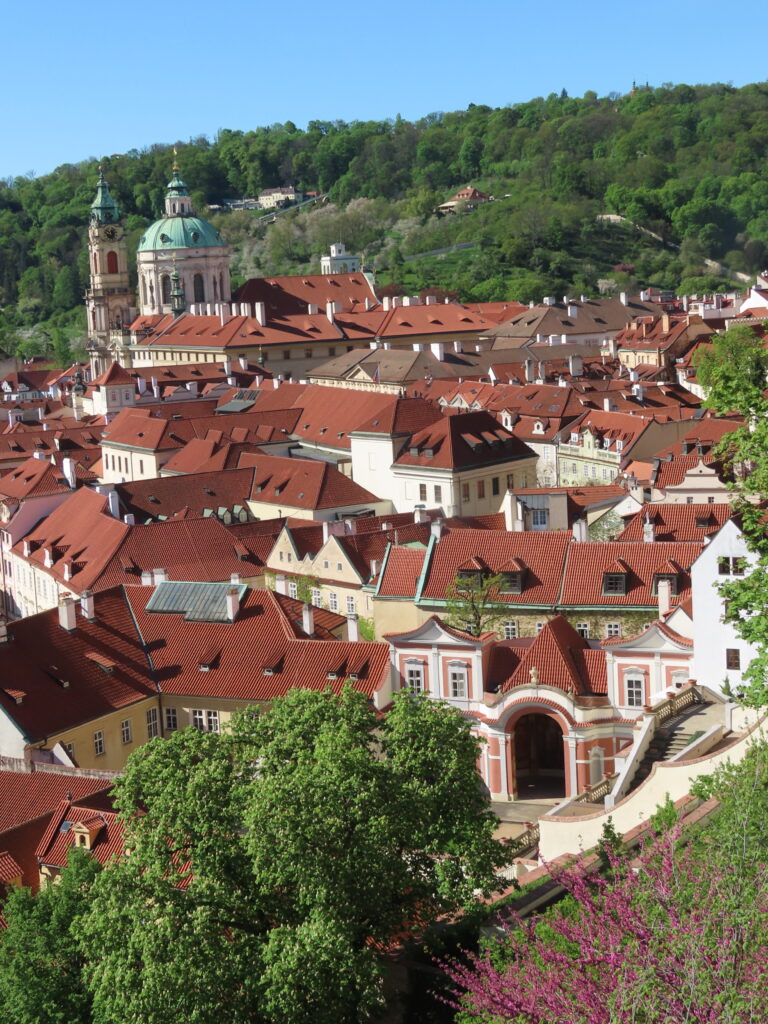
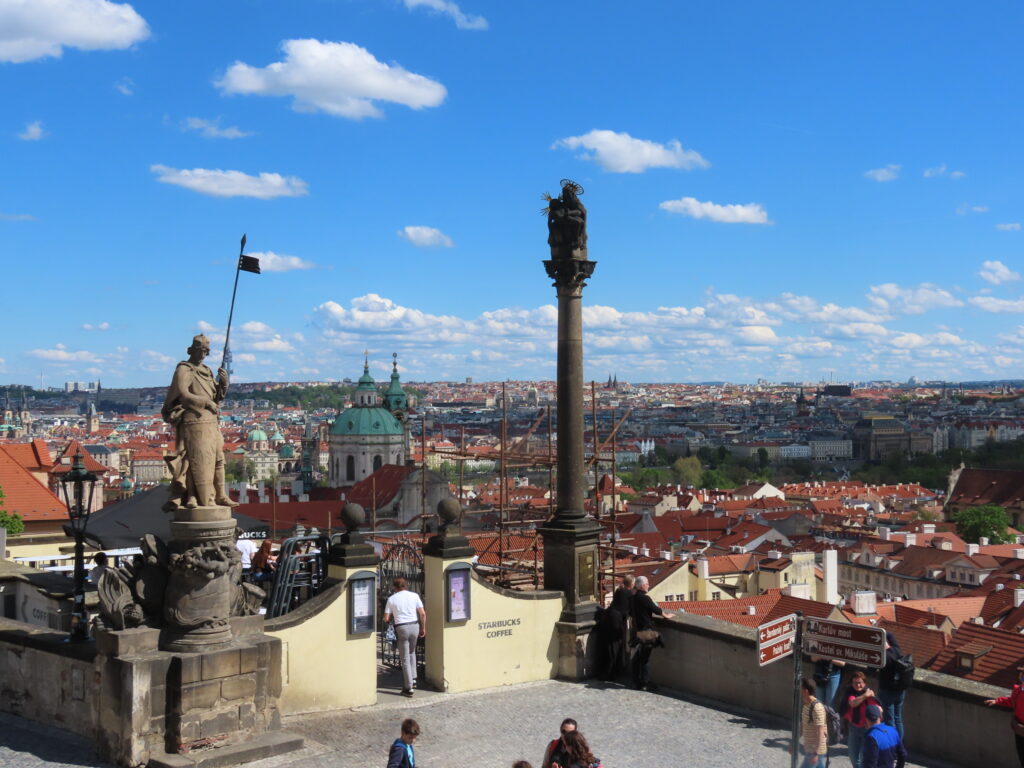
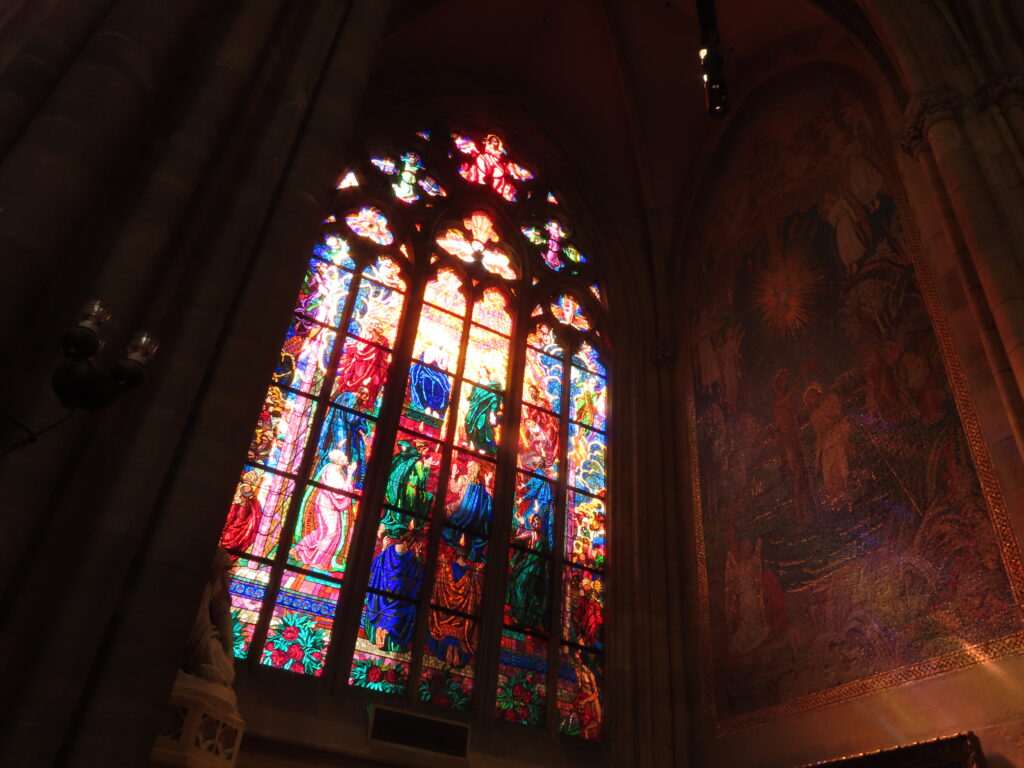
The cathedral has the most stunning, literally and figuratively, high art! The full-length painted glass panes, some done by Mucha, are divinely beautiful with different hues through the day. Head to see the changing of the guard which happens at noon every day at the Mathais Gate. The expansive square in front is encircled by various palaces of noblemen. Have lunch at Kuchyn restaurant with a lovely view of green Petrin Hill and the terracotta roofed city before walking down to Mala Strana to lose yourself in its charming cobbled alleys.

A dome in a city of spires

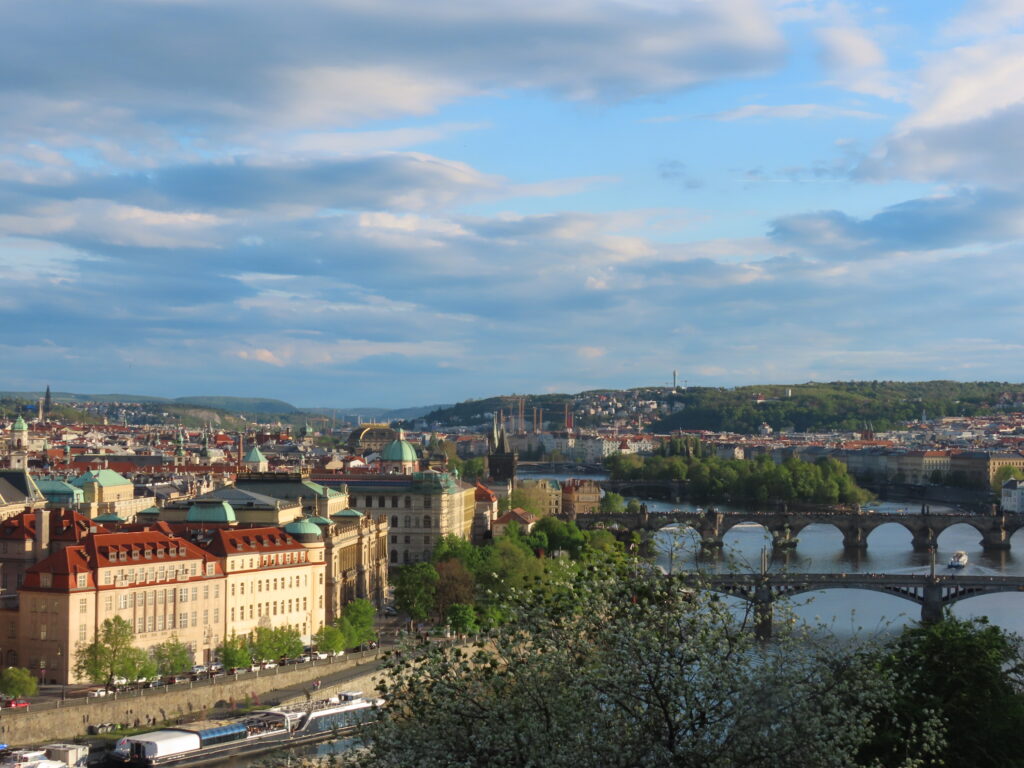
Head to the Vltava River for a boat ride in the evening. Gently glide on a small shallow stretch to get a ringside view of both banks. End the evening at Letna Park to see, in the mellow golden hour, the many bridges spanning the curves of the Vltava between the slopes of old Praha.

A picture postcard from Praha

Looking into the bewitching Bohemian Crystal that is Praha casts a spell. It will have anyone who visits it once coming back for an encore.

Fact File

 Accommodation-

Old Town has many good options. Mala Strana has a few.

 Getting around-

The trams are a great way to get not only a feel of the city, but to get around as well. Walking is inevitable in the cobbled streets.

Money Wise-

Though the Euro works well, the local Kroner is preferred.

Miscellaneous-

Tram 22 offers some of the most worthwhile views of the city.

Vintage views

Kuchyn and Lokal in Mala Strana are must trys for local cuisine. Book an outside table in advance at Kuchyn.

GuruWalk has some good ‘free walking tours’.

Book your event tickets through GetYourGuide which has good options.

The castle ticket can be booked online and has different variants.

Show me the light