Wining and Dining on Modern Caravans through the Old Silk Route

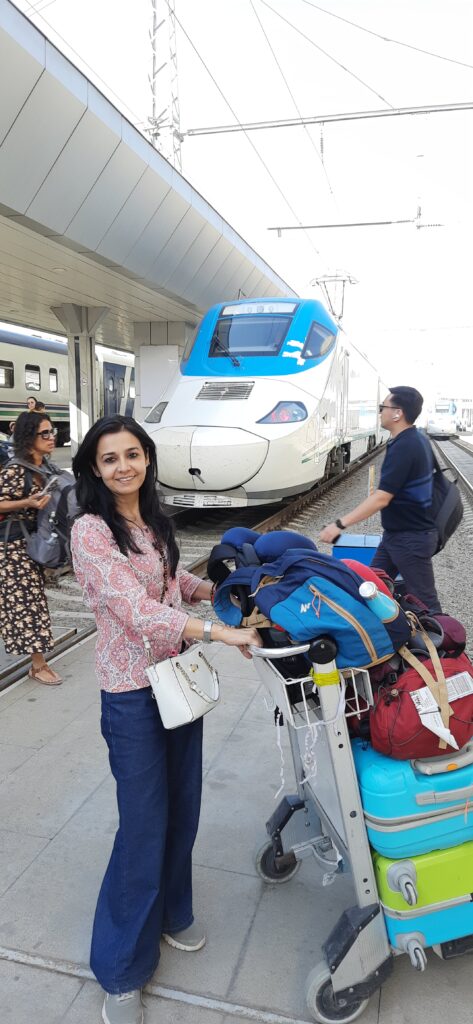
‘There are bullet trains in Uzbekistan?’, I peered at the online site where the man was booking the train tickets in Uzbekistan. The Afrosiyob’s nose, a long haughty one at that, stretched out low and sleek over the rails. It would be an experience by itself! The man’s charter was to get us in and around Uzbekistan and Kazakhstan, and mine to do the accommodation, so I could not crib about it. Planning a trip through Uzbekistan and Kazakhstan was a breeze. Connectivity with Samarkand and Bukhara, the stars of the fabled Silk Route, was aplenty. But getting to Khiva, an oasis of blue beauty and elm pillars on a limb across the Kyzlykum desert, was proving to be a challenge, till we came across an overnighter from Tashkent. It was a winning trifecta – accommodation, travel and food! The train sounded much like our own, slower, more ponderous, different classes but with a dining car. I love the idea of dining cars. A restaurant on the move…. We were to discover the best journeys were not on the bullet trains!
The lean and the loaded

Stationed

We are not sure of the exact location of the station as there are more than one in Tashkent, so we head to it early … Very early. The arched façade is modern and nondescript but announces itself in big letters and there is a security check near the entrance. Inside the main hall, metal chairs are laid out in neat rows. There are a few kiosks selling knick-knacks, a luggage room, a very fancy paid waiting room and the loos. They are Indian style with plastic goglets for water!
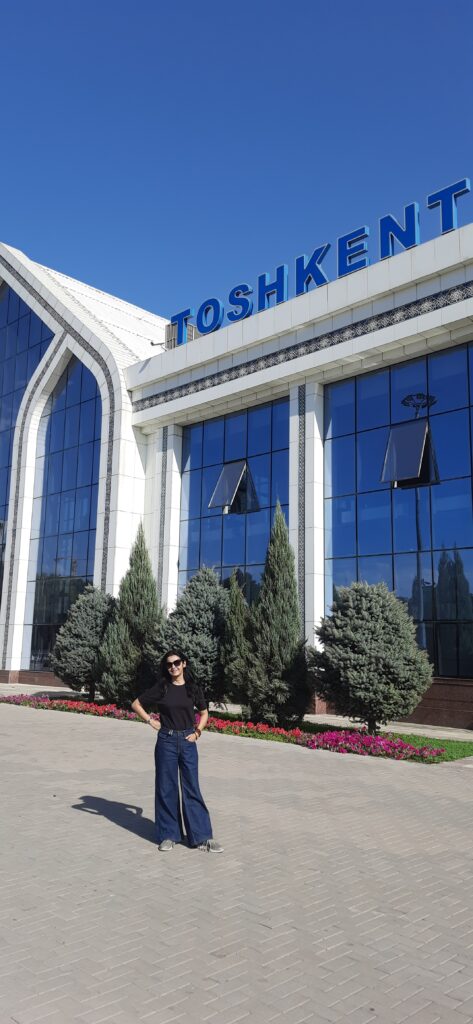
Stationary

People wait outside under a covered waiting area. They do not seem to mind the heat. The platform stayed deserted save for one train’s departure in the time that we were there. A small bakery outlet is stocked with flaky puff pastries, naan and such like things. Like good travellers catering for contingencies, and what can be more calamitous than being hungry on an overnight train, we stock up.

Read how to explore- Ultimate Uzbekistan in 8 Days

Cozy Cabins and Tepid Teacups

The train rolls in just a few minutes before departure. With its olive green, white and golden colouring and spit polish shine it looks like a military special straight from Russia! The stairs unfold down and the staff is at hand to check our tickets and guide us. We have booked a cabin. Inside, the berths are thickly padded and covered with rich covers. The windows have blackout curtains and are tinted. All my photographs on the move have, what I call an ‘Uzbek filter’, a pinkish brown tint. The compact cabins seem to have no space under the seats for the luggage.  A lady sharing our cabin tells us to stow our luggage overhead in a narrow opening over the passage. The man has a lot of heavy lifting to do. We settle in and are off on the dot.
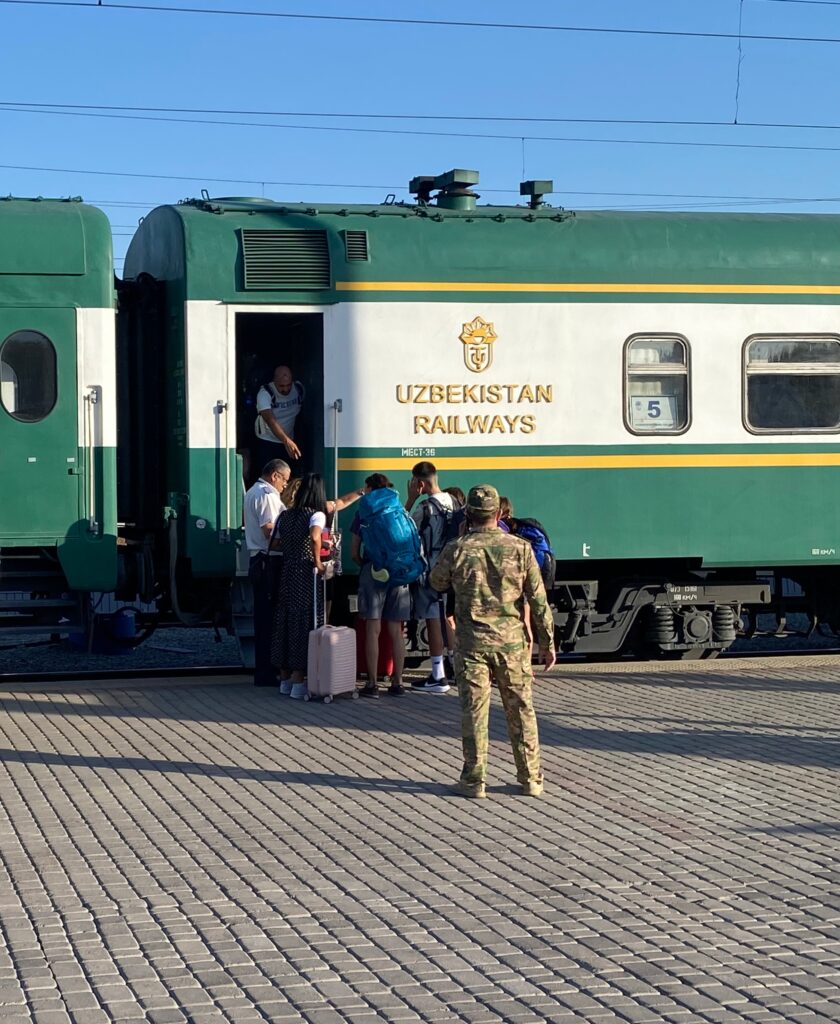
All aboard the night train

There is a samovar dispensing scalding hot water near the inner door. Tea must be the national drink given the copious quantities drunk, especially along with meals and it seems to be a done thing to carry your own ubiquitous blue and white china. We are also carrying our tea bags but no cups. On the return journey I am tut-tutted for being so ill-prepared for the journey and then being given a cup by the attendant. Why I wanted tea when the air conditioning had gone kaput and we were like sodden tea bags ourselves is beyond me.

Read – On Uzbekistan’s Silk Route- The Golden Road to Samarkand and Bukhara

Hearty Hospitality

Come dinner time and we head for the dining car. It is small, basic but clean, all in vinyl. The lady incharge seems to run it with crisp efficiency. Some of the staff is crammed into one table and making short work of a mound of plov (or Pulao as we know it). We are greeted with big smiles. The main guard is the only one who knows a smattering of English and as he strikes up a conversation, I eye the dinner. The plov is looking tempting. With unabashed curiosity we are asked where we are from. The smiles get bigger and more heartfelt when we say India. They seem genuinely happy and excited to have Indians onboard. We settle down and I promptly ask for beer and the Laghman soup which has been on my menu, and I am delighted it is on theirs’s, and the plov as well. The smile on the lady’s face dims. The dish I have eyed is meant only for the staff. Oh! Okay! We understand. An exchange in Uzbeki ensues between her and the men. As we sip our beer, a big bowl of the soup fetches up. It has vegetables and broth and for me anything soupy in a bowl is soul food.
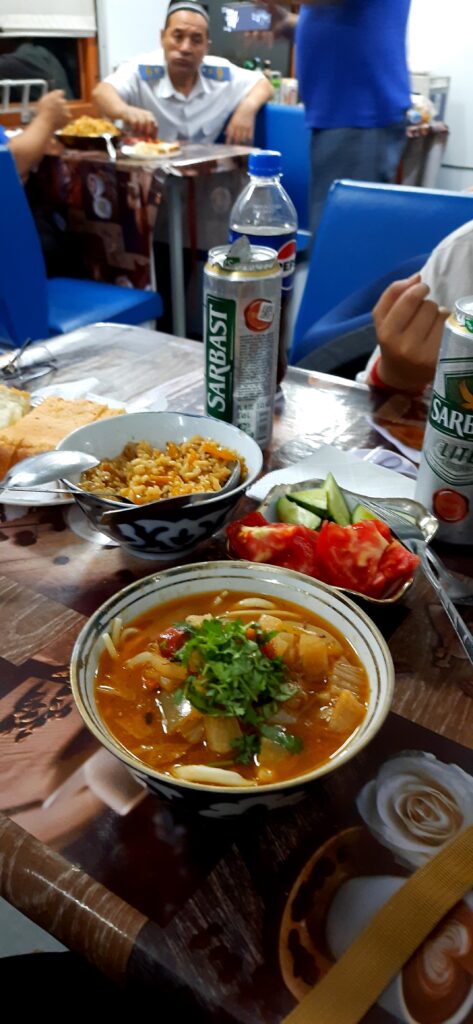
Bowls for Souls

 Just as we are about to dig in the lady returns and sets down a bowl of…plov with a smile and a nod towards the staff. The big burly guard says something in Uzbeki with a smile. He has sent a portion of their dinner to us. It is a little embarrassing but the men are just all smiles and insist, happy to share their dinner. It had looked delicious and it is! Greasy but so flavourful. The best I have on my trip to the land of the plov! Belly full and the heart warmed up with the gesture, we return to the cabin. Thank God for the air-conditioning! The cabin is upholstered for Siberian winters and not Indian summer-like temperatures.

Discover- On Uzbekistan’s Silk Route- Tashkent and Khiva
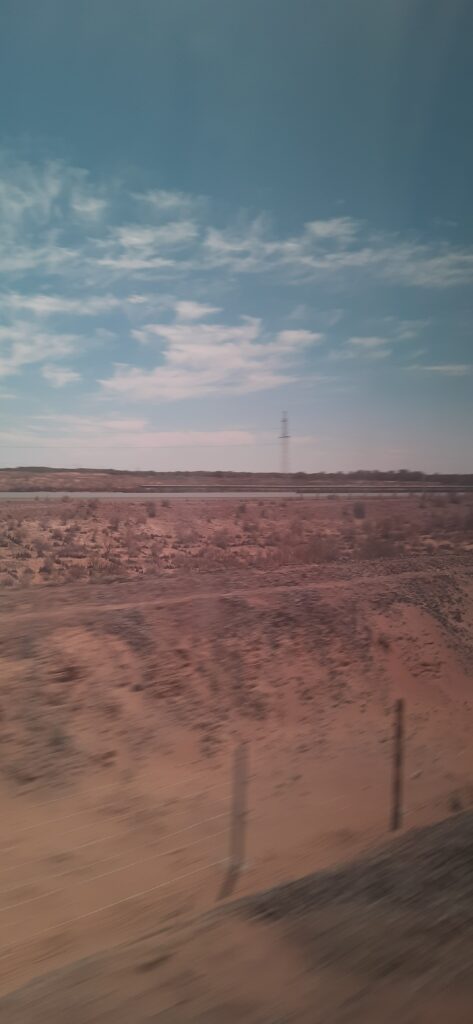
Uzbeki Filter

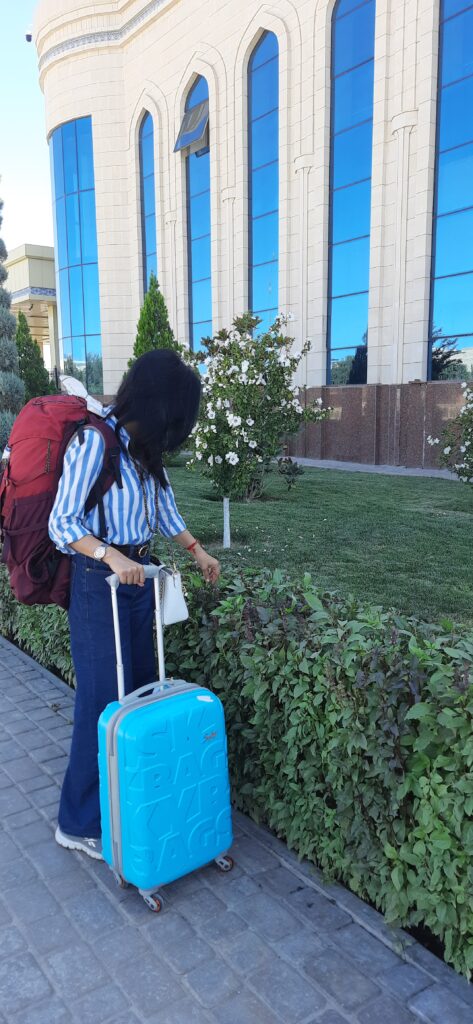
Morning reveals a stark landscape- towering dunes, sand and scrub till we cross the timeless Amu Darya lined with reeds, emptying into a sea that has dried. The change from one bank to the other is dramatic. It gets greener as the miles roll till we reach Khiva. It’s station is a miniature version of Tashkent’s. The hotels lining the boulevard in front look like a mirage of a movie set. Plush and exotic. Letting off a faint aroma are basil bushes lining the path. Naturally, curious me cannot help but surreptitiously taste a leaf. Feel like a goat and probably looked like one while I was at it!
Try something new

Time Travelling

Done exploring Uzbekistan’s opulent offerings we head over to the country of wild landscape, Kazakhstan, crossing the border on foot. A windy car ride to Shymkent through the rolling steppes follows. Our train to Almaty is in the evening and after booking our luggage at the Shymkent station we explore the town.
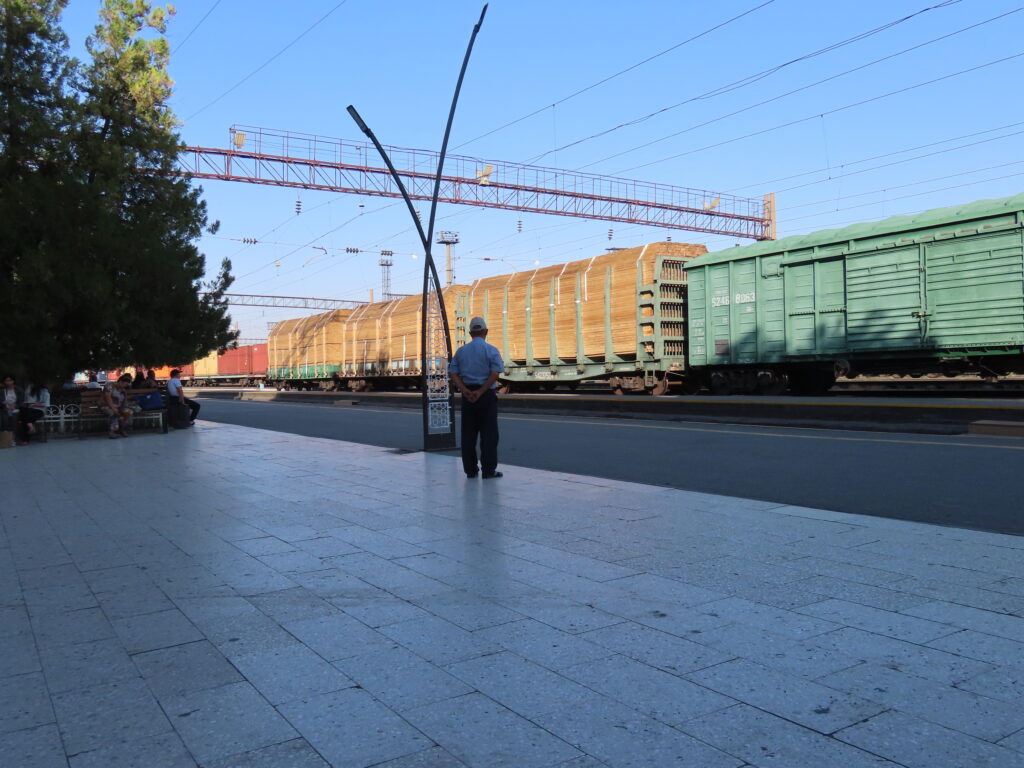
Shymkent Special Timber Train

In the evening the platform is choc-o-block full by the time the train arrives. The interiors look very well maintained and the staff is courteous. There seem to be only coupes in our bogey. The daughter has a university student returning back to Almaty for company and we don’t see her till the next morning. Our coupe is brightly lit, the berth is wide and the linen crisp. With a small wash basin, hangers in a narrow cupboard and a full-length mirror, it is more than comfortable. There is no need to step out but the dining car has to be explored.
Bogey Bar

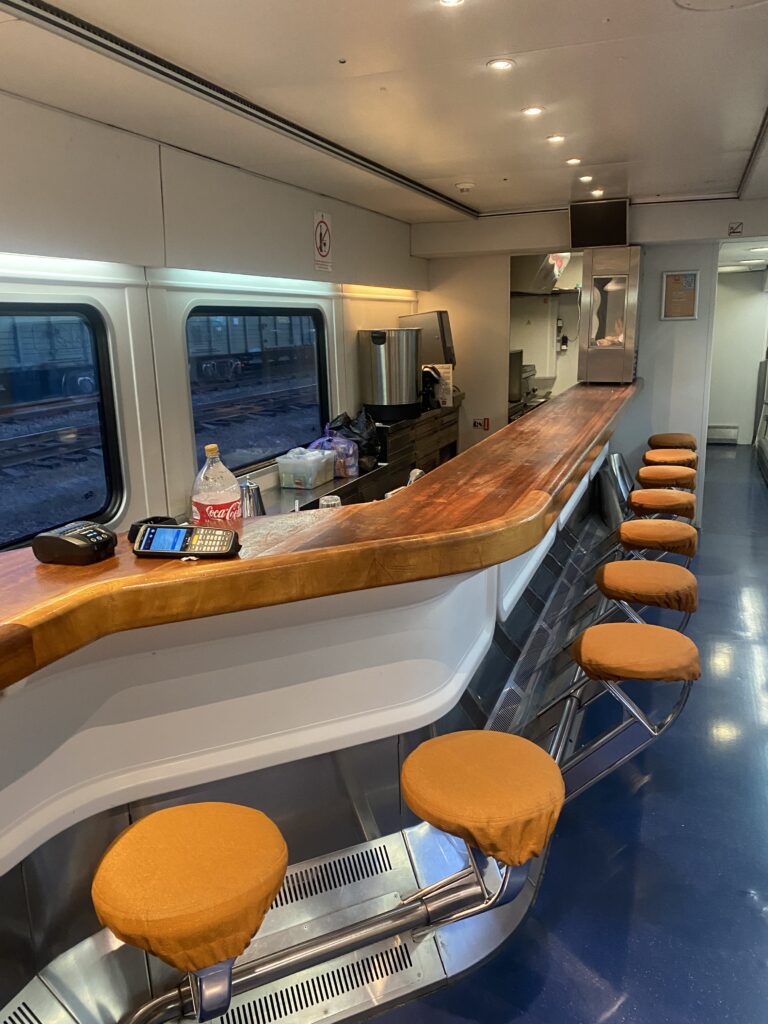
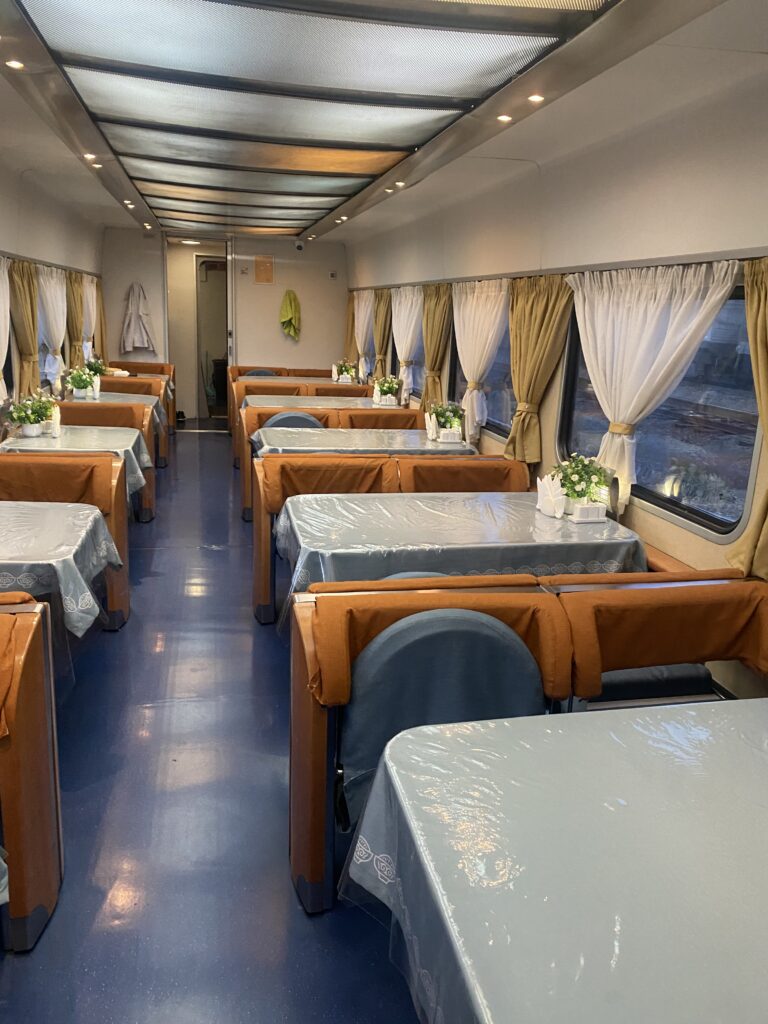
The chrome, Robin egg blue and sweet orange vinyl combination gives the dining chaircar the look of a diner from the 60’s! Just a jukebox, Jackie-O bobs and mini shift dresses seem to be missing. The bar counter is long and chilled beer is served on the glass and as the moon sails over the silhouettes of moulded hills we gently sway and wind our way between them to Almaty. We are in no hurry to head back to our cabin, from this full restaurant on the move….

Also read- 2 Days in Kazakhstan- Exploring Splendid Almaty, the Steppes and Sunken Mountains
Diner on Wheels

While the places on the ancient Silk Route more than lived up the hype, the warmest interactions were on these modern caravans with the charm and hospitality harking back to another era. The slower trains and the people they carried turned out to be as memorable and worth experiencing as much as the destinations they connected.

Fact File-

1. Uzbekistan has three types of trains- The Afrosiyobs which run between Tashkent, Samarkand and Bukhara. The slower Sharq between the same cities. The overnight sleeper on the longer routes.

2. A faster day train has been recently introduced between Tashkent and Khiva but it does not run everyday.

 3. Booking for all the trains can be done online.

4. We travelled 1st class on all the overnight trains.
On Uzbekistan’s Silk Route- The Golden Road to Samarkand and Bukhara

Two unconnected sources planted the seed of the Silk Route in my mind. (Which then took forever to germinate!) One was a picture of perfectly moulded mountains providing a backdrop to a lake and the yellowest mustard fields I had ever seen (which was all probably Kazakhstan!). The second was a story on Facebook (if you please) by an intrepid traveller and writer par excellence- James Joyce, who painted such a vivid and exotic picture of blue monuments in Samarkand that it became my ‘have to see places’. Bukhara materialised by and by and along my favourite dal named after it but with probably no culinary connection, has my heart.

Blue Eye Candy


Bukhara- Of Bazaars and Beacons of Light

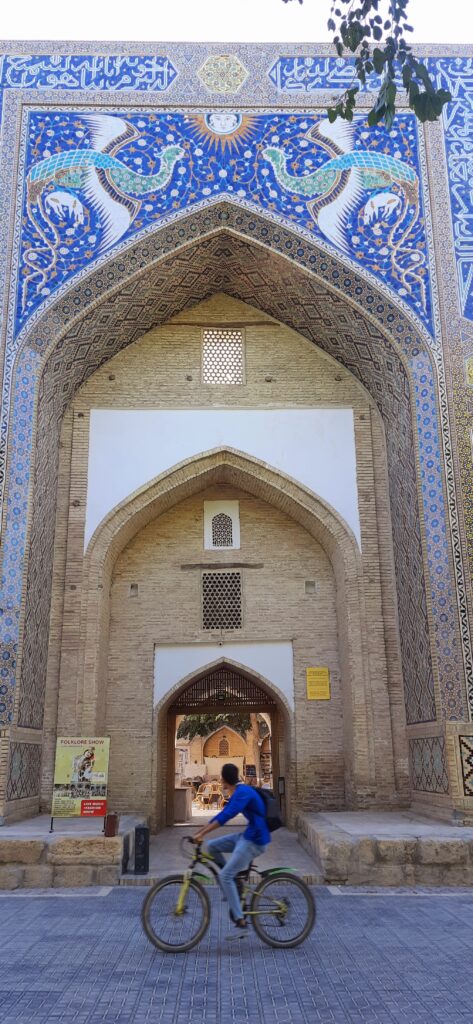
Done exploring Itchan Kala in the oasis that is Khiva we catch the train to Bukhara. After dozing in the afternoon heat thanks to the bogey’s defunct airconditioning I stand in the passageway as we chug past fields and canals and in the fading light of the evening, I spy a minaret and blue domes on the horizon. From the station we speed past non-descript blocks and the newer parts of Bukhara straight to our accommodation in old Bukhara. The hotel is off the road, behind a park and canal with the Nadir Divan Begi Madrassa enroute with the most brilliant phoenix like birds on it’s façade.

Rich as Imagination (Nadir Divan Begi Madrassa)

They are striking not only because of the vivid colouring but also since it is such a departure from the permitted geometric designs. (Islam does not permit depiction of living beings which is ironic since in India Mughal miniature art was all about people.)

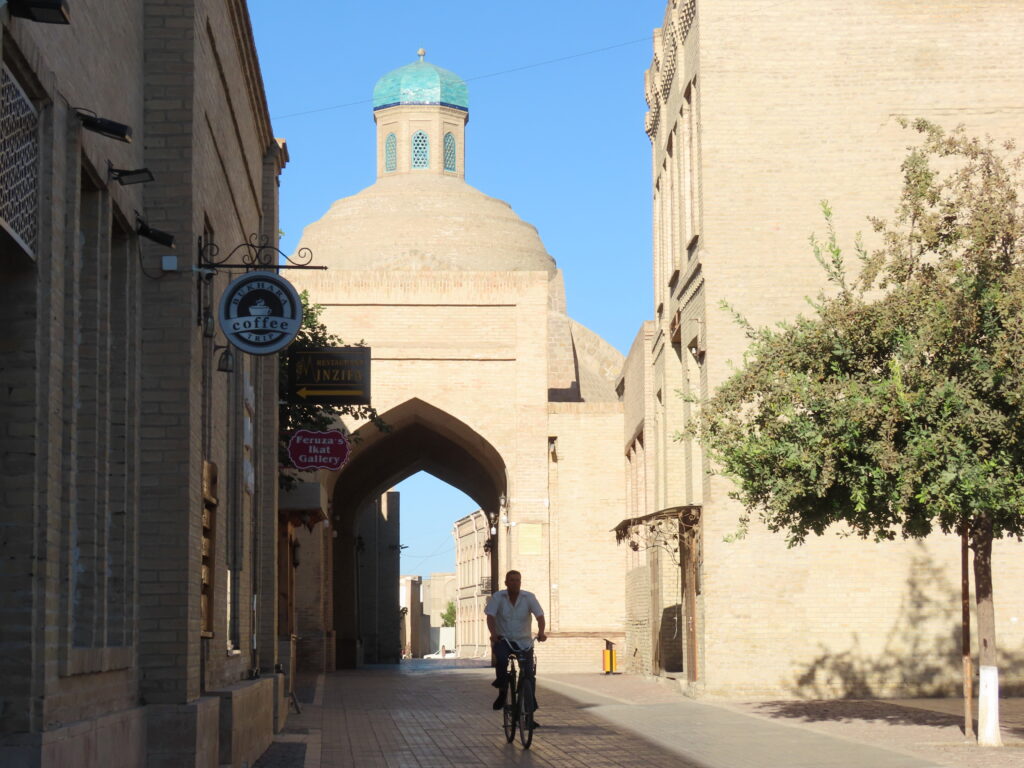
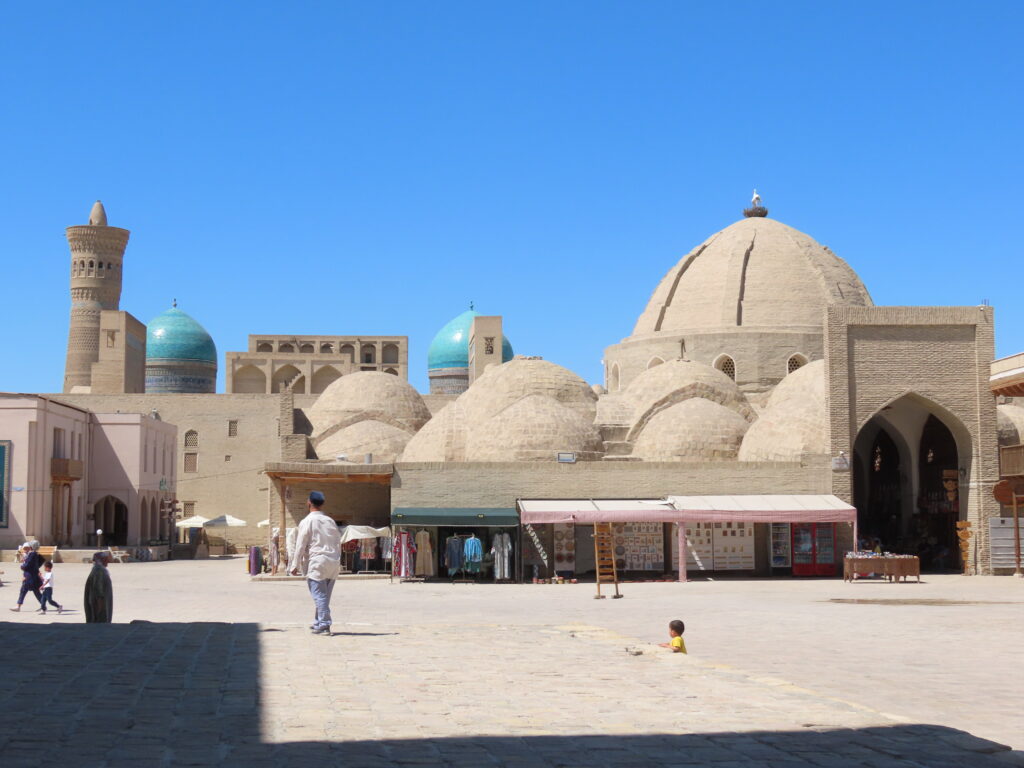
This ancient trading town with many lives and masters is still alive and thriving with well-preserved traditional domed bazaars in plain brickwork. It was once one of the biggest markets for slave trading though when Ibn Battuta passed through, he found it a little more than a wreck. We walk the same alleys late in the evening, past the domed Toki Zargaron and Telpakfurushon with shops selling carpets, knives and spices and through lively paved streets to the Poyi Kalon complex.

Old Market New Shops (Toki Sarrofon)

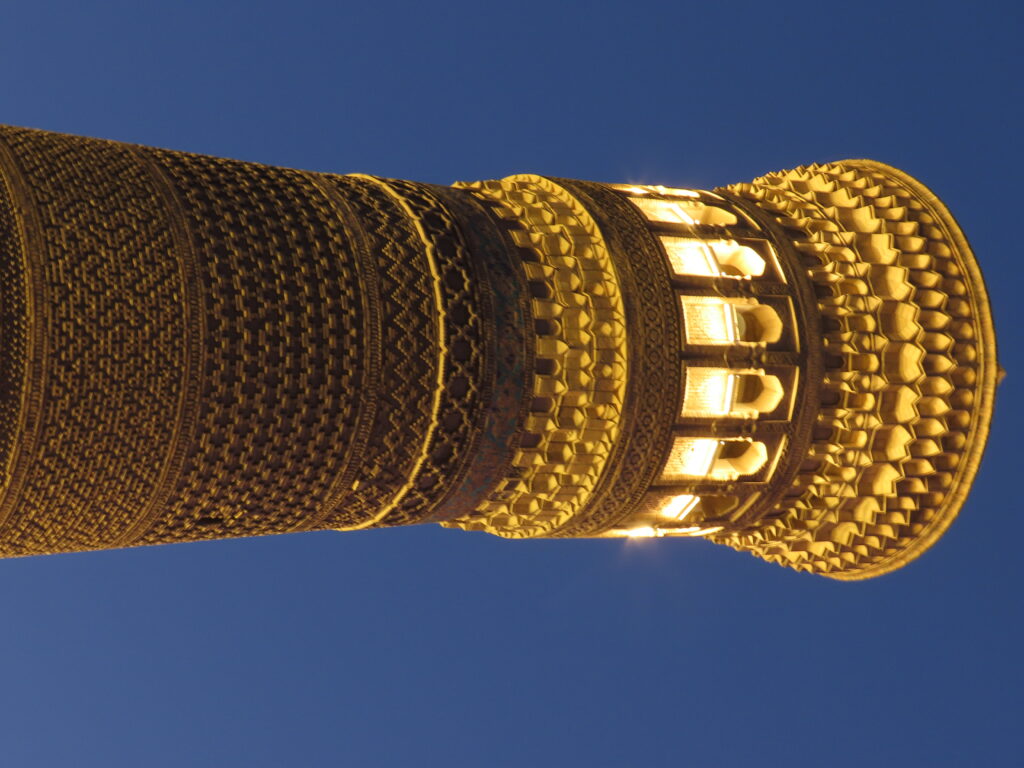
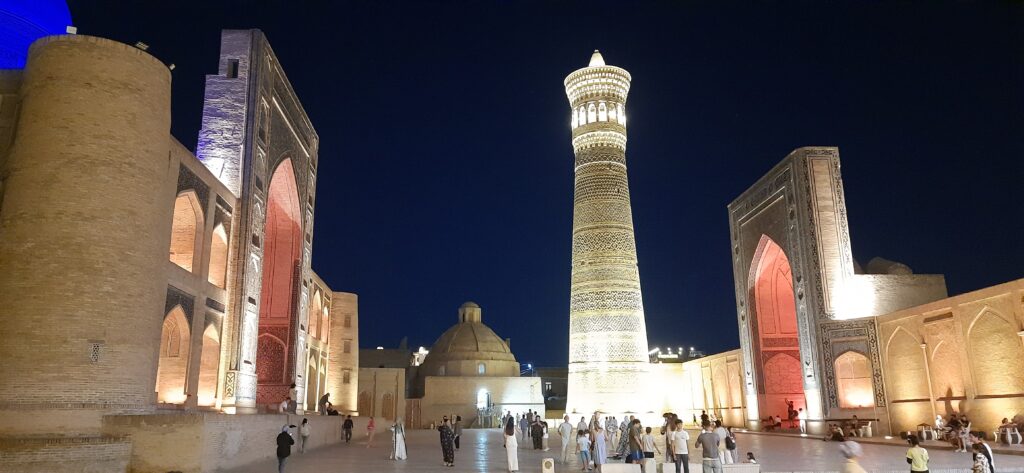
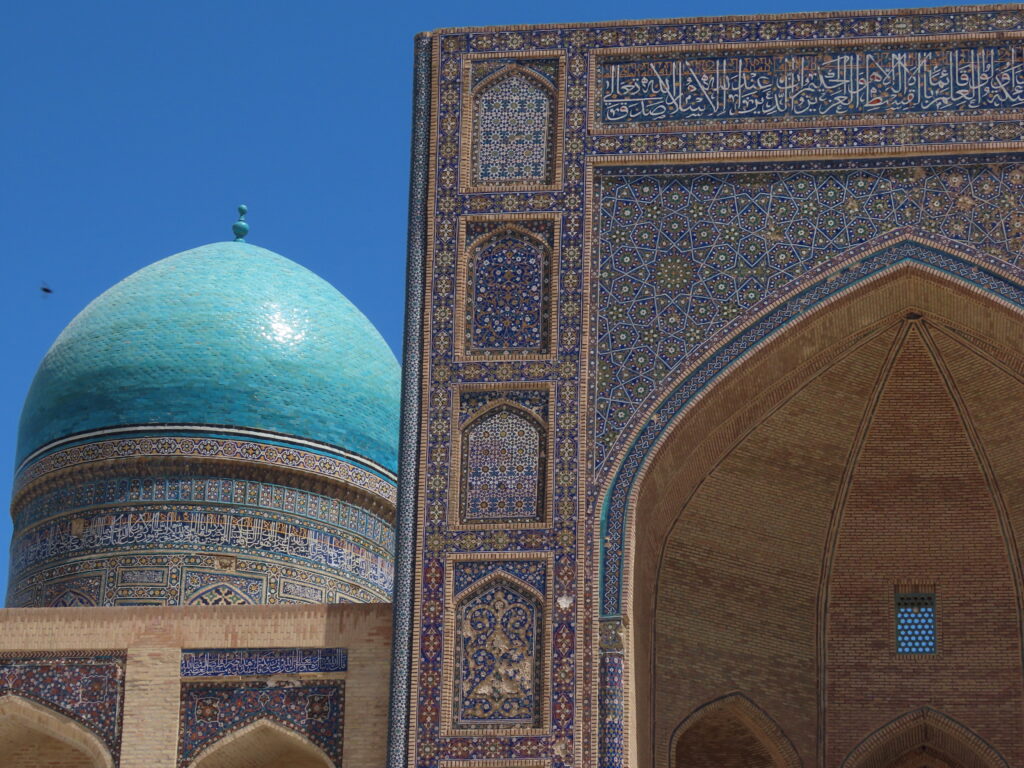
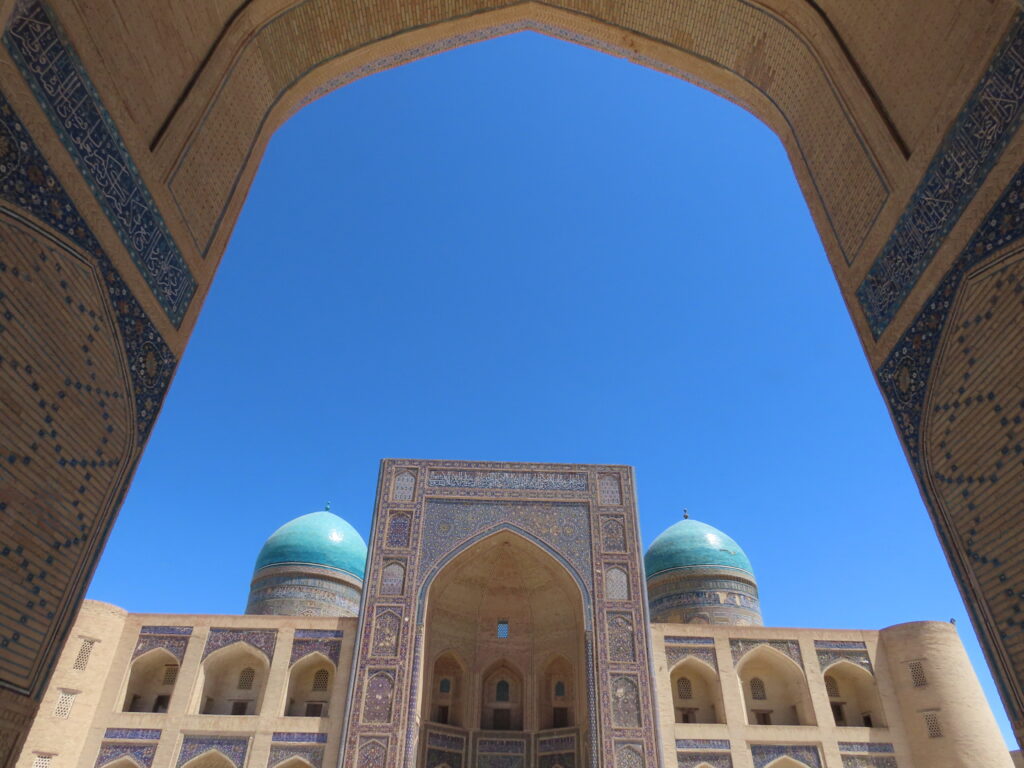
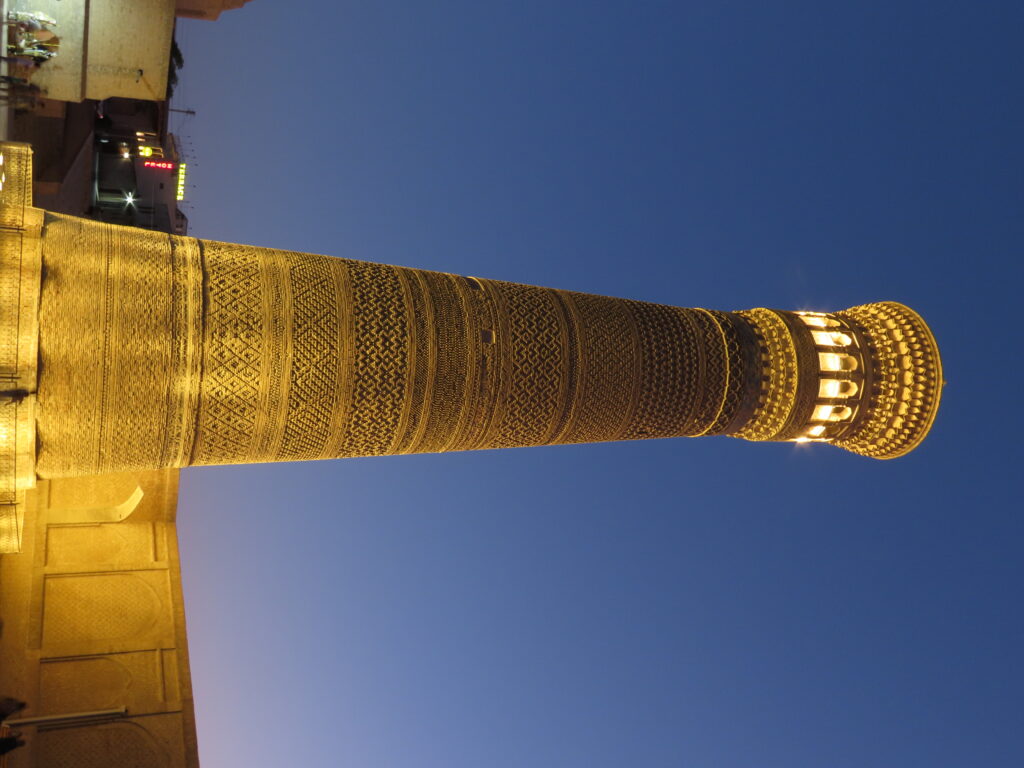
The Kalon tower, the tallest minaret in central Asia when it was constructed in the 11th century, is a beacon of light and in the quadrangle, is flanked by a namesake mosque and the only functional madrassa here- the Mir-i-Arab Madrassa, with giant blue domes on either sides of a towering façade in fabulous blue patterns.

Brickwork in the Spotlight (Kalon Tower)

The ensemble is all lit up in blue and pink and as garish as it sounds, it carries it off with panache. There is nothing better than to sit on the steps under lofty arches and soak in the atmosphere.

‘The Light Rises from Bukhara’

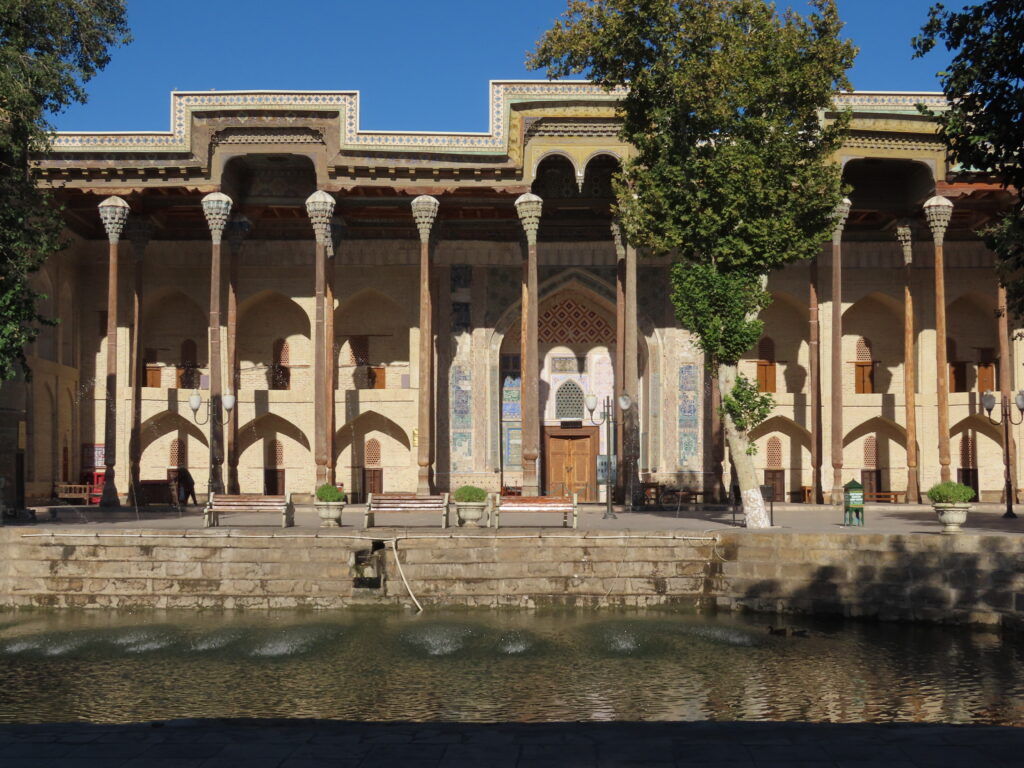
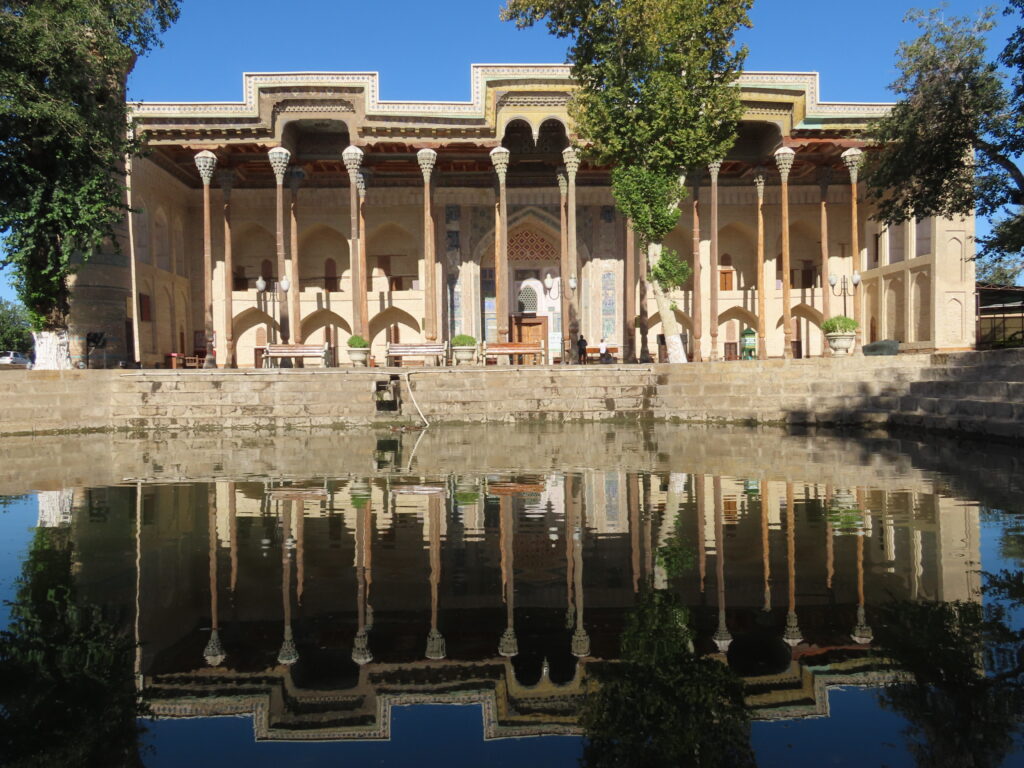
The next morning before breakfast we retrace our steps to the Poyi complex and beyond to the Ark or the citadel which is the oldest part of Bukhara. The ramparts rise high on the flat land curving a little like at Itchan Kala. We cross the road and sit on a bench at the hauz or pond in front of the Bolo Hauz mosque.

Pretty Peaceful Prayer hall (Bolo Hauz Mosque)

It is unlike any we have seen here. Slender wooden pillars uphold a wooden roof painted in warm colours and the light from the hauz paints patterns on it. Grandparents babysitting little ones feed the ducks.

Monument in Miniature

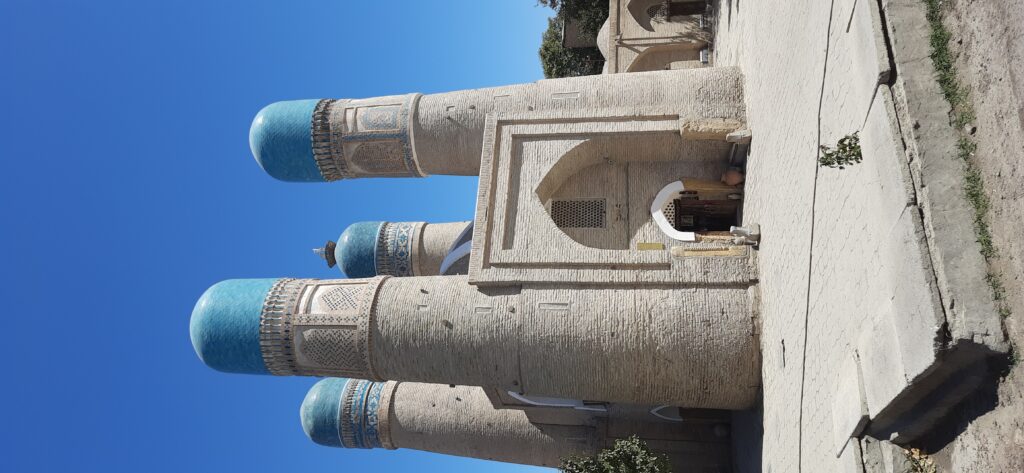
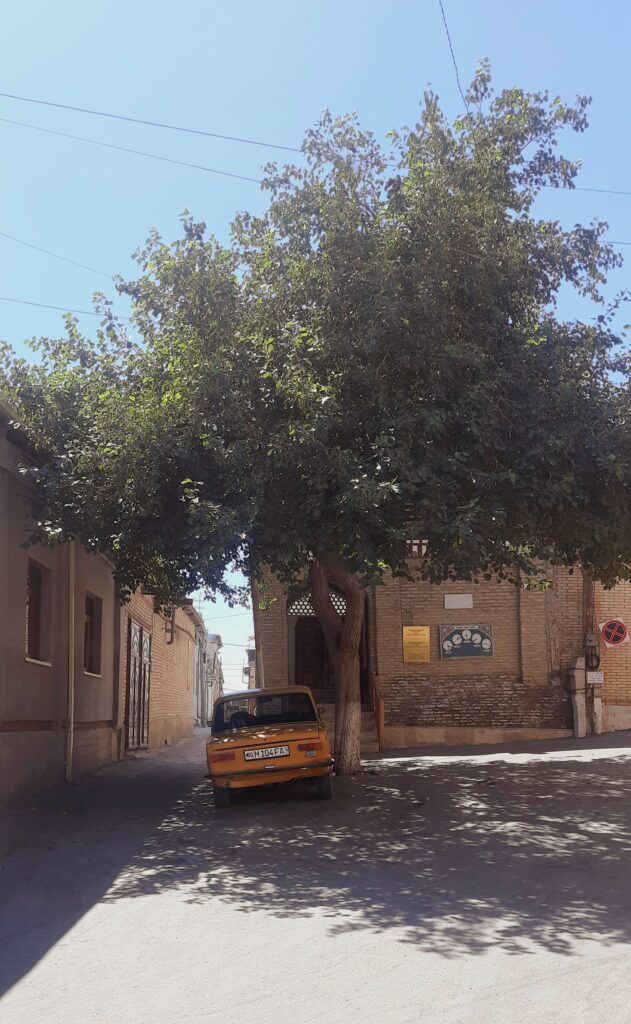
Later we amble to the tiny Char Minor tucked into the bylanes of a residential area. With plain blue minarets it has no architectural beauty yet the miniature structure retains a certain charm thanks to its size. We wander through the labyrinthine lanes of residences with ancient ladas, relics of another time, parked in front, to the two madrassas, Ulug’bek and Abdulaziz Khan, facing each other. The madrassas have been repurposed as shopping arcades with curios, art and clothes. In the heat of the day the tourists take refuge in the shops.

A streetcar named mango

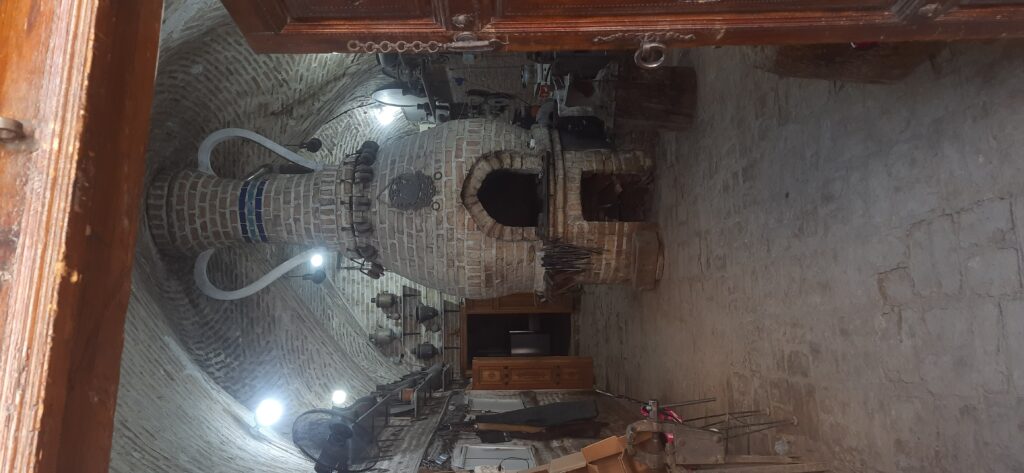
We discover a hamam and I try to persuade the man to try it. He balks seeing the images displayed. Says it looks too contorting to give any joy or relief. Across is a pichokchi’s(master who creates knives) foundry with a furnace shaped like a fluted jug. He is busy sharpening one out.

The means matter

A larger-than-life bronze statue of a legendry folk hero Khoja Nasreddin near Lyabi Hauz is beleaguered by mothers trying to cajole their kids to sit with him on his donkey. It supposedly portends luck, we are told by the man selling curios across the road at Kukaldosh madrassa. We end the evening again at the steps of a fairly deserted Miri Mosque and as the lights come on under an inky sky it is the perfect place to be.

An Artist’s Canvas. (Miri Mosque)


On the Golden Road to Samarkand

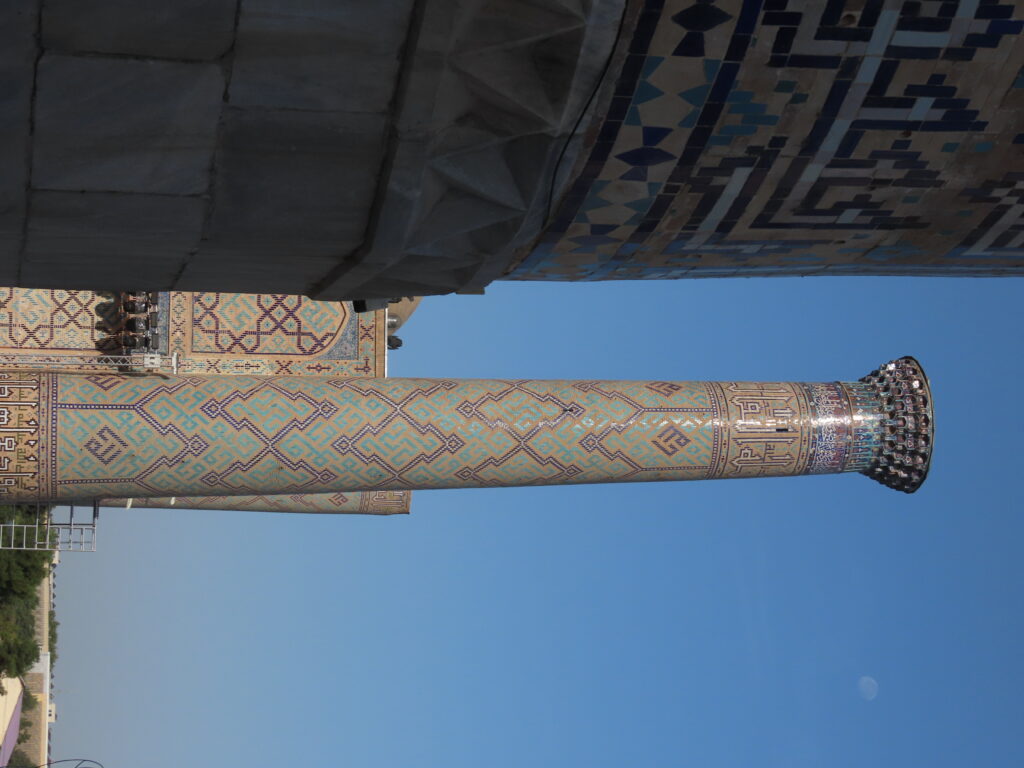
The Sharq rushes past the expansive rolling countryside to put us in Samarkand as it is waking up the next day. After a sumptuous breakfast we walk to Registan Square which Google guide says is a two minute walk from our guesthouse. For a change it is accurate as we see the geometric patterned towers of Ulug Beg’s madrassa peep out from above the thick trees.

Three is a charm.

There is music in the air. But the initial excitement of finally seeing the most famous ensemble of the route turns to disappointment when we discover the reason for the festive air. There is going to be a mega music show to coincide with Uzbekistan’s national day at the Registan but unfortunately for security reasons and the practice session the Square is cordoned off. So near yet so far! We watch the dancers twirl around and flag bearers practice from behind the barricades before recalibrating our programme.

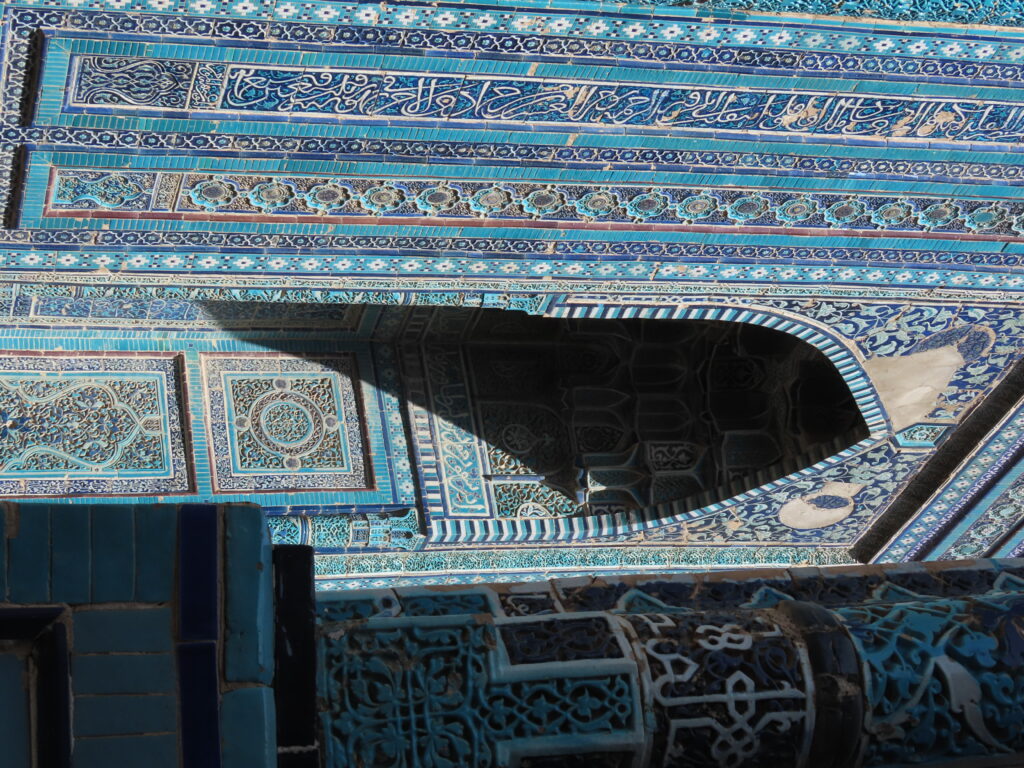
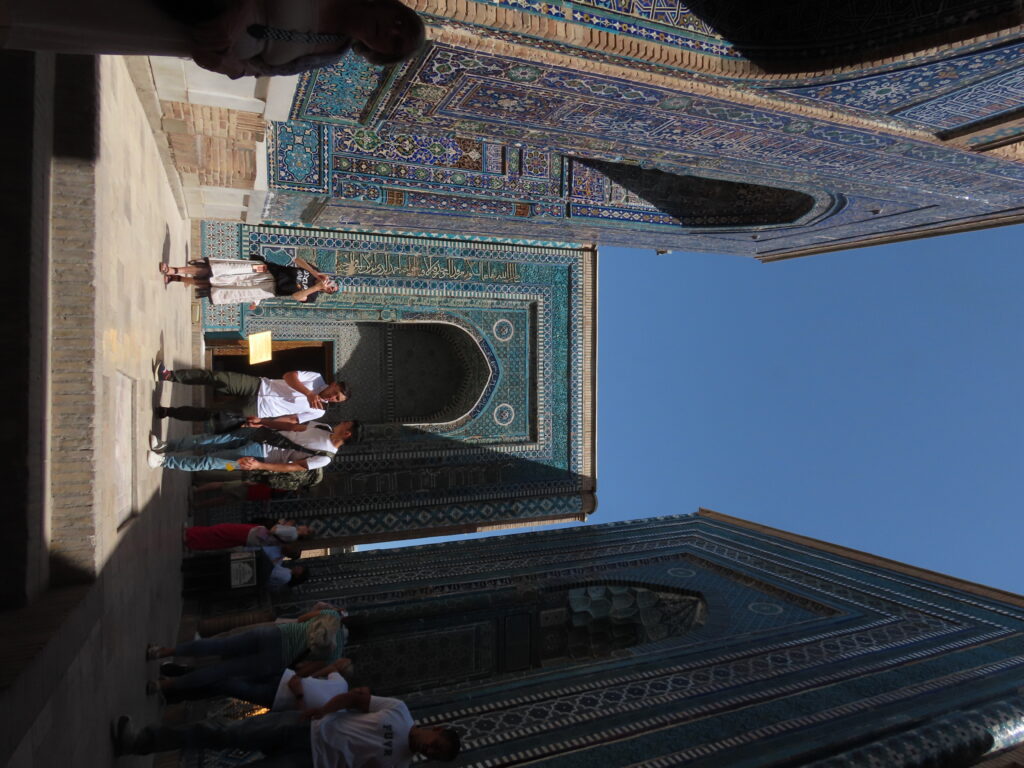
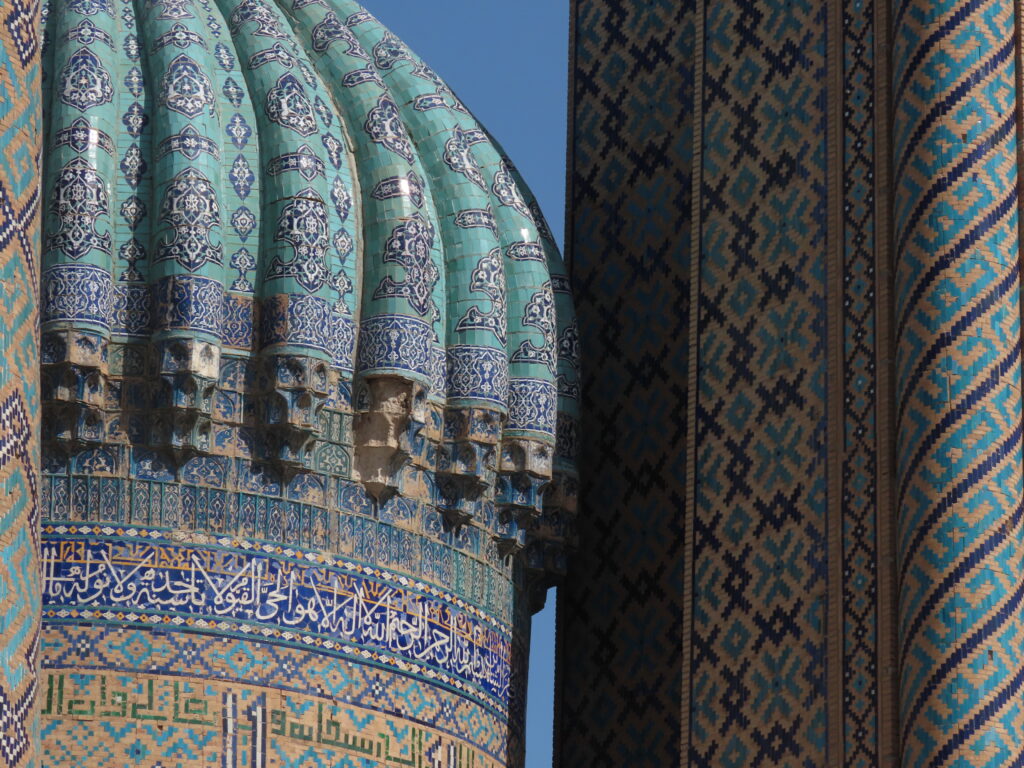
We head to Shah-i-Zinda, which by the time we reach is completely overrun by bus loads of tourist. But, once we climb up through a bland archway in a line stand Uzbekistan’s finest buildings. This necropolis is the final resting place of many a royal family member and court dignitary of yore. The tiled facades go from an indigo to midnight blue and every shade in between.

Discover colours in- Pangong Tso -The Gems in the Crown

Let me stay here forever

With calligraphy, floral motifs and geometric patterns, still retaining all their glossy finish they are just beautiful! The interiors of most are a rich bottle green and the roofs have patterns in orange. A man sells paintings in one and at the end of a maze of rooms near the end we find an imam singing prayers once the handful of seats are full.

Read also- A Bard Sings a Story in Jhansi

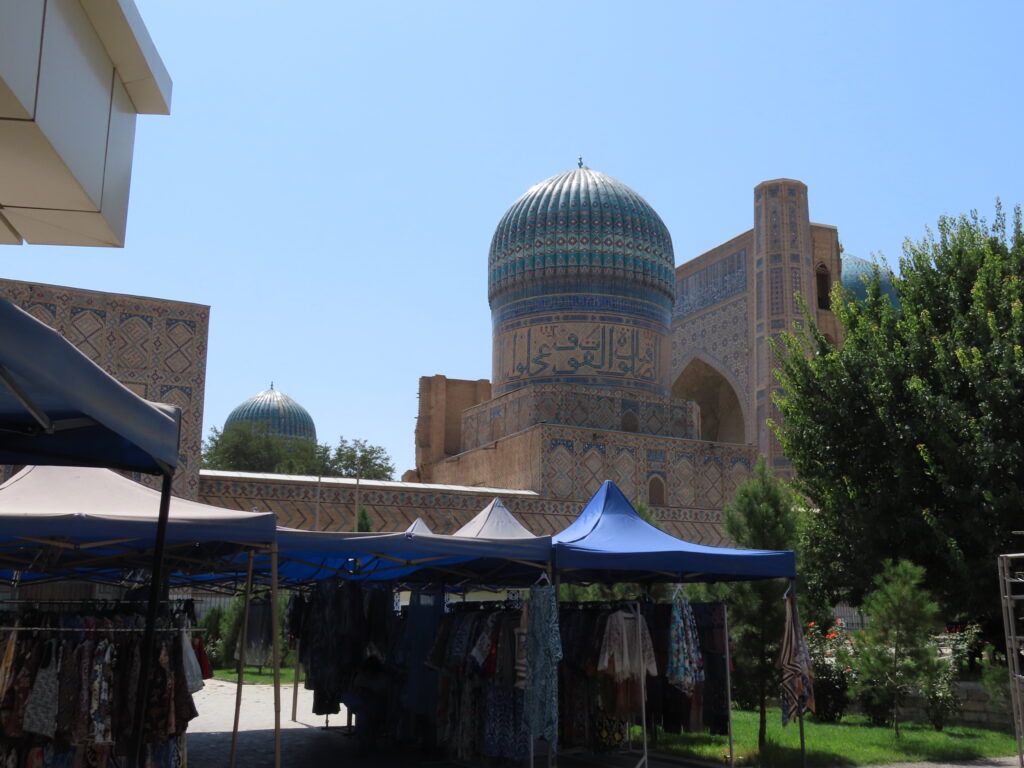
We walk to Bibi Khaynum’s mosque. Timur’s queen’s mosque has been resurrected from a ruin and inside the spacious quadrangle shaded by trees stands a massive marble quran. In the Siyob bazaar adjoining it where apart from the mounds of dry fruits, spices and candied sugar, the riot of colours comes in the shape of porcelain souvenirs.

All a Woman May Need (Siyob Bazaar and Bibi Khaynum’s Mosque)

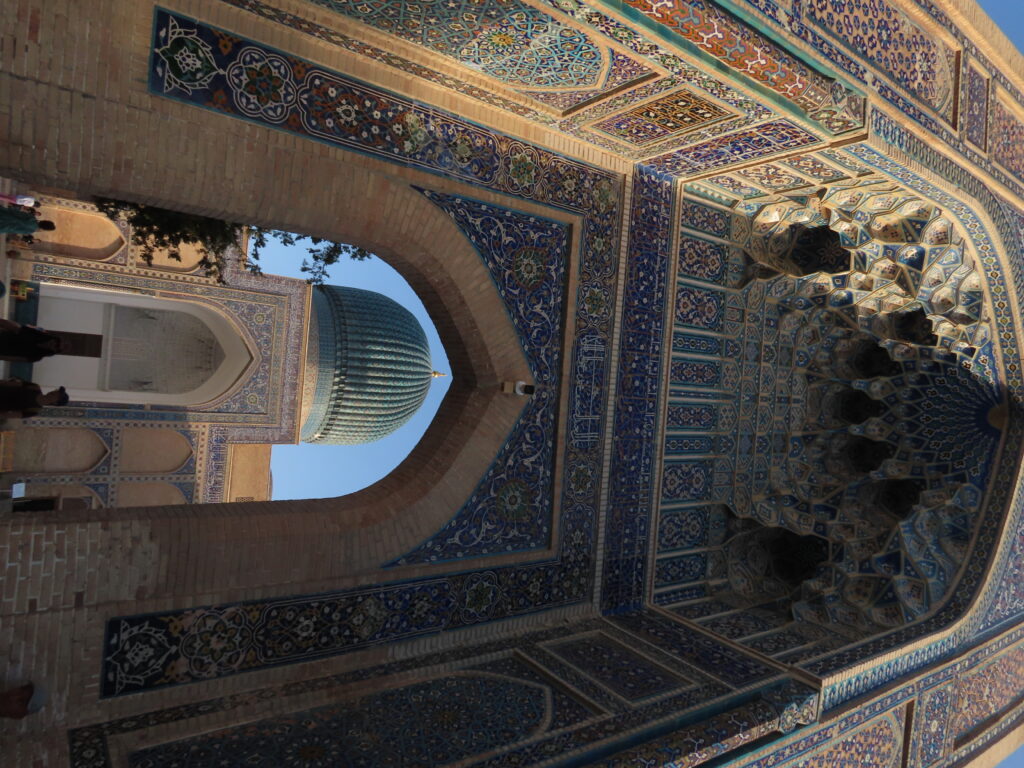
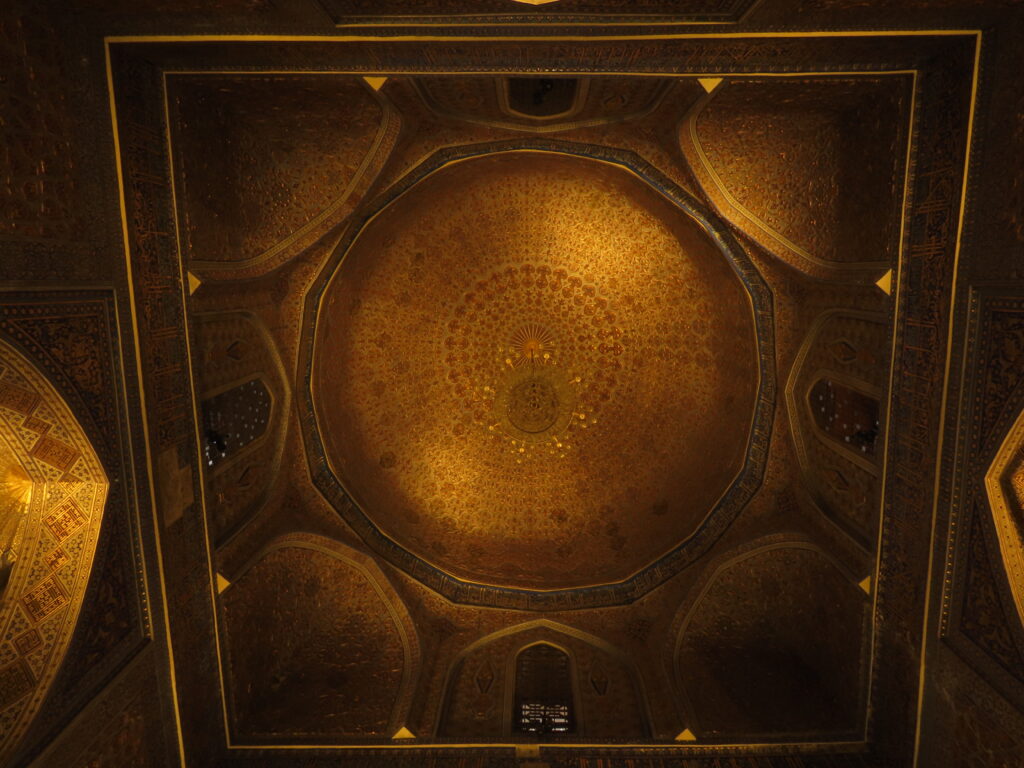
In the evening we walk down to Gur-i-Amir, Timur’s mausoleum. The fluted turquoise dome is massive but that apart it is a modest structure.

Legends and Legacies (Gur-i-Amir)

Inside, the famed ruler has the company of his sons, Ulug Beg, his grandson and one of his revered teachers. The plundering Nadir Shah made off with Timur’s jade marker but returned it after a spate of bad luck followed along with it. The restored interiors are a rich blue and the gilded gold cupola with lighting on point makes it glow.

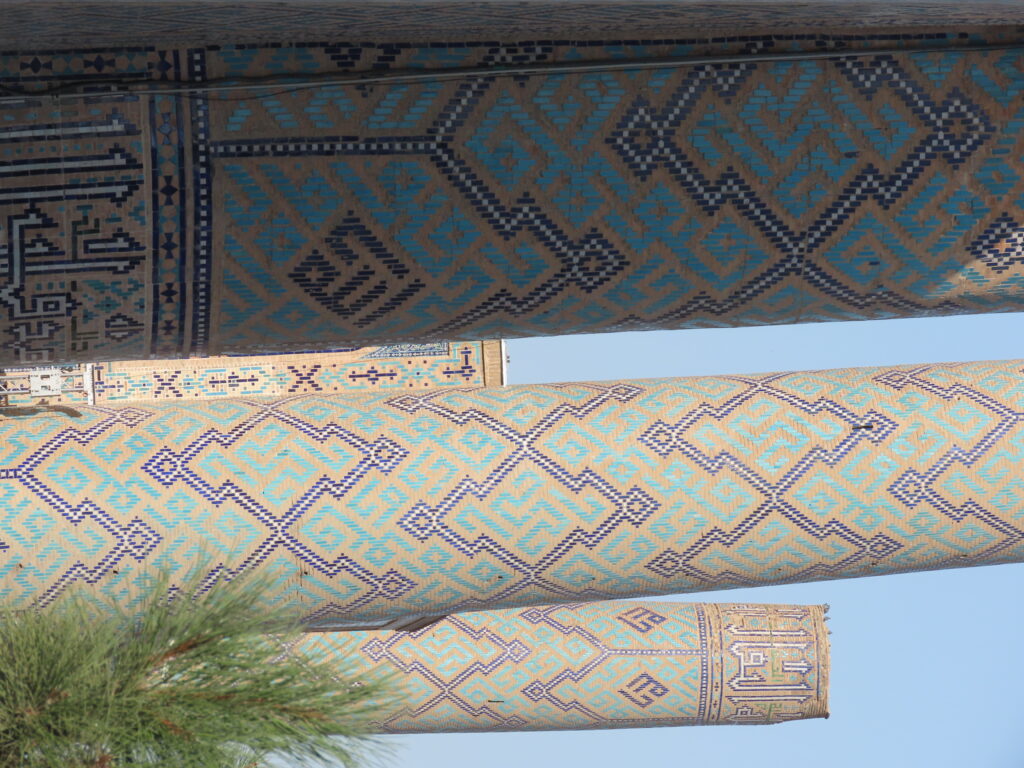
We get lucky the next day in the afternoon since the barricades are opened for visitors at the Registan Square in between the practices. All the minarets seem to be leaning just a little at different angles.

Not a straightforward affair.

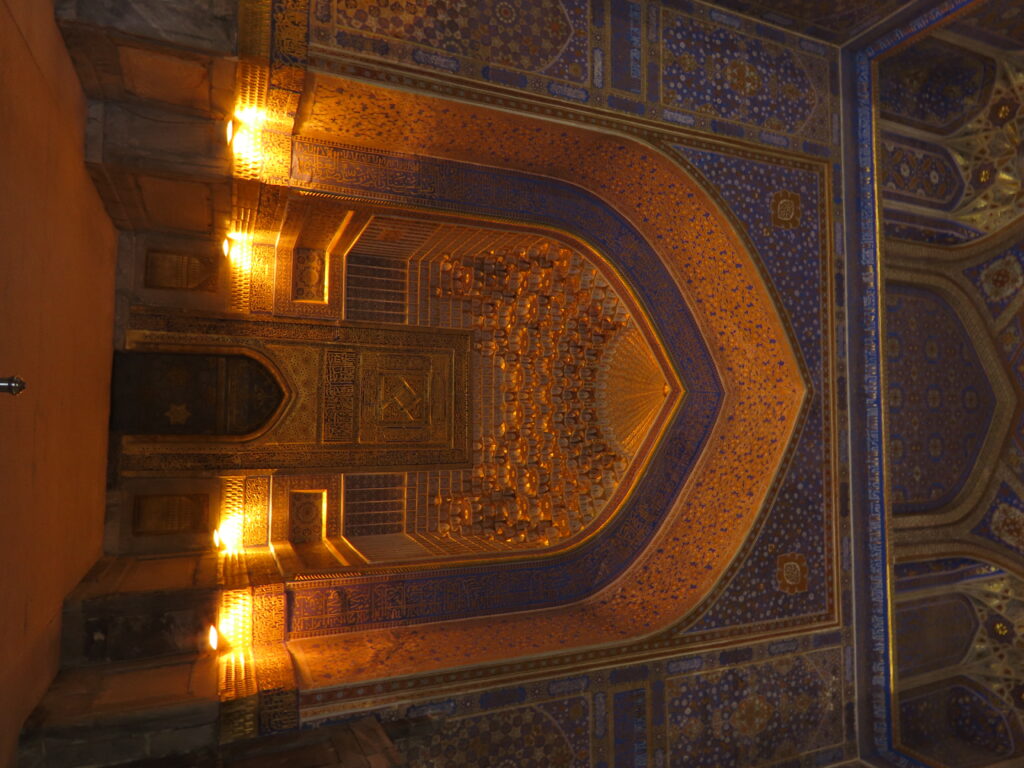
The Tilya Kori Madrassa in the centre has a photoshoot going on in the inner quadrangle with a bride making a pretty picture in white but once inside our jaws drop taking in the rich interiors which seem to be as opulent as Timur’s mausoleum!

Restoration work par excellence (Tilya Kori Madrassa)

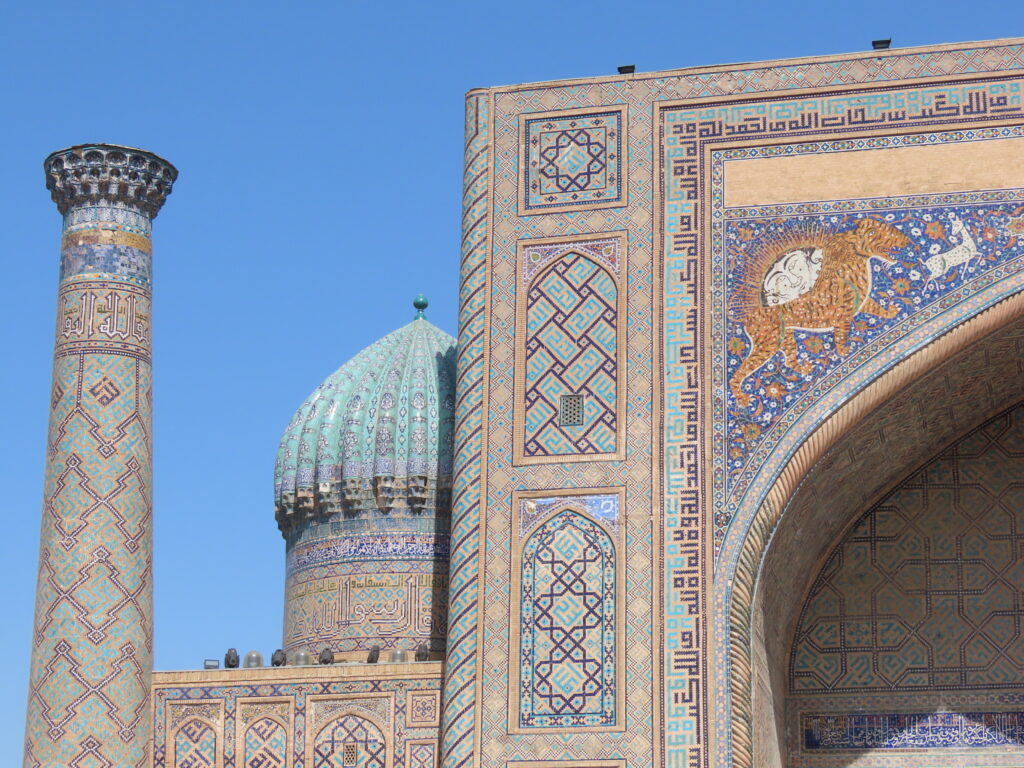
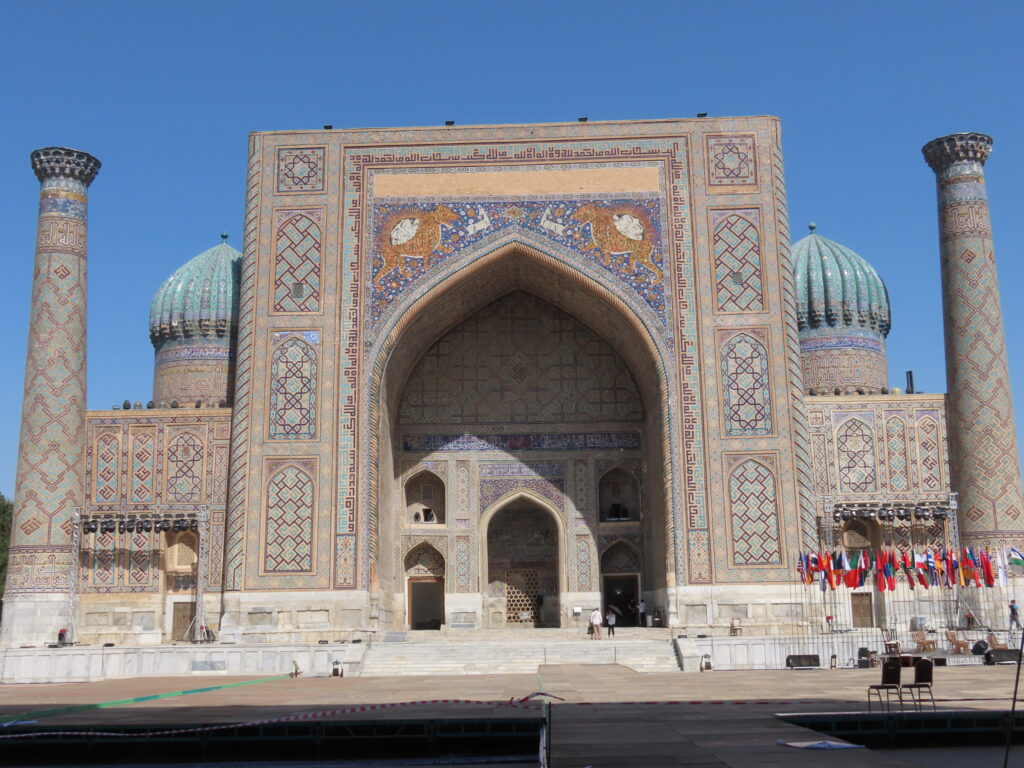
The Sherdor Madrassa is true to its name with unmistakable bright orange shers or tigers on the dwar (door) high up on the arched façade.

Fire in the Belly (Sherdor Madrassa)

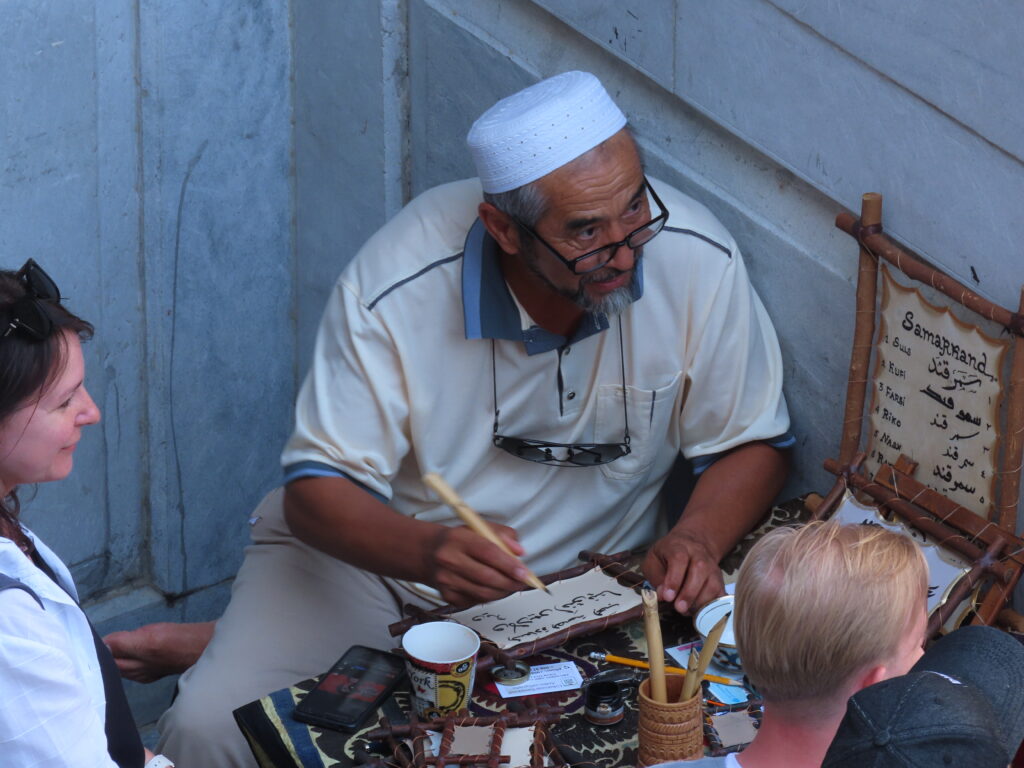
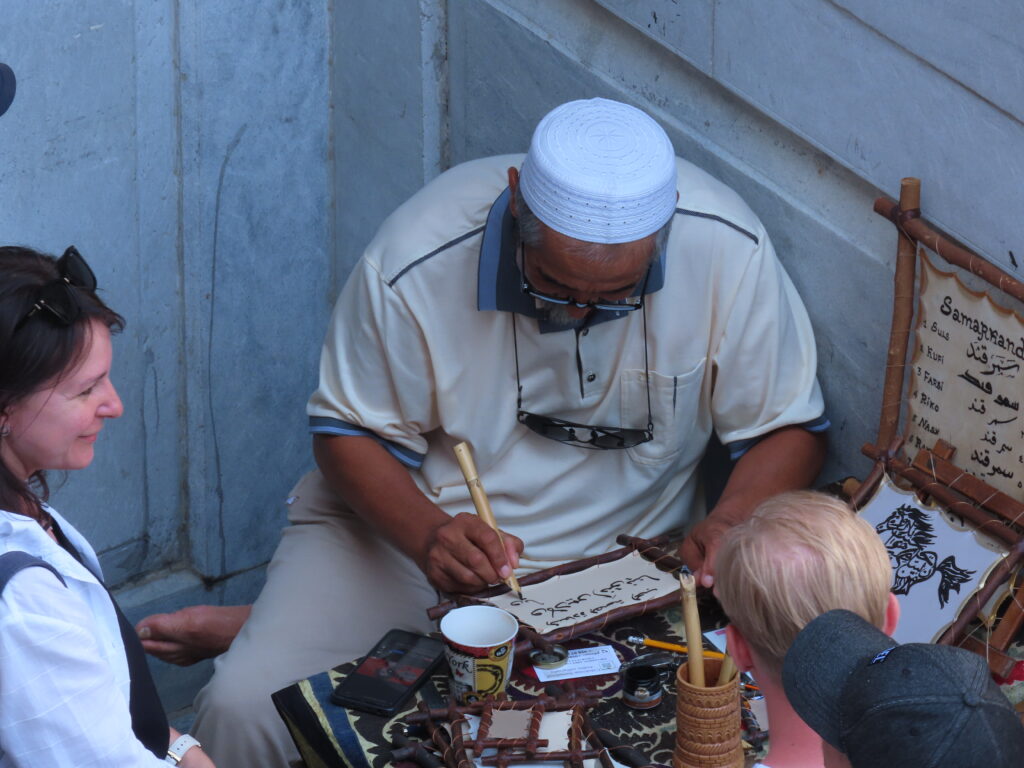
Inside the small quadrangle of Ulug Beg Madrassa with its carpet sellers in an alcove and other trinket shops we find a blink and miss coffee shop on the first floor. A perfect perch to view the calligrapher at work below while sipping an iced coffee.

Portrait of an Artist

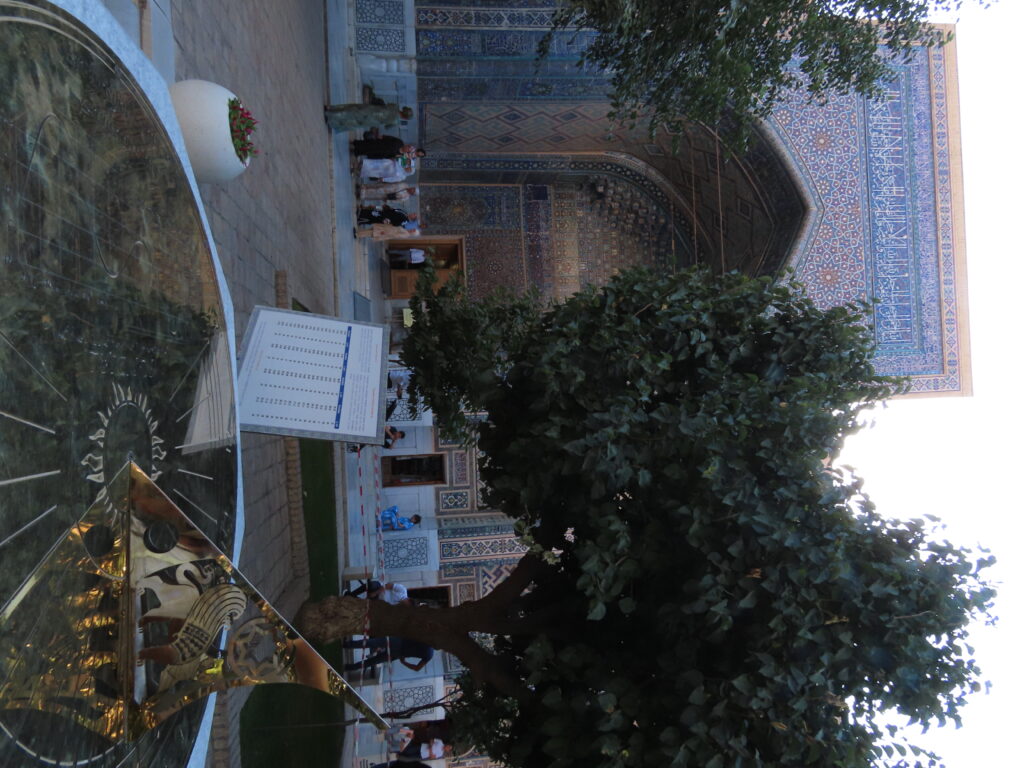
The madrassa named after the famous astronomer king has a sundial below. The wheels of time never still and this ancient city, now a bustling metropolis, carries the old along with the new, in perfect step and harmony, much like the performers at Registan.

Time’s Turntable.

Fact File-

Getting there–

There are Sharq(regular) and Afrosiyob (bullet train) trains connecting the two cities to Tashkent.

Use the Yandex app for taxis. Very reasonable and convenient.

Sightseeing–

Bukhara- The Kalon Mosque has an entry ticket.

Samarkand- All the monuments require tickets. The Registan Square ticket is valid for the entire day.

For more details read- Ultimate Uzbekistan in 8 Days


Ultimate Uzbekistan in 8 Days

I wish I had the luxury of slow travel! To spend days in a place.. I’m sure most of us yearn for that but till the horses grow wings, I know I am going to be spending just a few days in a place and I need to stretch those days. Not cram them with mindless visits to every place mentioned but, in my own way, savour the essence as much as I can of each place I do visit. Like the two evenings in Bukhara were spent at the Po-i complex, sitting on the steps of the mosque, taking in the lit monuments while the place was overrun with tourists and locals. It was noisy and vibrant and the next evening it was almost deserted and great for photography while being peaceful and contemplative.

Enroute

Uzbekistan is a must visit for history buffs being at the heart of the fabled Silk Route. It has stunning monuments painstakingly restored (probably better than what they might have been originally!) For foodies there is the cuisine so familiar yet so distinct. The cultural links run deep (Babur came from there with his tarbooz!) and they love us there! (so happy to meet Indians) An eight day trip is a minimum. So here is an itinerary to help you organize it.

Read also-ABC’s of a Bali Itinerary

Day 1-

1. The cheapest flight is at night to Tashkent from Delhi. It puts you there in less than three hours and Tashkent is half an hour behind so you land there at 12:30am Tashkent time.

2. Check into your hotel and catch up on the zzz.

Note- Reconfirm the check-in timings. We got a rude shock because our hotel cancelled our booking without informing us since we were reaching so late. Something lost in translation. Adventurous but not the best beginning to the trip, especially in the middle of the night. They accommodated us at a nearby hotel immediately but still…

Day 2-

1. Tank up on the amazing breakfast spread and it was quite the dastarkhwan, everywhere.

2. Head to the Hazrati Imam complex. Look up in awe at the roof of the Khazrati Imam Mosque. View the oldest Koran and other exquisite ones in the small Muyi Mubarak Madrassa in the middle and browse through a small market in the Barak Khan madrassa at the back. A humungous new Islamic Civilization complex adjoining this is still in the works.

3. Visit Chorsu bazaar. (remember to ask for Bazaar and not market, that is another place!)

Discover- Loktak, Keibul Lamjao and Ima Market- The 3 Must Dos in Manipur

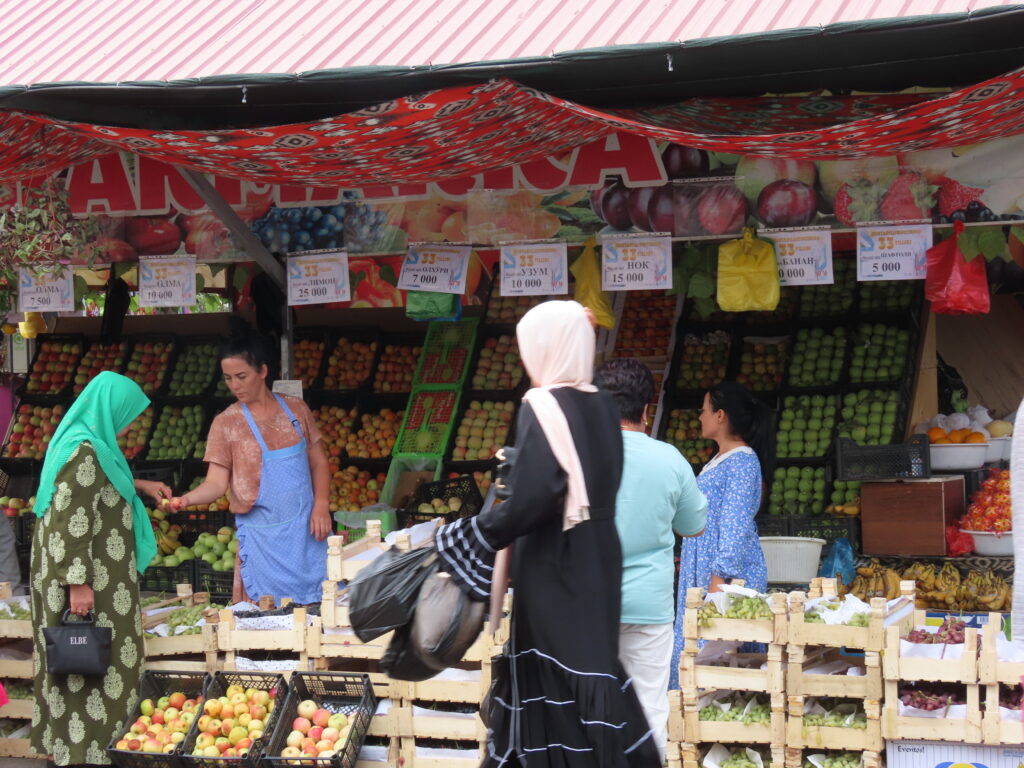
4. Lunch at one of the small eateries behind it, if you already have not been offered to sample from the mounds of dry fruits and snacked on the juiciest fruits and drunk fresh compote.

A feast in every sense.

5. Head to Tashkent North Railway Station to catch an overnight train to Khiva. Enjoy being welcomed by liveried staff, sleep in a slightly cramped 1st class compartment and dine on the yummiest but greasy plov in the dining car. (I think it was only for the staff but they generously shared it with us!)

Notes– Though there is a separate entrance for women, once inside you can wander all over in the Khazrati Mosque.

The entry fee at the Muyi Mubarak Madrassa is 50,000som.

Pro Tip– Bargaining at the markets is expected and a 20% reduction is the norm.

The train to Khiva departs at 6:15PM. Reach a little early since all train stations have a security check.

Day 3-

1. Reach Khiva by 11 AM. Head to the hotel, freshen up and head to Itchan Kala. Buy the entry tickets from the West gate and get a guide.

2. Lunch at Café Zarafshon.

3. Wander the bylanes of this ancient citadel.

Read- Sojourns to Shekhawati

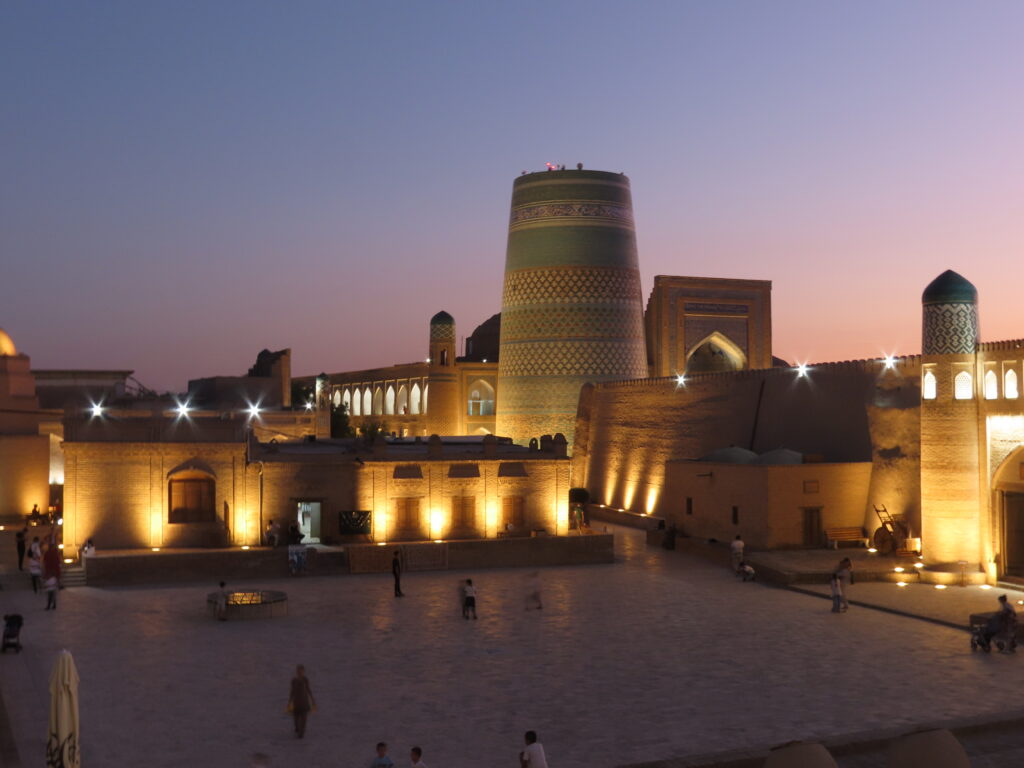
4. To enjoy the sunset and have dinner with a view head to Terrassa Café.

The colours of an evening at Itchan Kala

Pro Tips- The entry ticket to Itchan Kala costs 200,000 som per person.

Carry an umbrella or a hat.

Book a table at Terrassa café well in advance since they sell out fast.

Getting a guide here is a good idea. Although it is a small citadel but with labyrinthine alleys.

Day 4-

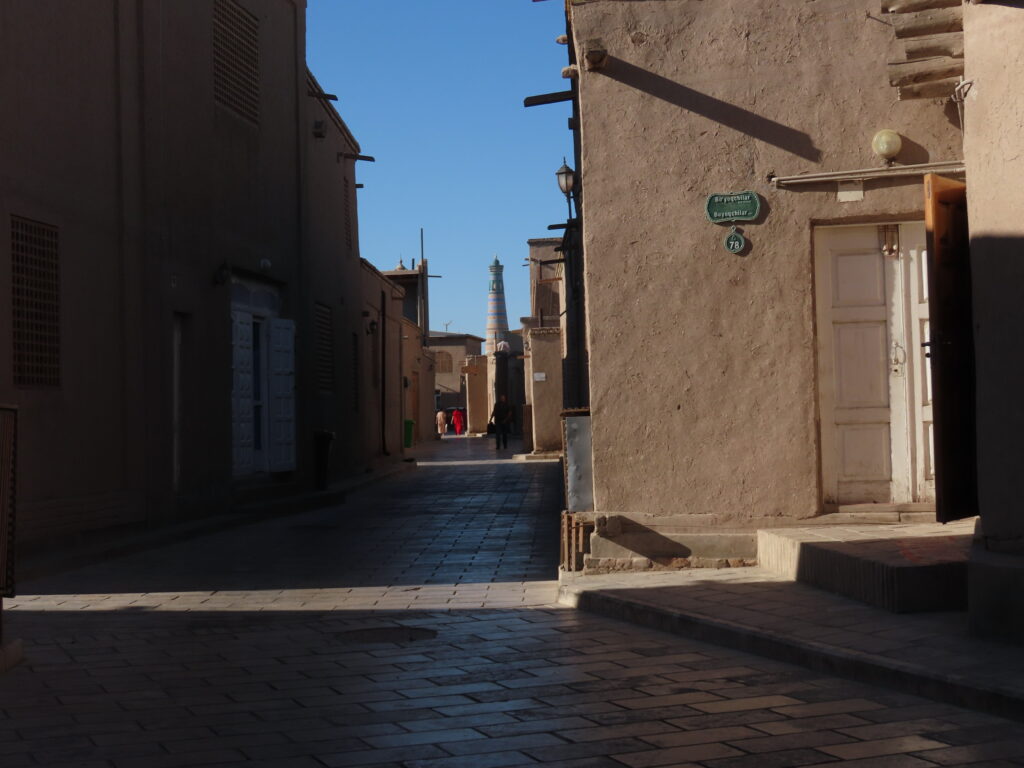
1. Head early in the morning to Itchan Kala and buy a ticket to go up the ramparts to get a bird’s eye view (whether it is worth the price is debatable) or just walk through the still inhabited parts of this ancient place and watch the place come to life as people begin to open their businesses and go about their mundane chores.

Lanes to get lost in.

2. Go back to the hotel, grab a good breakfast and check out.

3. Catch a train or drive down to Bukhara.

4. Reach Bukhara late in the evening. and check in.

5. Walk into the lively paved streets of old Bukhara. If you are up to it stroll till the Po-i-Kalyan complex.

Of domes and arches.

6. Have dinner at the Old Bukhara Restaurant or catch a performance (mixed reviews) and dinner at the Nadir Divan Begi Madrassa.

Pro tip- If you drive to Bukhara the Khorezem fortresses fall enroute.

Stay in Old Bukhara.

The train leaves Khiva at 11:10 AM and reaches Bukhara at 6:15 PM.

We stayed at Hotel Fatima.

Day 5-

1. Before breakfast catch a cab or walk to the Ark of Bukhara and Bola Hauz Mosque.

A place to reflect – Bola Hauz Mosque

2. Head back to the hotel, have breakfast and slather on the sunscreen.

3. Wander back towards Ulug’Bek Madrassa and end up at the Po-i-Kalyan Ensemble. Explore Kalan Mosque.

Explore- Mandu and Maheshwar in the Monsoon Mist

4. Go bargain hunting for carpets and kilims in Toqi Zargaron or Toki Sarrofon, the old domed markets of Bukhara or peep into a functioning foundry where knives are made near Toqi Telpakfurushon.

Bukhara’s famed markets

5. Spend the evening on the steps of Poi-i-Kalyan Ensemble all lit up like a ripe tarbooz with a blue covering, just soaking in the colours and the Kalon Tower all lit up!

Light House

Pro Tip– The Ark of Bukhara Museum opens at 9AM.

All the Madrassas now house shops save Mir-i-Arab Madrassa which is a functional theological school.

The Kalan Mosque’s entry costs 150,000 som.

Day 6-

1. Catch the early morning train to Samarkand.

2. Check-in and head early to Shah-i-Zinda to beat the crazy crowds that fetch up later there.

Shah-i-Zinda, the sacred necropolis

3. After breakfast visit Bibi Khanym Mausoleum and wander into Siyob Bazaar adjoining it.

4. Grab a bite near the market.

5. Head to Amir Timur’s mausoleum and take in the stunning interiors early in the evening.

Fit for a King

Also read- Part Two – The Old Gold in Outstanding Orchha

6. Wander over to Registan Square. Spend the evening on the steps of the Square outside the barricade or catch a performance inside.

Registan Square Side

7. Dine at Labi G’or across the street with live music and drinks.

Pro tip–

A Shah-i-Zinda ticket costs 15,000 som.  Take your time here for the colours are truly astounding!

Registan tickets cost 65,000. It is valid for the full day. Plan to see it in the day time and evening on the same day if you want to budget a bit.

Bibi Khanym mausoleum entry costs 40,000 som.

Emir Timur’s mausoleum entry is 40,000 som.

Note– We stayed at Hotel Jasmina. Good place with a fabulous location.

Day 7-

1. Explore Registan Square at leisure. Have coffee in the tiny café on the first floor of Ulug Beg Madrassa and watch a calligrapher at work below. Be awed by the interiors of Tilya-Kori Madrassa.

An artist at work.

2. Visit smaller monuments and places of interest scattered in Samarkand, the heart of Timur’s empire.

3. Finish any left-over shopping at Siyob bazaar.

Pro Tip– Buy the famous Samarkand Paper!

Siyob Bazaar has some very good quality ceramics.

Day 8-

1. Catch the Afrosiyob train to Tashkent.

2. Leave the luggage at the railway station or check into a hotel and then take the metro and explore the beautifully done up metro stations.

3. Get off at Chorsu Bazaar for last minute souvenir and gift shopping and the best dry fruit bargains. My musk melon struck travel companions got the juiciest ones back, with the indulgent aid of the hotel.

4. Catch the night flight back to Delhi.

Pro Tips-

The cloakrooms at the railway stations are well organised and cheap.

Afrosiyob is the bullet train.

A metro ticket has a flat rate.

Points to Ponder

1. English is not widely spoken or understood. So have a translator app handy.

2. Pure vegetarian fare is limited mostly to cheeses, some salads and fruits. Otherwise, it is mostly lamb, beef and sometimes chicken.

3. The mosques require a headscarf but they don’t seem to be fanatical about it and in big mosques they are available outside.

4.  The forex card was an utter waste! Uzbeki som was not available. Carry dollars in cash for easy  and better rate of conversion.

5. Get a SIM card as soon as you land and use the Yandex app for cabs. It is convenient and very reasonable.

6. Carry your own water bottle.